
Commercial Services Marketing for Multi-Location Companies That Turns Searches Into Contracts
Running marketing across a dozen branches, three service lines, and a mix of property managers, facility managers, and procurement teams is a different problem than running marketing for one location. Commercial services marketing has to generate qualified opportunities in every market while giving leadership one place to see what’s actually working.
WebFX helps multi-location commercial and facility service companies build local visibility, generate qualified B2B opportunities, and centralize marketing performance across every branch and market. Facility services marketing works best when strategy and reporting stay centralized while execution adapts to each market.

Great Northern

Generate more qualified commercial opportunities across every market
-

Move Beyond Basic Lead Count

Two leads from the same campaign can be worth very different amounts. A one-time service call, a recurring contract for a single facility, a multi-property agreement, and a regional multi-site account all show up as “one lead” in a CPL report, but they’re not the same opportunity.
WebFX builds campaigns around service, facility type, market, and account opportunity together, so marketing targets the contracts a company actually wants to grow. The measure of success is the volume of profitable commercial opportunities, rather than total lead count.
-
Every branch has a different growth opportunity
One branch might have strong demand and heavy competition. Another might have less competition, more capacity, and demand nobody’s captured yet. Centralized marketing doesn’t mean every branch gets the same budget, channel mix, or service emphasis. It means every branch operates inside the same growth system while its strategy reflects its own market demand, competition, customer mix, and capacity.
-
Commercial buyers don’t move through a residential funnel
A homeowner searches, calls, and books. A commercial buyer moves through something closer to search, research, inquiry, qualification, a site visit or walkthrough, a proposal or RFP, and then a contract. Facility managers, property managers, operations leads, and procurement teams may all touch that decision before a contract gets signed. Marketing has to support that entire process, beyond generating the first inquiry.
-
Branch performance disappears inside company-wide averages
A company-wide cost per lead can hide four very different stories: One branch converting well with room to grow, one generating volume but closing poorly, one with fewer leads but far larger contracts, and one performing well but already at capacity. A single blended number tells leadership almost nothing about where the next marketing dollar should go. Marketing needs to roll performance up for leadership and let them drill down by region, branch, service, and channel to act on it.
-
Growth through acquisition creates marketing fragmentation fast
A new branch or acquired company usually brings its own website, CRM, ad accounts, agency relationships, and reporting definitions. Adding a location shouldn’t mean adding an entirely separate marketing operating system. The infrastructure (reporting, attribution, marketing technology, KPI definitions) should centralize, while local assets and market-specific execution stay intact.
Two leads from the same campaign can be worth very different amounts. A one-time service call, a recurring contract for a single facility, a multi-property agreement, and a regional multi-site account all show up as “one lead” in a CPL report, but they’re not the same opportunity.
WebFX builds campaigns around service, facility type, market, and account opportunity together, so marketing targets the contracts a company actually wants to grow. The measure of success is the volume of profitable commercial opportunities, rather than total lead count.
One branch might have strong demand and heavy competition. Another might have less competition, more capacity, and demand nobody’s captured yet. Centralized marketing doesn’t mean every branch gets the same budget, channel mix, or service emphasis. It means every branch operates inside the same growth system while its strategy reflects its own market demand, competition, customer mix, and capacity.
A homeowner searches, calls, and books. A commercial buyer moves through something closer to search, research, inquiry, qualification, a site visit or walkthrough, a proposal or RFP, and then a contract. Facility managers, property managers, operations leads, and procurement teams may all touch that decision before a contract gets signed. Marketing has to support that entire process, beyond generating the first inquiry.
A company-wide cost per lead can hide four very different stories: One branch converting well with room to grow, one generating volume but closing poorly, one with fewer leads but far larger contracts, and one performing well but already at capacity. A single blended number tells leadership almost nothing about where the next marketing dollar should go. Marketing needs to roll performance up for leadership and let them drill down by region, branch, service, and channel to act on it.
A new branch or acquired company usually brings its own website, CRM, ad accounts, agency relationships, and reporting definitions. Adding a location shouldn’t mean adding an entirely separate marketing operating system. The infrastructure (reporting, attribution, marketing technology, KPI definitions) should centralize, while local assets and market-specific execution stay intact.
$275M
revenue driven
for commercial facility clients
6.1M+
leads driven
for commercial facility clients
190
marketing experts
to grow your business
Recommended marketing playbook for commercial and facility service companies
SEO and local SEO
Commercial buyers search by service and market (“commercial janitorial company in [city]”) and by service and facility type (“access control for warehouses,” “landscaping for property management companies”). A multi-location SEO strategy builds visibility across service, industry or facility type, and location together, rather than one generic set of pages per branch.
Don’t build thin location pages by swapping the city name. Each local page should reflect the services offered there, the industries served, local proof, and that branch’s actual service area.
Paid search
Paid search captures high-intent commercial demand for service, repair, installation, and replacement work. Campaigns and budgets should vary by market, service, customer type, competition, performance, and capacity, using geographic targeting, commercial-intent keywords, call and form tracking, and value-based optimization where the data supports it.
Don’t optimize toward the cheapest lead across the organization. Optimize toward qualified opportunity, then customer, then revenue.
Content and AI SEO
Commercial buyers research heavily before they contact anyone: What a service should cost, what to include in a contract, when to switch providers, how to write an RFP. Content built for facility managers, property managers, operations leads, and procurement should help them evaluate and select a provider, going beyond generic consumer advice about the same service category.

meet your marketing pros
48,000+
Hours of Expertise in Commercial Faciltiy Services
Get Your Custom Strategy Proposal from WebFX Today!
Centralize marketing across every location with RevenueCloudFX
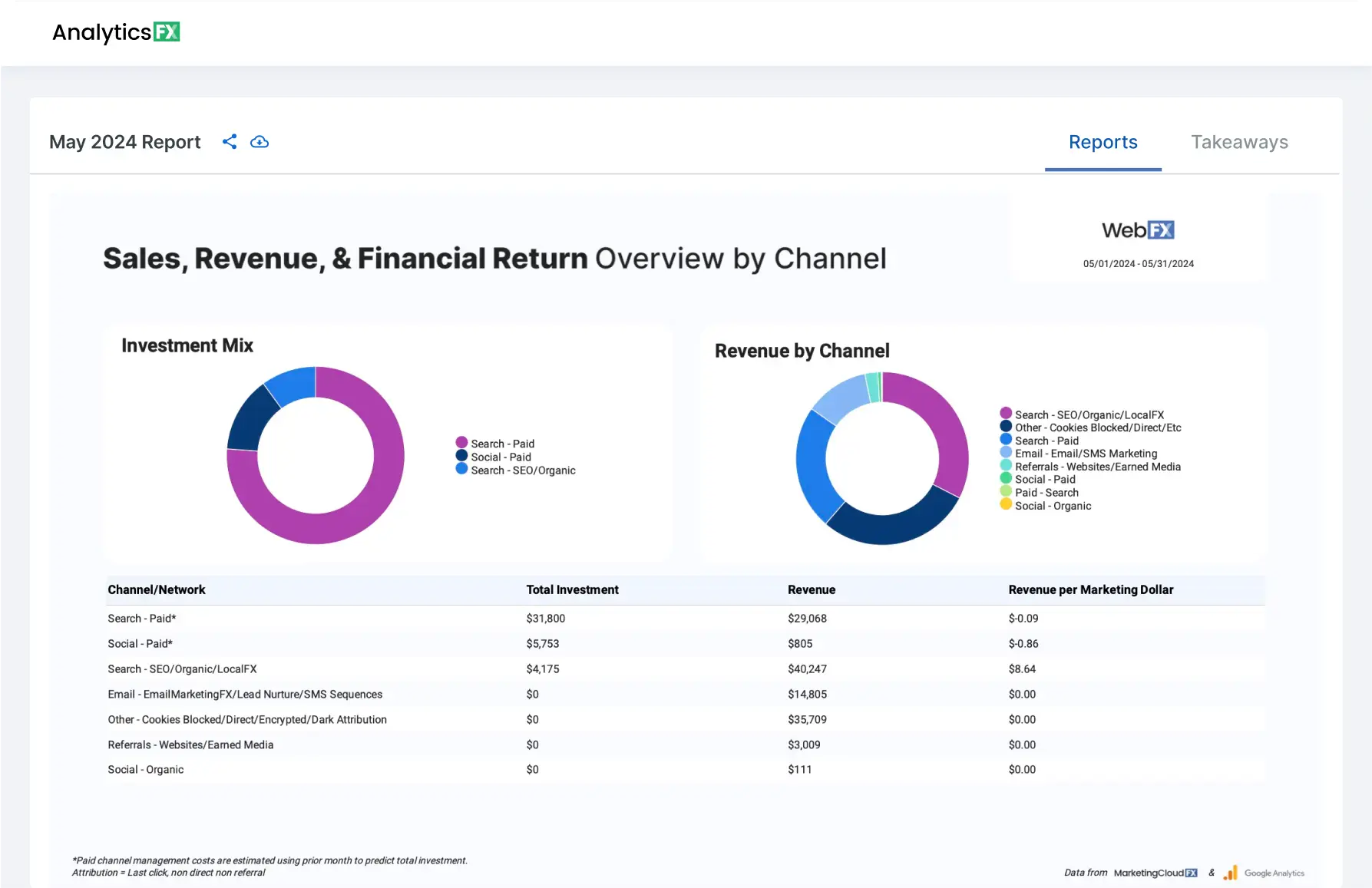
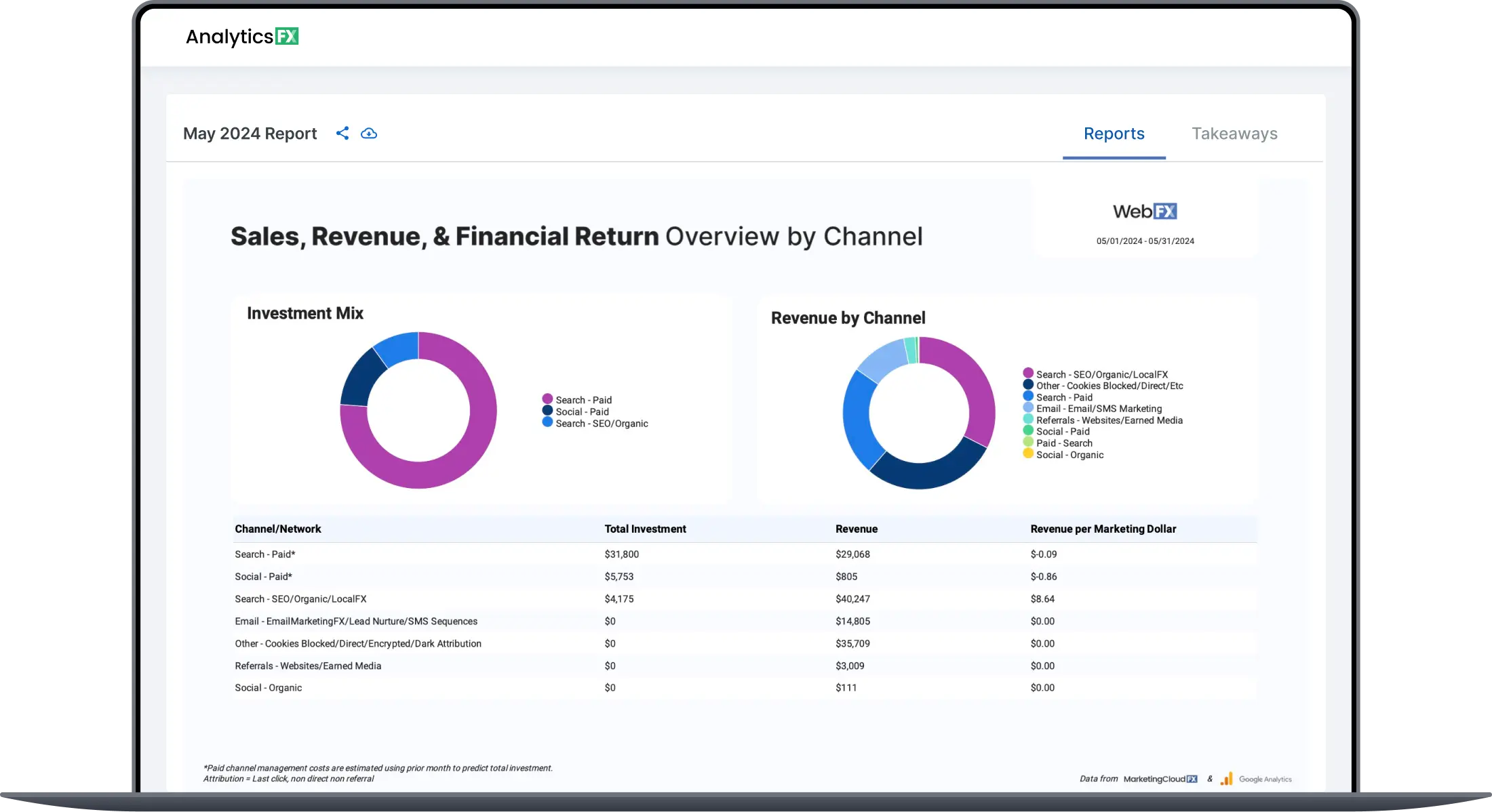
A 50-location commercial services company shouldn’t need 50 different definitions of what performance looks like. RevenueCloudFX can help create visibility from company down through brand or service line, region, location, channel, and campaign to lead, customer, and revenue, where your systems and integrations support it.

1 Billion
data points that drive decision making
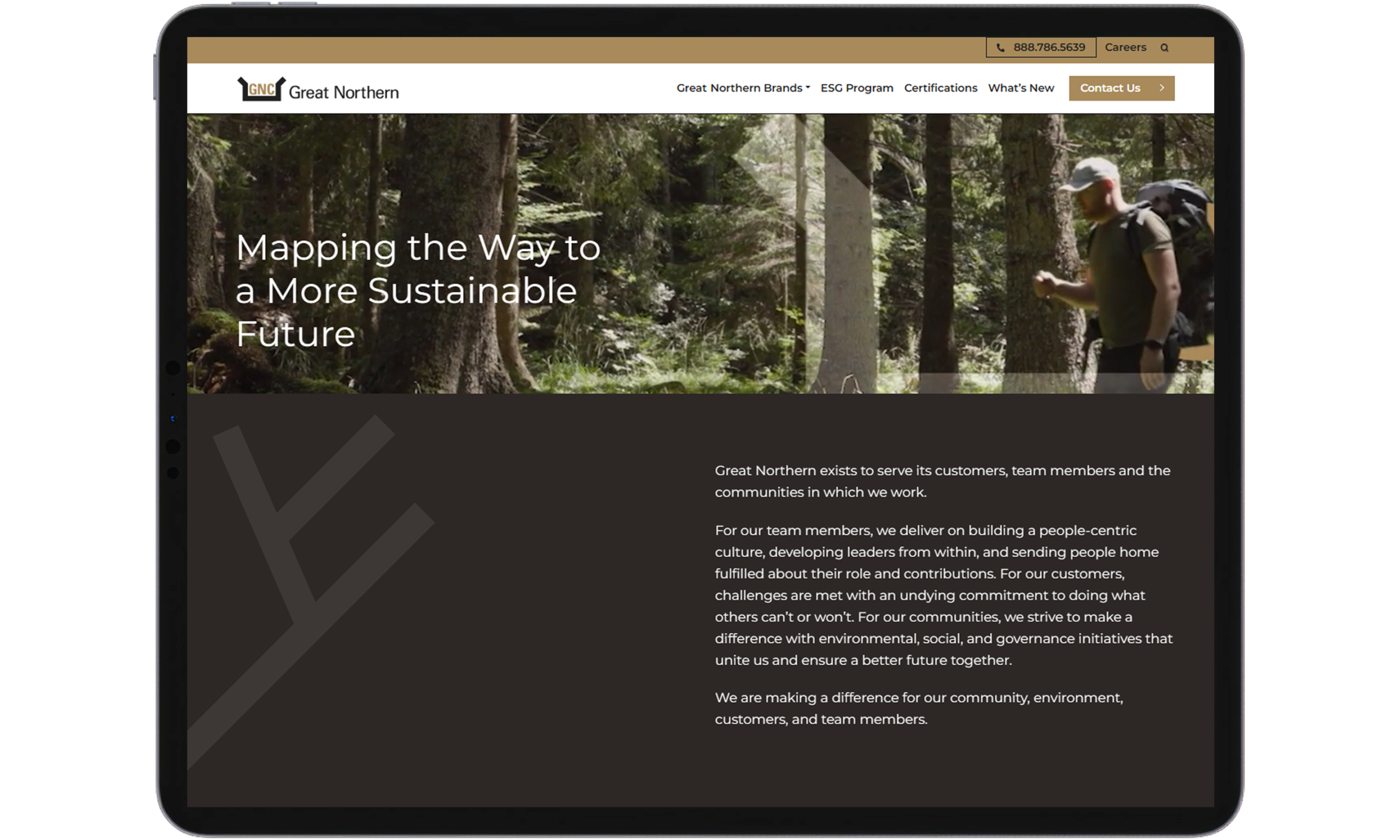
Featured Case Study:
Great Northern
-
109%
INCREASE IN ORGANIC TRAFFIC YOY
-
103%
INCREASE IN ORGANIC FORM SUBMISSION
-
31%
INCREASE IN FORM SUBMISSIONS FROM PAID TRAFFIC
FAQs about marketing for multi-location commercial and facility service companies
What is commercial services marketing?
Commercial services marketing uses SEO, paid advertising, local search, content, AI SEO, and CRO to help providers like janitorial, landscaping, security, pest control, and facility maintenance companies reach businesses and organizations looking for outsourced services. Facility services marketing covers the same providers when the emphasis is on maintaining or operating a facility rather than a single project.
How should commercial service companies market multiple locations?
Centralize strategy, technology, reporting, and attribution, while adapting local campaigns to each market’s demand, competition, customer mix, and operational capacity.
Does every location need its own marketing strategy?
Each location needs locally relevant execution, but not an entirely separate marketing infrastructure. Technology, reporting, SEO frameworks, and brand standards can be shared while location pages, PPC, reviews, and messaging stay local.
How do multi-location commercial service companies generate more qualified leads?
Define the types of accounts the company wants, build campaigns around service, facility type, and market together, and use qualification and sales data to see which leads actually become valuable customers.
How should commercial service companies measure marketing ROI?
Track the full funnel where possible: Marketing source to lead, qualified opportunity, proposal, customer, and revenue. Cost per qualified opportunity, close rate, and contract value matter more than cost per lead alone.
Should every location get the same marketing budget?
Usually not. Locations differ in market demand, competition, customer value, and operational capacity. Allocating based on opportunity, performance, and capacity together works better than an even split.
How can commercial service companies win more multi-site accounts?
Build marketing specifically for buyers managing multiple facilities, and demonstrate geographic coverage, consistent service, and centralized account management where those capabilities are genuinely in place.
How can digital marketing support commercial service acquisitions?
Audit and protect the acquired company’s website, rankings, Google Business Profile, reviews, and lead sources first, then connect it into centralized reporting and measurement while preserving the local equity it already has.
How much does marketing for a multi-location commercial services company cost?
Cost depends on the number of markets and locations, the services involved, competition, ad spend, and how much local execution each market needs.
Why choose WebFX as your multi-location commercial and facility services marketing agency?
WebFX helps multi-location commercial and facility service companies scale marketing across branches, markets, and acquisitions without losing control or visibility. Here’s how:
- One partner across multiple markets. Coordinate SEO, PPC, local, content, and reporting through one centralized team instead of separate vendors per branch.
- Target the accounts you actually want. Build around service, industry, market, and account opportunity, prioritizing recurring contracts and multi-site accounts over generic lead volume.
- Connect marketing to customers and revenue. A higher-CPL campaign can be the better investment if it produces larger accounts, better close rates, and more recurring revenue. RevenueCloudFX and supported client data help make that visible.
- Centralize reporting across every location. See which branches generate the strongest returns, which markets need investment, and where budget should move, with location-level detail intact.
- Scale across branches and acquisitions. Built for regional providers, multi-branch organizations, PE-backed platforms, and roll-ups that need the marketing system to keep working as the company grows. The fifth acquisition shouldn’t require rebuilding what the first four already helped create.
How does WebFX help scale marketing as I add new locations or acquisitions?
A new branch or acquired company usually brings its own website, rankings, Google Business Profile, CRM, ad accounts, and agency relationships. WebFX works through each acquisition in four stages:
- Audit what already exists: We assess the current marketing assets and performance
- Protect what’s already creating value: We preserve rankings, profiles, and strategies that are working
- Connect the location into shared reporting and attribution: We integrate the new branch into your centralized data systems
- Scale the strategies that already work elsewhere: Once the market supports them, we apply proven tactics from your other locations
The goal is to make every new location easier to market than the last. A growing platform gains leverage from its existing data, technology, and content instead of rebuilding marketing from scratch after every expansion.