


Contents
- 5 types of AI agents for businesses
- 1. Simple reflex agents
- 2. Model-based reflex agents
- 3. Goal-based agents
- 4. Utility-based agents
- 5. Learning agents
- How to choose the right AI agent type for your business
- Get help setting up your AI agent with consulting services from WebFX
- FAQs about types of AI agents for businesses
- What’s the difference between an AI agent and a chatbot?
- What business tasks are AI agents useful for?
- Which business workflows should AI agents not be trusted with?
5 Types of AI agents for businesses:
| Type of AI agent | How it works | Example tools | Best for |
| Simple reflex agents | Follow preset if/then rules to react to specific triggers | Gmail filtering system, server-monitoring alerts | Rule-based, repetitive tasks |
| Model-based reflex agents | Use prior context to make better decisions | Support chatbots, NetSuite Inventory Management | Context-aware task handling |
| Goal-based agents | Plan actions around specific objectives | AutoGPT, route-planning agents | Goal-driven, multi-step workflows |
| Utility-based agents | Compare and choose options with the best expected outcomes | Marketing optimization agents, trading agents, Google Ads Smart Bidding | Optimization and tradeoff decisions |
| Learning agents | Adapt and improve over time using feedback and data | Recommendation engines, fraud detection systems, sales forecasting systems | Tasks that |
Maybe you’ve heard of AI agents before. If you haven’t, AI agents are AI tools capable of performing tasks on their own, without being specifically prompted to do each one. The idea is that they can handle simple, repetitive business tasks to save time.
If you’re considering using AI agents in your own business, you’ll find that there are numerous types of agents available, and you may be unsure which to choose. Those types differ in how much context they use, how independently they make decisions, and whether they can improve over time, so the right fit depends on the complexity of the tasks you want them to handle.
To help you out, we’ve put together this overview of the five main types of AI agents for businesses, with specific examples of each one.
Read on for the full overview!
5 types of AI agents for businesses
There are several different AI agent types available to businesses like yours. Get more details about each of those types — along with specific AI agent examples — below!
1. Simple reflex agents
The most basic type of AI agent is a simple reflex agent. Simple reflex agents use a minimalist “if/then” logic, taking specific, preset actions in response to particular triggers. Although this might not quite fit what you imagine when you think of AI, it’s the foundation for many automation tools.
Examples of simple reflex agents might include Gmail’s email filtering system (or a similar tool), which sorts emails based on specific keywords or senders. Another example might be a monitoring system designed to track server loads or equipment conditions, automatically shutting down machinery if danger is detected.
2. Model-based reflex agents
Model-based reflex agents are a more advanced version of the simple reflex agents we just looked at, and they enter more into the territory of what we would typically think of as AI.
These agents are built to handle partial observability, using AI models — not dissimilar to those used by chatbots — to retain a limited understanding of context. For example, you might use a customer support chatbot that’s able to remember the last few questions and give more context-aware answers as a result.
For a more specific example of a model-based reflex agent, you could look at a tool like NetSuite Inventory Management. Though not primarily an AI agent, this ERP platform does feature some agentic capabilities that allow it to analyze inventory trends, decide when replenishment is needed, and even initiate procurement actions.
3. Goal-based agents
Goal-based agents are assigned a specific goal, and then use planning and search capabilities to help them find the right sequence of actions to achieve that goal. When people talk about agentic AI, they’re most often talking about tools that are at least this advanced.
An example of a goal-based agent would be a travel booking AI agent identifying the cheapest flight path to a destination, or a logistics agent planning a delivery route. A specific tool that fits into this category is AutoGPT, which is directly built and marketed as an agentic platform that runs on OpenAI’s GPT model.
4. Utility-based agents
Utility-based agents build on goal-based agents, but take it a step further. These tools prioritize actions that maximize utility, enabling them to handle conflicting goals or uncertain outcomes. That’s vital for businesses looking to optimize their processes.
As an example, you might use a marketing campaign agent to help you allocate your budget across different channels to maximize your return on investment (ROI). Or, you might use a trading agent designed to balance risk and potential profit. On some level, Google Ads Smart Bidding might even be classified as a utility-based agent.
5. Learning agents
Learning agents, which constitute the most advanced category of agentic AI, are designed to improve their performance over time based on feedback. The interesting thing about this is the fact that agentic learning capabilities can actually be added to any of the previous AI agent types on this list.
Some learning AI agent examples might include a personalized recommendation engine that learns from user clicks, or a fraud detection system that automatically adapts to new scam patterns over time.
A sales forecasting system is one example of this type of system in action — it can learn from historical pipeline and revenue data over time to improve its predictions.
How to choose the right AI agent type for your business
The best type of AI agent for your business depends entirely on what you’re trying to do. If you’re trying to pick which one to use for a given task, consider the following factors:
- Workflow complexity: How complicated is the workflow you want to automate?
- Context requirements: How much context will the agent need to perform the task well?
- Decision-making level: Does the agent need to make decisions or weigh tradeoffs?
- Ongoing improvement: Should the agent’s performance improve over time?
- Degree of autonomy: How much autonomy do you trust the agent with?
Answering these questions will help you judge which type of agent to use. By looking at how each option’s capabilities match up with your needs, you can identify which type of agent would be the most effective for the task you’re trying to automate.
FAQs about types of AI agents for businesses
Here are the answers to some of the most common questions about AI agents.
What’s the difference between an AI agent and a chatbot?
The primary difference between AI agents and chatbots is autonomy. Chatbots require a back-and-forth interaction with a human user, only producing responses when a human actively prompts them to do so. AI agents, on the other hand, are capable of taking action on their own in response to specific stimuli.
Also, AI agents are primarily goal-oriented, while chatbots are primarily conversation-oriented.
What business tasks are AI agents useful for?
AI agents can be helpful for tasks related to the following:
- Customer support
- Lead qualification
- Ad campaign management
- Inventory management
- Fraud detection and cybersecurity
Of course, that’s not to say you should hand each of these areas entirely over to an AI agent. Rather, you should assign them specific, simple, and repetitive tasks within those broader categories.
Which business workflows should AI agents not be trusted with?
In general, you should avoid letting AI agents handle tasks that are:
- Highly strategic (e.g., developing a marketing content strategy)
- Emotionally nuanced (e.g., making final hiring decisions)
- High-stakes and irreversible (e.g., making business deals)
If you must use AI assistance in any of those areas, treat it more as a decision support tool rather than giving it the ability to make autonomous decisions on behalf of you or your company.
Get help setting up your AI agent with consulting services from WebFX
If any of the AI agent examples on this page have piqued your interest, you may be considering setting up an AI agent or two for your business. If so — and particularly if you want to set up AI agents for your marketing — consider taking advantage of WebFX’s deep marketing expertise to help you along.
With our AI agent development and consulting services, you can ensure your agents are implemented smoothly and safely, and that they’ll bring the greatest benefit for your company. Interested in working with us? Just give us a call at 888-601-5359 or contact us online today!
-
 Matthew Gibbons is a Senior Data & Tech Writer at WebFX, where he strives to help businesses understand niche and complex marketing topics related to SEO, martech, and more. With a B.A. in Professional and Public Writing from Auburn University, he’s written over 1,000 marketing guides and video scripts since joining the company in 2020. In addition to the WebFX blog, you can find his work on SEO.com, Nutshell, TeamAI, and the WebFX YouTube channel. When he’s not pumping out fresh blog posts and articles, he’s usually fueling his Tolkien obsession or working on his latest creative project. View full profile
 -

WebFX is a full-service digital marketing agency delivering revenue-driving strategies across online advertising, SEO and AI search optimization, and digital marketing. Backed by 1,100+ client reviews, a 4.9-star rating on Clutch, and proprietary revenue-tracking technology, our team helps businesses grow visibility and revenue across platforms, from Google to ChatGPT to LinkedIn. Discover how our expert team and revenue-accelerating tech can drive results for you. Learn more

Try our free Marketing Calculator
Craft a tailored online marketing strategy! Utilize our free Internet marketing calculator for a custom plan based on your location, reach, timeframe, and budget.
Contents
- 5 types of AI agents for businesses
- 1. Simple reflex agents
- 2. Model-based reflex agents
- 3. Goal-based agents
- 4. Utility-based agents
- 5. Learning agents
- How to choose the right AI agent type for your business
- Get help setting up your AI agent with consulting services from WebFX
- FAQs about types of AI agents for businesses
- What’s the difference between an AI agent and a chatbot?
- What business tasks are AI agents useful for?
- Which business workflows should AI agents not be trusted with?
Share this article


See AI Marketing in Action
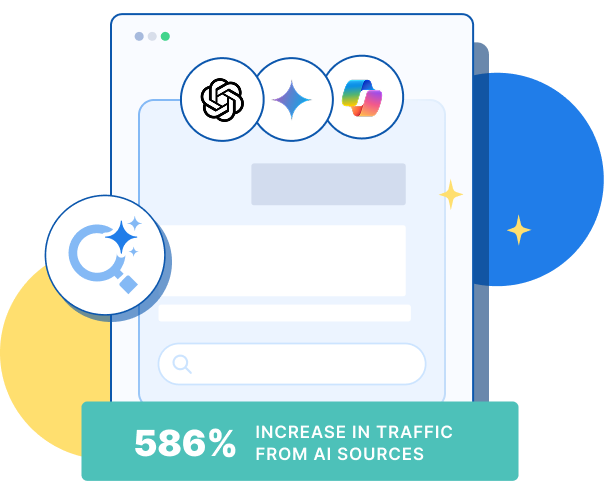
Explore how WebFX helped a regional brand get discovered in AI search experiences — proving what’s possible with today’s AI-driven marketing!
Try our free Marketing Calculator
Craft a tailored online marketing strategy! Utilize our free Internet marketing calculator for a custom plan based on your location, reach, timeframe, and budget.