What changed: OpenAI is testing a UI update that moves ChatGPT’s Sources button out of the visible footer and into a three-dot “More actions” menu.
What it means for your AI traffic and citations: The citation itself still exists, but a reader now has to click one extra step to find it, which lowers the odds of users reaching your site even when you’re the source behind the answer.
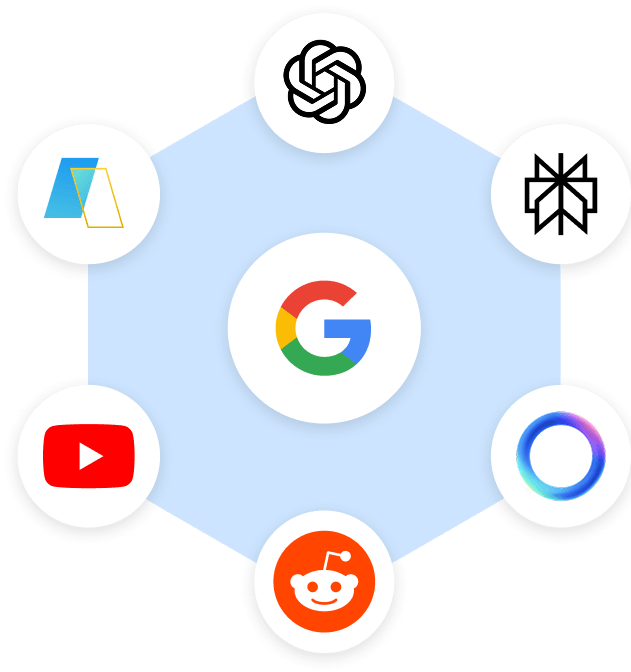
How to protect your AI visibility: Track citation presence across Perplexity, Google AI Overviews, and Copilot instead of ChatGPT alone, and build proof of visibility, like first-party data and brand mentions, that doesn’t depend on a reader clicking through.
Imagine spending a year earning citations inside ChatGPT, then watching OpenAI quietly bury the button that made them visible.
That’s not a hypothetical. OpenAI is testing a change that makes ChatGPT sources less visible by default, moving the Sources button out of the footer and into a three-dot “More actions” menu. The citation itself hasn’t disappeared. What’s disappeared is the odds that a reader ever clicks one more step to find it.
This is the moment to build a framework that holds up no matter which platform rearranges its interface next, and that’s exactly what the rest of this article gives you, including why this change matters right now, and what to do about it.
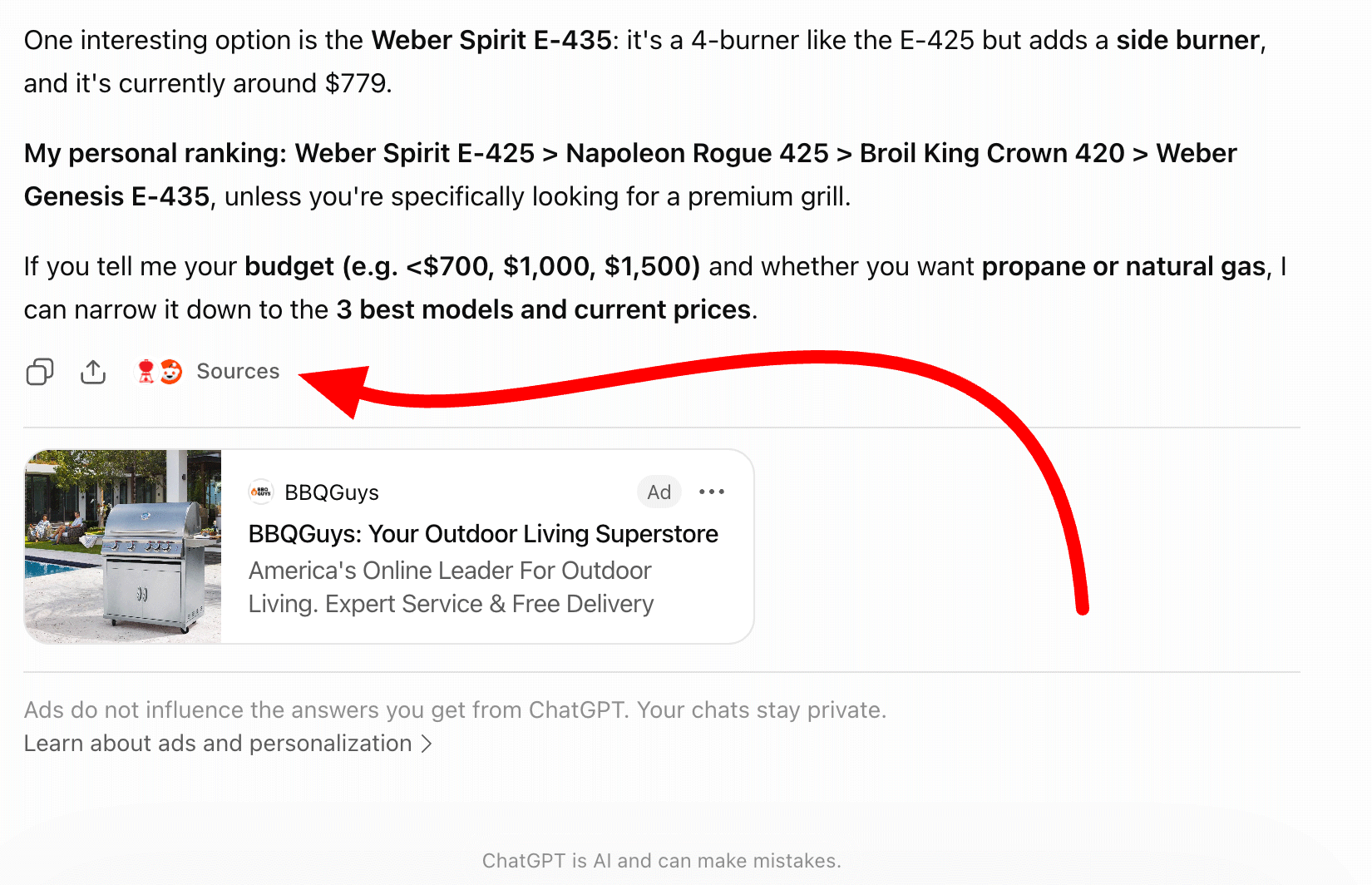
ChatGPT used to show a “Sources” button right in the footer of a response.
The ChatGPT Sources button in the footer. Source: Search Engine Roundtable
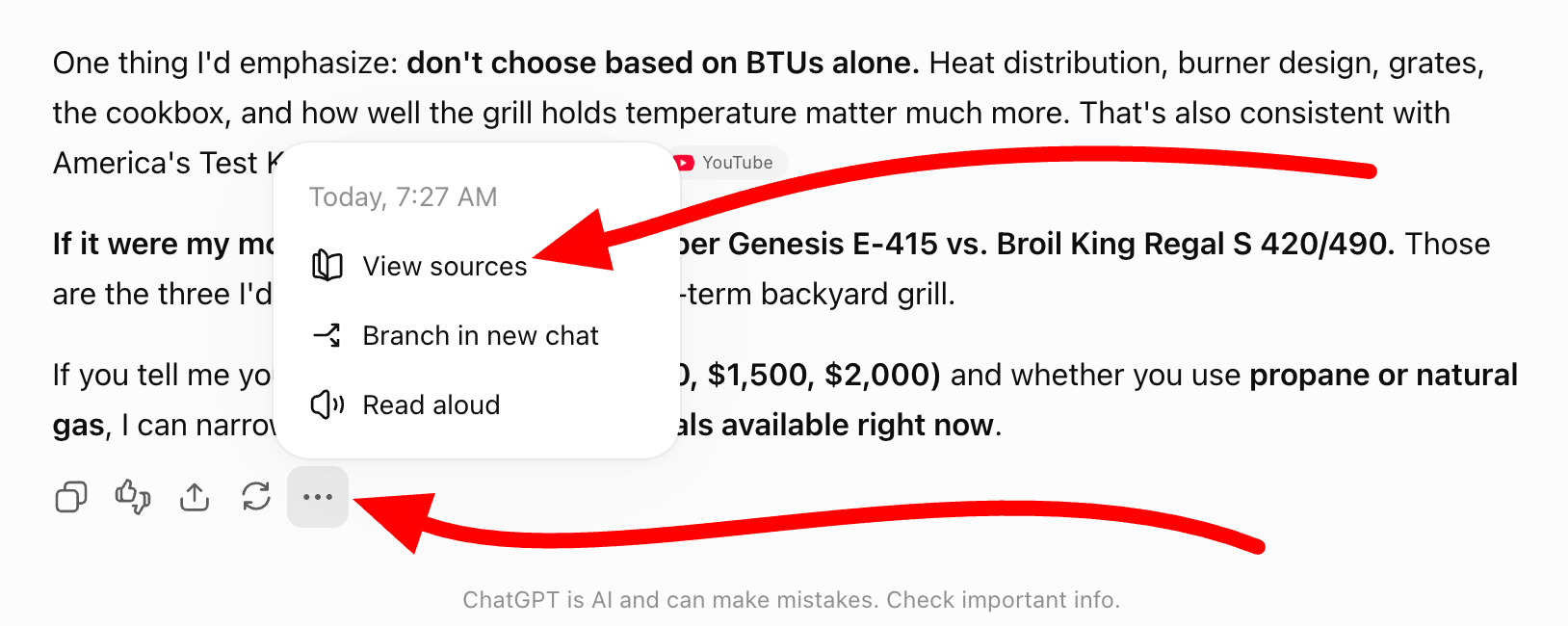
Now, OpenAI is testing a change where ChatGPT buries the sources button. In this test, that button now lives inside a three-dot “More actions” menu, so a reader has to click once just to find the option to click through to your site.
ChatGPT now requires more actions to view sources. Source: Search Engine Roundtable
The source data itself hasn’t gone anywhere. Your citation still exists in the response, and the underlying attribution still works the same way it always has. What changed is default visibility, and that’s the part worth watching closely, since a citation only earns you traffic if someone actually sees it and clicks.
Keep in mind that, at the moment, this is just a live test OpenAI is running, not a confirmed permanent rollout across every account. But it triggers the question: Is this the future of source visibility? For now, this is just a preview of what could stick.
Why this is bigger than one UI tweak
Marketing teams have spent the past year treating an AI citation the way they’d treat a backlink: something durable, earned once and kept. This test says otherwise, and the difference is worth considering.
A backlink lives on a page you don’t control, but the link itself doesn’t move once it’s published. A citation lives inside an interface someone else designs, and that interface can be rearranged overnight with no warning to you.
Consider what’s riding on that distinction. Citation depth in AI-generated answers has nearly doubled industrywide, from roughly six sources per response to more than 13 in many cases, which means more competition for every spot.
That’s the real stake here. Not whether citations vanish, but whether the platform holding them decides to make them harder to find, and whether you’d even notice before it hurts your traffic.
Technology like OmniSEO® is built to catch these changes, since it tracks citation visibility continuously instead of relying on someone happening to notice a UI change before you do.
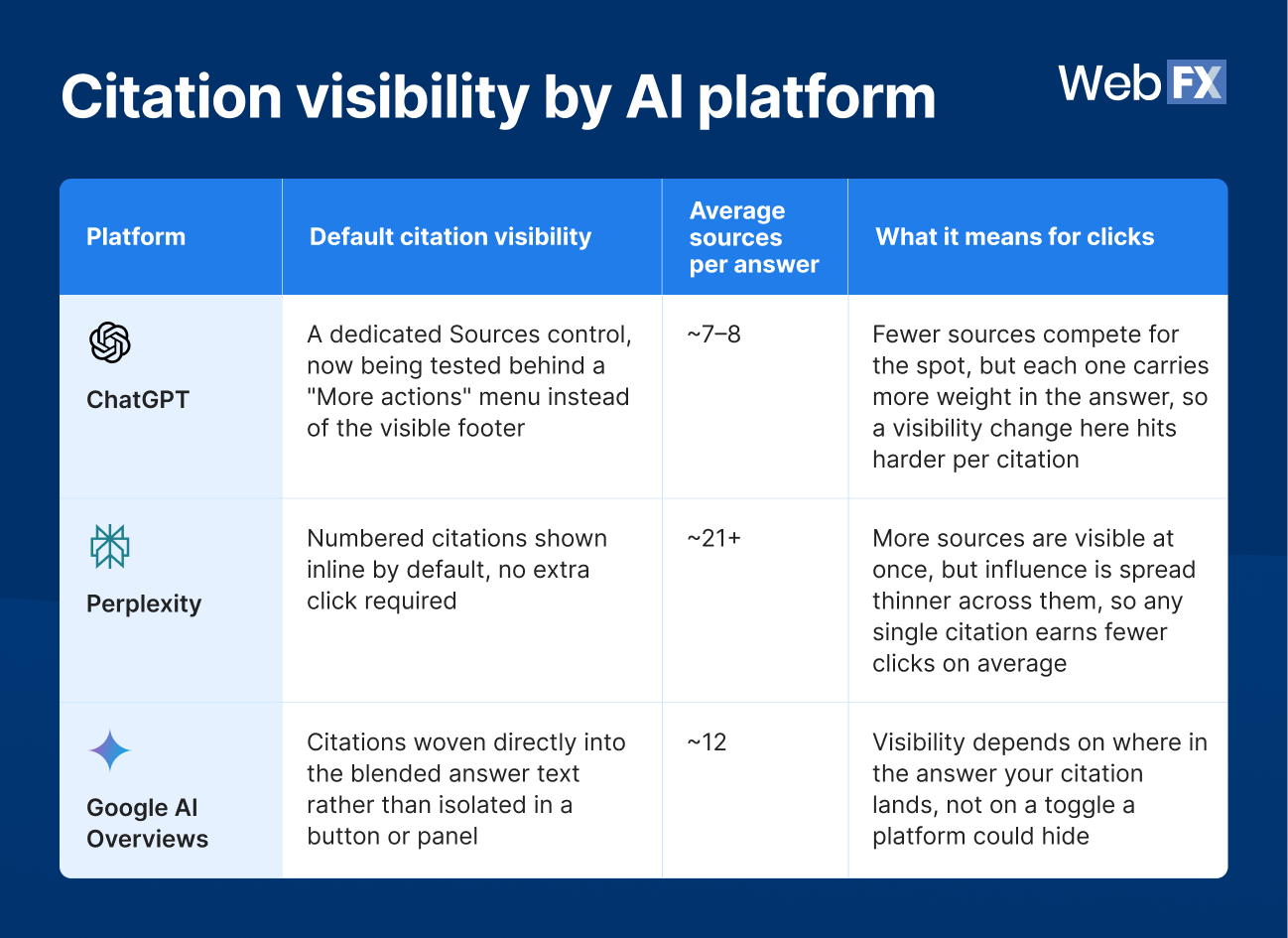
How does ChatGPT’s citation visibility compare to Perplexity and Google AI Overviews?
Default citation visibility already varies a lot by platform, and that’s exactly why building your strategy around one platform was fragile even before this test started.
Perplexity surfaces meaningfully more sources per answer than ChatGPT does by default, largely because it searches the live web on nearly every query instead of leaning on training data the way ChatGPT often does.
Google AI Overviews structures its citations differently again, blending them into the answer rather than tucking them behind a single button. Three platforms, three different defaults for how visible your citation actually is, and none of them are locked in place.
A dedicated Sources control, now being tested behind a “More actions” menu instead of the visible footer
~7–8
Fewer sources compete for the spot, but each one carries more weight in the answer, so a visibility change here hits harder per citation
Perplexity
Numbered citations shown inline by default, no extra click required
~21+
More sources are visible at once, but influence is spread thinner across them, so any single citation earns fewer clicks on average
Google AI Overviews
Citations woven directly into the blended answer text rather than isolated in a button or panel
~12
Visibility depends on where in the answer your citation lands, not on a toggle a platform could hide
This is exactly why a single-platform strategy was already fragile before this test. Each platform’s citation logic runs on its own rules, and none of those rules are guaranteed to stay put.
The Citation Resilience framework
None of this means your AI SEO work stopped paying off. It means the strategy needs to survive interface decisions you don’t get a vote on, and that’s what this framework is built to do.
1. Diversify tracking
Don’t watch ChatGPT alone. Use AI visibility tracking technology like OmniSEO® to track your citation presence across Perplexity, Google AI Overviews, and Copilot, too, so a single platform’s redesign doesn’t wipe out your entire visibility picture.
Start by checking which AI platforms your actual audience uses to research your category, then make sure you’re optimizing for those specifically instead of defaulting to whichever platform gets the most headlines.
2. Stop treating any single platform’s interface as a stable channel
Build your monitoring cadence around the assumption that interfaces will keep changing without notice, the same way you’d plan for a search algorithm update rather than hope one never comes.
In practice, that means checking citation visibility on a set schedule, such as monthly, rather than only after you notice a traffic dip, and keeping a running log of what each platform’s citation UI looked like the last time you checked.
That log becomes valuable the moment something like this test happens, since it gives you a real before-and-after to point to instead of relying on memory.
3. Build proof that doesn’t depend on the click
First-party data, case studies, and even unlinked brand mentions carry value whether or not a reader ever clicks through. A tool can confirm you’re cited in a response while your actual referral clicks quietly decline in the background, which is exactly the gap this pillar is meant to close.
If your entire case for AI visibility rests on click-through numbers alone, you’re more exposed to a UI change like this one than you need to be. OmniSEO® can track those brand mentions for you here, instead of you checking each platform by hand.
See Where Your Brand Stands in AI Search Results
We’ll show you exactly where you’re cited, mentioned, or missing entirely, based on real-time tracking across ChatGPT, Perplexity, and Google AI Overviews.
What should you check in your own AI traffic this week?
Pull your click-through rate on cited pages specifically, isolated from your total citation volume, before you do anything else.
Total citations can hold steady while click-through quietly drops, and that gap is precisely what a buried Sources button would produce.
Look at this number inside GA4’s AI Assistant traffic channel rather than lumping it in with general referral traffic, since that separation is what lets you catch a drop early instead of six months from now.
Expert insights from
Sarah B.Lead Web Marketing Consultant at WebFX
“The best way to track or report on ChatGPT visibility at this time is with a tool. Spending the time running queries and logging answers isn’t worth your time (that’s time you could spend optimizing for AI search).”
If your AI referral traffic drops, how do you know it’s this UI change and not something else?
A single before-and-after CTR reading doesn’t prove causation on its own, because several other factors drive ChatGPT referral traffic independently of this test. Rule those out first.
Here are a few other factors to check before you assume the traffic drop is related to the UI change.
Algorithm or retrieval changes: OpenAI regularly adjusts which sources get cited at all, entirely apart from any interface change, so a citation-volume dip might have nothing to do with the Sources button.
Analytics reclassification: GA4 rolled out a native AI Assistant channel in May 2026, which automatically pulls recognized traffic from ChatGPT, Gemini, and Claude out of the general Referral bucket. If your numbers moved around that window, check whether you’re comparing the same bucket on both sides of the date before assuming a real traffic change.
Citation-volume swings tied to specific update dates: Compare your dip against known platform update timelines before assuming this specific UI test explains it.
Expert insights from
Sarah B.Lead Web Marketing Consultant at WebFX
“If you see a sudden drop in AI referral traffic, dig into your analytics first (GA4 has a dedicated AI Assistant channel for this) before assuming it’s from this UI change. In GA4, for example, check to see if the drop is coming from a specific source (like ChatGPT) or landing page and how that shift compares to the previous period and year.”
If you have access to GA4 data on a managed account that shows a chatgpt.com referral shift, that’s worth pulling directly and comparing against the dates above before drawing a conclusion.
How do you build a cross-platform visibility strategy so no single platform’s UI change can hurt you?
Rather than reacting platform by platform every time one of them redesigns something, allocate your tracking and content effort in proportion to where your citations and traffic actually show up.
You can also revisit that allocation on a regular basis instead of setting it once and moving on. Here’s how to put that into practice when you use a platform like OmniSEO®:
Audit where your citations and traffic actually come from today. Pull your current platform mix before deciding where to invest more attention, rather than assuming ChatGPT deserves the largest share by default.
Match your monitoring effort to the real distribution. If Perplexity sends more qualified traffic than Google AI Overviews for your brand, your tracking cadence should reflect that, not an even split across all platforms.
Revisit the allocation on a set schedule. Platform share shifts over time, so the mix that made sense six months ago might already be out of date.
Build enough flexibility to shift resources quickly. When a platform’s share changes, or when a test like this one turns permanent, you want to be able to move your attention without rebuilding your whole tracking setup from scratch.
If you want to make tracking and monitoring easier, OmniSEO® is built to handle that kind of shifting allocation automatically, so you’re not manually re-checking every platform every quarter to see where your attention actually belongs.
TRACKED BY OMNISEO®
93,969
Mentions Earned for Clients Across AI Search Platforms
No. This test changes how visible the Sources button is by default, not whether the underlying citation exists. The response still pulls from and attributes the same sources it always did. What’s different is that a reader now has to click into a menu to see them, instead of finding them in plain view.
Not currently, as far as what we have seen reported. This appears to be specific to ChatGPT for now, though it’s worth watching whether other platforms follow, since interface tests like this one don’t always stay confined to a single product.
Google AI Overviews and Perplexity already handle citation visibility differently from ChatGPT by default, which is one more reason to track all three rather than assuming a change on one platform tells you anything about the others.
No, the tracking mechanism itself is unchanged. What changes is the likelihood that a reader ever clicks through to trigger it in the first place.
A monitoring tool can still show you as cited while your actual referral clicks decline quietly in the background, which is exactly why we advise building proof that doesn’t depend on click-through rates.
Ask category-level questions rather than brand-name questions, with browsing enabled, and open the source panel manually across a few prompt variations, since results can shift between attempts. A monitoring tool turns this into a repeatable check instead of a one-off spot check every time you’re curious.
Volume is still small relative to organic search. WebFX’s analysis of 2.3 billion site sessions found that AI-referred visitors converted at about 1.2 times the rate of organic search. Small volume with disproportionately high intent is exactly the kind of traffic worth protecting.
If source links get harder to reach, an unlinked brand mention becomes relatively more valuable, since it still drives branded search and direct visits even without a trackable click.
OpenAI has been rolling out ads inside ChatGPT since early 2026. However, it’s not confirmed that there is any official connection between the ads rollout and this specific Sources-button test. The person who first spotted the change has floated the idea, but OpenAI hasn’t made a statement tying the two together, so the connection is only speculation right now.
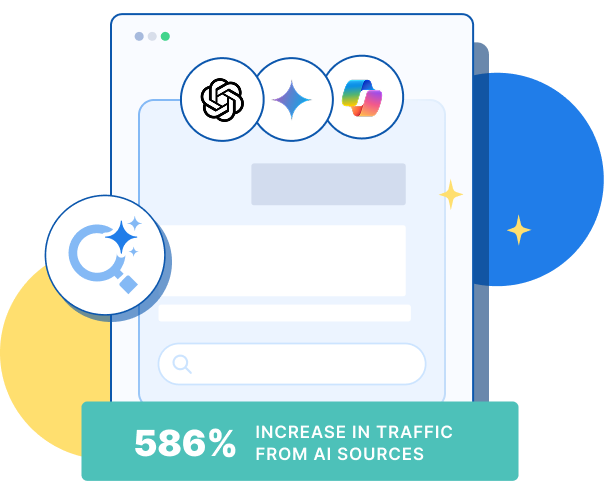
Learn how we increased traffic from generative AI sources by 586%, and leads driven from AI platforms by 500% for a client.
Protect your AI visibility from the next platform decision
Pull your ChatGPT-referral click-through rate this week, before you have a before-and-after baseline to compare it against later. That single number is more useful right now than any amount of speculation about where this test ends up.
The teams that come out ahead will be the ones already tracking citations across Perplexity, Google AI Overviews, and Copilot, and already building proof of AI visibility that doesn’t live or die by a single click.
OmniSEO® is built to do exactly that, so you’re covered no matter which platform rearranges its interface next. Use our OmniSEO® technology to see exactly where your brand is cited across every major AI platform and learn more about how our AI search optimization services can help you today.
Try our free Marketing Calculator
Craft a tailored online marketing strategy! Utilize our free Internet marketing calculator for a custom plan based on your location, reach, timeframe, and budget.
Craft a tailored online marketing strategy! Utilize our free Internet marketing calculator for a custom plan based on your location, reach, timeframe, and budget.








 Thaakirah Abrahams is a Lead Editor at WebFX, where she leverages her 5+ years of experience to craft compelling website content. With a background in Journalism and Media studies and certifications in inbound marketing, she holds a keen eye for detail and a talent for breaking down complex topics for numerous sectors, including the legal and finance industries. When she’s not writing or optimizing content, Thaakirah enjoys the simple pleasures of reading in her garden and spending quality time with her family during game nights. View full profile