


Table of Contents
- What is generative AI in search?
- Where is generative AI used in search?
- How does bringing generative AI to search change marketing?
- Why prioritize generative search as a marketing channel?
- 5 areas marketers need to prioritize when it comes to generative AI search
- Get discovered in AI search with WebFX
Described by Google as the “biggest upgrade to Search in over 25 years,” generative AI is revolutionizing the search experience on Google and Bing, while also introducing new ones through ChatGPT, Perplexity, and Claude.
For marketers, generative AI in search isn’t a trend — it’s a call to action.
That’s why we’ve created this guide, which shares what marketers need to know about generative search (and what you need to prioritize this year) based on our experience helping hundreds of businesses improve their visibility in AI search.
What is generative AI in search?
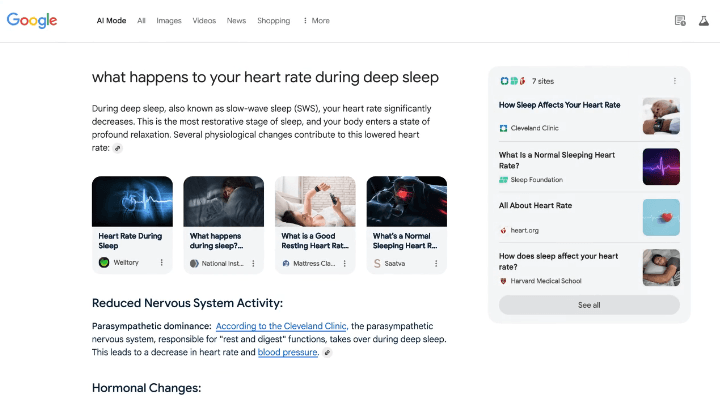
Generative AI in search is the use of large language models to generate responses to user queries. Examples of generative AI in search include Google’s AI Overviews and AI Mode, as well as the ChatGPT and Perplexity platforms.
Where is generative AI used in search?
Everywhere. You’ll find generative AI in search experiences like:
| Experience | Description | Supports Advertising | Reach |
| AI Overviews (Google) | Populates a text-based response in Google Search with citations to sources | Yes | More than 2.5 billion monthly users (Google) |
| AI Mode (Google) | Provides conversational search experience | Yes | More than 1 billion monthly users (Google) |
| Copilot (Microsoft) | Provides conversational responses to user queries | Yes | More than 20 million paid users (TechCrunch) |
| ChatGPT (OpenAI) | Provides conversational search experience | Yes | More than 1 billion monthly users (Reuters) |
How does bringing generative AI to search change marketing?
Bringing generative AI to search changes marketing by:
- Introducing a new marketing channel (AI search)
- Reshaping the marketing funnel
- Shifting success metrics (and introducing new ones)
- Rewarding businesses that activate their first-party data (such as by connecting their website, CRM, and ad networks to improve bids and targeting)
- Evolving existing strategies, like search engine optimization and paid advertising
Why prioritize generative search as a marketing channel?
Marketers need to prioritize generative AI search as a marketing channel because of its rapid adoption. For perspective, consider the following findings:
- 50% of consumers use AI-powered search (McKinsey & Company)
- 44% of U.S. adults use ChatGPT — more than double its usage in 2023 (Pew Research)
- Generative AI’s adoption rate is faster than both the PC and the Internet (Stanford Institute for Human-Centered Artificial Intelligence)
- Generative AI users have one of the highest conversion rates of unpaid marketing channels (WebFX)
Similar to the early days of search, businesses that want to be a part of the conversation need to invest in optimizing their digital presence — those that invest early (and consistently) will have a competitive edge.
5 areas marketers need to prioritize when it comes to generative AI search
Getting started with generative engine optimization doesn’t mean doing everything. Instead, it means focusing on the most impactful areas for long- and short-term success.
That’s why we’ve compiled the five most important areas to prioritize:
💡 About our recommendations
At WebFX, our recommendations are based on practicing generative engine optimization since ChatGPT’s release (along with practicing digital marketing for more than 30 years) with the goal of helping businesses:
- Achieve results that have real-life impact (like qualified leads and sales)
- Understand how marketing strategies contributed to those results (which we do through our RevenueCloudFX technology)
- Adapt to changes within the marketing industry (and the client’s industry) proactively rather than reactively
Over the course of our experience, we’ve helped businesses achieve results like:
- 500% increase in leads from generative search platforms
- 188% increase in traffic from generative search platforms
- 6 leads within 6 months from generative search platforms
You can learn more about these experiences (and our approach) by browsing our case studies or contacting us online to chat with a strategist.
1. AI search and SEO optimization
One of the biggest mistakes we’ve seen since the rise of generative search is companies assuming SEO is dead when SEO is actually foundational to appearing in AI search experiences.
While search traffic will decline due to generative search (McKinsey & Company estimates anywhere from 25-50%), search engine optimization will continue to provide the groundwork for generative search discovery.
Google reinforces this fact, stating, “The best practices for SEO continue to be relevant because our generative AI features on Google Search are rooted in our core Search ranking and quality systems.”
That’s why businesses (and marketers) need to:
- Redefine success metrics, such as prioritizing impressions vs. traffic
- Expand SEO efforts to include generative engine optimization
- Continue SEO best practices, such as link acquisition, page speed optimization, and helpful content
2. Brand positioning
You do it. Your friends do it. And AI does it. They associate brands with things, whether it’s being affordable, serving busy moms, or having a buy-it-for-life level of durability.
For example, AI attributes WebFX* with:
- Being headquartered in Harrisburg, PA
- Providing full-service digital marketing
- Having transparent pricing
- Focusing on delivering measurable revenue growth to clients
These associations influence AI search responses.
If someone asks ChatGPT for a digital marketing agency headquartered in Timbuktu, for example, ChatGPT won’t mention WebFX because that’s not an associated attribute.
That’s why businesses need to adapt to GenAI in search by:
- Determining how AI perceives their brand and its products or services
- Shaping attributes through reviews, third-party directories, Google’s Knowledge Graph, and/or Wikipedia
- Tracking how AI’s brand perceptions shift over time
The above actions all take time, but can have a monumental impact in being discovered across generative AI search experiences, especially for smaller businesses.
*Attribution data comes from OmniSEO®
3. Non-commodity content
Marketers can think of non-commodity content as a sequel to helpful content. The goal is the same — produce a unique page that brings something new to the conversation, like by:
- Sharing your first-hand experience
- Highlighting your opinion or take
- Revealing your research into a topic, like through a survey
- Formatting your page as an interactive experience, like a tool
Below is Google’s example of commodity vs. non-commodity content:
| Industry | Commodity | Non-Commodity |
| Running Store |
|
|
| Real Estate Agent |
|
|
| Interior Designer |
|
|
Non-commodity content is an investment. With generative AI in search, though, it’s non-negotiable. These platforms have a wealth of data when it comes to the basics — that’s why you need to go beyond that to something that’s worth citing.
4. Multi-modal marketing
The large language models powering AI search experiences on AI Overviews, ChatGPT, and Copilot can read more than text. They can also interpret:
- Video
- Images
- Other file formats, like PDF
You can see these multi-modal capabilities play out in AI Overviews where YouTube is cited more than 35% of the time. The video-based social media platform is also popular in Perplexity, being cited close to 40% of the time.
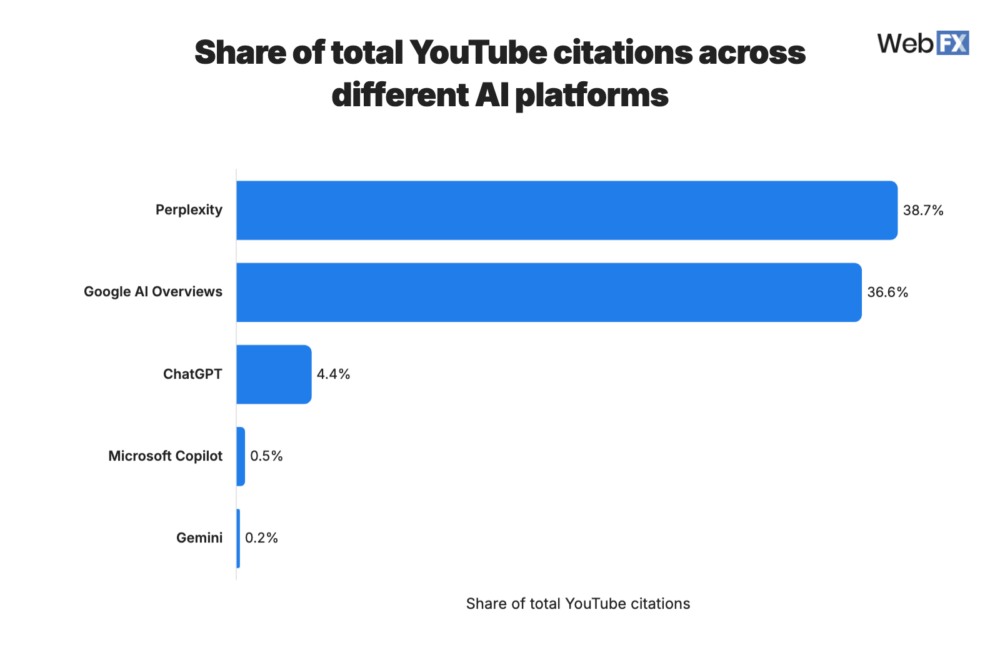
What this means for businesses is expanding to multi-modal marketing.
When producing non-commodity content, for example, consider how your company can reformat or support that topic with images, videos, PDFs, or something else in order to gain additional visibility.
Google highlights this strategy as well, stating, “our generative AI search features can bring in relevant images and video, which means more opportunities for your website to appear beyond web page links.”
5. Data activation
Generative AI in search has increased the demand (and reward) for businesses that can activate their internal data across marketing campaigns.
When it comes to internal data, there is a massive amount to leverage, including:
- Website analytics
- Customer data platform (CDP)
- Call tracking software
- Email management software
- CRM
Companies can activate this data in a variety of ways, including:
- Informing ad targeting and bidding via CDP and CRM data
- Surfacing non-commodity content ideas via CRM data
- Personalizing on-site experiences via CDP and CRM data
- Prioritizing marketing spend based on the combined dataset
As businesses lean into advertising across AI search experiences (the Interactive Advertising Bureau predicts a 9.5% increase in U.S. ad spend this year), it’s become imperative for companies to leverage their data in order to achieve better returns.
At WebFX, we’ve seen the impact of this strategy across our client base. When our clients connect and activate their data (which we help them do through our RevenueCloudFX platform), companies consistently see a:
- 20% increase in their return on investment
- 15% cost-per-lead reduction in the first six months
- 15% increase in leads in the first six months
That’s a massive impact on a company’s advertising performance, but also business performance, which is why we recommend prioritizing data activation against the backdrop of generative search.
Get discovered in AI search with WebFX
Generative AI in search is here to stay, and now is the time to start scaling your visibility across generative search experiences, whether in Google, ChatGPT, or Bing.
At WebFX, we’ve been practicing generative engine optimization since ChatGPT’s release and have helped companies across industries and business models grow their visibility, leads, and revenue from AI search.
Discover how our award-winning team can help your business do the same by contacting us online today to speak with a strategist or browsing our AI search optimization services!
-
 Sarah Berry is a Lead SEO Consultant at one of the largest digital marketing agencies in the USA — WebFX. With more than 10,000 hours of experience, she offers practical insights and strategies to grow your digital revenue. Her work has been cited by Michigan State University, Business Insider, and Ars Technica. When she isn’t polishing her Time Magazine Person of the Year Award, she’s spending time with her flock of ducks. View full profile
 -

WebFX is a full-service digital marketing agency delivering revenue-driving strategies across online advertising, SEO and AI search optimization, and digital marketing. Backed by 1,100+ client reviews, a 4.9-star rating on Clutch, and proprietary revenue-tracking technology, our team helps businesses grow visibility and revenue across platforms, from Google to ChatGPT to LinkedIn. Discover how our expert team and revenue-accelerating tech can drive results for you. Learn more
Try our free Marketing Calculator
Craft a tailored online marketing strategy! Utilize our free Internet marketing calculator for a custom plan based on your location, reach, timeframe, and budget.
Plan Your Marketing Budget
Table of Contents
- What is generative AI in search?
- Where is generative AI used in search?
- How does bringing generative AI to search change marketing?
- Why prioritize generative search as a marketing channel?
- 5 areas marketers need to prioritize when it comes to generative AI search
- Get discovered in AI search with WebFX
Share this article


See AI Marketing in Action
Explore how WebFX helped a regional brand get discovered in AI search experiences — proving what’s possible with today’s AI-driven marketing!
Try our free Marketing Calculator
Craft a tailored online marketing strategy! Utilize our free Internet marketing calculator for a custom plan based on your location, reach, timeframe, and budget.
Plan Your Marketing Budget
What to read next