The digital marketing strategies that drove growth a few years ago aren’t necessarily the ones that will win in 2027. AI is reshaping how buyers discover, research, and choose businesses, and with it the future of marketing. That’s challenging some long-standing assumptions about what makes marketing effective.
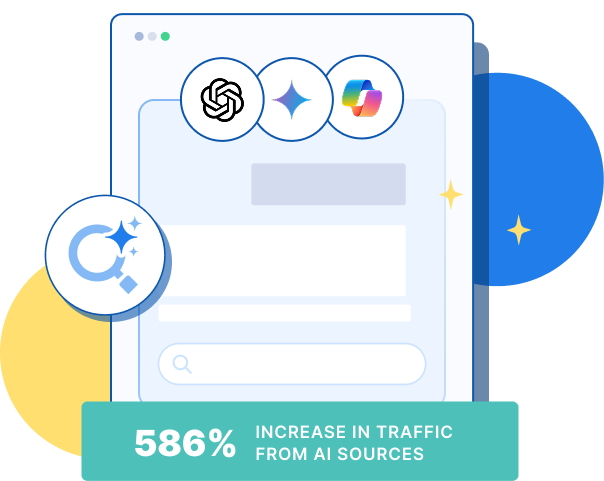
The shift is already showing up in the data. WebFX’s analysis of 2.3 billion website sessions found that generative AI traffic grew 796% in two years, and those visitors converted at about 1.2 times the rate of organic search visitors.
We sat down with five of our senior strategists to unpack how AI is changing marketing, what they’re rethinking for 2027, and what they’re recommending instead. With 30 years of experience helping businesses navigate shifts in digital marketing, our team is seeing these changes firsthand.
5 Shifts to Make as AI Changes How Buyers Research and Choose in 2027
As AI changes how buyers research and choose, here are five shifts our strategists say are worth making in 2027:
Use these firsthand insights to pressure-test your current strategy, uncover opportunities you may be overlooking, and make smarter decisions about where to focus your marketing efforts in 2027.
1. Website traffic is no longer the north-star metric for marketing success
The old playbook: More website traffic means better marketing performance.
For years, traffic has been one of the go-to metrics for measuring digital marketing success. More visitors meant more opportunities to generate leads and sales.
But as buyers increasingly turn to AI to research their options, website traffic alone tells less of the story. It’s one of the clearest ways AI is changing how marketing performance gets measured.
As Samm S., Senior Ongoing Strategy Consultant at WebFX, explains, traffic can still help us understand individual page performance and website experience, but it shouldn’t be the north-star metric for digital marketing success.
Expert insights from
Samm S.Senior Ongoing Strategy Consultant at WebFX
“We should be looking at how can we build and verify our brand reputation to solidify consumers’ trust versus how many monthly visits did we have in the last quarter or the last year to date.”
Buyers are forming opinions about brands and deciding who to trust before they ever reach a website. And our data backs up the need to look beyond visits.
According to WebFX research, visitors referred by generative AI converted at approximately 1.2 times the rate of traditional organic search visitors. While AI accounted for just 0.18% of total sessions, those visitors were more likely to take a measurable action once they arrived.
Visitors referred by generative AI converted at approximately 1.2 times the rate of traditional organic search visitors.
Fewer website visits don’t automatically mean less business opportunity. What matters is who’s visiting, how ready they are to act, and whether your marketing is influencing their decision along the way.
What we’re doing instead: Measuring what drives revenue, not just visits
At WebFX, connecting marketing performance to real business growth isn’t a new priority. It’s been central to how we’ve approached digital marketing for years.
It’s also why we developedRevenueCloudFX, our proprietary revenue marketing platform, to connect marketing activity with CRM, customer, and sales data. Rather than stopping at clicks, traffic, or leads, we can get a clearer picture of which marketing efforts contribute to actual customers and revenue.
As AI makes the buyer journey more complex, that visibility is becoming even more valuable.
For your 2027 strategy, consider four questions:
Are we attracting the right visitors? Look at lead quality, conversion rates, and revenue alongside traffic trends to understand whether you’re reaching people likely to become customers.
Which marketing efforts are driving revenue? Connect marketing data with CRM and sales outcomes to better understand which channels and campaigns contribute to your bottom line.
Are we building demand before buyers visit? Track branded search, AI visibility, and reputation signals to understand how buyers are discovering and evaluating your business.
Are we making the most of the traffic we earn? Identify which pages and experiences generate qualified opportunities, and prioritize improvements that help turn more visitors into customers.
Traffic still matters, especially when diagnosing changes in search visibility or website performance. But it needs context.
Measuring the metrics that affect your bottom line.
Are you interested in custom reporting that is specific to your unique business needs? Powered by RevenueCloudFX, WebFX creates custom reports based on the metrics that matter most to your company.
Our recommendation: Before making major strategy changes in response to declining traffic, look at what’s happening further down your funnel. Are qualified leads increasing? Are conversion rates improving? Which channels are contributing to actual sales?
Your next growth opportunity may not be getting more visitors. It may be getting more revenue from the marketing you’re already doing.
2. The easiest marketing channels to measure aren’t always the biggest revenue drivers
The old playbook: Invest more in the marketing channels with the clearest attribution and most defensible ROI.
When it’s time to defend your marketing budget, having clear numbers makes the conversation easier.
That’s one reason paid search has long been a go-to investment for businesses. You can see what you spent, how many clicks and conversions you generated, and how those results translate into leads or revenue.
But what happens when some of the channels influencing buyers are also the hardest to measure?
Lauren B., Lead Ongoing Strategy Consultant at WebFX, has noticed an interesting pattern in the marketing budgets she reviews.
Expert insights from
Lauren B.Lead Ongoing Strategy Consultant at WebFX
“I tend to see that companies are overinvesting in paid search, not necessarily because it performs best, but because it is most measurable and defensible when it comes time to review budgets or report back on year-to-date results.”
It’s an important distinction. Are we investing in a channel because it’s driving the most value, or because it’s the easiest to prove?
AI is changing how marketing gets measured, too, which makes that question increasingly relevant.
Buyers are using AI platforms to research solutions, compare providers, and build shortlists. But unlike traditional paid search, it’s not always possible to trace those interactions directly to a lead or sale.
That doesn’t mean those interactions aren’t influencing revenue.
And it creates a potential risk for businesses that continue allocating most of their budgets based on the channels with the cleanest attribution.
Lauren also cautions against pulling back on traditional SEO in response to declining organic traffic. SEO and AI search visibility are closely connected, with foundational investments in content, technical optimization, and authority helping support both.
Businesses that underinvest in those fundamentals today may face a much steeper climb as AI search continues to evolve.
What we’re doing instead: Investing in long-term growth, not just immediate attribution
At WebFX, we’re looking at marketing budgets through the lens of where businesses have the greatest opportunities to reach buyers and generate revenue, even when attribution isn’t perfect.
That doesn’t mean shifting budget away from paid search simply because AI is growing. Paid advertising remains a valuable channel for capturing demand and generating measurable results.
It means balancing those immediate opportunities with investments that build visibility, trust, and demand over time.
One way we’re helping businesses make more informed decisions about AI search investments is throughOmniSEO®, our AI search visibility platform.
OmniSEO® helps us measure an important part of the buyer journey that traditional analytics can miss: How often brands appear in AI-generated answers, which prompts trigger those mentions, where competitors are being recommended instead, and which content earns citations.
That gives our strategists more data to evaluate AI search performance, identify visibility gaps, and prioritize opportunities rather than treating AI as an investment we simply have to trust will pay off.
Make Smarter AI Search Investments With OmniSEO®
Get the data to see where you’re visible, where you’re losing to competitors, and what to prioritize next.
Combined with the customer and revenue insights we track throughRevenueCloudFX, we’re working toward a more complete picture of marketing performance, from early AI discovery to the leads and revenue generated further down the funnel.
There’s still no perfect attribution model for every AI-assisted interaction. But we don’t have to wait for perfect measurement to start making smarter investment decisions.
As Lauren points out, businesses have faced this challenge before. When companies delayed investing in SEO and later needed to establish an organic presence quickly, they couldn’t make up years of progress in a few months.
The same principle applies to AI search: It’s easier to keep up than to catch up.
For your 2027 marketing budget, consider:
Are we investing based on performance or attribution? Review whether your channel allocations reflect actual business outcomes or simply where reporting is most straightforward.
Are we giving AI search visibility enough attention? Evaluate how your business appears in AI-generated answers and where you have opportunities to improve visibility among prospective buyers.
Are we maintaining our SEO foundation? Continue investing in quality content, technical SEO, and authority-building that support both traditional and AI search visibility.
Are we balancing short-term and long-term growth? Make room for channels that generate immediate leads alongside investments that strengthen your ability to compete in the future.
And remember, you don’t necessarily need to treat AI search as an entirely separate budget line item. Many of the investments that improve your organic search presence can also help strengthen your visibility across AI platforms.
Our recommendation: Before finalizing your 2027 marketing budget, challenge how you’re allocating resources. Look for areas where you’re investing heavily because the results are easy to measure, while potentially overlooking channels that influence buyers earlier in their journey.
The goal isn’t to spend more on every emerging opportunity. It’s to make sure your budget reflects how customers are actually finding and choosing businesses, not just what your attribution reports can easily capture.
3. Your website is no longer where every buyer’s research begins
The old playbook: Buyers visit your website to learn about your business, research their options, and decide whether you’re the right fit.
Think about how buyers researched a major purchase just a few years ago. They’d search Google, visit several websites, read blog posts and service pages, and gradually narrow down their options.
Today, much of that research can happen before they ever reach your site.
Buyers are turning to AI platforms like ChatGPT and Google AI Mode to compare solutions, evaluate providers, and build shortlists. By the time they click through to your website, they may already know what they need and which businesses they’re considering.
Rachael D., Ongoing Strategy Consultant at WebFX, sees this as one of the biggest changes businesses need to account for in their 2027 strategies.
Expert insights from
Rachael D.Ongoing Strategy Consultant at WebFX
“The buyer in 2027 that lands on your website is more engaged than the buyer in 2024. They’re more educated. They already understand the market way more strongly than the buyer in 2024 did.”
While that doesn’t mean every AI-referred visitor is ready to buy, it suggests that AI search can bring visitors who are further along in their research and more prepared to take action.
That’s another way AI is changing marketing by changing the job your website needs to do.
Instead of simply introducing buyers to your products or services, your website increasingly needs to confirm why your business deserves a spot on their shortlist and give them the confidence to choose you.
But there’s another important piece to Rachael’s perspective: If your business isn’t showing up during those earlier AI-assisted research moments, you may never get the chance to make your case.
What we’re doing instead: Building visibility before the visit and confidence once buyers arrive
At WebFX, we’re approaching the buyer journey as something that extends well beyond a website visit. That means helping businesses earn visibility during AI-assisted research while making their websites more effective at converting informed buyers.
For your 2027 strategy, there are two areas worth prioritizing.
Make sure you’re part of the conversation before buyers visit.
Start by understanding how AI platforms represent your business when prospective customers research their options.
Using tools likeOmniSEO®, we can track relevant AI prompts, monitor brand mentions and citations, and identify where competitors are earning visibility.
That helps inform where businesses need stronger content, authority, or brand presence to compete for consideration earlier in the buying journey.
Give informed buyers the answers they need to choose you.
Once someone reaches your website, make it easy for them to validate what they’ve already learned and move forward.
Consider whether your most important pages provide:
Clear differentiators: Why should buyers choose your business over the other providers they’re considering?
Proof of results: Do you have case studies, customer stories, reviews, or data that demonstrate your expertise?
Pricing and investment guidance: Can buyers understand what to expect financially and what influences the cost?
Helpful comparisons: Are you answering the questions buyers ask when weighing different solutions or providers?
A clear next step: Can someone who’s ready to talk, request a quote, or make a purchase do so without unnecessary friction?
This doesn’t mean introductory or educational content no longer has a place. Buyers still have questions at every stage, and your website should support them.
But it does mean businesses need to think more carefully about what visitors already know when they arrive.
Our recommendation: Review your highest-value service or product pages from the perspective of a buyer who’s already researched your industry and shortlisted three providers. What would they need to see to confidently choose you?
Your website may no longer be where every buyer’s journey begins. But it can still be where they decide to become your customer.
4. Branded search is no longer just about buyers who already know you
The old playbook: Treat branded search as a way to capture existing demand from people who already know your business.
When businesses think about growing their search visibility, they often focus on the keywords potential customers use to find products or services.
For example, an electrical company might prioritize ranking for “electricians near me” or “electrical repair services.”
Those searches are valuable, but they only tell part of the story.
Think about what happens when someone discovers your business through a YouTube ad, an AI recommendation, or a social media post. They might not convert immediately. Instead, they search for your business by name to learn more.
That’s branded search, and it’s an important opportunity to turn initial interest into a customer.
AI is accelerating this pattern. When a buyer gets a recommendation in ChatGPT or Google AI Mode, their next step may be to search for that business by name to check it out.
Rendell W., Senior Ongoing Strategy Consultant at WebFX, encourages businesses to think more intentionally about what happens during that step of the buyer journey.
Expert insights from
Rendell W.Senior Ongoing Strategy Consultant at WebFX
“A lot of our marketing is going to lead to people searching your business name to get more information. So, when it comes to branded search, there are a lot of tactics we can do to make the most of that experience.”
Whether someone first encounters your business through paid advertising, organic search, AI, or connected TV, that interaction may eventually lead them to research your brand. What they find matters.
Your reviews, search results, website messaging, and reputation can all influence whether someone feels confident choosing you over a competitor.
Getting discovered is only part of the job. You also need to win the evaluation that follows.
What we’re doing instead: Connecting brand visibility to the full customer journey
At WebFX, we’re looking beyond individual channels to understand how buyers discover businesses, research their options, and ultimately become customers.
As Rendell emphasizes, that starts with understanding your audience and the touchpoints influencing their decisions.
WithRevenueCloudFX, we can bring marketing, CRM, and customer data together to better understand the interactions that contribute to conversions and revenue. That context helps inform where businesses should invest to reach the right audiences and strengthen the journey from initial awareness to purchase.
For your 2027 strategy, consider four opportunities:
Audit your branded search experience. Search for your business name on Google and relevant AI platforms. What do prospective customers see? Are your services, differentiators, and reputation represented accurately? What AI platforms say about your brand can shape that experience, too.
Strengthen your reputation. Review customer ratings, testimonials, third-party mentions, and other trust signals that buyers encounter when evaluating your brand.
Make your differentiators clear. Ensure your website quickly communicates who you serve, what makes your business different, and why customers should choose you.
Understand what drives branded interest. Use customer journey data to identify the marketing channels and touchpoints contributing to brand discovery, searches, and eventual conversions.
And don’t overlook the connection between branded and nonbranded marketing.
An effective paid ad, helpful piece of content, or AI recommendation may not generate an immediate conversion, but it can introduce someone to your business and prompt them to research your brand later.
That’s why evaluating each channel in isolation can leave out important parts of the customer journey.
Our recommendation: Put yourself in the shoes of someone who’s heard about your business but isn’t ready to buy. Search your brand name, review the results, and identify anything that might make a prospective customer hesitate.
You’ve already earned their interest. Make sure their next interaction gives them a reason to choose you.
5. More content doesn’t always mean better marketing results
The old playbook: Publish more content to increase search visibility, attract traffic, and generate leads.
AI is changing how marketing content gets made. Businesses can now publish dozens of articles in the time it once took to produce a handful.
But just because you can publish more content doesn’t mean you should.
When everyone has access to the same AI tools, producing another article that repeats what’s already available online does little to differentiate your business. And publishing more content doesn’t guarantee more traffic, better rankings, or additional revenue.
Kelsey L., Senior Ongoing Strategy Consultant at WebFX, sees high-volume AI-generated informational content as one of the more overhyped strategies businesses are investing in.
Kelsey’s advice is to put more emphasis on content that offers something competitors can’t easily replicate.
Expert insights from
Kelsey L.Senior Ongoing Strategy Consultant at WebFX
“The more you can incorporate case studies and data and research that you’ve done, and anything that’s truly unique to you guys and your site is going to be helpful because it helps us stand out amongst a crowd where everybody might be saying the same thing.”
That doesn’t mean informational content is no longer valuable. Kelsey emphasizes that high-quality, high-intent content remains essential for helping buyers evaluate solutions and make purchase decisions.
But as businesses expand into broader educational topics, they need to give readers a reason to choose their content over the countless other resources covering the same questions.
The opportunity isn’t to outpublish your competitors, but to create content they can’t easily reproduce.
What we’re doing instead: Prioritizing original expertise and business impact
At WebFX, we’re putting greater emphasis on content that brings something new to the conversation, whether that’s original research, firsthand experience, expert perspectives, or real examples of strategies in action. Content like this may also give AI platforms something distinctive to cite, which is another reason we prioritize it.
That also means being more intentional about which content deserves investment in the first place.
Rather than measuring success by how many articles make it onto the publishing calendar, we’re focused on creating resources that help businesses make decisions and contribute to meaningful marketing outcomes.
For your 2027 content strategy, consider four priorities:
Start with high-intent opportunities. Prioritize content that answers the questions buyers ask when comparing solutions, evaluating providers, and preparing to purchase. Think pricing guides, comparisons, case studies, and service-specific resources.
Bring something original to the conversation. Incorporate proprietary data, subject-matter expert insights, customer examples, or lessons learned from firsthand experience. Give readers information they can’t find in every competing article.
Improve what you’ve already published. Audit existing content for opportunities to strengthen its usefulness, add new insights, and better align it with what buyers need today. A substantial update may be more valuable than another article covering the same topic.
Measure content by its contribution to growth. Look beyond publishing volume and traffic to evaluate qualified leads, assisted conversions, and revenue opportunities influenced by your content.
AI can still play a valuable role in content workflows, from supporting research and organization to helping teams work more efficiently. The important distinction is that efficiency shouldn’t come at the expense of original thinking, accuracy, or usefulness.
And not every article needs a proprietary study or extensive expert interview. But every piece should have a clear purpose and give its intended audience something worth reading.
Our recommendation: Before adding another topic to your 2027 content calendar, ask what your business can contribute that isn’t already widely available. If you can’t identify a compelling answer, consider a different angle, bring in a subject-matter expert, or invest in improving an existing resource.
Your Revenue Growth Starts Here
Tell us about your business, and we’ll create a custom plan to grow your traffic, leads, and predictable revenue.
Build a 2027 digital marketing strategy for AI-driven buyers
Your 2027 strategy doesn’t need to start from scratch. But with AI reshaping how buyers find and choose businesses, it’s worth taking a closer look at what’s working, what’s changed, and where your marketing dollars could be working harder.
Is your current marketing strategy built for how your customers buy today, or ready for the future of marketing?
If you’re questioning where to invest, which channels deserve more attention, or how to connect your marketing efforts to revenue, our team at WebFX can help.
With 30+ years of experience, our expert strategists and proprietary technology, including RevenueCloudFX and OmniSEO®, help businesses identify growth opportunities, make smarter marketing investments, and turn those investments into measurable results.
Ready to get more revenue from your marketing in 2027?Contact our team for a free strategy consultation to discuss your goals, review your current approach, and explore where WebFX can help you grow.
Try our free Marketing Calculator
Craft a tailored online marketing strategy! Utilize our free Internet marketing calculator for a custom plan based on your location, reach, timeframe, and budget.
Craft a tailored online marketing strategy! Utilize our free Internet marketing calculator for a custom plan based on your location, reach, timeframe, and budget.













 Emily Carter is the Sr. Content Team Lead at WebFX, where she leads the creative team behind the company’s content. With an M.S. in Digital Marketing and 10+ years of experience, she’s written and reviewed hundreds of articles on marketing, SEO, and tech. These days, her focus is on content strategy and operations, with a special interest in the systems, processes, and people that help great content come to life. Her work appears across WebFX and its brands, including SEO.com, Nutshell, and TeamAI, and has been featured by Social Media Today, HuffPost, and more. Outside the office, she’s usually road-tripping, hiking, or planning her next national park adventure. View full profile@emcarter16