


Contents
- TL;DR: Key considerations when choosing between GEO services and in-house GEO
- What is GEO, and why does this decision matter?
- In-house GEO vs agency GEO: Key differences
- Pros and cons of keeping GEO in-house
- Pros and cons of hiring a GEO agency
- When should you choose in-house GEO?
- When should you choose an agency GEO approach?
- What does a hybrid GEO model look like?
- How should you measure GEO success in either approach?
- Which option is better for AI visibility?
- How to decide between in-house GEO and an agency
- FAQ: In-house GEO vs. agency GEO
- Get the right GEO support for your team

In-House GEO vs. agency GEO: Which is better?
The better choice depends on how much GEO expertise, reporting capacity, and execution bandwidth your team already has. If your business needs quicker traction and outside guidance, agency support usually makes more sense, while businesses with a strong internal SEO and content foundation may get more value from building GEO in-house.
If you are trying to decide between building GEO internally or hiring a GEO agency, the right choice depends on your team’s expertise, capacity, and AI visibility goals. In-house GEO means your team owns the strategy, execution, and reporting. Agency GEO means partnering with specialists who already have the workflows, testing process, and cross-platform experience to move faster.
The better option comes down to one question: Do you already have the people, process, and time to earn AI visibility consistently, or do you need outside support to build momentum faster?
This guide compares in-house GEO vs. agency GEO across control, cost, speed, scalability, measurement, and long-term fit so you can choose the approach that best supports your business.
- TL;DR: Key considerations when choosing between GEO services and in-house GEO
- What is GEO, and why does this decision matter?
- In-house GEO vs agency GEO: Key differences
- Pros and cons of keeping GEO in-house
- Pros and cons of hiring a GEO agency
- When should you choose in-house GEO?
- When should you choose an agency GEO approach?
- What does a hybrid GEO model look like?
- How should you measure GEO success in either approach?
- Which option is better for AI visibility?
- How to decide between in-house GEO and an agency
- FAQ: In-house GEO vs. agency GEO
TL;DR: Key considerations when choosing between GEO services and in-house GEO
The decision usually comes down to expertise, resources, urgency, level of support needed, and budget structure. If you need fast execution and stronger reporting right away, GEO services often make more sense. If you already have a strong internal SEO and content function, in-house GEO may be a better fit.
| Factor | In-house GEO | GEO services |
| What it is | Your internal team owns GEO strategy, implementation, testing, and reporting. | An external agency leads or supports GEO strategy, implementation, reporting, and optimization. |
| How it works | GEO gets layered into your existing SEO, content, and analytics workflows. | The agency audits your current presence, builds a roadmap, and manages or guides execution. |
| Best for | Teams with strong internal SEO, content, analytics, and technical support. | Teams that want faster ramp-up, outside expertise, or more scalable support. |
| Equipment or expertise needed | Content strategy, technical SEO, analytics setup, entity and citation knowledge, AI visibility monitoring, and internal bandwidth. | Clear internal point of contact, stakeholder access, approval process, and willingness to collaborate on implementation. |
| Level of action needed | High. Your team must plan, publish, test, monitor, and report consistently. | Moderate. Your team still needs to approve, share brand insight, and help implement where needed. |
| Cost | Salary, benefits, tools, training, and opportunity cost. | Retainer, project, or consulting fees with less internal staffing overhead. |
| Other considerations | Stronger long-term ownership, but slower ramp-up if the team lacks GEO experience. | Faster access to tested workflows, but success depends on choosing the right partner. |
Choose in-house GEO when you already have the people who can turn strategy into output every month. That usually means an internal team that can update content, improve site structure, monitor AI mentions, and report on performance without adding GEO to an already overloaded roadmap. GEO services make more sense when you need to build traction sooner or when your current team already has full ownership over SEO, paid media, reporting, and content production. For example, if your team knows AI visibility matters but still needs a repeatable process for prompt testing, citation tracking, and content prioritization, an agency can shorten that learning curve.When to choose in-house GEO
When to choose a GEO agency
A simple way to pressure-test your fit is to look at your current operating model. If your team struggles to keep core SEO work moving, in-house GEO will likely move slowly too. If your team already runs technical SEO, publishes consistently, and tracks performance cleanly, keeping GEO inside the business may be a better long-term investment.
What is GEO, and why does this decision matter?
Generative engine optimization, or GEO, is the practice of optimizing your website content to appear in generative AI search results, including Google AI Overviews, ChatGPT, Claude, and Perplexity. The goal is not just to rank in traditional search, but to increase visibility in AI-generated responses and cited answer surfaces.
Google recommends the same core practices that strong SEO already depends on, including crawlability, internal links, text-based content, helpful media, and structured data that matches visible page text.
At the same time, AI optimization still requires more than publishing a few pages and hoping they get picked up. You need content that AI systems can discover, understand, trust, and cite. You also need a measurement process that combines manual checks and specialized tools, since no single dashboard shows performance across every platform.
That is why choosing the right approach to GEO matters. The work itself may follow familiar SEO principles, but the operating rhythm is different. You need tighter reporting, stronger prioritization, and a clearer process for testing how your brand appears in AI-driven results.
In-house GEO vs agency GEO: Key differences
The biggest differences show up in control, speed, learning curve, and measurement maturity. Both models can work. The better fit depends on how much capability you already have versus how quickly you need to close the gap. Understanding the typical generative engine optimization cost can also help clarify whether building an internal team or partnering with an agency makes more financial sense.
| Dimension | In-house GEO | Agency GEO |
| Control | Highest internal control over messaging, workflow, and prioritization | Shared control through a partnership model |
| Execution speed | Slower at first if GEO capability is new | Faster ramp-up with established process |
| Learning curve | Steeper because the team builds the playbook while executing | Lower because the agency brings tested workflows |
| Specialized expertise | Depends on current team skill set | Usually broader and deeper across AI search surfaces |
| Scalability | Limited by current headcount and internal priorities | Easier to scale across content and initiatives |
| Reporting maturity | Varies based on analytics and AI tracking setup | Often stronger earlier because reporting systems already exist |
| Internal lift | High | Moderate |
The next two sections break these differences down. First, we’ll look at what in-house GEO actually requires. Then we will look at what you are really buying when you hire an agency.
In-house GEO
What is in-house GEO?
In-house GEO is when your business owns the full strategy and execution process internally. Your SEO lead, content team, demand generation leader, or digital marketing manager usually owns it, often with help from technical SEO, analytics, web, and content contributors.
This approach works best when AI optimization is treated like an ongoing marketing discipline. Someone has to own the roadmap, the publishing priorities, the monitoring process, and the reporting story.
How does in-house GEO work?
In-house GEO usually starts by layering AI visibility work into your existing SEO program. That means identifying high-value prompts and search journeys, improving answer-focused content, strengthening supporting pages, updating structured data where it makes sense, and tracking where your brand gets mentioned or cited.
Google recommends keeping important content in textual form, supporting that content with strong imagery or video when relevant, and maintaining structured data that matches visible page content. But you also need to start with SEO fundamentals and then build toward AI-specific tactics like visibility tracking, clear content structure, E-E-A-T signals, and citation-friendly formatting.
A simple in-house workflow often looks like this:
- Audit which prompts and AI surfaces matter most.
- Improve existing pages for direct answers and clearer structure.
- Publish supporting content for unanswered or weak areas.
- Track mentions, citations, and AI referral patterns monthly.
- Adjust based on what gets cited and what does not.
What do you need for in-house GEO work?
You need more than one motivated marketer. A workable in-house GEO program usually needs:
- A strategist who can connect AI visibility work to business goals.
- Writers or editors who can produce direct, well-structured content.
- Technical support for indexing, internal linking, markup, and site updates.
- Analytics support to track AI referrals, assisted conversions, and branded search lift.
- Time to test prompts, review citations, and refine content repeatedly.
That is the real barrier for many teams. The challenge for in-house teams is creating enough sustained output and measurement to improve AI visibility over time.
How much does in-house GEO cost?
In-house GEO cost usually shows up in four buckets:
- People: Salaries, benefits, and the time your SEO, content, analytics, and technical team spend planning, implementing, and reporting on GEO work.
- Tools: Costs for platforms that support AI visibility tracking, keyword and prompt research, analytics, content optimization, technical audits, and reporting.
- Training: Time and budget spent helping your team learn GEO strategy, AI search behavior, measurement methods, and platform changes.
- Opportunity cost: The work your team delays, deprioritizes, or does more slowly because internal resources are being redirected toward GEO.
The hidden cost is slower progress while your team learns. If your internal team is strong, that learning investment may pay off in long-term ownership. If your team is already stretched thin, the same setup can slow both SEO and GEO progress at the same time.
Agency GEO
What are GEO services?
GEO services are outsourced support for improving your brand’s visibility in AI-generated answers and related search experiences. Depending on the arrangement, the agency may handle strategy, content recommendations, technical guidance, reporting, testing, or full execution.
The best GEO services do not replace SEO. They extend it into AI answer environments that reward strong structure, authoritative content, and clear source signals.
What do GEO services include?
GEO services typically include:
- AI visibility audits and competitor benchmarking
- Prompt and query research
- Content recommendations or content production
- Technical recommendations tied to crawlability, internal links, and markup
- Brand mention, citation, and share-of-voice tracking
- Reporting that connects visibility work to traffic, engagement, and pipeline
If you choose a GEO agency over in-house GEO, be sure to ask the agency whether they offer these capabilities, to ensure you choose an effective one. Ask agencies questions like how they measure mentions and citations, what platforms they track, and how they prove AI visibility and ROI.
How does agency GEO work?
Agency GEO usually starts with a diagnostic phase. The agency looks at your existing content, AI visibility baseline, competitive presence, technical foundation, and reporting setup. Then it builds a roadmap based on your priorities.
From there, the relationship often follows a simple pattern. The agency identifies what to improve, your team reviews and approves, and then either the agency or your internal team implements the changes. Reporting closes the loop so you can see whether mentions, citations, and AI referrals are improving.
This approach works especially well when your team needs faster progress without building every workflow from scratch.
What do you need for agency GEO?
You still need internal support. Agency GEO does not mean zero internal effort. You need a point person who can approve priorities, share brand context, align stakeholders, and help implement changes when the agency is not doing the publishing directly.
The smoother your approvals and implementation process, the more value you will get from the partnership. Agencies move fastest when they do not have to wait weeks for access, feedback, or simple publishing decisions.
How much do GEO services cost?
Agency GEO costs usually fall into three main options:
- Retainer: A recurring monthly fee for ongoing GEO support, such as strategy, content recommendations, monitoring, reporting, testing, and continuous optimization.
- Project: A one-time or short-term cost for a defined scope of work, such as an AI visibility audit, GEO roadmap, content refresh initiative, or measurement setup.
- Strategy engagement: A focused consulting arrangement centered on planning and direction, such as identifying priorities, building a GEO framework, defining reporting methods, and guiding your internal team on execution.
The total cost depends on how much implementation support you need and how wide the scope is. The main advantage is that you are paying for a system, not just labor hours.
A strong GEO agency already has the workflow, testing rhythm, and reporting framework. That can reduce internal lift and shorten the time between strategy and execution.
Pros and cons of keeping GEO in-house
Keeping GEO in-house gives your team more control, stronger brand alignment, and long-term internal capability. The tradeoff is that your team also needs enough time, skill, and execution capacity to keep GEO moving consistently. Here’s a breakdown of the pros and cons of keeping GEO in-house:
| Benefits | Limitations |
| More control: Your team manages priorities, approvals, and messaging. | More internal lift: GEO adds work to your existing team. |
| Stronger alignment: GEO can stay closely tied to campaigns, launches, and business goals. | Steeper ramp-up: Your team needs time to build process and confidence. |
| Long-term capability: Your team keeps the knowledge and improves over time. | Slower scale: Progress depends on available headcount and bandwidth. |
You can tell in-house GEO is working when content updates happen consistently, AI mentions improve over time, and your team can report clearly on progress.
Pros and cons of hiring a GEO agency
Hiring a GEO agency gives you faster access to expertise, structure, and scalable support. The tradeoff is that you share some control and need a partner that communicates clearly and understands your business. Here’s a look at the pros and cons of hiring a GEO agency:
| Benefits | Limitations |
| Faster execution: Agencies start with established workflows. | Ongoing cost: You are paying for outside support. |
| Specialized expertise: Agencies bring broader experience across AI search environments. | Shared control: Your team still needs to align on priorities and approvals. |
| Better scalability: Agencies can often support more optimization and reporting at once. | Partner-dependent quality: Results depend on agency fit and clarity. |
| Less internal lift: Your team does not need to build every process from scratch. | Needs collaboration: Success still depends on communication and access. |
You can usually tell if your GEO agency is doing a good job because the work is visible, the reporting is clear, and the team can explain what changed and why it matters.
When should you choose in-house GEO?
Choose in-house GEO when you already have the foundation to support it. That usually means your team can publish consistently, update important pages quickly, work with analytics cleanly, and tie content changes back to demand generation goals.
In-house GEO is a strong fit when:
- You already have a capable SEO and content team.
- Your team can support technical updates without a long queue.
- You want GEO to become a long-term internal competency.
- Your urgency is moderate rather than immediate.
- You can commit to ongoing testing and reporting.
This path usually works best for companies that want to prioritize long-term ownership over speed. It is also a strong fit when leadership wants the GEO playbook embedded into the internal marketing function over time.
When should you choose an agency GEO approach?
Choose the GEO agency route when your team needs to move faster, fill skill gaps, or get support managing the workload. This is often the better fit for lean teams that know AI visibility matters but do not yet have a repeatable process for improving it.
Agency GEO is a strong fit when:
- You need faster execution and do not want a long ramp-up period.
- Your SEO or content team is already at capacity.
- You want stronger reporting without building the system internally first.
- You need outside perspective on what earns AI mentions and citations.
- You want to scale optimization across more pages or prompts faster.
This approach also fits companies that need to show progress to leadership sooner.
Each of those scenarios maps to a specific advantage. Exploring the benefits of outsourcing GEO in more detail can help you connect your specific situation to the outcomes an agency partnership is most likely to deliver.
What does a hybrid GEO model look like?
A hybrid GEO model combines agency strategy with internal execution, or agency-led setup followed by a gradual handoff to the internal team. For many businesses, this is the most practical structure.
One common version looks like this: the agency handles the initial audit, roadmap, tracking setup, and early optimization priorities, while your internal team handles publishing, approvals, and SME input. Another version starts with the agency doing most of the work, then shifts ownership to the internal team once the process becomes repeatable.
This model works well because it balances speed with long-term ownership. You get outside expertise where you need it most, while still building internal muscle over time.
How should you measure GEO success in either approach?
You should measure GEO success in layers. Start with presence metrics, then add engagement metrics, then connect those to impact. Your AI visibility needs to improve before revenue attribution fully catches up.
Start with these three categories:
- Presence metrics: Brand mentions in ChatGPT, Gemini, and Perplexity, citations in AI Overviews, and share of voice against competitors.
- Engagement metrics: Referral traffic from AI tools, bounce rate from AI visitors, and pages per session from AI-sourced traffic.
- Impact metrics: Leads, revenue, conversion rate, and pipeline influenced by AI referrals.
AI traffic from tools like ChatGPT or Perplexity requires setup in GA4 because those sources do not appear in standard reports by default. That is why reporting maturity matters so much in this decision. You are not just choosing who will do the work. You are choosing who will build and maintain the measurement system behind it.
Here is a practical monthly reporting framework you can use:
- Check target prompts and record which brands are mentioned or cited.
- Track citation frequency and share of voice against key competitors.
- Review AI referral traffic and user quality in GA4.
- Compare assisted conversions, branded search lift, and influenced pipeline over time.
- Summarize the story using the then, now, next framework.
That “then, now, next” method is especially useful for leadership because it shows baseline, progress, and what continued investment could unlock. It turns GEO reporting into a business conversation instead of a visibility-only update.
Which option is better for AI visibility?
Agency GEO is usually better for faster AI visibility gains, while in-house GEO is usually better for long-term internal ownership.
If your business needs quicker progress, broader testing experience, and a more mature reporting process, a GEO agency often gives you that advantage. If your business already has the right team and wants GEO embedded into its long-term operating model, in-house GEO can be the better investment.
The better option is the one your team can execute consistently. AI visibility does not improve because a company chose the more impressive-looking model. It improves because the chosen GEO team can publish, optimize, test, and measure work without stalling.
How to decide between in-house GEO and an agency
Use these questions as a quick decision check:
- Do you need faster progress in AI search?
- Does your team need more GEO-specific expertise?
- Is your current team already working at full capacity?
- Do you need help tracking AI mentions, citations, and referral traffic?
- Would outside support help you scale content updates and optimization faster?
- Would adding GEO internally slow down other marketing priorities?
If you answer yes to most of these questions, a GEO agency can help you move faster, fill skill gaps, and reduce pressure on your internal team.
If you answer no to most of these questions, your team may already have the time, structure, and ability to manage GEO internally.
If your answers are mixed, a hybrid GEO approach may be the best fit because it gives you outside support while still helping your team build internal ownership over time.
This decision is similar to evaluating in-house marketing vs. agency support—your best option depends on your team’s expertise, available resources, and how quickly you need results.
FAQ: In-house GEO vs. agency GEO
Should I do GEO in-house or hire an agency?
Do GEO in-house if you already have strong internal SEO, content, analytics, and technical support. Hire an agency if you need faster execution, stronger reporting, or outside expertise to build momentum sooner.
Can an in-house team handle AI SEO effectively?
Yes, but only if the team can support continuous publishing, optimization, prompt testing, and reporting. In-house GEO works best when it has clear ownership and enough capacity to run consistently.
Is it better to outsource generative engine optimization?
It is often better to outsource generative engine optimization when your team lacks GEO-specific experience or needs results faster. Outsourcing gives you access to tested workflows and can lower the internal lift required to get started.
How do agencies measure GEO success?
Strong agencies measure GEO success through presence, engagement, and impact metrics. That usually includes mentions, citations, AI referral traffic, assisted conversions, and competitive share of voice.
What does a GEO agency actually do?
A GEO agency usually does the following:
- Audits your AI visibility
- Identifies opportunities
- Improves or recommends content and technical changes
- Monitors mentions and citations
- Reports on progress
The best GEO agencies also connect that work to broader business outcomes.
When should I switch from in-house GEO to an agency?
Switch when the internal team cannot maintain momentum, reporting stays weak, or GEO work keeps getting deprioritized behind other marketing needs. A switch also makes sense when leadership expects faster progress than the current team can realistically deliver.
Can I combine an in-house team with a GEO agency?
Yes. A hybrid model often works very well because the agency can provide strategy, structure, and reporting support while your internal team contributes execution, brand knowledge, and subject-matter expertise.
Get the right GEO support for your team
The best GEO approach depends on your goals, resources, team structure, and urgency. If you need faster AI visibility, clearer reporting, or support building the process, GEO services or a hybrid model can create momentum faster.
WebFX is a GEO agency with 30+ years of digital marketing experience and 7+ years investing in AI. Our experts use that experience to help businesses build a system with the right balance of strategy, execution, and reporting.
If you want faster progress in AI search without building every workflow from scratch, explore WebFX’s AI search optimization services to learn more about how we earn clients stronger inclusion in AI-generated answers and higher ROI.
-
 Thaakirah Abrahams is a Lead Editor at WebFX, where she leverages her 5+ years of experience to craft compelling website content. With a background in Journalism and Media studies and certifications in inbound marketing, she holds a keen eye for detail and a talent for breaking down complex topics for numerous sectors, including the legal and finance industries. When she’s not writing or optimizing content, Thaakirah enjoys the simple pleasures of reading in her garden and spending quality time with her family during game nights. View full profile
 -

WebFX is a full-service digital marketing agency delivering revenue-driving strategies across online advertising, SEO and AI search optimization, and digital marketing. Backed by 1,100+ client reviews, a 4.9-star rating on Clutch, and proprietary revenue-tracking technology, our team helps businesses grow visibility and revenue across platforms, from Google to ChatGPT to LinkedIn. Discover how our expert team and revenue-accelerating tech can drive results for you. Learn more

Try our free Marketing Calculator
Craft a tailored online marketing strategy! Utilize our free Internet marketing calculator for a custom plan based on your location, reach, timeframe, and budget.
Contents
- TL;DR: Key considerations when choosing between GEO services and in-house GEO
- What is GEO, and why does this decision matter?
- In-house GEO vs agency GEO: Key differences
- Pros and cons of keeping GEO in-house
- Pros and cons of hiring a GEO agency
- When should you choose in-house GEO?
- When should you choose an agency GEO approach?
- What does a hybrid GEO model look like?
- How should you measure GEO success in either approach?
- Which option is better for AI visibility?
- How to decide between in-house GEO and an agency
- FAQ: In-house GEO vs. agency GEO
- Get the right GEO support for your team
Share this article


See AI Marketing in Action
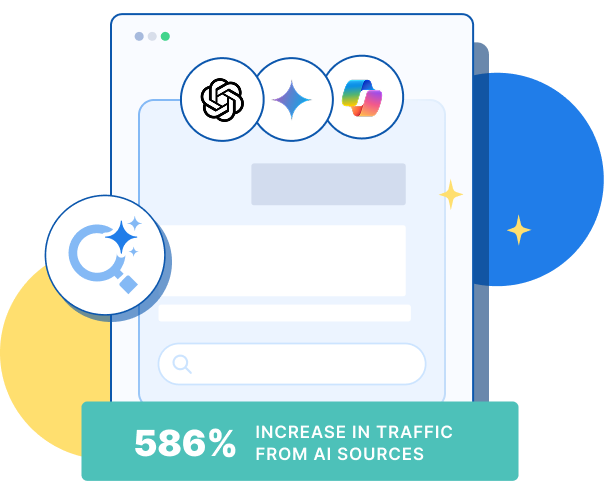
Explore how WebFX helped a regional brand get discovered in AI search experiences — proving what’s possible with today’s AI-driven marketing!
Try our free Marketing Calculator
Craft a tailored online marketing strategy! Utilize our free Internet marketing calculator for a custom plan based on your location, reach, timeframe, and budget.