


Table of Contents
- What is SEO visibility?
- How has search visibility’s definition changed?
- What determines your search visibility?
- Which metrics measure SEO visibility?
- Which dimensions measure search visibility?
- How do you measure search visibility?
- How do I improve my SEO visibility?
- How long does it take to see a difference in AI and SEO visibility?
- Measure (and scale) your search visibility

What is SEO visibility?
SEO visibility (also known as search visibility) measures a site’s visibility across search experiences, including Google, Bing, ChatGPT, Perplexity, and more.
Visibility — it’s what every company is looking to earn online, whether as a mention in a ChatGPT response, a citation in a Google AI Overview, or a link in Bing search results.
Discover the basics of search visibility (and how to improve it) now:
What is SEO visibility?
SEO visibility, also known as search visibility or search engine visibility, measures a brand and its website’s visibility across search experiences, whether on Google, ChatGPT, Bing, or another platform.
How has search visibility’s definition changed?
Search visibility’s definition has changed because of generative search experiences. Now, brands need to understand whether they are ranked, mentioned, or cited in search experiences, which creates new metrics to measure and dimensions to explore.
What determines your search visibility?
Search visibility depends on several factors, including:
| Factor | Details |
| Search experience | Google, ChatGPT, Meta, and other platforms use different factors to generate search or query responses. |
| Site accessibility | Appearing across search experiences means making your website accessible to search and LLM crawlers. |
| Brand reputation | Mentions (an AI search metric) are often influenced by a brand’s reputation, which surfaces through reviews, online discussions, and business accolades, like awards and certifications. |
| Brand positioning | A brand’s position, whether as the affordable option or premium solution, shapes its visibility in personalized searches, such as in ChatGPT conversations. |
| AI search and SEO optimizations | On- and off-site optimizations, like improving a page’s structure and clarity, also influence a website’s AI search visibility. |
Which metrics measure SEO visibility?
Metrics for measuring SEO visibility include:
| Metric | Definition | Tracking tools |
| Impression | Measures when a URL is visible to a user in search results |
|
| Click | Measures when a user clicks on a URL |
|
| Average position | Measures the average position of a URL for queries |
|
| Citation | Measures when an LLM (like ChatGPT) cites a brand by linking to its website |
|
| Mention | Measures when an LLM (like ChatGPT) mentions a brand without linking to the brand’s website |
|
Which dimensions measure search visibility?
Dimensions for measuring search visibility include:
| Dimension | Definition | Tracking tools |
| Brand sentiment | Measures user sentiment towards a brand and/or product as positive, negative, or neutral |
|
| Brand attributes | Measures leading and lagging brand attributes, like around cost, innovation, or approach |
|
| Grounding queries | Describes the queries large language models (LLMs) use to fan-out and expand their answers to a user’s initial query |
|
| AI search experience | Describes the AI search experience, like AI Overviews or ChatGPT, where the mention or citation happened |
|
How do you measure search visibility?
Businesses measure search visibility across tools, with many using a combination of traditional tools (like Google Search Console) and AI visibility tools, like OmniSEO®.
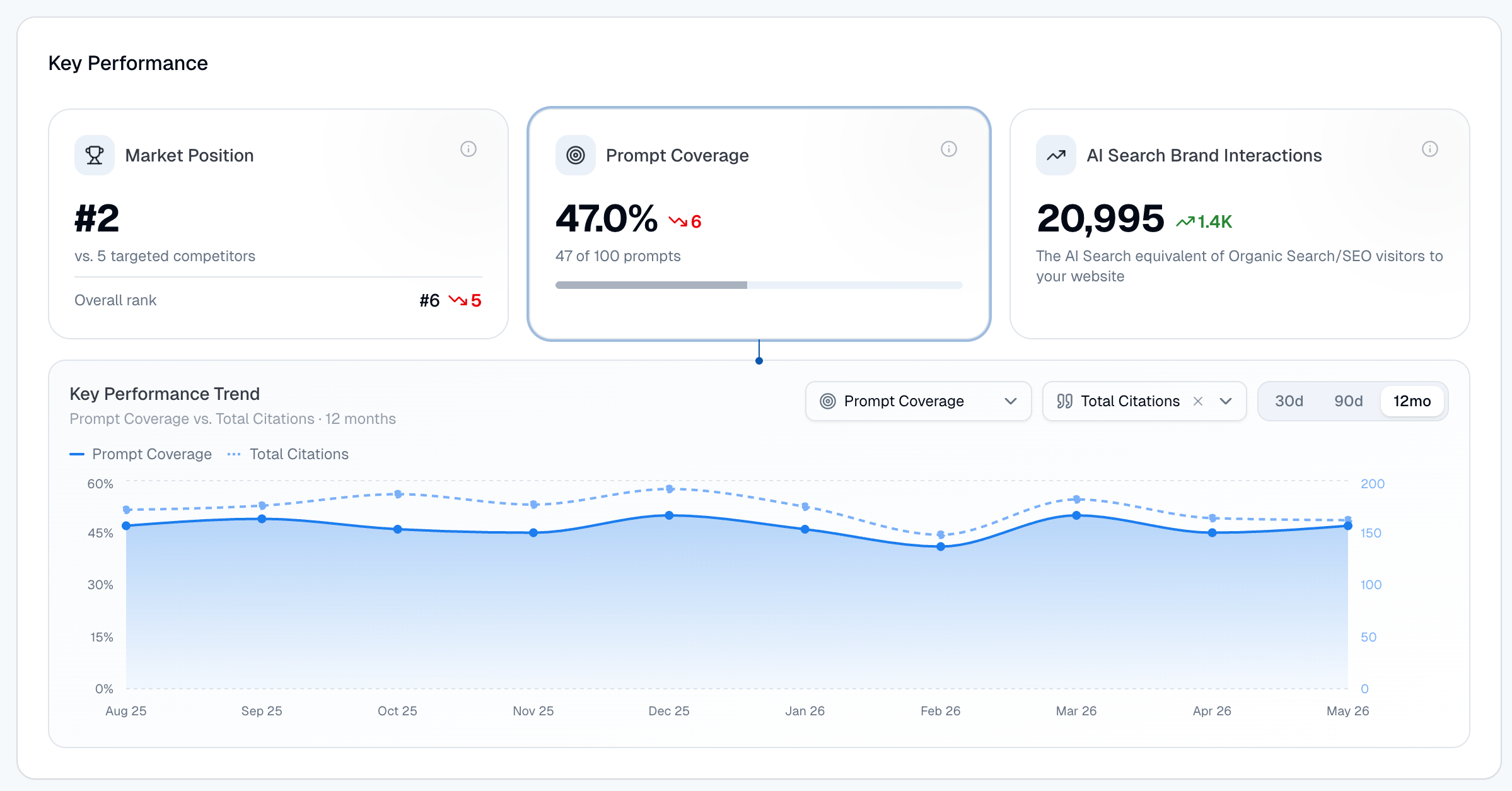
How do I improve my SEO visibility?
Learn how to improve your SEO visibility across search experiences below:
Make your site accessible to AI search crawlers
One of the biggest ways businesses can improve their SEO visibility is by making their sites accessible to AI search crawlers, which include ChatGPT, Perplexity, Claude, and Gemini.
You can adjust these settings (if needed) in your robots.txt file.
With access to your website, AI search crawlers can cite your website in relevant responses, which can get your brand discovered in new search channels.
Create citable content
Next, prioritize citable content.
Citable content is, well, worth citing. Whether through data points, quotes, or anecdotes, it gives AI search experiences a reason to quote or cite the page while also demonstrating your brand’s expertise.
A few ideas for surfacing citable content ideas include:
- Speaking with client-facing team members (or using AI to review these calls!)
- Analyzing internal datasets
- Interviewing client-facing team members on common mistakes
- Running internal experiments where the outcome is relevant to your audience
- Browsing relevant online forums for common questions that would benefit from data-backed answers
Structure content for the web
What do search engines, large language models, and users have in common? They all prefer content structured with headings, lists, tables, and multimedia.
That’s why it’s important to structure your content for the web by:
- Using question-based headings to organize content
- Converting paragraphs into lists or tables to improve skimming
- Creating “answer capsules” at the beginning of content to answer the core question of the page
- Including visuals, like graphics, to demonstrate concepts
Note: While users can’t “see” structured data, using structured data can help crawlers better understand your content and organization, so take advantage of it.
Build a brand with character
Search visibility is more than producing citable content. It’s also building a distinguishable brand, one that knows its purpose and who it serves and why.
When businesses build that kind of brand, it becomes easier to LLMs to surface this brand in conversations because the LLM (like ChatGPT) understands both what the business does and what the user needs.
Companies can create a unique brand by:
- Establishing values — and publishing them on their website
- Creating an “About Us” page that outlines the business’s purpose
- Filming walkthroughs of how a product is made or service is delivered
- Publishing case studies that highlight the client, challenge, and solution
- Claiming and optimizing third-party listings, like Google Business Profile
- Partnering with influencers to produce user-generated content
- Taking actions that highlight the company’s commitment, like by volunteering at a local charity or supporting the community’s sports team
As Simon Sinek shared in his now-famous TED Talk: “People don’t buy what you do; they buy why you do it.”
Maintain a trusted reputation
When it comes to improving your AI search and SEO visibility, one of the best things you can do is maintain (or build) a trusted reputation because people want to hire a vetted partner or purchase a well-reviewed product.
Grow your reputation through strategies like:
- Welcoming online reviews or client testimonials
- Responding to online reviews, both the good and the bad
- Participating in online forum discussions as a helpful guide vs. salesperson
- Maintaining transparency, like in pricing and deliverables
- Representing the company’s values in internal and client-facing interactions
When search and answer engines recognize that people trust your brand, especially when it comes to specific scenarios or buying factors, they’re more likely to recommend you to your target audience.
Optimize website code
Along with improving your site’s speed, optimizing the code powering your website can also help with SEO visibility. That’s because websites with optimized code:
- Maximize their crawl budget
- Comply with Google’s 2MB size cap for pages
- Ensure AI crawlers see the most important page information first
While most optimizations will require developer assistance, marketers can take some initial steps to improve their site’s code and speed, such as by compressing images.
How long does it take to see a difference in AI and SEO visibility?
How long it takes to see a difference in AI and SEO visibility ranges from a few weeks to a few months. Differences in AI search visibility happen faster, such as a few weeks, while SEO visibility tends to take longer.
Clutch has personally interviewed more than 250 WebFX clients to discuss their experience partnering with us.Independent research from Clutch has named WebFX the top SEO company in the United States.

Measure (and scale) your search visibility
Grow your search visibility across Google, ChatGPT, and other search experiences with WebFX, an award-winning digital marketing agency that’s been optimizing for AI search since ChatGPT’s release.
Discover how we can help your business scale and measure its search visibility by browsing our AI search and SEO services or contacting us online to speak with a strategist one-on-one!
-
 Matthew Gibbons is a Senior Data & Tech Writer at WebFX, where he strives to help businesses understand niche and complex marketing topics related to SEO, martech, and more. With a B.A. in Professional and Public Writing from Auburn University, he’s written over 1,000 marketing guides and video scripts since joining the company in 2020. In addition to the WebFX blog, you can find his work on SEO.com, Nutshell, TeamAI, and the WebFX YouTube channel. When he’s not pumping out fresh blog posts and articles, he’s usually fueling his Tolkien obsession or working on his latest creative project. View full profile
 -

WebFX is a full-service digital marketing agency delivering revenue-driving strategies across online advertising, SEO and AI search optimization, and digital marketing. Backed by 1,100+ client reviews, a 4.9-star rating on Clutch, and proprietary revenue-tracking technology, our team helps businesses grow visibility and revenue across platforms, from Google to ChatGPT to LinkedIn. Discover how our expert team and revenue-accelerating tech can drive results for you. Learn more
Try our free Marketing Calculator
Craft a tailored online marketing strategy! Utilize our free Internet marketing calculator for a custom plan based on your location, reach, timeframe, and budget.
Plan Your Marketing Budget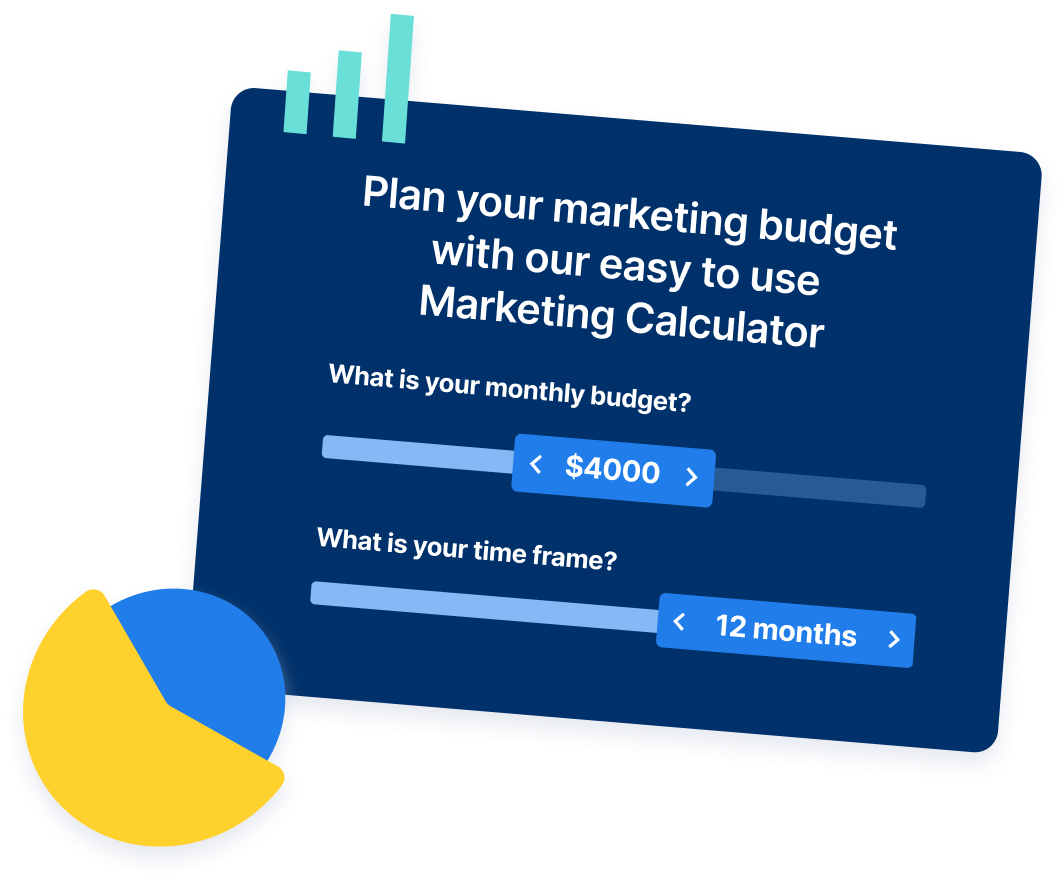
Table of Contents
- What is SEO visibility?
- How has search visibility’s definition changed?
- What determines your search visibility?
- Which metrics measure SEO visibility?
- Which dimensions measure search visibility?
- How do you measure search visibility?
- How do I improve my SEO visibility?
- How long does it take to see a difference in AI and SEO visibility?
- Measure (and scale) your search visibility
Share this article


SEO Success with KOA
Try our free Marketing Calculator
Craft a tailored online marketing strategy! Utilize our free Internet marketing calculator for a custom plan based on your location, reach, timeframe, and budget.
Plan Your Marketing Budget