


Table of Contents
- Trend watch: OpenAI went on a shipping spree with 5 product drops in 2 weeks
- Tactic talk: CTV advertising is your untapped retargeting channel (here’s how to activate it)
- Tool tip: Stop paying per seat for AI. TeamAI gives your team multi-model access for less.
- FAQs about our January 2026 drop
- Now hit enter
-
What major AI updates did OpenAI release in January 2026?
OpenAI released five products between January 15-27, 2026: ChatGPT Translate (standalone translation tool), ChatGPT Ads (sponsored recommendations in responses), ChatGPT Go ($8/month ad-supported tier), age prediction (for user safety), and ChatGPT Prism (free AI workspace for scientific writing). -
How do ChatGPT Ads work and what do they cost?
ChatGPT Ads appear at the bottom of AI responses for free and Go tier users, labeled as "Sponsored" and separated from answers. Early advertisers pay around $60 per 1,000 views (roughly 3x Meta's rates), with ads excluded from sensitive topics and users under 18. -
Why is CTV advertising effective for retargeting?
CTV advertising reaches people who already visited your website by displaying 15 or 30-second video ads on their streaming devices like Roku or Hulu. It offers faster activation than traditional TV, cost efficiency (you only pay when your audience streams), and premium placement alongside professional content. -
What makes TeamAI different from other AI tools?
TeamAI uses workspace-based pricing instead of per-seat charges, allowing teams to share credits across all members. A 10-person team pays $25/month on TeamAI Starter versus $250/month on ChatGPT Teams, providing 90% savings while accessing multiple AI models from OpenAI, Anthropic, Google, and DeepSeek. -
What is ChatGPT Go and who should use it?
ChatGPT Go is an $8/month subscription tier that offers 10x more messages, file uploads, and image creation than the free tier, plus unlimited access to GPT-5.2 Instant. It's designed for users who want expanded features but won't pay $20/month for Plus, though Go users will see ads.
January doesn’t care about your resolutions.
Q4 results are locked. Budgets are under the microscope. And while you’re explaining last quarter’s attribution gaps, OpenAI dropped five product updates in two weeks.
That’s how fast the digital marketing scene moves now. This month’s CTRL + FX captures everything at breakneck speed: The digital marketing trends around ChatGPT’s latest updates, the tactics worth deploying now, and the tools cutting costs without cutting capability.
Here’s your roadmap:
- Trend watch: OpenAI went on a shipping spree with 5 product drops in 2 weeks
- Tactic talk: CTV advertising is your untapped retargeting channel (here’s how to activate it)
- Tool tip: Stop paying per seat for AI. TeamAI gives your team multi-model access for less.
Don’t miss our Revenue Weekly emails!
Join 200K smart marketers for the hottest marketing news and insights in your inbox.
Inline Subscription Form
"*" indicates required fields
Trend watch: OpenAI went on a shipping spree with 5 product drops in 2 weeks
OpenAI didn’t ease into 2026. Between January 15–27, the company released five product updates that yet again redefine how businesses and consumers interact with ChatGPT.
If you blinked, you missed at least two. Here’s the full rundown:
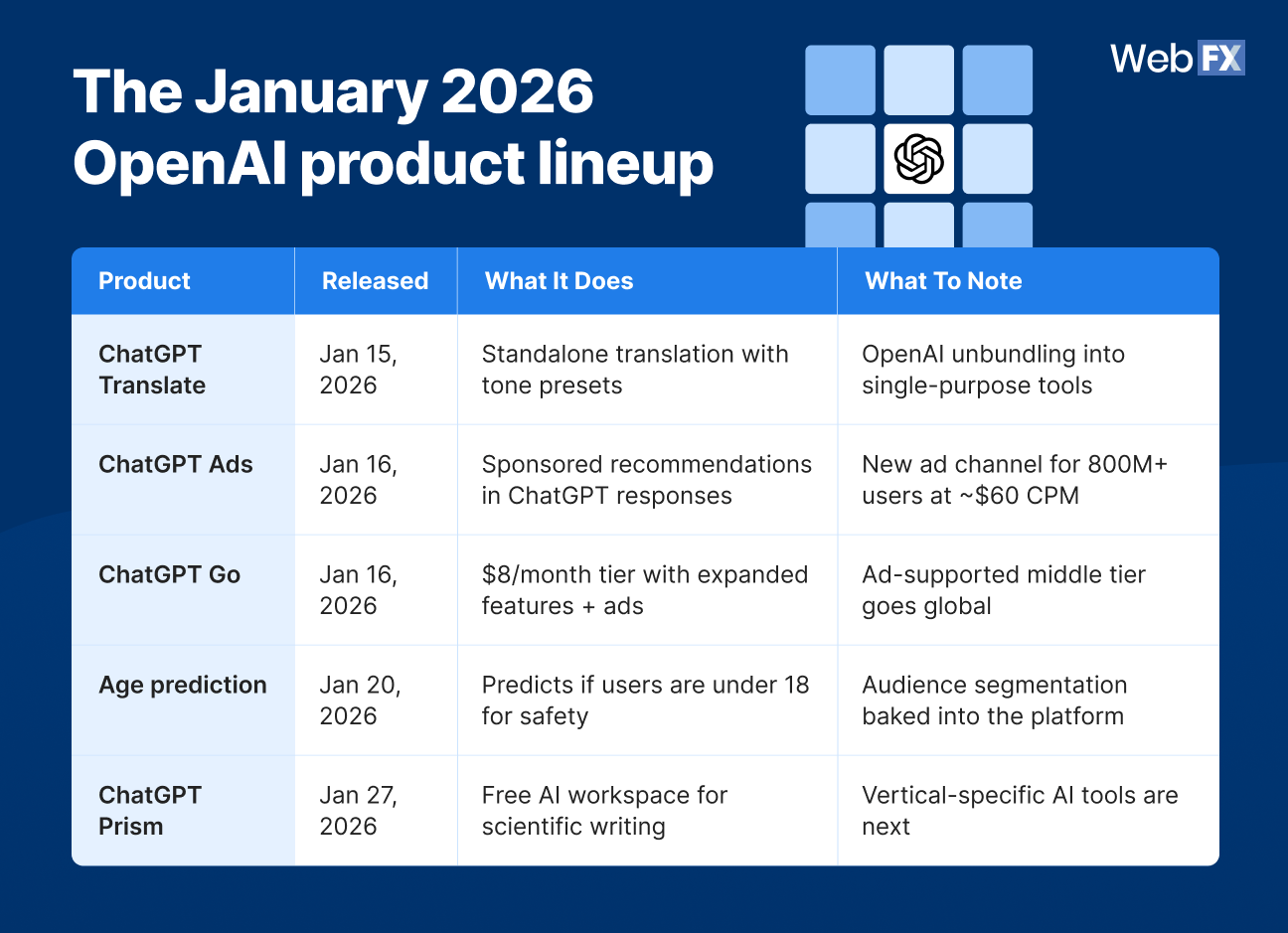
Table view
| Product | Released | What It Does | What To Note |
| ChatGPT Translate | Jan 15, 2026 | Standalone translation with tone presets | OpenAI unbundling into single-purpose tools |
| ChatGPT Ads | Jan 16, 2026 | Sponsored recommendations in ChatGPT responses | New ad channel for 800M+ users at ~$60 CPM |
| ChatGPT Go | Jan 16, 2026 | $8/month tier with expanded features + ads | Ad-supported middle tier goes global |
| Age prediction | Jan 20, 2026 | Predicts if users are under 18 for safety | Audience segmentation baked into the platform |
| ChatGPT Prism | Jan 27, 2026 | Free AI workspace for scientific writing | Vertical-specific AI tools are next |
ChatGPT Translate
OpenAI quietly dropped a Google Translate competitor on January 15, 2026. They made no official announcement nor a fanfare for this, just a new URL for ChatGPT Translate. To be fair, they posted two weeks later on their socials to make the rounds:
https://t.co/fJxV8cVORd pic.twitter.com/71q5YPcMKD
— OpenAI (@OpenAI) January 29, 2026
The interface looks familiar: Two text boxes, language dropdowns, auto-detect on the left, and translation on the right. If you’ve used Google Translate, you already know how to use this.
The notable difference is tone control. ChatGPT Translate lets you adjust how the output reads with one-tap presets to make it sound more fluent, more business formal, child-friendly, or suitable for an academic audience. That’s something Google doesn’t offer out of the box.
What’s live now:
- 40+ languages supported
- Text input on desktop
- Voice input on mobile browsers
What’s missing:
- Image translation (advertised but not functional yet)
- File uploads (PDF, DOCX, PPTX, images)
- Offline mode
- Dedicated mobile app
- Google Translate still covers 249 languages
There’s a clear signal here that OpenAI is unbundling ChatGPT into standalone, single-purpose tools. Translation is the first. Expect more to follow.
ChatGPT Ads
On January 16, 2026, OpenAI announced what many saw coming: Ads are coming to ChatGPT.
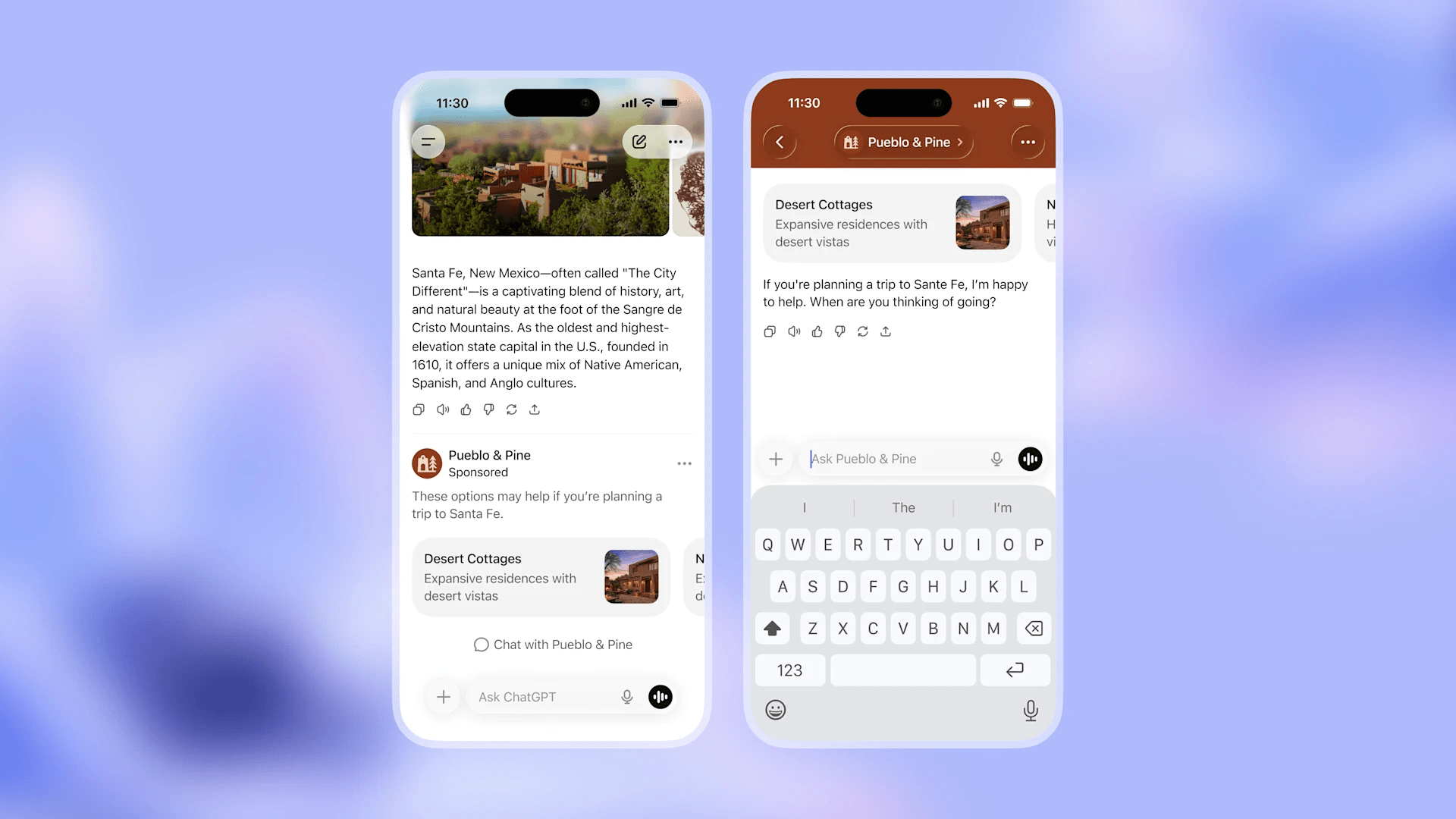
Testing starts “in the coming weeks” for logged-in adults in the U.S. The ads will appear at the bottom of ChatGPT responses, distinctly labeled “Sponsored” and separated from the AI’s answer.
Who sees ads:
- Free tier users
- ChatGPT Go subscribers ($8/month)
Who doesn’t:
- Plus, Pro, Business, and Enterprise subscriptions
What’s off-limits:
- Sensitive or regulated topics like health, mental health, or politics.
- Users under 18 (self-reported or predicted)
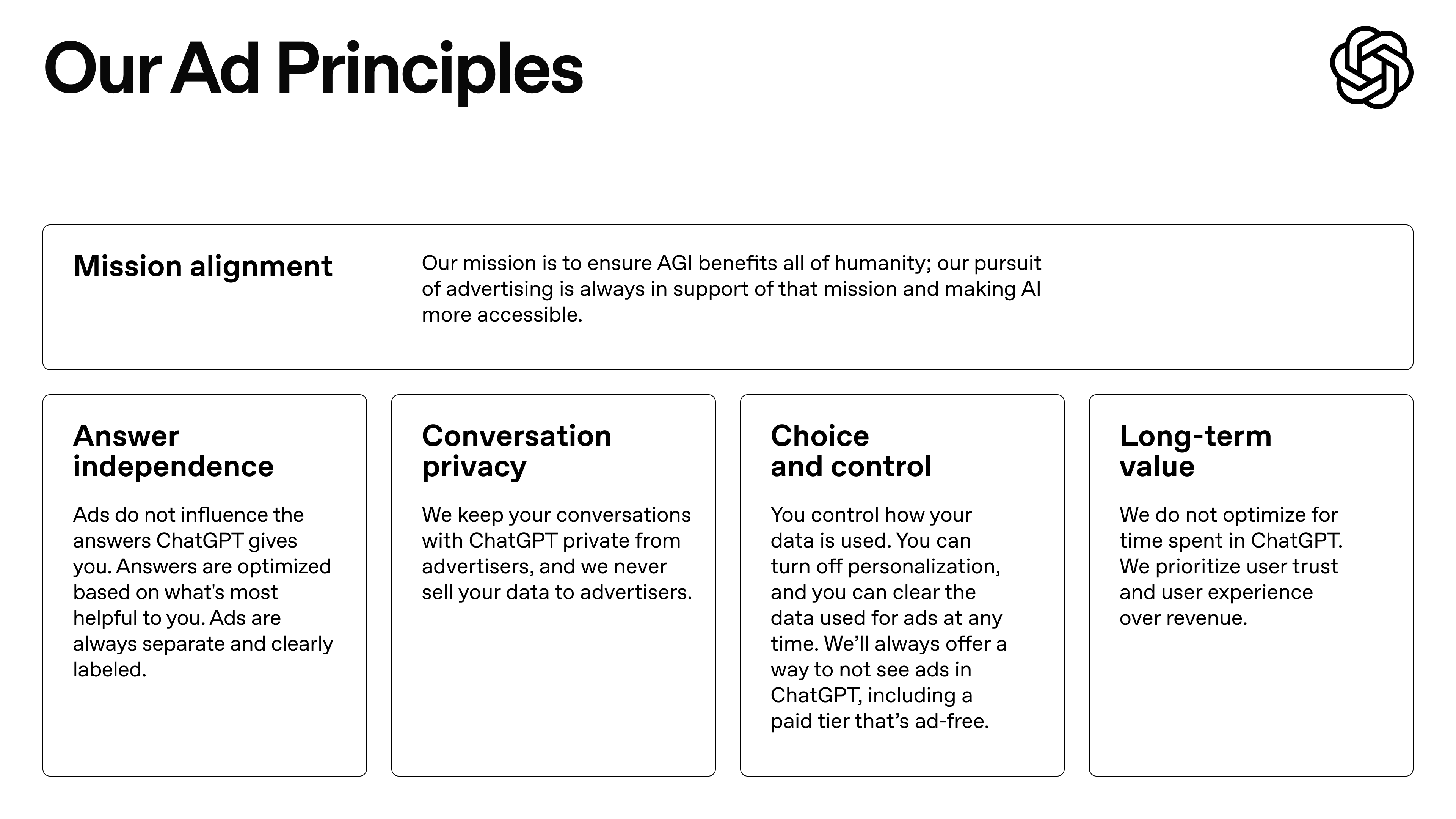
OpenAI published five principles guiding how ads will work. Their key commitments are that Ads won’t influence ChatGPT’s responses, conversations stay private from advertisers, and user data won’t be sold.
According to The Information, OpenAI is asking around $60 per 1,000 views. That’s roughly 3x what Meta charges. And with that, early advertisers will only get high-level metrics (total views, total clicks). There’s currently no purchase attribution and conversion tracking available, or at least not yet.
For a deeper look at how to approach ChatGPT advertising, check out our detailed breakdown of ChatGPT Ads.
ChatGPT Go
On the same day as the ad announcement, OpenAI launched ChatGPT Go globally.
Go is a new $8/month subscription tier that sits between free and Plus ($20/month). It started in India back in August 2025, expanded to 170+ countries, and became OpenAI’s fastest-growing plan before hitting the U.S.
What you get with Go:
- 10x more messages, file uploads, and image creation than the free tier
- Longer memory and context window
- No-limit access to GPT-5.2 Instant
But the tradeoff is that Go users will see ChatGPT Ads, just like free-tier users.
Here’s how the tiers now stack up:
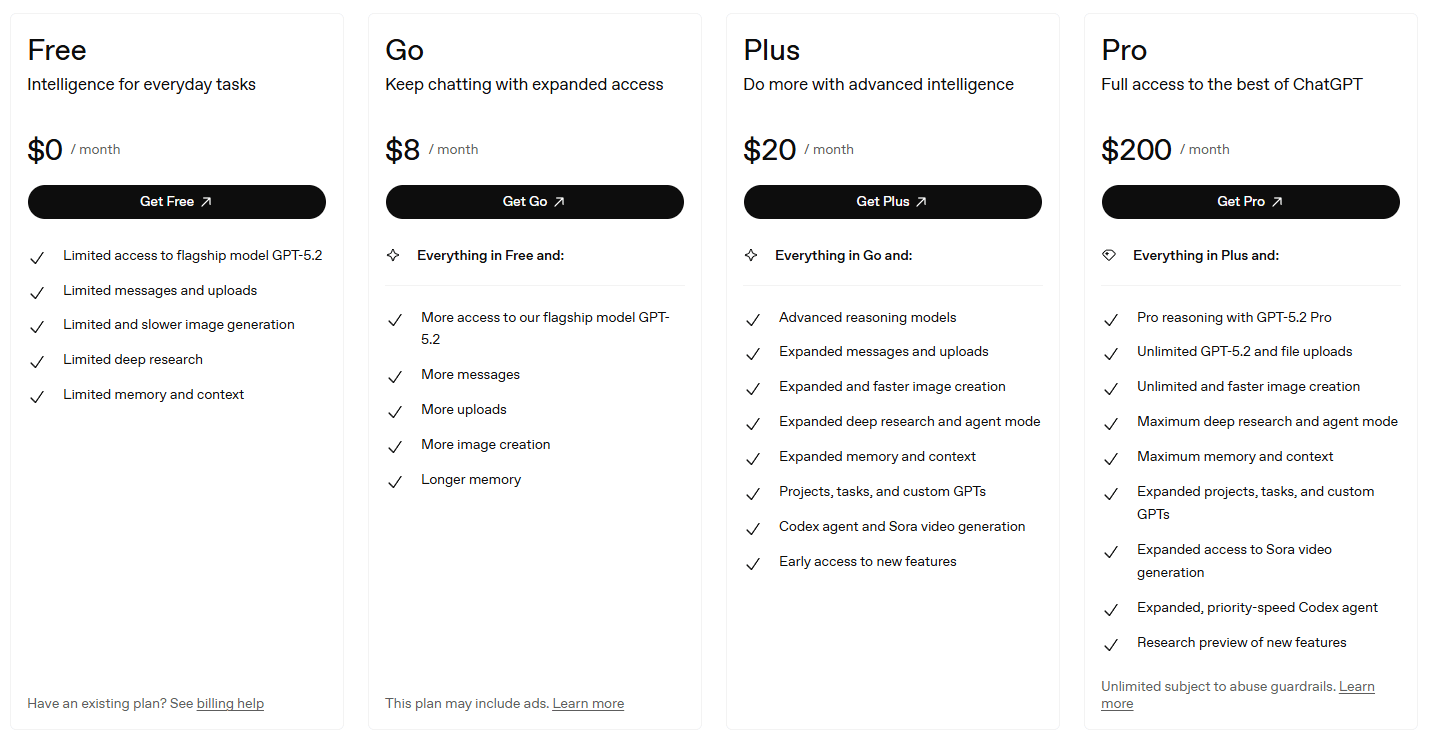
OpenAI evidently built an ad-supported middle tier aimed at users who want more than free but won’t pay $20 per month. For marketers, that’s a larger addressable audience for ChatGPT Ads.
Age prediction
On January 20, 2026, OpenAI started rolling out age prediction across ChatGPT consumer plans.
The system uses behavioral and account-level signals to estimate whether a user is under 18. Signals include how long the account has existed, typical active hours, usage patterns, and stated age.
If ChatGPT predicts a user is under 18, extra safety settings kick in automatically. These settings limit exposure to:
- Graphic violence or gory content
- Viral challenges promoting risky behavior
- Sexual, romantic, or violent roleplay
- Depictions of self-harm
- Content promoting extreme beauty standards or unhealthy dieting
Adults who get flagged incorrectly can verify their age through Persona, a secure identity-verification service, using a selfie or government ID. The rollout is global, with the EU following in the coming weeks to meet regional requirements.
That said, OpenAI is segmenting its audience at the platform level, and this means ChatGPT Ads won’t reach users predicted to be under 18. Factor that into your audience sizing and campaign planning.
ChatGPT Prism
On January 27, 2026, OpenAI launched Prism, a free AI workspace built for scientists and researchers.
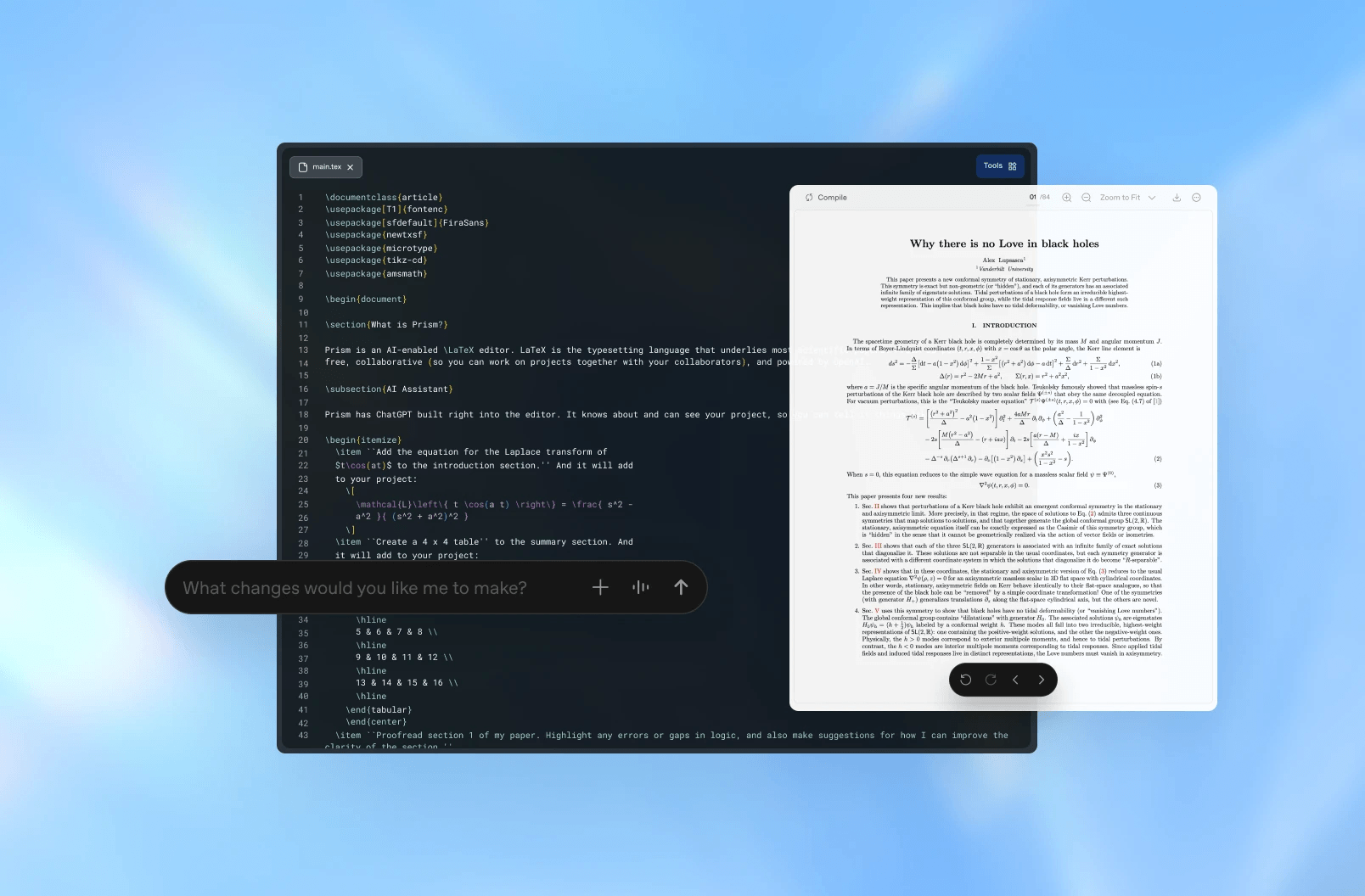
Prism is LaTeX-native, cloud-based, and powered by GPT-5.2. It brings drafting, collaboration, literature search, and AI-assisted editing into one place. It removes the need to switch between editors, PDF readers, reference managers, and chat windows.
What Prism does:
- Draft and revise papers with full document context (equations, citations, figures)
- Search academic literature from sources like arXiv
- Convert whiteboard equations or diagrams directly into LaTeX
- Collaborate in real time with unlimited co-authors
- Edit using voice commands
The platform is free for anyone with a personal ChatGPT account. It also comes with unlimited projects, unlimited collaborators, and without any seat limits.
Clearly, OpenAI is moving into vertical-specific tools with Prism, targeting researchers the same way Codex targets developers. If your audience includes academics, scientists, or R&D teams, this is worth paying attention to.
Tactic talk: CTV advertising is your untapped retargeting channel (here’s how to activate it)

What is Connected TV advertising?
Connected TV (CTV) advertising is video advertising for TVs that connect to the Internet, usually called smart TVs. These 15 or 30-second ads run on streaming platforms like Hulu and YouTube, retargeting users who visited your website to keep your brand visible as they stream.
Your audience left your site without converting. Now they’re on the couch watching their favorite show.
Some may already consider that a lost opportunity, but in hindsight, it’s actually a retargeting window. And among the most underused digital marketing tactics, CTV advertising puts your brand on the biggest screen in their home.
🎥 Video: Connected TV Advertising Basics EXPLAINED
Why CTV beats traditional TV advertising
Traditional TV ads reach whoever happens to be watching. CTV ads reach people who already engaged with your website. Instead of paying for random eyeballs, you’re paying to stay in front of warm prospects.
Here’s how they compare:
| Factor | Traditional TV | Connected TV |
| Targeting | Broad demographics | First-party data retargeting |
| Reach | Whoever’s watching | Users who visited your site |
| Cost model | Pay regardless of audience | Pay when your audience streams |
| Setup time | Weeks to months | Days |
| Measurement | Estimated ratings | Trackable impressions |
CTV ads are quicker to set up, more cost-effective, and laser-focused on people already interested in your business.
Why CTV ads work
CTV advertising solves a problem most digital marketing tactics can’t, which is reaching your audience when they’re not on a device you can typically target.
Your prospect browses your site on their laptop during lunch. They don’t convert. That evening, they’re streaming a show on their Roku. Your 30-second ad plays before their episode starts.
That’s the play, and here’s why it works:
- Faster activation: Campaigns can launch in days, not weeks or months, as traditional TV requires.
- Cost efficiency: You’re not paying for impressions that will never convert. Your ads only run when your retargeting audience is streaming.
- Higher intent: These aren’t cold prospects as they already visited your site. They know your brand, and the ad reinforces, not introduces.
- Premium placement: Your ad runs alongside professional streaming content, not sandwiched between user-generated videos.
Choosing your ad format and specs
CTV ads are pretty straightforward and come in two lengths:
- 15-second ads work best for brand reinforcement. Your audience already knows you, and the short format reminds them you exist and nudges them back.
- 30-second ads give you room to tell a story. Use these when you need to explain value, showcase a product, or address objections.
- 15 + 30-second combinations cover the full funnel. Run both to balance frequency (15-second) with depth (30-second). The shorter version keeps you visible while the longer version does the heavy lifting.
Before you produce creative, here are the technical requirements:
| Spec | Requirement |
| Length | 15 or 30 seconds (exactly) |
| Aspect ratio | 16:9 |
| Resolution | 1920×1080 (HD) |
| Bitrate | 16,000 kbps+ (required for premium placements) |
| File types | .mp4, .mov, .flv, .avi, .wmv, .mpeg1/2, .webm |
| Max file size | 1 GB |
These ads play on big screens, hence higher quality means access to more premium placements, so don’t cut corners on production.
How to get started with CTV advertising
If CTV sounds like a fit, here’s how to get CTV ads running for your brand:
- Confirm your retargeting data: CTV works best when you have established website traffic. If your site is new or low-traffic, build that foundation first.
- Define your goal: Are you driving awareness, consideration, or conversions? This determines your ad length, CTA, and creative approach.
- Produce video assets: Create 15-second and 30-second versions. Start with one CTA type and expand from there.
- Launch and measure: Start with a test budget. Track impressions and downstream conversions, then scale what works.
- Iterate on creative: Test different CTAs, messaging angles, and video styles. CTV rewards brands that optimize over time.
Need help getting CTV ads off the ground? WebFX’s CTV advertising services can help you promote your brand on platforms like Hulu, YouTube, A&E, and more, with advanced targeting options that use your first-party data to reach the right audience.
Tool tip: Stop paying per seat for AI. TeamAI gives your team multi-model access for less.

More than 80% of marketers worldwide integrate some form of AI into their online marketing activities. And 52% of U.S. marketers using AI tools said their advantage is the increased speed and efficiency of their workflows.
Most teams pay per seat for AI. ChatGPT Teams runs $25/user/month. For a 20-person team, that’s $500/month, and not everyone uses it equally. Your power users burn through it while your occasional users barely log in. At the end of the day, you’re still paying the same for both.
TeamAI fixes that with workspace-based pricing. Instead of paying per person, you pay for credits that the whole team shares. Heavy users get what they need. Light users don’t inflate your bill.
Among the growing list of proven digital marketing tools, TeamAI stands out for teams that want multi-model access without the per-seat tax.

What is TeamAI?
TeamAI is a collaborative AI workspace built for business teams. It gives you access to models from OpenAI, Anthropic, Google, and DeepSeek, all in one platform.
No more juggling subscriptions. No more switching tabs between ChatGPT and Claude. Your team gets multi-model access, shared prompt libraries, and a centralized knowledge base.
WebFX launched TeamAI in 2023 and uses it internally with 500+ employees.
What models does TeamAI include?
TeamAI organizes models into three tiers based on credit usage:
Included models (1x credits):
- GPT-4o-Mini
- DeepSeek-V3
- Qwen3-Next-80B
Premium models (15x credits):
- GPT-4o, GPT-5-Mini, GPT-5-Nano
- Claude 3.7, Claude 4 Sonnet, Claude 4.5 Haiku
- Gemini 2.0 Flash, Gemini 2.5 Flash, Gemini 3.0 Pro
- DeepSeek-R1
Premium+ models (30x credits):
- GPT-4.1, GPT-5, GPT-5.1
- Claude 4 Opus
- O3, O3-mini
- Gemini 2.5 Pro
You’re not locked into one provider. Pick the right model for the task.
TeamAI key features
TeamAI goes beyond model access. Here’s what makes it one of the more versatile digital marketing tools for teams:
- AI knowledge base: Store and chat with thousands of documents. TeamAI uses retrieval-augmented generation (RAG) to pull answers with citations, so your team gets sourced responses instead of guesses.
- Custom AI agents: Build workflows for repeatable tasks like content briefs, competitive research, lead summaries, or support ticket responses. Set it once, use it across the team.
- Shared prompt libraries: Create, organize, and share prompts company-wide. What works for one person becomes a resource for everyone.
- Seamless integrations: Connect with Slack, Jira, Zapier, and MCP to bring AI into the tools your team already uses.
- Future-proof flexibility: As new models launch, TeamAI adds them, so you’re not locked into one provider’s roadmap.
- Cost-efficient workspace pricing: A 10-person team on ChatGPT Teams pays $250/month. The same team on TeamAI Starter pays $25/month with access to more models. That’s 90% savings for teams with mixed usage. See full pricing here.
Who is TeamAI for?
Trusted by 1,000+ businesses, TeamAI fits teams that:
- Use AI inconsistently across roles (some heavy, some light)
- Want access to multiple models without managing separate subscriptions
- Need shared resources like prompt libraries and knowledge bases
- Want to reduce per-seat costs without reducing capability
If your team is paying for seats that sit idle, TeamAI is certainly worth a look.

AI Workspace for Business Teams
Imagine an AI workspace where you can collaborate with team members, share prompts, and leverage personas for generative AI.
Empower My Team with AI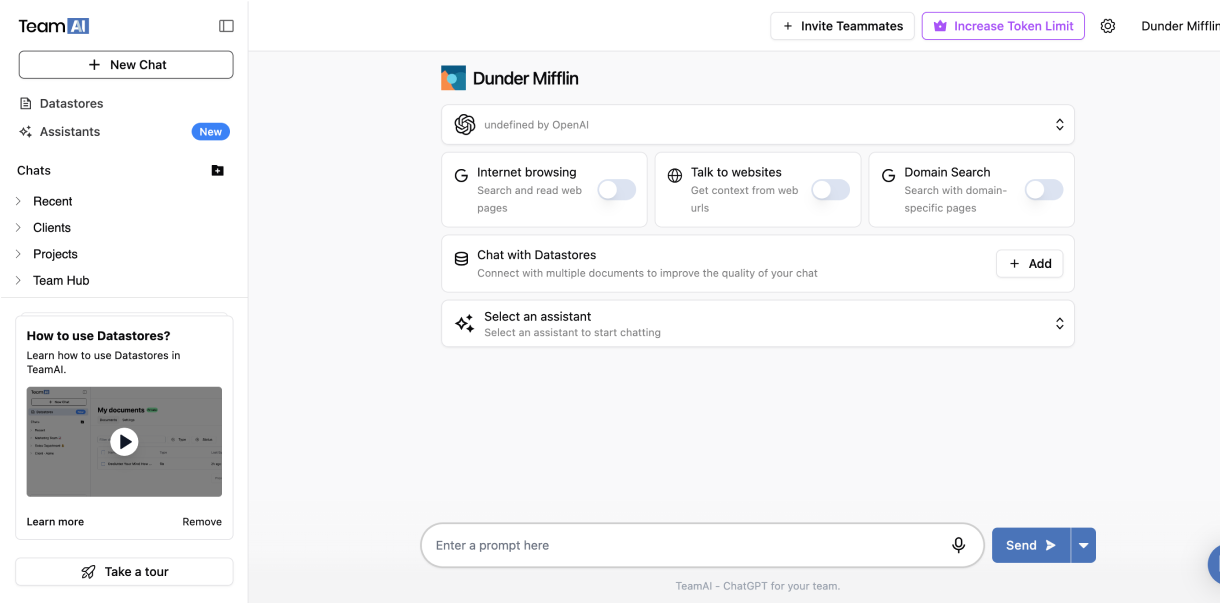
FAQs about our January 2026 drop
What digital marketing trends should marketers watch in early 2026?
The biggest digital marketing trends in January 2026 center around OpenAI’s product blitz. ChatGPT now has ads rolling out to free and Go tier users, a new $8/month subscription tier (ChatGPT Go) launched globally, and standalone tools like ChatGPT Translate and Prism signal that OpenAI is unbundling capabilities into single-purpose products. Marketers should also watch age prediction systems, which segment audiences at the platform level and affect ad targeting.
How will ChatGPT ads change digital advertising?
ChatGPT ads introduce a new channel to reach 800 million weekly active users. Unlike traditional search ads, these ads appear at the bottom of conversational responses, labeled “Sponsored.” Targeting is contextual, based on the conversation topic rather than keyword bidding. Early CPMs are reportedly around $60 (3x Meta rates), and attribution is limited to high-level metrics like views and clicks. Brands that test early will learn what messaging works in a conversational context before the platform gets crowded.
What are the top digital marketing tactics for retargeting in 2026?
Connected TV (CTV) advertising is one of the most underused digital marketing tactics for retargeting. CTV ads are 15 or 30-second video ads that run on streaming platforms like Hulu and YouTube. They retarget users who visited your website, keeping your brand visible while they stream content at home. CTV offers faster activation than traditional TV, cost efficiency (you only pay when your audience streams), and premium placement alongside professional content.
What digital marketing tools can help reduce AI costs for teams?
TeamAI is one of the more versatile digital marketing tools for teams looking to cut AI costs. Instead of paying per seat like ChatGPT Teams ($25/user/month), TeamAI uses workspace-based pricing where credits are shared across the team. A 10-person team on ChatGPT Teams pays $250/month. The same team on TeamAI Starter pays $25/month with access to multiple models from OpenAI, Anthropic, Google, and DeepSeek. That’s up to 90% savings for teams with mixed usage.

Now hit enter
January set the pace. OpenAI shipped five products in two weeks. CTV advertising is waiting for brands ready to retarget beyond the browser. And tools like TeamAI are making multi-model AI accessible without draining your budget.
If you want to own 2026, don’t be the one who just reads every update. Be the one who acts on the right ones. Explore our ChatGPT advertising services to get ahead of the new ad channel, activate CTV advertising services to retarget on the big screen, or try TeamAI to give your team multi-model AI access for way less.
We’ll be back next month with more. Until then, stay sharp between drops. Follow WebFX on Instagram, LinkedIn, and YouTube for valuable insights that hit before they’re viral.
Same satisfying scoops next month. Start 2026 strong.
-
 Albert Dandy Velasquez blends SEO strategy with compelling storytelling to help businesses boost their visibility and revenue online. With a B.A. in English and certifications from HubSpot, Semrush, and Google Analytics, he has written and optimized hundreds of articles on organic SEO, content strategy, and user experience. He regularly contributes to the WebFX blog and SEO.com, creating content that helps readers turn marketing goals into measurable results. When he’s off the clock, he's usually exploring new neighborhoods on two wheels, filming travel content, or chasing golden hour with a coffee in hand.
 -

WebFX is a full-service marketing agency with 1,100+ client reviews and a 4.9-star rating on Clutch! Find out how our expert team and revenue-accelerating tech can drive results for you! Learn more
Join our mission
to provide industry-leading digital marketing services to businesses around the globe - all while growing as an individual and leaving the world a better place.
I Want to Apply!
Table of Contents
- Trend watch: OpenAI went on a shipping spree with 5 product drops in 2 weeks
- Tactic talk: CTV advertising is your untapped retargeting channel (here’s how to activate it)
- Tool tip: Stop paying per seat for AI. TeamAI gives your team multi-model access for less.
- FAQs about our January 2026 drop
- Now hit enter
Share this article


Join our mission
to provide industry-leading digital marketing services to businesses around the globe – all while growing as an individual and leaving the world a better place.
I Want to Apply!
What to read next