How to generate faster marketing returns after an acquisition
Connect inherited campaigns to qualified pipeline and closed revenue before changing budgets.
Capture existing demand through high-intent search, local visibility, customer reengagement, and retargeting.
Improve page conversions and lead routing before investing in more traffic.
Shift budget toward campaigns and markets generating qualified revenue.
Balance immediate returns with long-term growth, and turn proven wins into a repeatable acquisition playbook.
To get faster marketing returns after an acquisition, start with the demand, traffic, customer relationships, and campaigns the company already has. Identify what generates revenue, fix conversion gaps, and scale proven opportunities before investing heavily in new demand.
The seven steps below show how to prioritize those opportunities while building a repeatable foundation for long-term growth.
How to generate faster marketing returns after an acquisition in 7 steps
If you’re responsible for figuring out how to generate faster marketing returns after an acquisition, you need a way to decide what deserves investment first. Use the five-phase framework Measure → Capture → Convert → Scale → Compound, broken into the seven steps below, to prioritize opportunities by their time to return.
1. Connect marketing activity to actual revenue
Your first move should be measurement. Before accelerating marketing ROI after acquisition, determine which inherited campaigns, markets, services, and locations already contribute to closed revenue.
Start by connecting marketing activity to your CRM and sales outcomes. Closed-loop attribution gives you a way to compare channels based on qualified pipeline and revenue instead of assuming that the campaign with the lowest cost per lead deserves more money.Your first 30-day marketing diagnostic should answer:
Which channels and campaigns generate closed revenue?
Which sources produce qualified leads instead of raw inquiries?
Which services, products, locations, or brands generate the strongest returns?
Where are you spending money without being able to connect that investment to pipeline?
Where do leads get lost between marketing, sales, and closed revenue?
Which inherited tracking or CRM integrations prevent you from answering those questions?
You’ll know this step worked when leadership can trace meaningful marketing investment from source through qualified pipeline to revenue and compare that performance at the level needed to make budget decisions.
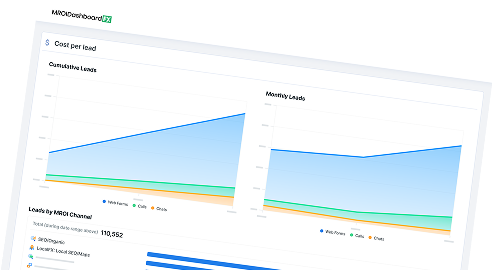
For more accurate attribution, RevenueCloudFX connects your CRM, ad accounts, and marketing channels into one system, so you can trace a closed deal back to the campaign, location, and channel that produced it instead of stopping at the lead.
For a multi-location or multi-brand acquisition, that same connection lets you compare markets side by side rather than relying on one aggregate company-wide number that hides where the real performance is happening.
2. Capture demand that the acquired company is already missing
Once you can see what drives revenue, look for prospects who already want what the company sells but aren’t reaching it or converting today.
That makes existing-demand capture different from net-new demand creation. Existing-demand capture gets more from buyers who are already searching, visiting, comparing, or reengaging with the business. Net-new demand creation invests in reaching and educating buyers who do not yet have that same level of intent.
For a post-acquisition growth strategy focused on time to return, existing demand deserves an early look because part of the customer-acquisition work has already happened.Audit for gaps like these:
High-intent keywords ranking on page one or two, but not in the top few spots
Local visibility that’s weak for one or more acquired locations
Brand searches landing on an outdated or slow page
Existing site traffic flowing to underperforming pages
Email lists or customer databases that haven’t been re-engaged
Retargeting opportunities from visitors who already showed interest
A newly acquired HVAC company that ranks eighth for its highest-value local keyword doesn’t need a bigger ad budget first. It needs whatever is holding that page back from the top three, because that demand already exists and is already searching.
Prioritize opportunities like this, where the customer is already looking, over campaigns built to create interest from scratch.
3. Find the shortest path from existing traffic to more revenue
More traffic isn’t automatically the fastest route to more revenue. Before you invest in bringing in new visitors, find out whether the traffic the acquired company already has can produce more pipeline on its own.
Look at the different aspects of the conversion path itself:
High-value landing pages
Service and location calls to action
Form length
Phone-call capture
Trust signals like reviews and case studies
Paid landing page relevance
Mobile speed
How quickly a new lead gets routed to a live person
Small, focused fixes here are usually cheaper and faster than generating new demand, and they compound. Every visitor you convert better is a visitor you didn’t have to pay more to acquire.
Should you redesign the website immediately after an acquisition?
Not necessarily. A full redesign can be worth doing eventually, but it takes months and risks resetting rankings and conversion paths that already work. If a faster return is the goal, fix the highest-value pages and conversion points first, and treat a full redesign as a sequencing decision based on time to return rather than a rule you follow on principle.
4. Reallocate budget toward what is producing revenue
Once attribution works, inherited budget allocations should become hypotheses rather than fixed rules.
Compare spend with qualified leads, cost per qualified lead, closed customers, customer value, revenue, and return on investment. A source that generates $50 leads can look more efficient than one generating $150 leads until you discover that the second source produces three times as many customers.Use a simple decision table to force that conversation:
Channel or market
Spend
Qualified leads
Cost per qualified lead
Closed revenue
Recommended action
Market A
$20,000
100
$200
$180,000
Scale
Market B
$18,000
120
$150
$70,000
Test and optimize
Market C
$12,000
50
$240
$105,000
Maintain
The numbers above are just examples, but the decision logic is what matters. The lowest cost per lead does not automatically equal the highest marketing return.
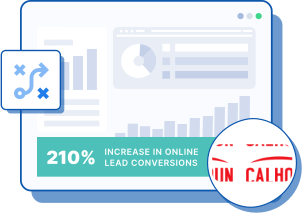
PaulB Parts offers a real example. WebFX analyzed its paid campaigns, identified its strongest performers, and reallocated budget toward top-converting ads while improving ad copy and targeting with first-party data. PaulB Parts subsequently reported a 150% year-over-year increase in ROI, a 75% increase in conversion rate, and a 23% decrease in cost per lead.
That is the goal of budget reallocation after an acquisition — move capital based on demonstrated business value rather than inherited channel allocations.
Learn how we increased YoY ROI by 150%, and YoY conversions by 75% for an industrial client.
5. Run two marketing clocks: Immediate returns and compounding growth
A strong post-acquisition marketing strategy should not force you to choose between near-term revenue and durable growth.
Run two clocks at the same time:
Clock one focuses on capturing revenue now. That could mean improving paid search, retargeting existing audiences, converting more current traffic, strengthening high-intent SEO pages, fixing local visibility, and improving lead management.
Clock two builds the assets that can compound over the hold period. SEO, useful content, digital PR, reviews, lifecycle marketing, brand demand, and AI search visibility can expand how and where buyers discover the company over time.
The balance will differ by acquisition. The important part is making each investment’s expected time horizon explicit.
AI search shows why the second clock deserves attention even when you’re focused on current returns. WebFX analyzed 2.3 billion site sessions from January 2024 through December 2025 and found that generative AI traffic increased 796%. AI-referred visitors also converted at roughly 1.2 times the rate of organic-search visitors, although AI still represented a small share of overall sessions.
Expert insights from
Sarah B.Lead Web Marketing Consultant
“Whether it’s happening in ChatGPT or Google’s AI Overviews, generative search is here to stay. Businesses looking to ride the wave need to start optimizing for these experiences.”
That does not mean shifting a post-acquisition budget heavily toward AI search overnight. It means your long-term search strategy should account for where high-intent discovery is developing while your short-term programs capture demand that exists today.
Measure the two clocks separately. Near-term investments should show movement in qualified pipeline, revenue, conversion efficiency, or CAC relatively quickly. Compounding investments need leading indicators alongside longer-term pipeline and revenue measures.
6. Turn the first acquisition into a repeatable marketing playbook
Once something works at the company you just acquired, figure out how to apply it to the next one. Standardize the pieces that make comparison and repetition possible:
Analytics and attribution
CRM integrations
Reporting
Paid campaign structures
SEO frameworks
Local SEO launch processes
Conversion benchmarks
Lead routing
Marketing KPIs
Vendor management
The goal isn’t only to optimize marketing at the business you just bought. It’s to shorten the ramp-up time for every acquisition after it. A serial acquirer that has to rebuild its measurement framework, its reporting, and its campaign structure from scratch every time it closes a deal is paying a hidden tax on every acquisition, one measured in months of lost visibility rather than dollars.
7. Report marketing’s contribution to business growth
The final step changes what appears in your post-acquisition marketing report.
Traffic, rankings, impressions, clicks, and raw leads still help teams diagnose marketing performance. They should not lead the executive conversation when the goal is value creation.
Prioritize these areas:
Qualified pipeline
Marketing-sourced revenue
Customer acquisition cost
Cost per qualified lead
Close rate
Revenue by location or brand
Marketing ROI
Customer value
Growth rate
Then ask one question:
Is the marketing engine becoming more measurable, efficient, scalable, and repeatable than the one the company had at acquisition?
That question keeps your private equity marketing strategy connected to the operating company’s growth rather than turning marketing reporting into a collection of channel metrics.
For example, an increase in traffic becomes useful when you can show that the additional qualified visitors created more pipeline. A lower CPL becomes useful when lead quality stays consistent or improves. More efficient media spend becomes meaningful when it frees capital for another proven growth opportunity.
Use those business outcomes to tell the value-creation story without claiming that any individual marketing initiative directly changes the company’s valuation.
Meet RevenueCloudFX:
One platform tracking countless metrics and driving stellar results.
Use this scorecard to evaluate an acquired company’s marketing program the same way you’d evaluate any other part of the business you just bought: By asking a direct question and checking for a specific red flag.
Area
Question to ask
Potential red flag
Attribution
Can you tie marketing leads to closed revenue?
No CRM or revenue attribution in place
Paid media
Which campaigns generate customers, not just leads?
Optimizing only to cost per lead
SEO
Where are you close to capturing existing demand?
High-intent rankings stalled on pages one to two
Conversion
Do your highest-traffic pages generate pipeline?
Traffic without conversions
Markets
Which locations or markets generate the strongest ROI?
Equal budget across locations regardless of performance
Lead management
How quickly are qualified leads contacted?
Leads sitting untouched for hours or days
Data
Can leadership compare performance across brands?
Disconnected reporting across systems
Scalability
Can this infrastructure transfer to the next acquisition?
Every company operates on its own systems
A useful scorecard should create decisions. If three areas surface major gaps, rank them based on the revenue affected and how quickly the team can resolve them, rather than treating every red flag as equally urgent.
FAQs about generating faster marketing returns post-acquisition
Prioritize connecting marketing to revenue first. Without that connection, every other decision, including where to spend and what to fix, is a guess. Once attribution exists, prioritize capturing demand the company is already missing over creating demand from scratch, since existing demand almost always has a shorter path to revenue.
That depends on what you inherited, but a reasonable target is measurable movement within 60 to 90 days on the fastest-return opportunities, like budget reallocation and conversion fixes, with longer-term channels like SEO and content building toward returns over 6 to 12 months.
Treat any promise of immediate, dramatic ROI with skepticism; the first 90 days post-acquisition are about establishing what’s actually working, not transforming the business overnight.
Evaluate the strategy based on its connection to business outcomes. Review:
Attribution
Qualified pipeline
Customer acquisition cost
Cost per qualified lead
Closed revenue
Conversion rates
Channel ROI
Market-level performance
Lead management
Scalability of underlying systems
Then identify what should be protected, fixed, scaled, or investigated further. The goal is to understand both current performance and where the shortest paths to incremental revenue exist.
The marketing channels that typically produce the fastest measurable returns include:
Paid search
Retargeting
Conversion rate optimization
This happens because they work with demand and visitors you already have.
SEO, content, and brand-building channels take longer to compound but reduce your dependence on paid spend over time, which is why running both clocks at once, rather than picking one, produces the strongest overall result.
Not automatically. Increasing spend before you know what’s already working just scales whatever inefficiency you inherited.
Before raising the total budget, determine whether the inherited spend is allocated efficiently. Reallocating budget from weaker investments toward stronger campaigns, markets, services, or locations may improve marketing ROI after acquisition without requiring the same increase in total spend.
How WebFX helps PE-backed companies accelerate marketing returns
Every month spent untangling reporting, figuring out which channels actually work, or rebuilding marketing infrastructure from scratch is a month subtracted from the value-creation window. WebFX exists to compress that timeline rather than stretch it out.
WebFX combines a team of over 750 digital marketing specialists with RevenueCloudFX to help PE-backed and multi-location companies establish measurement, identify the highest-return opportunities, capture near-term demand, build long-term growth, and scale what works across brands, locations, and future acquisitions.
That’s the same Measure to Compound sequence from this article, applied with a team and a platform built to run it.
Kampgrounds of America, a 500-plus-location franchise network, is one example of what that infrastructure supports at scale: WebFX’s work with KOA drove a 198% increase in organic transactions, a result that depended on comparing performance by location rather than managing the brand as a single undifferentiated whole.
“I’m consistently impressed with how well [WebFX] understands our business… I also appreciate how they offer ideas outside of SEO and content. They’re not just a partner in our business, they’re a part of it.”
KOA, a multi-location company with over 500 franchised locations
Get a custom revenue assessment for your acquisition
Focus on the opportunities with the clearest path to revenue before increasing your marketing investment. Get a custom revenue assessment from WebFX to explore projected ROI, performance opportunities, and quick wins for your acquisition.
Your Revenue Growth Starts Here
Tell us about your business, and we’ll create a custom plan to grow your traffic, leads, and predictable revenue.
Try our free Marketing Calculator
Craft a tailored online marketing strategy! Utilize our free Internet marketing calculator for a custom plan based on your location, reach, timeframe, and budget.
Craft a tailored online marketing strategy! Utilize our free Internet marketing calculator for a custom plan based on your location, reach, timeframe, and budget.








 Thaakirah Abrahams is a Lead Editor at WebFX, where she leverages her 5+ years of experience to craft compelling website content. With a background in Journalism and Media studies and certifications in inbound marketing, she holds a keen eye for detail and a talent for breaking down complex topics for numerous sectors, including the legal and finance industries. When she’s not writing or optimizing content, Thaakirah enjoys the simple pleasures of reading in her garden and spending quality time with her family during game nights. View full profile