


Should you rebrand after an acquisition?
- Base the rebrand decision on evidence, not the ownership change alone.
- Quantify existing brand equity before deciding what to consolidate.
- Centralize marketing infrastructure without automatically centralizing customer-facing brands.
- Measure whether customer demand and digital equity transfer after a rebrand.
Your decision to rebrand (or not) following an acquisition will define its performance. That’s why we’ve created the following guide, which provides the models and scorecard your team can use to make an informed decision.
Get started with our framework now:
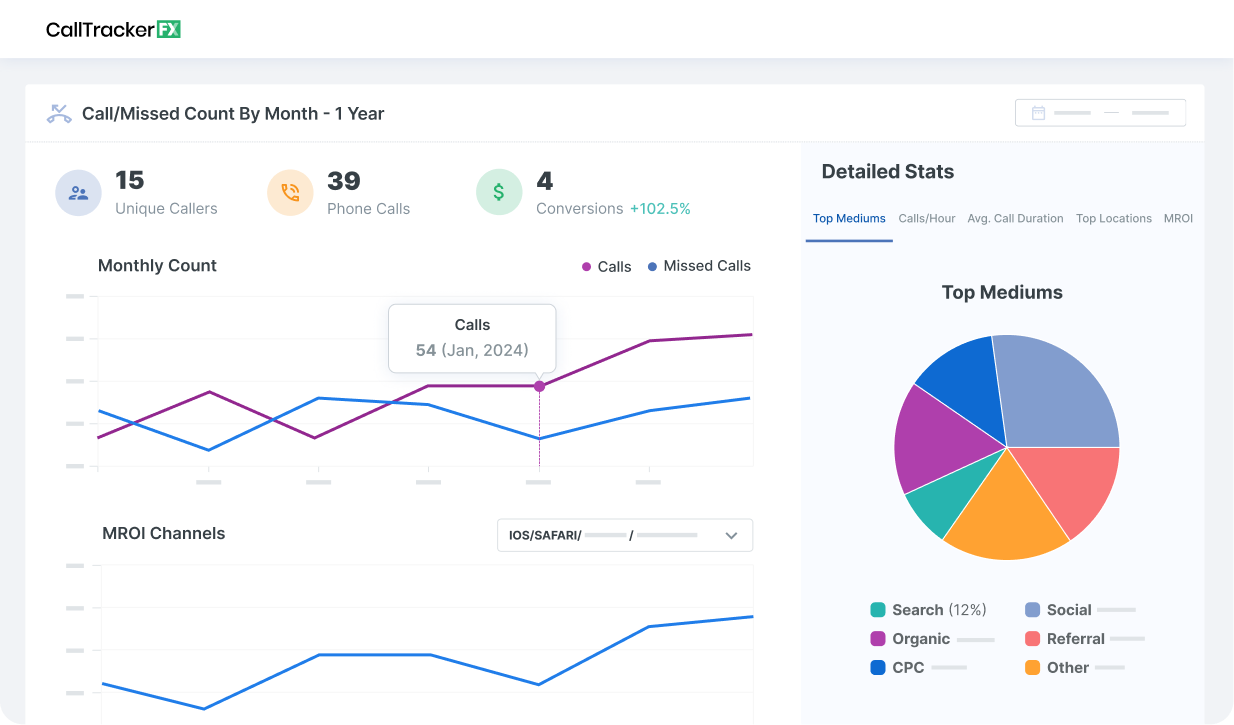
Measuring the metrics that affect your bottom line.
Are you interested in custom reporting that is specific to your unique business needs? Powered by RevenueCloudFX, WebFX creates custom reports based on the metrics that matter most to your company.
- Leads
- Transactions
- Calls
- Revenue

Should you rebrand after an acquisition?
Whether you should rebrand after an acquisition doesn’t have a one-size-fits-all answer. As mergers and acquisitions have a 70-90% failure rate, businesses need to do due diligence to determine whether to rebrand or maintain separate brands following an acquisition.
How to decide whether to rebrand after an acquisition
Decide whether to rebrand after an acquisition with the following steps:
1. Outline your options
First, outline your options.
In most cases, businesses use any of the following post-acquisition models:
| Model | Definition | Example |
| House of Brands | The acquired brand remains independent | Meta acquiring Instagram |
| Sub-Brand | The acquired brand acknowledges its parent | Salesforce acquiring Slack |
| Transitional | The parent absorbs the acquired brand over 12-18 months | T-Mobile acquiring Sprint |
| Consolidate | The parent immediately absorbs the acquired brand | Apple acquiring Beats Music |
2. Audit your acquired brand’s equity
Next, take inventory of your acquired brand’s equity. If your business invested in due diligence services before acquiring the brand, you’ll likely have some of this information already available:
| Area | Example Findings | Predicted Impact |
| Brand reputation: Does the brand have a healthy reputation? |
|
|
| Market fit: Do both businesses target the same buyer and/or location? |
|
|
| Digital equity: Does the brand’s online presence contribute to business growth? |
|
|
| Brand retention: Does a rebrand risk brand fans and retention? |
|
|
| Go-to market alignment: Does the brand’s offerings overlap with the parent company’s? |
|
|
| Operational efficiency: What is the overhead cost and overlap of the brands? |
|
|
Note: It’s worth mentioning that operational efficiency is one of the murkiest areas when considering a rebrand following an acquisition. That’s because businesses can often reduce costs and align structures through the House of Brands or Sub-Brand model, which often generates bulk discounts from vendors.
FAQs around brand audits
For more information about conducting brand audits, use these FAQs:
How should you measure brand reputation?
Measure brand reputation (or how much trust sits outside the website) by looking at:
- Review volume
- Average review ratings
- Review velocity
- Google Business Profile performance
- Third-party review visibility
- Customer sentiment
For a multi-location company, these assets can extend across dozens or hundreds of local profiles. As an example, Google’s Local Pack (which pulls from Google Business Profile) appears in more than 96% of searches, giving it massive influence in how buyers perceive a local services brand.
How should you measure digital equity?
Measure digital equity by inventorying the assets helping the company earn traffic and conversions:
- Backlinks and referring domains
- High-performing webpages
- Organic and/or AI assistant visibility (rankings, citations, mentions)
- Organic revenue
- Referral traffic (including from AI assistants)
- Local rankings
- Historical website conversion performance
A domain with years of authoritative backlinks and revenue-producing pages requires a different migration plan than a website with minimal organic visibility.
The same principle applies to individual pages. Before consolidating domains, identify which URLs currently earn traffic, links, leads, and revenue so you know what must survive the migration.
How should you measure brand retention?
Measure brand retention (or customer equity) by looking at the following:
- Repeat customers
- Customer retention
- Referrals
- Email engagement
- CRM or database activity
- Customer surveys and research
A strong referral engine deserves special attention. If existing customers regularly recommend the acquired company by name, retiring that identity changes the language people use to create new demand.
Customer interviews can also reveal something dashboards cannot: Why people trust the brand.
3. Choose your model
Now comes discussion time. This step in determining whether to rebrand an acquired company often takes months and considers factors outside your initial audit, such as execution costs and leadership preferences.
However, to get discussions and brainstorms started, we’ve created the scorecard below to help teams hone in on the most applicable models and surface which areas need deeper discussion.
Get started with the scorecard by:
- Selecting a single option for each area
- Tallying the total points
- Sharing your scorecard with other members of your team
| Area | Options | Points |
| Brand reputation |
|
[ 0 / 5 / 10 ] |
| Market fit |
|
[ 0 / 10 / 20 ] |
| Digital equity |
|
[ 0 / 10 / 20 ] |
| Brand retention |
|
[ 0 / 10 / 20 ] |
| Go-to market alignment |
|
[ 0 / 8 / 15 ] |
| Operational efficiency |
|
[ 0 / 8 / 15 ] |
| Total | ___ / 100 |
After tallying your points, interpret them using the table below:
| Score | Model |
| 0-29 | Consolidation |
| 30-54 | Transitional |
| 55-74 | Sub-Brand |
| 75-100 | House of Brands |
Note: The above scorecard is meant to support your discussions vs. make your decision. Use it appropriately.
FAQs about choosing an M&A model
Learn more about choosing a model with these FAQs:
When does it make the most sense to use the House of Brands model?
House of Brands makes the most sense when you find strong local or regional recognition, meaningful branded demand, valuable reviews and reputation, distinct positioning, or an audience that differs substantially from the rest of the portfolio.
When does it make the most sense to use the Sub-Brand model?
Sub-Brand makes the most sense when you’re looking to preserve the recognition already attached to Brand A and create an association with the larger organization.
It’s important to note that the right level of endorsement depends on factors like parent-brand awareness, audience overlap, opportunities for cross-selling, and how much equity remains concentrated in the acquired name.
Should you use this model, you’ll want to measure both sides of the relationship.
You want to see awareness or branded demand for the parent identity strengthening without a meaningful drop in acquired-brand conversions, retention, or direct demand.
If customers increasingly recognize the parent company while continuing to respond positively to the acquired brand, the endorsement has a concrete mechanism for creating value.
When does it make the most sense to use the Transitional model?
The Transitional model works well when consolidation supports the long-term business plan, but the acquired identity still carries customer or digital equity worth protecting.
While most often completed on a 12-18 month timeline, your pace should depend on customer awareness, branded search behavior, retention, sales cycles, parent-brand recognition, local profiles and reviews, and the complexity of any website or domain migration.
For the best results, make your transition data-driven.
As an example, you may watch whether parent-brand searches increase, customers begin using the new name unprompted, direct traffic successfully shifts to the new domain, and conversion and retention remain stable. Those signals provide stronger evidence than an arbitrary deadline.
When does it make the most sense to use the Consolidation model?
The Consolidation model makes the most sense when the acquired brand has limited recognition, its reputation offers little strategic advantage, audiences and services overlap heavily, or the master brand carries substantially stronger awareness.
Consolidation can also create value when maintaining separate identities produces meaningful duplication across the organization, such as “Consolidating three overlapping websites removes duplicated development costs and lets one SEO strategy capture shared service demand.”
4. Run your rebrand playbook
Should your business choose the Transitional or Consolidation model, the following playbook can help you rebrand while minimizing lost demand and downtime:
Phase 1: Protect
Start by documenting everything that currently creates or captures customer demand.
Inventory:
- Brand names and visual assets
- Domains, subdomains, and URLs
- Organic rankings and high-performing pages
- Backlinks and referring domains
- Google Business Profiles
- Reviews and local citations
- Customer and email databases
- Paid-search and social campaigns
- Analytics, CRM, and call tracking
- Referral sources and partner links
- Customer-facing sales materials
- Existing conversion benchmarks
Create a pre-rebrand baseline for branded search, organic traffic, local visibility, direct traffic, qualified leads, conversion rates, customer acquisition cost, revenue, retention, and review performance.
You cannot tell whether equity was transferred if you never established what it looked like before the transition.
Phase 2: Prepare
Turn the inventory into a migration plan.
Prepare:
- New positioning and messaging
- Customer communication
- URL and redirect mapping
- Domain-migration sequencing
- Backlink-preservation outreach
- Internal-link updates
- Google Business Profile changes
- Local citation updates
- Paid-search transition campaigns
- Analytics annotations
- CRM and tracking updates
- Email and social transitions
- Sales and employee enablement
Pay particular attention to search engine optimization when a rebrand includes a domain change.
Map existing URLs to their closest relevant destinations. Use appropriate 301 redirects, update internal links, sitemaps, and canonical signals, maintain Search Console tracking, and monitor rankings after launch.
Your brand consolidation and domain consolidation also do not have to happen on the same day. If the existing domain carries substantial digital equity, a phased technical migration may give your team more control over how that equity transfers.
Phase 3: Transition
Coordinate the launch across every place customers encounter the business.
That may include:
- Website and SEO
- Paid media
- Google Business Profiles and local listings
- CRM and sales workflows
- Email marketing
- Social profiles
- Public relations
- Customer support
- Customer communications
Consistency matters because customers experience a brand transition through individual touchpoints rather than through your internal brand architecture presentation.
Make sure the old and new identities clearly connect during the transition period so customers understand they are dealing with the same business.
5. Track your performance
Now compare post-launch performance against the Phase 1 baseline.
Monitor:
- Branded search demand
- Organic rankings and traffic
- Local visibility
- Direct traffic
- Leads and qualified leads
- Conversion rates
- Customer acquisition cost
- Marketing-sourced revenue
- Retention
- Reviews and sentiment
Define thresholds before launch where possible. For example, decide which drops in branded traffic or organic conversion rates would trigger investigation and what recovery trend leadership expects to see.
Do not judge success solely by whether the migration was launched on schedule.
A successful rebrand transfers customer demand and digital equity to the new identity while producing the strategic benefits leadership expected from consolidation.
How WebFX helps multi-brand companies navigate post-acquisition growth
Post-acquisition growth requires more than changing a brand or redesigning a website. You first need to understand what marketing equity exists, which assets drive customers and revenue, and which parts of the organization should be centralized without removing the local advantages that make individual brands valuable.
WebFX supports that process across search engine optimization (SEO), local SEO, paid media, web development, conversion rate optimization, analytics, AI-search visibility, multi-location marketing, and revenue attribution.
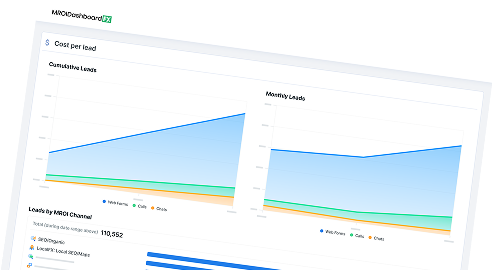
RevenueCloudFX adds the visibility that multi-brand organizations need to compare performance across markets while maintaining granular location-level data. For example, its multi-location capabilities can group data by location, division, franchisee, state, or territory and trace closed deals back to the channels and locations that sourced them.
That visibility helps leadership make a more informed decision about what should remain distinct and what can be centralized.
Meet RevenueCloudFX:
One platform tracking countless metrics and driving stellar results.
FAQs about rebranding after an acquisition
When shouldn’t you rebrand after an acquisition?
Hold on rebranding after an acquisition when you do not yet know what the brand contributes or what the transition would put at risk.
Reasons to gather more evidence include:
- Existing brand value has not been quantified
- The company has strong local recognition
- Branded searches produce meaningful leads or revenue
- The domain owns valuable rankings and backlinks
- Reviews and Google Business Profiles influence acquisition
- Repeat and referral customers rely on the existing identity
- The transaction recently closed and performance data remains incomplete
- The proposed change primarily serves visual preference rather than a measured business goal
“We own it now” is not a brand strategy.
A cleaner-looking portfolio can still introduce costs across customer communication, organic search, local visibility, paid media, website migrations, and customer reacquisition.
Identify assets to protect, fix, scale, or investigate before making higher-risk decisions like a rebrand or domain consolidation.
When does keeping multiple brands make sense?
Keeping acquired companies separate makes more sense when the individual identities themselves help generate demand.
Common signals include:
- Strong regional or local recognition
- Distinct customer audiences
- Different pricing or market positions
- Local trust influencing purchase decisions
- An acquisition model designed to preserve local identities
- Strong brand-specific search visibility
- Significant customer attachment to the existing name
One of the most important distinctions for a roll-up is that one organization does not need one customer-facing brand to operate one marketing system.
You can centralize data, analytics, attribution, technology, paid-media governance, SEO processes, reporting, content resources, and agency relationships without forcing every acquired business into the same customer-facing identity.
That model gives leadership centralized visibility while letting each market keep the positioning that works locally.
Measure the arrangement through brand-level revenue, customer acquisition cost, retention, branded demand, local visibility, and the cost of operating separate identities.
If independent brands continue producing strong customer economics without creating disproportionate operational costs, maintaining them has a measurable business case.
When does brand consolidation make more sense?
Brand consolidation becomes more attractive when maintaining separate identities creates more cost or confusion than value.
Look for conditions such as:
- Limited awareness for the acquired brands
- High audience and service overlap
- A much stronger parent brand
- Customer confusion between related companies
- Significant keyword or website overlap
- Duplicated marketing resources
- High technology or governance costs
- A deliberate strategy to build one national brand
Quantify the upside before deciding.
For example, assume three acquired brands target the same service category across adjacent markets. Each maintains its own website, paid-media structure, content calendar, reporting workflow, design library, and marketing technology.
Leadership can estimate what consolidation would reduce or eliminate across each cost center. Then compare those savings and growth opportunities with the customer, search, and reputation equity that would need to transfer.
That calculation makes “efficiency” concrete.
How soon should you rebrand after an acquisition?
There is no universal timeline for post-acquisition rebranding.
Timing should depend on how much existing brand equity you need to protect, customer impact, your integration strategy, parent-brand recognition, digital-migration complexity, and the performance data available.
If you cannot yet quantify what the acquired brand contributes, gather that evidence before committing to a high-risk transition.
What data should businesses use to inform post-acquisition rebranding decisions?
Businesses can use the following data (what we call the Rebrand Decision Dashboard) to inform their post-acquisition rebranding decisions:
1. Demand data
Track branded searches, non-branded visibility, direct traffic, and share of search.
The question these metrics answer is simple: How much existing demand depends on people already knowing the brand?
High branded demand raises the amount of recognition you need to transfer during a transition. Low branded demand may make consolidation easier, assuming other evidence points in the same direction.
2. Acquisition data
Measure leads by source, qualified leads, cost per lead, customer acquisition cost, conversion rates, and marketing-sourced revenue.
These metrics tell you whether brand visibility produces valuable customers rather than traffic alone.
For example, two brands could receive similar search traffic while one produces twice as many qualified opportunities. Leadership should understand that difference before treating the brands as equally valuable.
3. Brand data
Monitor reviews, sentiment, retention, referrals, and awareness research.
These signals help separate recognition from loyalty. A company may have high awareness but little attachment to the existing name, while another has a smaller audience with exceptional repeat and referral behavior.
Those situations call for different acquisition rebranding strategies.
4. Digital-asset data
Measure organic traffic, rankings, backlinks, local visibility, AI visibility, and domain performance.
These assets tell you what the digital migration needs to protect.
For example, if a high-revenue service page has hundreds of authoritative backlinks and top organic rankings, moving the domain without carefully mapping and redirecting that URL creates more risk than migrating a page with little search visibility.
5. Portfolio context
Finally, compare geographic overlap, audience overlap, service overlap, cross-sell potential, and the relative strength of each brand.
The same acquired brand may be valuable independently in one portfolio but redundant in another. Portfolio context explains the difference.
The best decision view goes beyond traffic and leads to follow the data.
For multi-location and multi-brand organizations, RevenueCloudFX can group performance by location, division, franchisee, state, or territory, and connect closed deals to the channels and locations that sourced them.
That gives leadership a way to compare where marketing produces revenue across a complex organization rather than relying on aggregate traffic alone.
Should an acquired company keep its brand name?
Keeping the acquired company’s name makes sense when it contributes meaningful recognition, trust, branded search demand, local reputation, customer retention, referrals, or revenue.
Maintaining the customer-facing brand does not prevent your organization from centralizing reporting, analytics, marketing technology, media governance, or other infrastructure behind it.
What are the risks of rebranding after an acquisition?
Potential risks of rebranding after an acquisition include:
- Loss of existing brand recognition
- Customer confusion during the transition
- Changes in branded search demand
- Organic ranking or traffic losses
- Lost backlink equity during a domain migration
- Local-search visibility disruption
- Review and profile complications
- Conversion-rate changes during the transition
The amount of risk depends on how much customer and digital equity already sit within the acquired identity. Measuring those assets before launch lets you build the transition around protecting the areas with the most business value.
How does rebranding after an acquisition affect SEO?
Rebranding after an acquisition can affect branded search behavior, rankings, backlinks, local visibility, website traffic, and AI and search citations, particularly if the change also includes a domain migration.
Protect SEO performance by:
- Inventorying valuable URLs and backlinks
- Mapping 301 redirects
- Updating internal links and canonical signals
- Submitting updated sitemaps
- Maintaining Search Console visibility
- Coordinating Google Business Profile changes
- Annotating analytics
- Monitoring rankings after launch
A brand change and a website consolidation do not always need to occur at the same time. Sequence them according to the digital equity you need to transfer.
How do you measure whether a post-acquisition rebrand was successful?
Compare pre- and post-rebrand performance across:
- Branded search demand
- Organic visibility
- Direct traffic
- Local visibility
- Qualified leads
- Conversion rates
- Customer acquisition cost
- Marketing-sourced revenue
- Retention
- Reviews
- Customer sentiment
The goal is not simply to adopt the new identity. Success means capturing the strategic benefits of the new brand architecture while successfully transferring the customer demand and digital equity the organization acquired.
Learn how we increased organic revenue by 260%, and organic transactions by 198% for a multi-location company with over 500 locations.

Make your next post-acquisition brand decision with better data
A post-acquisition rebrand should begin with evidence about what the acquired identity contributes today and what the future brand structure can create.
Whether that evidence points toward keeping, endorsing, transitioning, or consolidating the brand, leadership needs a clear view of customer demand, search performance, location-level results, and revenue before committing to the change.
WebFX can help your multi-brand or multi-location company assess its marketing and measurement setup, connect marketing activity to customers and revenue, and identify the digital assets your next transition needs to protect.
RevenueCloudFX supports that work by centralizing performance visibility while retaining the market- and location-level detail needed to make informed decisions across a growing organization.
Schedule a 30-minute discovery call with our specialists to analyze your current multi-location marketing and measurement setup and identify the next opportunities for your organization.
-
 Thaakirah Abrahams is a Lead Editor at WebFX, where she leverages her 5+ years of experience to craft compelling website content. With a background in Journalism and Media studies and certifications in inbound marketing, she holds a keen eye for detail and a talent for breaking down complex topics for numerous sectors, including the legal and finance industries. When she’s not writing or optimizing content, Thaakirah enjoys the simple pleasures of reading in her garden and spending quality time with her family during game nights. View full profile
 -

WebFX is a full-service digital marketing agency delivering revenue-driving strategies across online advertising, SEO and AI search optimization, and digital marketing. Backed by 1,100+ client reviews, a 4.9-star rating on Clutch, and proprietary revenue-tracking technology, our team helps businesses grow visibility and revenue across platforms, from Google to ChatGPT to LinkedIn. Discover how our expert team and revenue-accelerating tech can drive results for you. Learn more

Try our free Marketing Calculator
Craft a tailored online marketing strategy! Utilize our free Internet marketing calculator for a custom plan based on your location, reach, timeframe, and budget.
Share this article


Proven Marketing Strategies
Try our free Marketing Calculator
Craft a tailored online marketing strategy! Utilize our free Internet marketing calculator for a custom plan based on your location, reach, timeframe, and budget.
What to read next