


Contents
- Your 90-day post-acquisition marketing plan at a glance
- Days 1–15: Stabilize marketing before you change it
- Days 16–30: Diagnose what you actually acquired
- Build a post-acquisition marketing scorecard
- Decide your brand architecture: Absorb, endorse, or keep independent
- Days 31–60: Activate the highest-impact opportunities
- Days 61–90: Scale what works and build the longer-term roadmap
- The 5 decisions you should be able to make by day 90
- What a successful first 90 days looks like
- FAQs about marketing after an acquisition
- How WebFX helps newly acquired companies build their first 90-day plan
- The real question isn’t whether to change the acquired company’s marketing

TL;DR: Marketing after an acquisition
- Days 1–15: Stabilize. Secure access to marketing tools, preserve historical data, protect lead flow, and align internal teams before communicating changes to customers.
- Days 16–30: Diagnose. Audit channels, customer needs, the website, and CRM data. Classify inherited assets as protect, fix, scale, or investigate.
- Days 31–60: Activate. Fix tracking, lead routing, and conversion problems, then launch a small number of evidence-backed growth initiatives.
- Days 61–90: Scale. Adjust investment based on qualified leads, pipeline, and revenue. Build a 6 to 12-month roadmap with clear KPIs and ownership.
- Let evidence guide major changes. Evaluate brand equity, website performance, systems, and existing partners before committing to a rebrand, migration, or replacement.
Marketing after an acquisition should first protect existing revenue, customer relationships, and marketing data. During the first 90 days, stabilize the inherited marketing operation, audit performance, fix revenue leaks, and scale opportunities supported by evidence.
This playbook organizes that work into four phases, with a scorecard and Day 90 checklist to help leadership decide what to protect, fix, scale, stop, or investigate further.
Your 90-day post-acquisition marketing plan at a glance
| Timeline | Phase | Primary goal | Key deliverable |
| Days 1–15 | Stabilize | Protect existing demand and data | Marketing continuity checklist |
| Days 16–30 | Diagnose | Understand what’s actually working | Post-acquisition marketing scorecard |
| Days 31–60 | Activate | Fix leaks and launch quick wins | Prioritized growth roadmap |
| Days 61–90 | Scale | Invest behind proven opportunities | 6 to 12-month marketing plan |
Days 1–15: Stabilize marketing before you change it
The goal is to protect revenue, demand, data, and customer experience. Before making changes, identify what could break and make sure customers and internal teams understand the acquisition.
Preserve access to the marketing infrastructure
Inventory and confirm access to GA4, Google Search Console, Google Ads, Microsoft Ads, the CRM, the CMS, call tracking, the email platform, social accounts, Google Business Profiles, review platforms, domain and DNS, the tag manager, and any agency or vendor accounts.
Protect historical marketing data
Before migrating or replacing any technology, preserve historical performance and document current tracking configurations. Export critical reports, identify who owns the CRM data, and confirm call and form tracking still work.
Identify anything that could immediately disrupt lead flow
Check active paid campaigns, high-traffic and high-converting landing pages, forms, phone numbers, lead routing, CRM automations, email nurture sequences, and top organic pages before anyone touches them.
Build a “do not break” list
Before day 15 ends, document the assets and processes from the access, data, and lead-flow inventories that need to be understood before anyone changes them. This “do not break” list gives the team a shared reference before changing a campaign, tracking setup, or piece of infrastructure.
Align internal teams before notifying customers
Sales, support, and account teams should share the same explanation of the acquisition, answers to customer questions, and understanding of operational changes. Establish that alignment before the customer announcement.
Then give customers a short, direct announcement explaining what is changing, what is staying the same, and who to contact. Communicate before customers encounter a renamed invoice, changed login page, or other unexpected difference.
Coordinate subsequent channel updates with the brand decision. Changes to social handles, email footers, and redirects still need clear ownership and checks. Plan website, CRM, and domain consolidation only after reviewing the audit findings, brand architecture, and migration risks.
Days 16–30: Diagnose what you actually acquired
By this point, the marketing engine is protected. Now the question is what did we actually buy, from a marketing perspective.
Audit marketing performance
Review traffic, leads, qualified leads, pipeline, customers, revenue, CAC, CPL, conversion rates, and ROAS. Break the numbers down by channel, campaign, location, brand, and customer segment. The question that matters: Which activities are actually creating customers and revenue.
Audit organic search and AI visibility
Evaluate high-value rankings, organic traffic trends, which pages generate leads or revenue, brand versus non-brand visibility, competitor gaps, backlink authority, technical SEO, and local presence. Separate assets worth protecting from opportunities worth improving.
AI visibility belongs in that audit for a specific reason. WebFX’s analysis of 2.3 billion site sessions from January 2024 through December 2025 found generative AI traffic grew 796% over that period and converted about 1.2 times higher than organic search. Whatever AI visibility the acquired company has already built is a measurable, revenue-relevant asset, worth protecting before anyone touches its content, domain, or site architecture.
Audit paid media
Evaluate campaign structure, targeting, conversion tracking, lead quality, cost per qualified lead, and closed revenue. Don’t recommend pausing a campaign just because CPL looks high. Evaluate the quality and revenue those leads actually generate first.
Audit the website and conversion experience
Look at top landing pages, conversion paths, forms, CTAs, mobile experience, page speed, and trust signals. The question: Where is the company already attracting valuable prospects but losing them before conversion.
Audit the martech and CRM stack
Map the full path from traffic source to website to conversion to CRM to sales to closed revenue. Identify broken integrations, duplicate platforms, missing attribution, and data silos.
Review duplicate contact records, inconsistent lifecycle stages, and differences in how teams define a qualified lead. Agree on shared definitions with sales before combining reports or migrating systems.
An acquisition can add another CRM, ad account, and reporting layer to an already fragmented setup. Document what each system holds and how its data connects to pipeline and revenue before deciding what to consolidate.
Build a post-acquisition marketing scorecard
Ending the audit with a list of findings isn’t useful on its own. Score each area instead, using the same protect, fix, scale, investigate framework WebFX applies to post-acquisition marketing integration generally.
| Area | Protect | Fix | Scale | Investigate |
| SEO | High-revenue organic pages | Technical issues | High-intent rankings | AI visibility |
| Paid | High-ROAS campaigns | Tracking gaps | Profitable markets | Low-volume campaigns |
| Website | High-converting landing pages | Form friction | Winning layouts | Full redesign |
| Data | CRM history | Attribution gaps | Revenue reporting | Platform consolidation |
| Brand | Strong brand equity | Inconsistent messaging | Proven positioning | Rebrand |
Every major marketing asset or strategy goes into one of these four buckets. That keeps a team from treating everything it inherited as either “keep it” or “replace it,” which is the mistake that either stalls an integration or breaks something that was already working.
Once every area has a bucket, add a forecast of marketing growth after acquisition to the scorecard. Use your baseline cost per lead, lead to customer rate, and average customer value to project the revenue each marketing dollar should return, so leadership can set revenue and budget targets your marketing can actually hit.
Decide your brand architecture: Absorb, endorse, or keep independent
Every acquisition forces a brand decision, whether or not anyone frames it that way. A post-acquisition marketing strategy that skips this decision usually ends up making it by accident. There are three real options: Absorb the acquired company fully into the parent brand, endorse it as a distinct brand under the parent’s umbrella, or keep it operating independently for now.
The brand row of the post-acquisition scorecard is where this decision actually starts. Strong, protected brand equity argues for endorsing or keeping the brand independent, at least until there’s clear evidence a shared brand would perform as well or better. Weak or inconsistent brand equity, overlapping audiences, and duplicated service areas argue for absorbing the brand sooner.
This is a portfolio company marketing decision as much as a naming decision. A PE-backed platform running several acquired brands under one umbrella needs a private equity marketing strategy that treats brand architecture the same way it treats systems: Some things centralize, and some things stay local. A strong regional brand with real equity in its market is usually worth preserving longer than a generic marketing decision would suggest, because the cost of losing that equity is higher than the cost of running two logos for a while.
Don’t make this decision on day one. By day 90, leadership should know whether there’s enough evidence to make the call, or exactly what additional evidence is still needed before it can be made.
Days 31–60: Activate the highest-impact opportunities
By now the team knows enough to make informed changes. Prioritize opportunities by potential business impact, confidence in the data, time to return, and effort required.
Fix revenue leaks first
Before asking how to generate 30% more traffic, ask how much more revenue the company could generate from the demand it already has. Broken tracking, poor lead routing, and weak conversion paths are usually cheaper to fix than new demand is to create.
Launch a small number of high-confidence growth plays
The audit should point to two or three specific opportunities, whether that’s expanding a proven PPC campaign, shifting spend toward a stronger market, or fixing the highest-value landing page. Let the evidence from days 16 through 30 decide what deserves priority now, rather than launching everything at once.
Days 61–90: Scale what works and build the longer-term roadmap
The question at this stage: What have the first 60 days taught us that should shape the next 6 to 12 months.
Reallocate budget based on business results
Use qualified lead volume, pipeline, revenue, CAC, and ROAS by market or location to decide where to increase, maintain, test, or reduce spend. For multi-location companies, RevenueCloudFX can compare revenue, leads, CPL, and closed-won performance across locations to identify where budget should shift.
Decide what should be standardized
Analytics, CRM structure, attribution, reporting, and KPI definitions are usually worth standardizing across the organization. Customer-facing decisions usually aren’t. A newly acquired HVAC brand in Texas may need different messaging and local strategy than a portfolio company in Pennsylvania, so standardize the infrastructure that creates visibility and efficiency, while leaving the marketing decisions underneath it flexible.
Build the 6 to 12-month growth roadmap
By day 90, leadership should have a revenue baseline, a marketing KPI framework, priority channels, budget recommendations, and a reporting cadence. Connect those priorities to the acquisition’s value-creation goals.
Assign an owner, next action, and review date to each priority. Establish how marketing and sales will review results together so the initial integration work becomes an ongoing operating rhythm.
The 5 decisions you should be able to make by day 90
By the end of the first 90 days, leadership should confidently know the answers to five questions.
- What should we protect? Which channels, assets, campaigns, rankings, and brand elements already create value.
- What should we fix? Where tracking gaps, conversion issues, wasted spend, or operational problems are suppressing return.
- What should we scale? Which channels, markets, and campaigns have demonstrated revenue potential.
- What should we stop? Which investments have enough evidence to show they aren’t contributing meaningful business value.
- What should we investigate longer? Which major decisions, like rebranding or domain consolidation, need more evidence before anyone commits to them.
A successful first 90 days doesn’t mean the company has changed everything. It means leadership now knows where change will create the most value.
What a successful first 90 days looks like
By day 90, the organization should have:
- Preserved critical marketing data
- Documented the existing marketing ecosystem
- Connected marketing activity to business outcomes
- Established a baseline for current performance
- Identified the assets worth protecting
- Fixed the major tracking and revenue leaks
- Launched a small number of high-confidence initiatives
- Identified where budget should increase or decrease
- Established marketing KPIs and clear ownership
- Built a 6 to 12-month roadmap
- Established reporting leadership can actually use
FAQs about marketing after an acquisition
What should marketing do in the first 90 days after an acquisition?
Follow four phases: Stabilize in days 1–15, diagnose in days 16–30, activate in days 31–60, and scale in days 61–90. Start by securing access, preserving data, protecting lead flow, and aligning internal teams before customer announcements. Then audit performance, fix revenue leaks, and launch evidence-backed growth initiatives. By day 90, establish investment priorities and a 6 to 12-month roadmap with clear KPIs and ownership.
What should you change first after acquiring a company?
Prioritize changes based on business impact, confidence, and time to return, rather than by what’s most visible. Broken tracking, wasted paid spend, and high-intent SEO opportunities already close to ranking are usually strong early candidates. The most obvious change isn’t necessarily the highest-value one.
What shouldn’t you change immediately after an acquisition?
Avoid major changes before establishing a reliable performance baseline, unless a clear business risk requires immediate action. Review these assets before committing:
- Brand name and domain: Understand their contribution to customer recognition, direct traffic, and search visibility.
- Website: Document valuable rankings, backlinks, landing pages, and conversion paths before a redesign or replatform.
- CRM and marketing automation: Preserve historical customer data, integrations, tracking configurations, and automation logic before migrating.
- Agencies and vendors: Evaluate results, reporting transparency, and data ownership before replacing an incumbent partner.
- Top-performing campaigns and content: Confirm what drives performance before changing campaigns or high-ranking pages.
These assets do not need to remain unchanged indefinitely. Use evidence to decide what needs improvement, and distinguish reversible tests from changes that require a migration or recovery plan.
How do you identify quick marketing wins after an acquisition?
Look for demand, traffic, or leads the company already has but isn’t fully monetizing. A paid campaign generating qualified customers but constrained by budget, or a high-intent SEO ranking sitting just below the top positions, are good starting points. A real quick win is measurable, fast to implement, and tied to revenue.
How should you measure marketing performance after an acquisition?
Build the baseline around business outcomes. Marketing-sourced pipeline and revenue, cost per qualified lead, CAC, close rate, and ROAS matter more here than traffic or lead volume alone.
Should you increase the marketing budget immediately after an acquisition?
Not automatically. First determine which existing investments already generate revenue and where budget is currently wasted. The first 90 days should make the budget more informed above all.
Should you keep the acquired company’s existing marketing agency?
Evaluate the incumbent agency against the same standards as the rest of the inherited marketing function. Results, reporting transparency, and data ownership matter more than how long they’ve held the account. Neither automatically keeping nor automatically replacing the agency is the safer default.
How should marketing change when acquiring multiple locations or brands?
Apply the same four-phase plan, but audit each location or brand alongside the combined business. Compare revenue, qualified leads, marketing efficiency, and local market opportunity before reallocating investment.
Standardize analytics, attribution, reporting, CRM structure, and core KPIs where shared definitions improve visibility. Keep location-specific services, customer needs, and messaging flexible where markets differ.
Do not rely only on portfolio-wide averages. They can hide a strong location worth scaling or an underperforming market consuming budget. For businesses that depend on local customers, protect Google Business Profiles, reviews, and local search visibility during integration.
Is post-acquisition marketing the same as acquisition marketing?
No. Acquisition marketing usually refers to winning new customers. Post-acquisition marketing, the term this playbook uses, refers to integrating a newly acquired company’s marketing after a business acquisition.
Why do so many acquisitions run into marketing problems?
Common marketing-related problems can come from moving too fast on the wrong things. Rebranding or replatforming before understanding what brand and search equity are worth, and going silent on customer communication, are two common examples. A protect-first approach, backed by an actual audit, can catch many of these before they happen.
How do you know whether the first 90 days were successful?
Success looks like a reliable performance baseline, identified revenue leaks and growth opportunities, a prioritized investment list, and early measurable wins. All of it should tie back to the acquisition’s value-creation plan, well beyond a completed audit.
WebFX has thousands of reviews praising our transparency, communication, and results.
WebFX Agency Rating

4.9/5
based on over 550 third-party reviews

How WebFX helps newly acquired companies build their first 90-day plan
WebFX helps compress the discovery, decision, and execution cycle rather than stretching it out, building a post-acquisition marketing strategy around evidence instead of assumptions. In the first 30 days, that means a marketing audit, analytics and tracking review, CRM integration work, and a competitive assessment, supported by RevenueCloudFX.
In days 31 through 60, it means protecting existing performance while launching the highest-confidence opportunities the audit surfaced. By day 90, it means shifting investment toward what’s proven, establishing reporting leadership can rely on, and applying what worked in one location or brand across the rest of the portfolio.
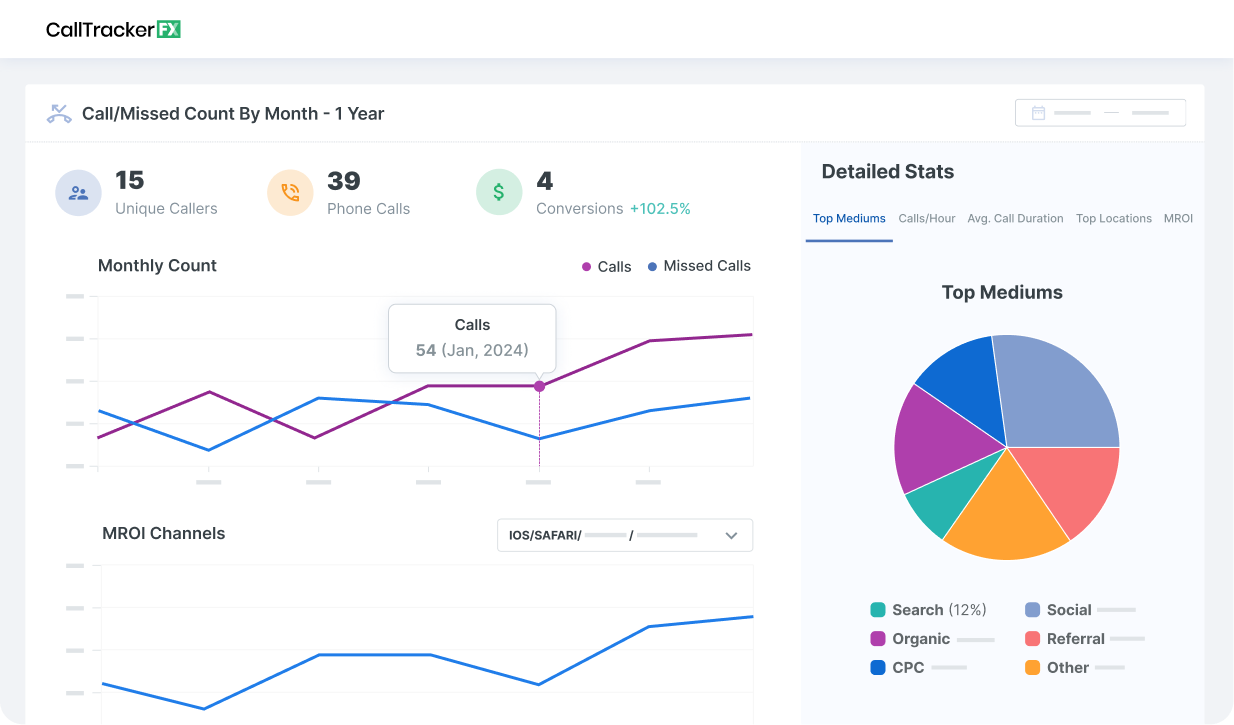
Measuring the metrics that affect your bottom line.
Are you interested in custom reporting that is specific to your unique business needs? Powered by RevenueCloudFX, WebFX creates custom reports based on the metrics that matter most to your company.
- Leads
- Transactions
- Calls
- Revenue

The real question isn’t whether to change the acquired company’s marketing
Want help building that scorecard for the company you just acquired? Get your custom post-acquisition marketing plan or call 888-601-5359 to talk to a strategist today about what to protect, fix, and scale first.
-
 Albert Dandy Velasquez blends SEO strategy with compelling storytelling to help businesses boost their visibility and revenue online. With a B.A. in English and certifications from HubSpot, Semrush, and Google Analytics, he has written and optimized hundreds of articles on organic SEO, content strategy, and user experience. He regularly contributes to the WebFX blog and SEO.com, creating content that helps readers turn marketing goals into measurable results. When he’s off the clock, he’s usually exploring new neighborhoods on two wheels, filming travel content, or chasing golden hour with a coffee in hand. View full profile
 -

WebFX is a full-service digital marketing agency delivering revenue-driving strategies across online advertising, SEO and AI search optimization, and digital marketing. Backed by 1,100+ client reviews, a 4.9-star rating on Clutch, and proprietary revenue-tracking technology, our team helps businesses grow visibility and revenue across platforms, from Google to ChatGPT to LinkedIn. Discover how our expert team and revenue-accelerating tech can drive results for you. Learn more

Try our free Marketing Calculator
Craft a tailored online marketing strategy! Utilize our free Internet marketing calculator for a custom plan based on your location, reach, timeframe, and budget.
Contents
- Your 90-day post-acquisition marketing plan at a glance
- Days 1–15: Stabilize marketing before you change it
- Days 16–30: Diagnose what you actually acquired
- Build a post-acquisition marketing scorecard
- Decide your brand architecture: Absorb, endorse, or keep independent
- Days 31–60: Activate the highest-impact opportunities
- Days 61–90: Scale what works and build the longer-term roadmap
- The 5 decisions you should be able to make by day 90
- What a successful first 90 days looks like
- FAQs about marketing after an acquisition
- How WebFX helps newly acquired companies build their first 90-day plan
- The real question isn’t whether to change the acquired company’s marketing
Share this article


Proven Marketing Strategies
Try our free Marketing Calculator
Craft a tailored online marketing strategy! Utilize our free Internet marketing calculator for a custom plan based on your location, reach, timeframe, and budget.