


Contents
- How much does multi-location marketing cost?
- What goes into the cost of multi-location marketing?
- How should you allocate your marketing budget across locations?
- What should a multi-location marketing agency quote include?
- How to compare multi-location marketing agency pricing?
- How WebFX approaches multi-location marketing costs?
- FAQs about multi-location and multi-brand marketing costs
Last Updated: September 14, 2026

Multi-location costs at a glance
- Custom multi-location marketing plans start at $3,000 per month, not per location, and advertising spend is a separate budget.
- Location count alone doesn’t set your cost. Brands, technology, and organizational complexity often matter more.
- Centralized strategy, technology, and reporting can serve every location, while local execution scales with each market.
- Allocate budget based on each location’s opportunity and expected return, not an even split.
- Compare total cost of ownership, not just monthly retainers, when evaluating agencies.
Custom digital marketing plans start at $3,000 per month, and multi-location pricing builds from there based on your markets, brands, service mix, ad spend, and technology needs.
A 50-location company doesn’t need 50 times the investment of a single-location company. Some costs can be centralized across your organization, and others scale with each market you add.
If you’re a marketing manager, CMO, or private equity operating partner budgeting across locations, brands, or acquired companies, this guide covers what drives cost and how to evaluate an agency’s quote.
- How much does multi-location marketing cost?
- What goes into the cost of multi-location marketing?
- How should you allocate your marketing budget across locations?
- What should a multi-location marketing agency quote include?
- How to compare multi-location marketing agency pricing?
- How WebFX approaches multi-location marketing costs?
- FAQs about multi-location and multi-brand marketing costs
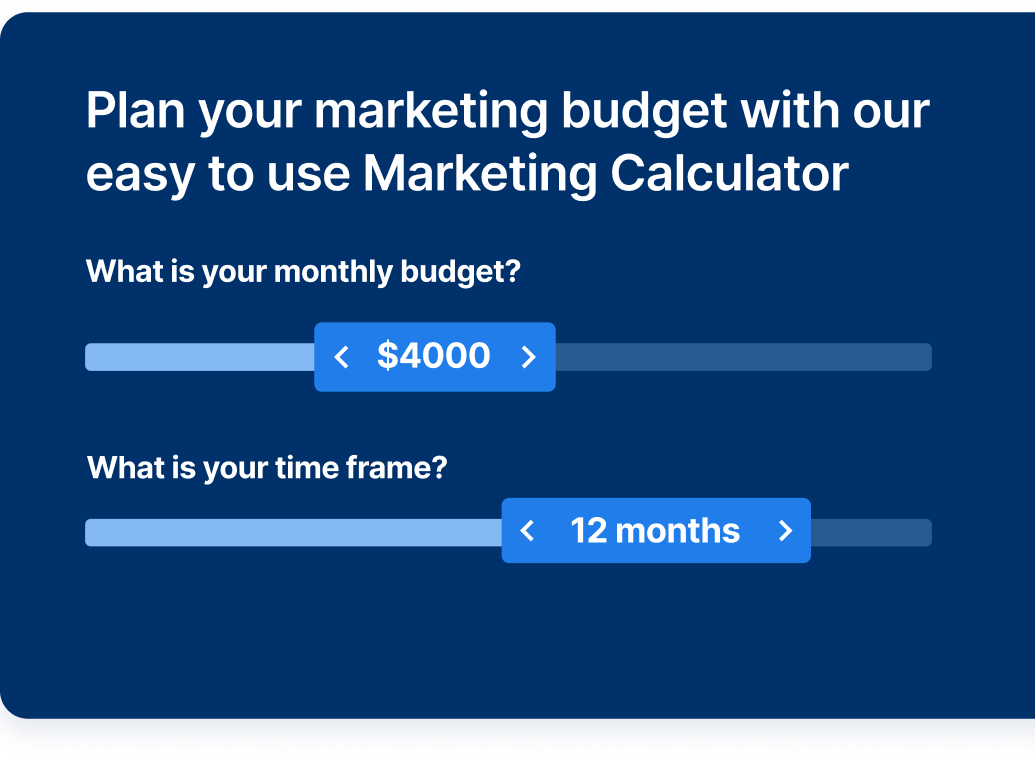
Try our free Marketing Calculator
Craft a tailored online marketing strategy! Utilize our free Internet marketing calculator for a custom plan based on your location, reach, timeframe, and budget.
Try our Marketing Calculator

How much does multi-location marketing cost?
Custom digital marketing plans start at $3,000 per month, and your multi-location price builds from there. That starting point applies to your plan, not to each location. It covers agency fees only, so your advertising spend is a separate budget.
These six factors affect your multi-location marketing costs:
- Number of locations and geographic markets
- Number of brands under your organization
- Marketing channels and the depth of each service
- Advertising investment, including market demand and competition
- Technology and reporting infrastructure, including CRMs and attribution
- Organizational complexity, such as multiple websites, acquisitions, franchise models, and decentralized teams
Location count alone doesn’t set your price. The number of distinct marketing environments and customer-facing systems you run matters more, and the more of your execution you can centralize, the less each new location adds.
WebFX builds custom plans rather than selling a flat per-location package, because these factors change so much from one multi-location company to the next.
What goes into the cost of multi-location marketing?
Your multi-location marketing cost rarely comes from a single invoice. It builds from agency fees, media spend, technology, local execution, and the internal time your team spends managing all of it. Some of those costs hold steady as you add locations, and others grow with every market.
- Agency fees
- Advertising and media spend
- Marketing technology, reporting, and attribution
- Local marketing and location-specific costs
- Internal resources and management
- Costs that can be centralized vs. scaled by location
- Bonus: How to calculate your total multi-location marketing cost
Agency fees
Agency fees pay for the people and process behind your marketing, not the dollars you spend on ads. WebFX custom digital marketing plans start at $3,000 per month, and multi-location pricing builds from there based on your markets, service mix, and growth goals.
Make sure every quote itemizes what that fee covers. A complete multi-location agency fee typically includes:
- Strategy: Growth strategy, market prioritization, and channel planning
- Campaign management: SEO, PPC, local SEO, CRO, and any other services you select
- Content and creative: Brand-level and market-specific assets
- Local execution: Location-level work, such as Google Business Profiles, location pages, and reviews
- Account management: Ongoing coordination between your team and the agency across brands and locations
- Reporting: Executive, brand, location, channel, and revenue reporting
- Team resources: A strategic lead, channel specialists, and data or technology support
Keep in mind that a lower quote often leaves out reporting technology, attribution, content, or additional markets rather than delivering the same scope for less.
Advertising and media spend
Media spend sits in a separate budget line from your agency fees. You pay it directly to platforms like Google, Microsoft, and Meta, and none of it goes to your agency. For example, WebFX custom PPC consulting plans start at $750 per month, while you might invest five figures a month directly into Google Ads.
For large multi-location advertisers, media spend can significantly exceed agency fees. Best practice is to show both figures separately in your budget, so you compare agency quotes on equal terms.
Each channel carries its own budget, whether you run paid search, paid social, or other media. Market demand, cost per click, competition, customer value, and revenue goals set the number for each one.
Spend also differs between locations, since the same search can cost more in a competitive metro than in a smaller market, and every market you add brings its own budget.
Marketing technology, reporting, and attribution
Beyond your agency retainer, you often pay separately for the technology that shows what your marketing produces. That includes executive dashboards, location-level reporting, revenue attribution, call and lead tracking, CRM integrations, review management, and competitor intelligence. These costs climb as you grow from 10 to 25 to 50 to 100-plus locations, since each new tool or integration often gets purchased and configured per system.
How you organize that stack matters as much as which tools you buy. In a fragmented model, every location or brand runs its own dashboards, lead tracking, and attribution setup, so adding a location means adding another stack. In a centralized model, one shared data infrastructure rolls up from corporate to brand, region, location, channel, campaign, lead, and revenue.
Centralizing can cut duplicate software, disconnected reporting, and manual data reconciliation, though your savings depend on your existing stack and which capabilities you can truly consolidate.
Weak visibility adds cost of its own. WebFX research found that 24% of companies are unsure whether their marketing ROI meets expectations, and separate systems in every market make that uncertainty worse.
RevenueCloudFX, WebFX’s proprietary tracking technology, gives you a single view of performance and revenue impact, which for many multi-location businesses goes further than Google Analytics 4 (GA4) alone.
Local marketing and location-specific costs
Local execution is where cost tracks your location count most closely. Each market you add brings its own Google Business Profile management, location page, review and reputation work, local content, and local competitive research. Local PPC campaigns and other market-specific execution add to that list.
Multi-location SEO shows how this plays out. WebFX custom SEO plans start at $2,900 per month, and your price rises with your number of markets, locations, and websites, along with your local SEO requirements, content needs, and competition.
Don’t calculate your SEO cost by multiplying a package price by your location count. Domain authority, technical work, site infrastructure, strategy, and reporting systems serve every location at once, so your organization shares those costs.
Internal resources and management
Your agency invoice doesn’t show your total cost of marketing. Your internal team also spends time on strategy alignment, location coordination, approvals, and oversight, and that time carries a real cost even though it never appears on a quote.
For example, internal marketing staff often field requests from location managers, approve local content and campaigns, manage agency and technology relationships, and compile reports for leadership.
Keep in mind that this workload grows with complexity. Multiple brands, different CRMs, separate ad accounts, and decentralized marketing teams each add coordination work, and inconsistent reporting adds manual cleanup on top.
The same logic applies to who runs the central layer. Strategy, reporting, and attribution can sit with an internal team or with an agency, and the cost looks different depending on how many brands you manage. See how in-house vs. agency marketing compares on cost and cross-brand reporting.
Costs that can be centralized vs. scaled by location
If you run 30 locations, you shouldn’t expect to pay 30 times what one location costs. Strategy, reporting, attribution, and technical infrastructure serve your whole organization. Local SEO, Google Business Profiles, location pages, reviews, local competitive analysis, and paid media scale with each market you add.
| Marketing investment | Mostly centralized | Scales with locations/markets |
| Marketing strategy | Yes | No |
| Executive reporting | Yes | No |
| Revenue attribution | Yes | No |
| Technical SEO | Yes | No |
| Marketing technology | Yes | Sometimes |
| CRM integration | Yes | Sometimes |
| Brand strategy | Yes | Sometimes |
| Website infrastructure | Yes | Sometimes |
| CRO | Yes | Sometimes |
| Content | Yes | Sometimes |
| Local SEO | No | Yes |
| Google Business Profiles | No | Yes |
| Location pages | No | Yes |
| Local reviews | No | Yes |
| Paid media | No | Yes |
| Local competitive analysis | No | Yes |
| Market-specific creative | No | Yes |
Treat the “Sometimes” rows as judgment calls. They scale when your markets, brands, or systems differ from one another, and they stay shared when they don’t. Scale should create leverage, not just multiply your cost, so a well-built system shares infrastructure across every location and invests locally only where that investment creates value.
Bonus: How to calculate your total multi-location marketing cost
Add up every cost layer to see what you actually pay:

How to calculate the cost of marketing operations
Total cost of marketing operations = agency fees + media spend + technology + data and reporting + internal management time
Your actual total depends on how much work you can centralize and how much must happen at the location level. Price the centralized terms once, including agency strategy, technology, and reporting. Then price the location-specific terms for each market you serve.
Comparing retainers in isolation gives you an incomplete picture. Use this formula to make sure every agency quote accounts for technology, reporting, and local execution.
How should you allocate your marketing budget across locations?
Don’t automatically divide your budget equally among locations. An even split gives a saturated market the same investment as an untapped one, so some locations receive more than they can use while others fall short. Allocate based on opportunity and expected return instead.
Score each location against the same set of criteria, then compare the results side by side to decide where your budget should go:
| Allocation criterion | What to evaluate | How it shapes your budget |
| Market opportunity | The size of the local customer base and how much of it you already reach | A larger untapped market justifies more investment |
| Current performance | Leads, revenue, and return on spend over time | Strong returns earn more budget, while weak returns need a diagnosis first |
| Search demand | The volume of local searches for your services | High demand gives your paid and organic efforts more to capture |
| Competition | How many rivals target the same searchers, and how aggressively | A crowded market raises the cost of every click and the spend you need to compete |
| Customer value | The average revenue a customer or lead brings in | Higher-value customers support higher acquisition costs |
| Conversion rates | The share of visitors and leads that become customers | Strong demand with weak conversion calls for a fix before more spend |
| Growth potential | Your room to expand share, services, or audience | A location with headroom absorbs extra budget more productively |
| Operational capacity | Whether the location can handle more leads, appointments, or jobs | Demand beyond capacity wastes the spend that created it |
Two of these criteria catch the most budget mistakes. A location with strong demand but poor conversion rates needs CRO before it needs more media spend, since extra traffic into a weak funnel multiplies waste. A location with strong returns but no room for more customers has the opposite problem, because leads it can’t serve never turn into revenue.
Keep in mind that your allocation needs location-level reporting and revenue attribution to work. Without them, you can’t compare returns across markets with any confidence. Best practice is to revisit your split on a regular schedule, and make sure each shift in budget traces back to a measurable reason, such as stronger returns or newly available capacity.
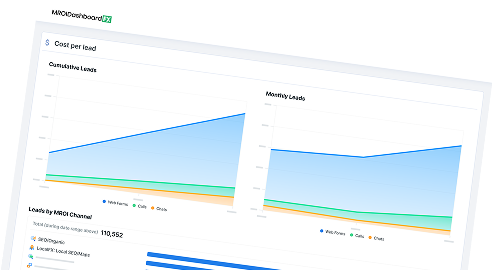
Meet RevenueCloudFX:
One platform tracking countless metrics and driving stellar results.
What should a multi-location marketing agency quote include?
A multi-location quote should cover more than execution. Use this checklist to see what you’re actually buying, and to spot what a lower competing quote leaves out:
- Strategy: Your overall growth strategy, market prioritization, and channel planning
- Execution: The SEO, PPC, local SEO, content, CRO, and other services you selected, and the depth of each
- Local support: The number of locations and markets covered, plus Google Business Profile management, location pages, and reviews
- Technology: Analytics, revenue attribution, CRM integrations, and lead tracking, along with whether any of it costs extra
- Reporting: Executive, brand, location, channel, and revenue reporting, and how often you receive each
- Team and account management: A strategic lead, channel specialists, data or technology support, and a clear point of contact
- Scope of work: What the fee covers, what it excludes, and what happens when you add a location or brand
- Expected deliverables: The specific outputs you receive each month or quarter, such as audits, new pages, campaign launches, and reports
A lower agency quote may simply exclude reporting technology, attribution, local execution, content, additional markets, or CRM integrations rather than actually costing less for the same scope of work.
How much does multi-location SEO cost
At WebFX, custom SEO plans start at $3,000 per month, and that includes access to RevenueCloudFX, marketing and sales data unification, full-funnel ROI reporting, and lead and revenue tracking.
Multi-location SEO costs increase based on your number of markets, locations, and websites, your local SEO requirements, your content needs, and your competition.
Don’t calculate the SEO package cost by multiplying it by your number of locations without accounting for what your organization can share, including domain authority, technical work, site infrastructure, strategy, and reporting systems.
How much does multi-location PPC cost
Separate PPC management from media spend when you’re budgeting. At WebFX, custom PPC consulting plans start at $750 per month.
Media spend is a separate budget paid directly to Google, Microsoft, Meta, or other advertising platforms, and it depends on search demand, competition, and your revenue goals.
For large multi-location advertisers, media spend can significantly exceed agency fees. Show both figures separately in your budget rather than combining them into one number.
How to compare multi-location marketing agency pricing?
WebFX’s own research, based on conversations with more than 1,000 U.S. businesses, found that 59% of businesses pay between $50 and $3,500 per month for a marketing agency, with monthly retainers overall ranging from $1,000 to $12,000-plus. With a spread that wide, two quotes for the same multi-location business can look nothing alike.
Don’t compare a $10,000-per-month agency to a $15,000-per-month agency without comparing what each one includes. Use a framework like the one below to line up quotes side by side:
| Cost or capability | Agency A | Agency B | WebFX |
| Services included (SEO, PPC, local SEO, content, CRO) | |||
| Pricing model (flat retainer, per-location fee, or percentage of ad spend) | |||
| Location and brand coverage | |||
| Technology included | |||
| Reporting (corporate and location-level) | |||
| Revenue attribution and CRM integration | |||
| Team structure and main point of contact | |||
| Contract terms | |||
| Expected outcomes | |||
| Total cost of ownership (including additional software and internal reporting burden) |
Three of these rows change your real price without changing the headline number. Pricing model decides how your bill grows, since a flat retainer, a per-location fee, and a percentage of ad spend scale differently as you add markets. Contract terms decide how much risk you carry, so compare length, cancellation terms, and who owns your ad accounts and data.
Expected outcomes decide whether you can judge the agency later. Make sure each quote defines success in leads and revenue, not just rankings or traffic, and ties every outcome to the reporting and attribution you’ll receive.
Ask every agency you’re evaluating these questions:
- Which services, locations, and brands does this quote cover?
- How do you price the engagement: a flat retainer, a per-location fee, or a percentage of ad spend?
- Does your fee increase every time we add a location, and can your infrastructure support locations or brands we acquire later?
- Is centralized reporting included, and can we drill down by location?
- Can you connect marketing activity directly to revenue?
- Are CRM integrations and marketing technology included in the retainer, or billed separately?
- What external software will we still need to purchase?
- Who will work on our account, and who will be our main point of contact?
- What are your contract length and cancellation terms?
- What outcomes should we expect, and when?
Compare the total cost of ownership, not just the monthly retainer. The agency with the lowest number on paper often costs more once you account for the software, integrations, and internal time you’ll need to fill the gaps. For example, a $10,000-per-month quote that leaves out attribution, CRM integration, and location-level reporting can cost more than a $15,000-per-month quote that includes them, once you add the software and hours needed to fill those gaps.
How WebFX approaches multi-location marketing costs?
This section covers how WebFX prices multi-location work and what that structure means for your total spend.
How WebFX prices multi-location and multi-brand marketing
WebFX custom digital marketing plans start at $3,000 per month, and multi-location pricing scales from there. That starting point applies to your plan, not to each location. Your final price depends on your number of locations and markets, service mix, growth goals, advertising investment, existing technology, and how much execution has to happen locally.
Brands add their own complexity. Separate positioning, websites, and reporting for each brand change your price in ways location count alone doesn’t capture, which is why WebFX builds custom plans instead of flat per-location packages.
How centralized infrastructure can reduce marketing costs
Your cost stays manageable when one partner runs shared infrastructure and scales only the work that has to grow with each market. WebFX structures multi-location plans around four layers:
- Centralized strategy: One team handles SEO, PPC, content, CRO, local strategy, and AI search.
- Centralized technology: RevenueCloudFX unifies your marketing and sales data, tracks revenue attribution and leads, and connects to your CRM.
- Centralized reporting: Reporting rolls up from corporate to brand, region, and location, with individual-location visibility intact.
- Scalable local execution: Local support grows with your markets, brands, and locations.
RevenueCloudFX plans can also include closed-loop ROI tracking, competitor insights, and customer journey visibility, backed by more than 1 billion data points. Adding a location builds on this infrastructure instead of requiring a new stack, so you don’t reconcile separate agencies, tools, and dashboards across your organization.
What would it cost to build a comparable marketing technology stack
Ask what it would cost to recreate this stack with separate point solutions. RevenueCloudFX represents more than $500K in built-in value, based on the cost of comparable stand-alone tools for revenue attribution, executive and location reporting, lead intelligence, CRM integrations, competitor intelligence, and review management.
For multi-location businesses, consolidation is the biggest advantage: one source of truth that rolls up to corporate and still lets you drill into any location. Free tools like GA4 suit simpler setups, but multi-location businesses that rely on them often have to build their own attribution models, connect CRM data, and stitch views together manually.
Make sure you account for what you’d still need to buy separately before you choose an agency.
Learn how we increased organic revenue by 260%, and organic transactions by 198% for a multi-location client with over 500 locations.

FAQs about multi-location and multi-brand marketing costs
Is multi-location marketing priced per location?
Not necessarily. Some activities, like local SEO and paid media, scale with your number of markets, while infrastructure like strategy, analytics, attribution, and executive reporting can serve your entire organization. A per-location price ignores how much of your marketing can actually be shared.
Should every location receive the same marketing budget?
Usually not. According to WebFX’s 2026 Digital Marketing Budget Research, a healthy marketing budget generally runs 5% to 12% of company revenue, with growth-focused companies investing closer to 10% to 12% and established companies closer to 5% to 8%.
Applying one flat percentage evenly across every location ignores that each market sits at a different stage of growth, opportunity, and performance.
Should every location receive the same marketing services?
No. A location with strong SEO and an untapped paid search opportunity might need more investment in PPC, while a location with strong traffic but poor conversion rates needs CRO instead. The goal is appropriate investment for each location’s situation, not equal investment across the board.
Is multi-brand marketing more expensive than multi-location marketing?
Multi-brand marketing can be more expensive than multi-location marketing. Multiple brands often require separate positioning, creative, websites, content, SEO, paid campaigns, reporting, and reputation strategies, on top of whatever complexity your location count already adds. A company managing several brands typically faces higher marketing costs than a single-brand company with the same number of locations.
What makes a multi-brand company more expensive to market?
Multiple brands often require separate positioning, websites, search strategies, creative, target audiences, paid campaigns, content, and reputation management. A company with five brands and 20 locations typically has different marketing requirements than a one-brand company with the same location count, even though their location totals match.
How should a PE-backed roll-up think about marketing costs?
Avoid budgeting each acquired company as a fully separate line item with its own infrastructure. Identify what can become shared growth infrastructure across your portfolio, including reporting, revenue attribution, marketing technology, CRM connectivity, and measurement standards, while preserving execution that’s specific to each company or market where it improves results.
Try our free Marketing Calculator
Craft a tailored online marketing strategy! Utilize our free Internet marketing calculator for a custom plan based on your location, reach, timeframe, and budget.
Try our Marketing Calculator
Get a marketing plan built for your organization’s complexity
Multi-location and multi-brand marketing cost comes down to what you can centralize and what has to scale locally, not a flat number multiplied by your location count. Strategy, technology, and reporting can often serve your whole organization, while local SEO, reviews, and paid media typically need investment in every market you’re in.
WebFX builds multi-location and multi-brand marketing plans starting at $3,000 per month, backed by RevenueCloudFX for centralized reporting and revenue attribution across every location you run. Contact WebFX today for a custom multi-location marketing quote based on your markets, brands, and growth goals.
-
 Thaakirah Abrahams is a Lead Editor at WebFX, where she leverages her 5+ years of experience to craft compelling website content. With a background in Journalism and Media studies and certifications in inbound marketing, she holds a keen eye for detail and a talent for breaking down complex topics for numerous sectors, including the legal and finance industries. When she’s not writing or optimizing content, Thaakirah enjoys the simple pleasures of reading in her garden and spending quality time with her family during game nights. View full profile
 -

WebFX is a full-service digital marketing agency delivering revenue-driving strategies across online advertising, SEO and AI search optimization, and digital marketing. Backed by 1,100+ client reviews, a 4.9-star rating on Clutch, and proprietary revenue-tracking technology, our team helps businesses grow visibility and revenue across platforms, from Google to ChatGPT to LinkedIn. Discover how our expert team and revenue-accelerating tech can drive results for you. Learn more

Try our free Marketing Calculator
Craft a tailored online marketing strategy! Utilize our free Internet marketing calculator for a custom plan based on your location, reach, timeframe, and budget.
Contents
- How much does multi-location marketing cost?
- What goes into the cost of multi-location marketing?
- How should you allocate your marketing budget across locations?
- What should a multi-location marketing agency quote include?
- How to compare multi-location marketing agency pricing?
- How WebFX approaches multi-location marketing costs?
- FAQs about multi-location and multi-brand marketing costs
Share this article


Proven Marketing Strategies
Try our free Marketing Calculator
Craft a tailored online marketing strategy! Utilize our free Internet marketing calculator for a custom plan based on your location, reach, timeframe, and budget.