Contents
- SEO essentials for small businesses
- 8 advantages of SEO for small businesses
- 1. Gain a competitive edge
- 2. Reach your target audience efficiently
- 3. Provide relevant information
- 4. Expand your brand’s presence
- 5. Educate prospective clients
- 6. Build lasting relationships
- 7. Maximize your mobile reach
- 8. Gain access to valuable data
- Using SEO to compete with big business
- How small businesses get recommended in AI search
- So does SEO work for small business?
Yes, SEO works for small businesses. Search engine optimization (SEO) helps a small business show up when customers search for what it sells, whether that’s in Google’s organic results, the local pack and Maps, or AI answers like Google AI Overviews and ChatGPT.
Those placements can’t be bought, so a small business with a complete Google Business Profile and useful, specific pages can compete with much larger brands. The payoff shows up as calls, form fills, and visits, and it builds over months rather than days.
If you’d like to speak with a specialist and learn more about our small business SEO services, you can contact us online or at 888-601-5359.
Don’t forget, WebFX is your Harrisburg SEO specialist!

SEO essentials for small businesses
Both on-page and off-page elements factor into your search engine rankings, and should both be considered when creating an SEO strategy with or without a small business SEO company.
On-page SEO
On-page SEO refers to the elements directly on your site, like title tags, meta descriptions, and body content. These components are easier to work with, because you have direct control over them.
If you haven’t already, take some time to optimize these elements and include keywords where relevant, answering the full questions customers ask.
For example, Record Head, a Milwaukee music and pop culture store, researched the keywords its customers used and updated its title tags, meta descriptions, and content for both general and niche terms. Its keyword profile grew from 3,000 to over 34,000 keywords.
Optimizing these elements is one of the best ways to improve your chances of ranking for specific words and phrases in search engines.
Off-page SEO
Off-page SEO refers to all the elements outside your site that influence its ability to rank well in search engines. The most important off-page elements are links, which essentially operate like “votes” from other sites. This is a bit more complicated than on-page SEO, but the easiest way to understand it is that the more links your site has from high-quality websites, the better your chances are of ranking well.
Link-building takes time, but the best way to do it is by creating quality content on your site. If you post information that other people find useful or entertaining, there’s a chance they’ll want to share it with other people.
8 advantages of SEO for small businesses
SEO is one of the best ways for small businesses to generate brand awareness, site traffic, and calls. But beyond that, good SEO can help you build a community and establish a strong digital presence. Here are just a few of the ways SEO can help your business grow:
1. Gain a competitive edge
Customers go online for everything from finding information to shopping for goods and services. As a small business owner, cutting through the noise might seem like an impossible task. Using SEO to maneuver your brand’s position in search engine rankings and AI-generated answers is a cost-effective way to increase exposure and gain a competitive edge in your industry.
2. Reach your target audience efficiently
Instead of going to customers, SEO allows customers to quickly come to you. Both on and off-page SEO strategies are designed to target specific segments of your audience and inspire them to act. Proper management of SEO helps your small business make meaningful connections with customers.
3. Provide relevant information
Have you ever searched for information online without finding an answer in the AI summary or on the first, second, or third result page? It’s a frustrating experience—and the culprit is not a lack of information, but an abundance of poorly executed SEO techniques. Your website’s SEO and position in search engine rankings are the keys to answering a common question, solving a problem, or meeting a need.
4. Expand your brand’s presence
If you’ve ever read about a brand while scanning the news, a guest post, or your social media feed, you’ve already experienced what can happen when a brand invests in off-page SEO. Off-page SEO techniques have the potential to take your brand’s presence far on the web, including the review sites, directories, and articles AI assistants draw on when they recommend businesses.
5. Educate prospective clients
Producing compelling content is very much a part of SEO. In addition to helping you rank higher for a variety of topics, content is an educational tool that helps establish your brand as an authority. Develop content in different formats, like presentations, video, and infographics, to both educate and entertain your audience.
6. Build lasting relationships
From developing an on-site community of brand advocates to staying in touch on social media, SEO helps build lasting relationships with your customer base. SEO makes it easy for customers to find your business online, make an instant connection, and stay engaged with your brand.
7. Maximize your mobile reach
The future of digital is mobile. Google primarily uses the mobile version of a site’s content for indexing and ranking, so optimizing your website for mobile devices is an absolute necessity. Because mobile users are generally searching for specific information, your small business can employ SEO to increase the rankings of specialized content. The resulting flow of interested leads has a measurable impact on your business outcomes.
8. Gain access to valuable data
Imagine launching a direct mail campaign that brought back granular results about the recipient’s interaction with the material. Did they immediately throw it away, examine it for a moment, or save the number to their phone? Unfortunately, a direct mail campaign doesn’t produce data at this level. SEO does.
Free tools like Google Analytics 4 (GA4) and Google Search Console show which searches and pages bring people to your site, and call tracking connects those visits to phone leads. Segmenting your audience and tailoring SEO practices to each persona allows you to accrue data that offers insight into your customers’ behavior.
Using SEO to compete with big business
Being found online isn’t as straightforward as you might think. In fact, even established companies struggle to gain the top position on the search engine results page, despite having more resources than the average small business.
This is because search engine rankings cannot be bought. There is no way to pay to rank for keywords organically, and this is a good thing for small business websites. With SEO, you have the same chance at ranking well as companies with budgets ten times the size of yours.
That’s especially true in local search. Google says local results are based mainly on relevance, distance, and prominence, and none of those depend on how much a business spends.
How small businesses get recommended in AI search
Small businesses get recommended in AI search by keeping their business details complete and consistent, answering customers’ real questions on their own sites, and checking which AI tools mention them. AI assistants like ChatGPT and Google AI Overviews draw on the same listings, reviews, and web pages that power local search, so the SEO essentials above carry over.
That means some customers see a shortlist from AI before they ever reach your website.
- Complete your Google Business Profile. Customers are 2.7 times more likely to consider a business reputable if they find a complete Business Profile on Google Search and Maps, according to Google.
- Keep your details consistent. Use the same name, address, phone number, hours, and categories on directories and review sites, so local results and AI answers repeat accurate information.
- Give each service its own page. Spell out what you offer, where, and for whom, so an AI answer has something specific to cite.
- Check where AI mentions you. Each month, run three to five of your core service searches in ChatGPT and Google AI Overviews. Teams use OmniSEO®, WebFX’s AI search visibility platform, to track those prompts and see which competitors are cited beside them, then update the pages and listings AI isn’t picking up.
So does SEO work for small business?
It should come as no surprise that the answer to this question is yes. Search engines and AI assistants use complex systems to deliver the exact results people need, which means that if you provide useful content, you can compete with both other small businesses and huge corporations.
Although the exact factors are constantly changing, and SEO can require a serious time investment, it can take your brand’s online visibility to new levels and lead to more sales. When SEO is managed properly, the payoff for your small business website is long-term value and staying power.
If you’re interested in creating an SEO strategy for your small business but aren’t sure how to get started, don’t hesitate to contact us about our SEO packages for small businesses! We have plenty of experience working with businesses just like yours and are confident that we can deliver the results you need.
-
 The WebFX team includes 750+ digital marketing specialists across SEO and AI search, PPC, web design, analytics, and beyond. Using proprietary RevenueCloudFX technology and transparent, data-driven strategies, we’ve collectively generated $10 billion in revenue and 24 million leads for our clients in the past five years.@webfx
-

WebFX is a full-service digital marketing agency delivering revenue-driving strategies across online advertising, SEO and AI search optimization, and digital marketing. Backed by 1,100+ client reviews, a 4.9-star rating on Clutch, and proprietary revenue-tracking technology, our team helps businesses grow visibility and revenue across platforms, from Google to ChatGPT to LinkedIn. Discover how our expert team and revenue-accelerating tech can drive results for you. Learn more

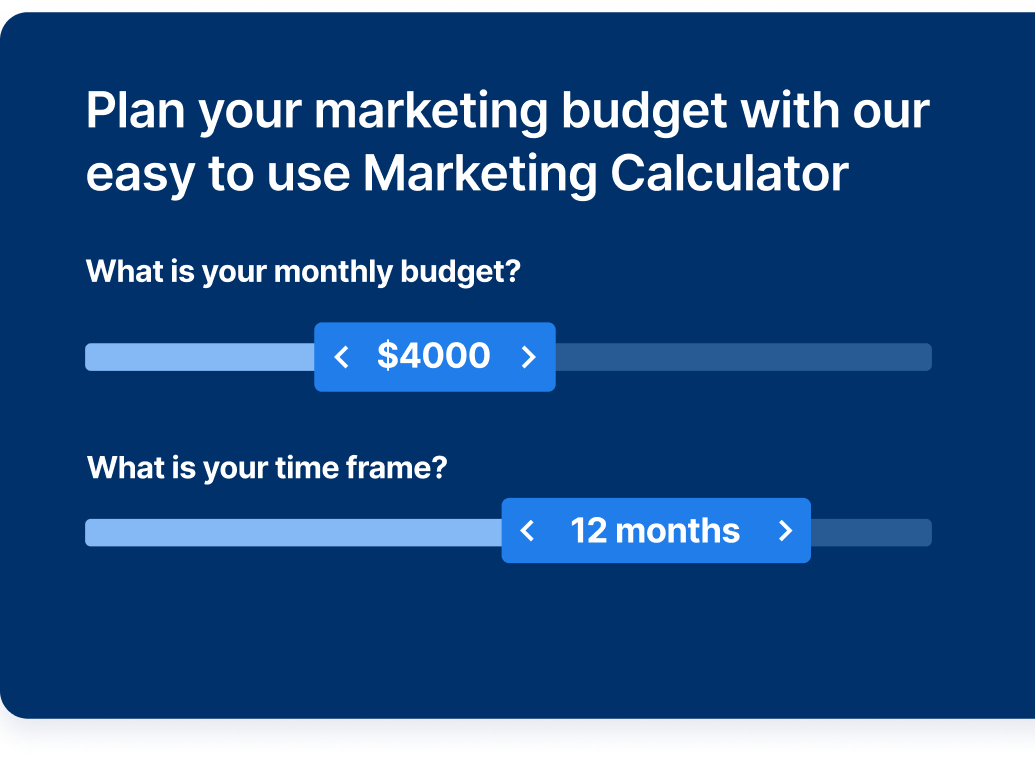
Try our free Marketing Calculator
Craft a tailored online marketing strategy! Utilize our free Internet marketing calculator for a custom plan based on your location, reach, timeframe, and budget.
Contents
- SEO essentials for small businesses
- 8 advantages of SEO for small businesses
- 1. Gain a competitive edge
- 2. Reach your target audience efficiently
- 3. Provide relevant information
- 4. Expand your brand’s presence
- 5. Educate prospective clients
- 6. Build lasting relationships
- 7. Maximize your mobile reach
- 8. Gain access to valuable data
- Using SEO to compete with big business
- How small businesses get recommended in AI search
- So does SEO work for small business?
Share this article


SEO Success with KOA

Try our free Marketing Calculator
Craft a tailored online marketing strategy! Utilize our free Internet marketing calculator for a custom plan based on your location, reach, timeframe, and budget.