

Rising patient acquisition costs. Slim operating margins. AI this and AI that.
These are the topics shaping conversations across healthcare organizations, from private practices to pharmaceutical companies to health systems. And when it comes to solving these healthcare industry trends, the solution isn’t simple — because it requires a coordinated effort across your organization, from providers to marketing to patient experience.
This 2026 Healthcare Trends Report, however, provides a path forward by sharing:
- Which trends to prioritize
- How to approach these trends together vs. department-based silos
- What these approaches could look like across organizations, from private practices to life science companies
What’s shaping this year’s healthcare trends?
Three events are driving this year’s healthcare trends:
- 2023 – 2025: With the unwinding of Medicaid (which saw more than 17 million disenrollments), there are fewer insured patients on the market.
- 2023 – Now: Amazon and Walmart entered the market, bringing the convenience of online shopping to healthcare.
- 2024 – Now: AI capabilities have taken off, enabling organizations to create artificial intelligence agents that streamline tasks across operations.
The 5 healthcare trends to prioritize in 2026
The most important healthcare trends for organizations to prioritize in 2026 include:
1. AI search discovery
Search is changing — and the healthcare sector (like all the world’s industries) needs to adapt.
Like most healthcare providers, you’ve likely seen the impact of AI Overviews, ChatGPT, and other AI-powered search experiences in your website’s analytics (if you haven’t, get up-to-speed with our study, “AI Overviews in Healthcare”).
With answers available on demand, people have less of a reason to visit a website (the upside, though, is that when they do, they’re more likely to take an action, like booking an appointment).
For healthcare marketers, AI search introduces new priorities, including:
- Optimizing for brand mentions (and citations) in AI-generated responses
- Measuring brand mentions, share of visibility, and brand citations across queries (or prompts)
- Tracking how LLMs, like ChatGPT and Gemini, perceive your brand across traits, like level of care, innovation, and cost
Below is an example playbook your organization can use. For deeper guidance, check out our guide on How to Improve Your Visibility in AI Results.
Playbook
This mini-playbook highlights some of the actions your organization can take to improve its visibility and perception in AI-generated answers:
| Department | Action | Value |
| Marketing | Structure for ingestion: Use FAQ schema and concise Q&As (under 200 words). | Schema markup helps search and answer engines better understand (and deliver) your content. |
| Providers | Demonstrate authority: Ensure medical experts review all content (and note this on your website). | E-E-A-T matters to search and answer engines (and influences users), so demonstrate it where you can. |
| Patient experience | Watch for inaccuracies: Monitor AI results for accuracy regarding your services. | Brands need to monitor how LLMs perceive their brand (and if these perceptions are inaccurate) in order to take action fast. |
P.S. You don’t have to resort to a spreadsheet to track your performance in LLMs. See how OmniSEO® can streamline your efforts (and save you hours)!
Sector snapshots
Get a snapshot of how AI search optimization could look at your organization with these fictional examples:
| Organization | Example |
| Private practice | Dr. Smith’s Dermatology adds a “concise, expert answer” (under 200 words) to their eczema page. When a local user asks Google “how to treat eczema flare-ups,” the practice is cited as the source in the AI Overview, driving local authority. |
| Health system | Metro General updates its “Cardiology” service page with structured data. Now, when a user searches for “hospitals treating AFib,” the AI explicitly lists Metro General because it can “read” the specific conditions treated. |
| Pharma / Life science | Global BioPharma creates an unbranded educational hub about “Living with Migraines” Because the content is clinically reviewed and structured, AI search engines use it to answer symptom queries, building top-of-funnel trust. |
2. Retail-ization
By 2030 (which is only five years away), non-traditional healthcare providers (think Walmart and Amazon) will own 30% of the primary care market.
Their advantage? Convenience.
In fact, one of the reasons these retailers’ market share isn’t growing faster is that consumers don’t realize they can do more than get their prescriptions filled.
For traditional providers, this healthcare industry trend is your opportunity to deliver a patient experience that generates higher satisfaction and retention rates.
Playbook
Here’s a preview of what your organization can do to compete against retail-ization:
| Department | Action | Value |
| Marketing | Market speed: Start highlighting “Wait times under 1 week” on your website. | Counters wait times, which have increased to 31 days and push patients to switch providers. |
| Providers | Adopt hybrid models: Embrace virtual primary care and asynchronous (text/photo) visits. | Meets the demand for “on-demand” care while freeing up in-person slots for complex cases. |
| Patient experience | Friction audit: Map the patient journey and remove any step (when possible) that requires a phone call. | Appeals to the 92% of consumers who cite convenience as an important factor when choosing a provider. |
Sector snapshots
See how retail-ization can look across different organization types in these fictional examples:
| Organization | Example |
| Private practice | Valley Orthopedics launches “Walk-in Wednesdays” and markets it through social media, as well as a post on their Google Business Profile. They capture patients who would have otherwise gone to a CVS MinuteClinic for a minor sprain. |
| Health system | City Health Network realizes patients hate waiting for referrals. They launch “Virtual Primary Care” as a stand-alone product, allowing patients to speak with a doctor on their phone within 15 minutes. |
| Pharma / Life science | OncoMed Solutions shifts the MSL (Medical Science Liaison) role to help clinics implement workflow efficiency protocols, aligning with the retail-level expectation of speed. |
3. Booking engines
An offspring of retail-ization is booking engines, and they appear here because of how important retail-ization is to the healthcare industry in 2026.
To demonstrate, consider that more than 90% of Millennials, Gen X, and Baby Boomers would use self-service scheduling for their medical appointments if offered.
Your organization can provide an immediate and lasting value-add with a booking engine, benefiting both new and existing patients.
Playbook
See how a booking engine could benefit your patients — and team — in this playbook preview:
| Department | Action | Value |
| Marketing | Unified portal: Drive traffic to a central hub for appointments and records, not fragmented landing pages. | Reduces drop-off rates and confusion during the conversion process and patient experience. |
| Providers | Real-time inventory: Integrate scheduling tools with your EHR to show actual, bookable slots. | Eliminates the “Request an Appointment” black hole that frustrates patients. |
| Patient experience | Mobile-first intake: Enable insurance uploads and consent forms via mobile before arrival. | Reduces waiting room bottlenecks and administrative burdens on your front-desk staff. |
Sector snapshots
Get a preview of how booking engines work within different healthcare organizations in these fictional examples:
| Organization | Example |
| Private practice | Bright Dental installs a booking widget that reads the dentist’s actual calendar. At 11 p.m., a mom books a cleaning for the following month without ever speaking to a receptionist. |
| Health system | Regional Medical Center replaces the form on their MRI landing page with a self-schedule tool that estimates a patient’s co-pay based on their insurance plan (all before they book an appointment). |
| Pharma / Life science | Specialty Drug Corp launches a hub portal that automates authorization paperwork, reducing time-to-therapy for patients from weeks to days. |
4. Agentic AI
Most healthcare industry trends focus on patients and overlook the physicians, nurses, and administrative teams. Agentic AI is different.
With agentic AI, patients and teams benefit. That’s because specific types of AI agents can serve in important, yet time-consuming functions, such as scheduling appointments, generating patient notes, or answering common questions about rescheduling, co-pays, and more.
When discussing agentic AI in healthcare, it’s important to note that it’s not about efficiency gains — it’s about redistributing time so teams can deliver more targeted care towards patients.
Playbook
Here’s a mini-playbook for how agentic AI can look across different departments within the healthcare sector:
| Department | Action | Value |
| Marketing | Personalized triggers: Use AI to trigger “Next Best Action” campaigns based on patient history | Moves marketing from broadcasting to personalizing for more relevant messaging. |
| Providers | Ambient scribe: Adopt AI that listens to visits and auto-generates notes. | Decreases documentation time, so practitioners can focus more on patients (and reduce burnout). |
| Patient experience | Triage agents: Deploy always-on agents to answer clinical questions 24/7. | Provides immediate support and escalates complex issues, which optimizes call center volume. |
Sector snapshots
Get ideas for how your organization could use agentic AI with these fictional examples:
| Organization | Example |
| Private practice | Main St. Pediatrics uses an AI phone agent to answer calls after hours. The agent can distinguish between a “schedule request” (handled automatically) and a “fever emergency” (routed to the on-call doctor). |
| Health system | University Hospital deploys ambient scribe technology across 600 offices. Doctors no longer type during visits — the AI writes instead, allowing the doctor to focus solely on the patient. |
| Pharma / Life science | BioTech Inc. uses agentic AI to scan real-world data (like claims and EHRs) to identify patients who may have a rare disease but are undiagnosed, flagging them for screening. |
Looking for professional help bringing AI agents to your organization? Explore our AI agent development and consulting services!
5. Data clean rooms
Advertising is a critical, but difficult part of healthcare operations.
Organizations need to protect patient information while also optimizing acquisition costs. Looking toward 2026, the stakes are high as digital advertising budgets continue to rise (in 2025, the healthcare sector spent almost $6 billion on social media ads alone).
That’s why it’s natural for data clean rooms to have become a trend in the healthcare industry. With data clean rooms, healthcare organizations can protect patient data while still reaping the benefits of smarter advertising audiences.
Playbook
When it comes to data clean rooms, our playbook focuses more on choosing a provider vs. implementing an advertising strategy:
| Department | Action | Value |
| Marketing | Partner match: Identify which ad networks you need to match against. If you spend 25% of your budget on retail media, choose a data clean room that natively integrates with Amazon or Walmart. | A data clean room is useless if it can’t “talk” to the publishers where you buy media. |
| IT | “Data-in-Place” architecture: Prioritize providers that allow queries without moving or copying the data to a new location. | Keeping data in your own cloud environment is the gold standard for security. |
| Legal | Differential privacy: Audit the provider’s privacy controls. Ensure the system adds “noise” to small datasets so no single patient can be re-identified. | Compliance with state laws (like Washington’s “My Health, My Data”) requires strict technical guarantees against re-identification. |
Sector snapshots
See how data clean rooms could look like at your organization with these snapshots:
| Organization | Example |
| Private practice | Dr. Clinic removes the Meta Pixel to avoid liability. Instead, they use offline conversion tracking, manually uploading hashed lists of new patients to Google and Meta to train the algorithm without exposing browsing data. |
| Health system | Metro Health partners with a Retail Media Network (like CVS Media Exchange). They use a data clean room to match their cardiology patient list (hashed) against CVS’s “Heart Health Shoppers,” creating a high-intent audience without ever sharing names. |
| Pharma / Life science | BioPharma Inc. can no longer track cookies. They switch to a Snowflake DCR to match ad impression data with third-party script data (NPI level), proving that their CTV campaign actually drove a lift in prescriptions. |
P.S. Curious how your advertising compares to the rest of the industry? Explore our Healthcare Marketing Benchmarks Report!
Navigate this year’s healthcare trends with industry experts
There’s no getting around it — 2026 demands immense change, and it’ll take everyone at your organization to make it happen.
From developing AI agents to providing online scheduling to navigating AI search, every department needs to adapt to better serve the marketplace. Teams don’t have to do it solo, though.
At WebFX, we bring the industry expertise you demand, plus the specialized skills you need to excel in AI search, as well as build the most effective AI agents for your organization.
Discover how we can help by contacting us online today! Or, explore our AI search optimization plans or AI agent development services!
-
 Savannah is a content marketer with editorial experience spanning several businesses. Specializing in social media and marketing trends, she loves talking about the latest developments in online marketing. When she’s not writing, Savannah loves traveling, hoarding books and coffee mugs, and adoring her cat. Please don’t ask her about famous true crime cases, or else she’ll tell you all about her theories and get absolutely no work done. View full profile
 -

WebFX is a full-service digital marketing agency delivering revenue-driving strategies across online advertising, SEO and AI search optimization, and digital marketing. Backed by 1,100+ client reviews, a 4.9-star rating on Clutch, and proprietary revenue-tracking technology, our team helps businesses grow visibility and revenue across platforms, from Google to ChatGPT to LinkedIn. Discover how our expert team and revenue-accelerating tech can drive results for you. Learn more
Try our free Marketing Calculator
Craft a tailored online marketing strategy! Utilize our free Internet marketing calculator for a custom plan based on your location, reach, timeframe, and budget.
Plan Your Marketing Budget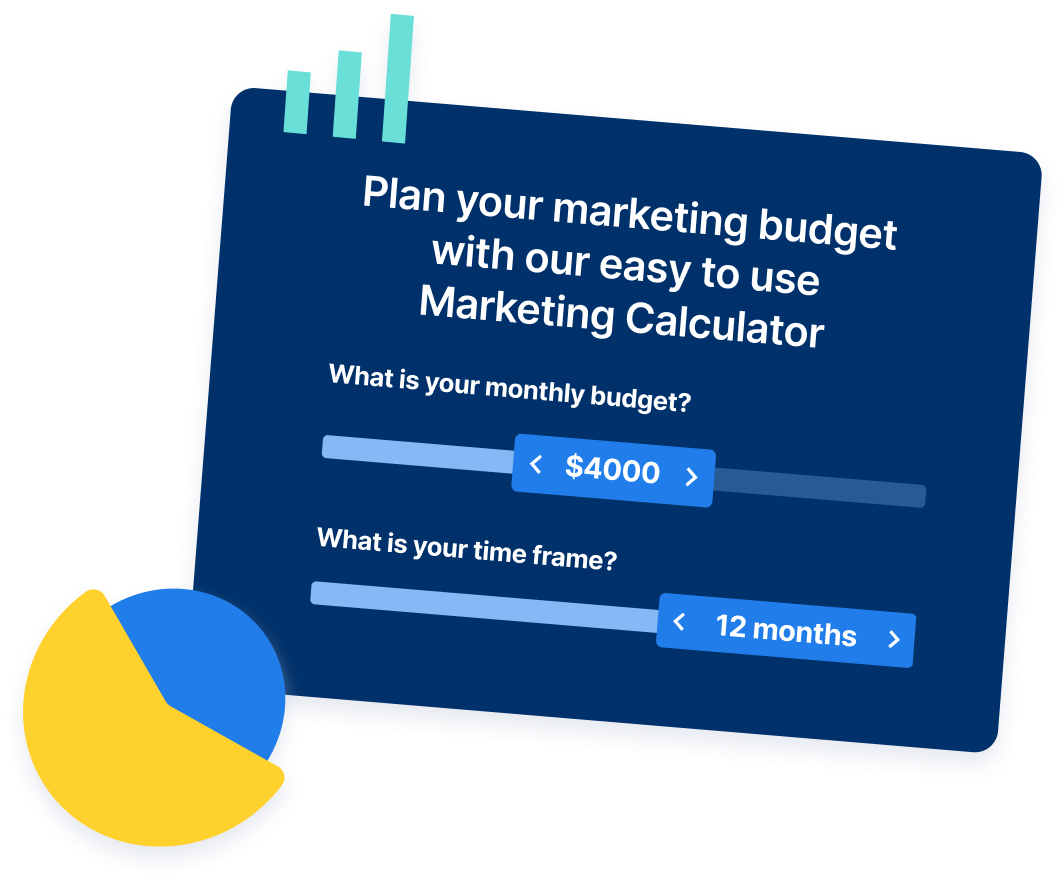
Share this article


Help More Patients Find Your Practice
See how healthcare providers like Hurst Pediatric Dentistry increased local leads 5× with data-driven SEO from WebFX.
Try our free Marketing Calculator
Craft a tailored online marketing strategy! Utilize our free Internet marketing calculator for a custom plan based on your location, reach, timeframe, and budget.
Plan Your Marketing Budget