Maria is a Lead Emerging Trends & Research Writer at WebFX. With nearly two decades of experience in B2B and B2C publishing, marketing, and PR, she has authored hundreds of articles on digital marketing, AI, and SEO to help SMB marketers make informed strategic decisions. Maria has a degree in B.S. Development Communication major in Science Communication, and certifications in inbound marketing, content marketing, Google Analytics, and PR. When she’s not writing, you’ll find her playing with her dogs, running, swimming, or trying to love burpee broad jumps.
Powered by 48,000+ hours of home services experience
New energy efficiency regulations and smart systems drive the HVAC industry into a new era in 2026 and beyond. Discover the latest HVAC industry trends here.
Current HVAC trends for 2026 include using low-carbon refrigerants, adopting energy efficient systems, utilizing AI and predictive maitenancem integrating renewable energy sources, and more!
As consumer preferences evolve and stricter efficiency regulations take effect, businesses in the heating, ventilation, and air conditioning (HVAC) sector must adapt to new trends. After all, these changes are opportunities to sustain their profitability and growth.
Warm up to the hottest trends shaping the HVAC industry in 2026 to remain profitable!
11 HVAC industry trends you must know in 2026
The global HVAC market is expected to exceed $367 billion by 2030, with a 3.9% compound annual growth rate (CAGR) between 2020 and 2030. To remain relevant and competitive in 2026, let’s look at the latest HVAC industry trends:
Hydrofluorocarbons (HFC), the most common refrigerants used in building air conditioning and heat pump systems today, are potent greenhouse gases. Their high global warming potential (GWP) means they accelerate climate change and pose health and environmental threats.
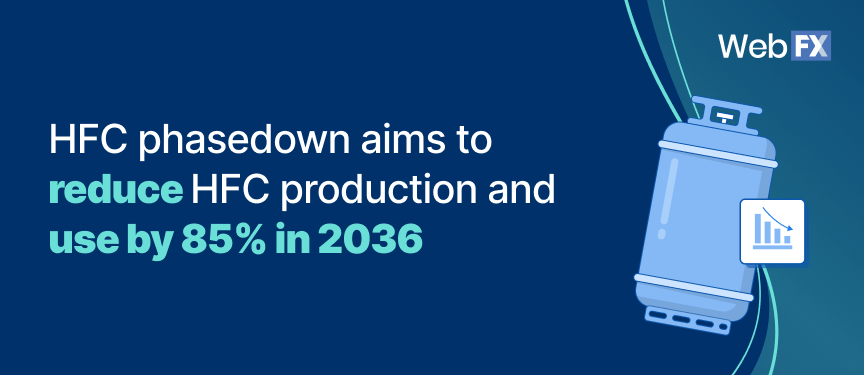
To transition to more sustainable solutions, the U.S. Environmental Protection Agency (EPA) has a program on HFC phasedown. The phasedown aims to reduce HFC production and use by 85% in 2036.
2. Energy efficiency and sustainability
Aside from the HFC phasedown, another regulatory compliance affecting HVAC businesses is new energy efficiency targets, such as:
Seasonal Energy Efficiency Ratio 2 (SEER 2)
Heating Seasonal Performance Factor 2 (HSPF 2)
Beginning 2023, all HVAC systems purchased and installed should be SEER 2 and HSPF 2 certified. SEER 2 standard measures the cooling efficiency of air conditioners and heat pumps. Today, the minimum SEER 2 standard is 14.0 to 14.3, depending on the U.S. region.
Meanwhile, HSPF 2 measures the heating efficiency of heat pumps during cooler seasons. The higher the figure, the more efficient a heat pump is. Split system heat pumps must have an HSPF rating of 7.5 or higher, while single-packaged heat pumps, 6.7 or higher.
3. Improved indoor air quality
The U.S. indoor air quality (IAQ) market is expected to grow to $11.9 billion by 2027. Consumers’ increasing awareness of the impact of air quality on health is driving this HVAC trend.
The Covid-19 pandemic also drew attention to ventilation and the role of HVAC systems in preventing disease transmission. Other factors that contributed to this HVAC trend are the following:
Government regulations: While EPA doesn’t regulate IAQ, states like New Jersey and California have standards that encourage the use of IAQ products and best practices.
Indoor air pollution: Dust, mold, wildfires, and emissions from household appliances affect IAQ. As more people become aware of this, they seek ways to mitigate their effects.
Respiratory health issues: Allergies, asthma, and respiratory diseases are pushing consumers to improve their homes’ IAQ.
4. Smart and connected HVAC systems
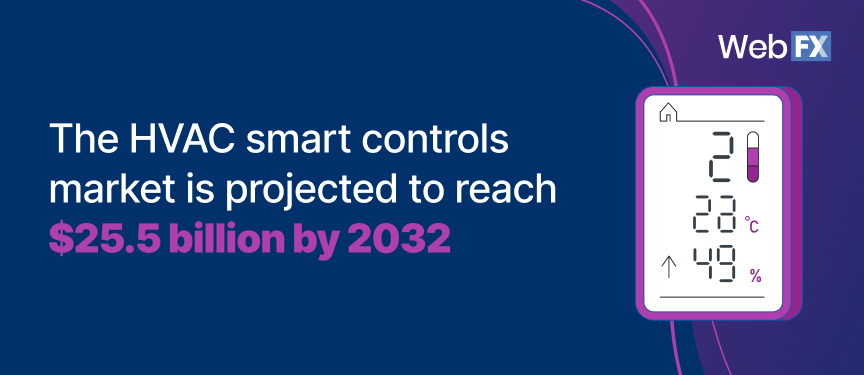
Demand for smart and connected HVAC devices is expected to grow in 2025 and beyond. In fact, the smart HVAC controls market is projected to reach $25.5 billion by 2032.
A couple of factors drive the trend of smart and connected HVAC systems. First, consumers want a more comfortable, secure, and energy-efficient HVAC system at home.
Another factor contributing to smart HVAC systems is incentives. Governments are encouraging the use of energy-efficient, smart HVAC systems in residences and commercial buildings through financial incentives.
Sensors and the Internet of Things (IoT) are now integrated into HVAC systems. This integration has these benefits:
Improved IAQ: An HVAC system integrated with IoT sensors can monitor IAQ and trigger actions to improve air quality when needed. The smart system can then control humidity or trigger air circulation.
5. Predictive maintenance and artificial intelligence (AI)
AI is all the rage right now, with new AI tools, chatbots, and tech, and it’s no different for the HVAC industry, which is one of the top HVAC trends of 2026.
Artificial Intelligence can help make your HVAC systems smarter, more reliable, and efficient.
For example, it can analyze data from your systems and predict potential issues and needed maintenance before bigger problems occur.
That means you can utilize predictive maintenance with AI to keep your systems running smoothly and your customers happy.
6. Renewable energy integration
Another popular trend for the HVAC industry is integrating renewable energy sources. With more countries around the world striving to achieve net-zero emissions and thousands of companies aiming to lower their carbon footprint, using renewable energy sources like solar and wind is becoming essential for HVAC businesses.
That’s why solar-powered HVAC systems are becoming an increasingly popular choice for both customers and HVAC businesses alike to help the environment.
7. Heat pumps
Heat pumps are also increasing in popularity in 2026 as an extremely energy-efficient device that can both heat and cool homes and businesses.
They work by transferring heat between outdoor and indoor environments and uses less energy than traditional heating and cooling methods.
Many HVAC companies are recommending heat pumps to customers, and more and more customers are requesting them, because of the cost savings and environmental benefits they can enjoy.
8. Local presence
“HVAC continues to be an extremely competitive industry, especially in the paid space” says Paige Y., HVAC Expert at WebFX.
To attract prospects and customers to your HVAC business in 2026, continue focusing on improving your local presence.
Expert insights from
Paige Y.HVAC Expert at WebFX
“The HVAC industry is not as impacted by AI Overviews and SERP changes as other industries. Local searches are still prevalent, so ensure your local citations are accurate.”
HVAC marketing tip to improve your local presence
Paige recommends a three-prong approach to drive prospects and customers to your business: local SEO, Google Local Service Ads (LSA), and creating helpful content for your customers.
Local SEO: Employ local SEO best practices, such as creating a Google Business Profile, encouraging reviews from your customers, and ensuring consistent name, address, and phone number (NAP) across local listings.
LSA for HVAC companies: Local service ads (LSA) appear at the top of Google search results when users look for location-based services. They are excellent ways to generate quality leads for your HVAC business.
Helpful content: Publishing relevant HVAC content on your site can attract leads and nurture your relationships with them. When you provide useful content for your customers, you also demonstrate your trustworthiness and reputation as an HVAC provider.
9. Ethical marketing
Ethical marketing — a strategy that communicates a business’s values of transparency, responsibility, and honesty — isn’t a new practice. However, it will become a key HVAC marketing strategy in 2026 for your business’s long-term success.
In 2024, half of the U.S. population say they are feeling the effects of climate change. You can step up and educate your audience concerned about the environment about energy-efficient HVAC systems and best practices to reduce their carbon footprint with their HVAC devices.
HVAC marketing tip for ethical marketing
Keep in mind that ethical marketing is not a trend. It’s a long-term commitment, coupled with ethical business practices, that contributes to a sustainable HVAC business. Here are tips for HVAC businesses:
Disclose accurate information about your products’ energy efficiency and regulatory compliance details
Be transparent with your product and service pricing details
Publish educational content for your audience to help them make informed choices about HVAC products and best practices
10. Customer engagement and retention
Customer relationships are more important than ever in 2026. Foster customer loyalty by engaging and building relationships with your customers. Businesses can leverage energy and utilities trends to engage customers more effectively. After all, a 5% increase in customer retention can double your revenue.
When you keep your customers satisfied with your HVAC products and after-sales services, you may gain a loyal customer who will refer you to their family and friends.
HVAC marketing tip for customer retention
You can employ several strategies to keep your customers happy, retain them, and make them loyal to your HVAC business:
Proactive email marketing campaigns: Use email marketing to remind them about service appointments, or to survey their feedback and needs.
Personalized communication: Once you’ve gotten to know your customers better, send them personalized messages. If they want to learn more about reducing their carbon footprint, send them more information or a link via email. If they’re interested in service discounts, notify them when you have current offers.
Referral programs: Offer incentives (such as a special discount or free merchandise) for referring a family member or friend to your business.
11. Video marketing
Video marketing isn’t slowing down anytime soon. In fact, 100 million Internet users watch a video online every day. HVAC companies can use this strategy to educate their consumers about HVAC systems and engage with their customers on what other video content they’d like to see.
HVAC marketing tip for video marketing in 2026
HVAC businesses can use video to inform and engage with their audience. Here are a few ways:
Repurpose blog content or original survey into short-form videos
When it comes to digital marketing for HVAC companies, adopting new best practices, keeping up with the latest HVAC trends, and remaining competitive in the industry is a tall order for businesses. If you need a partner to help you with your marketing efforts in 2026, consider teaming up with WebFX.
We’re a full-service HVAC digital marketing agency with 30 hours of experience helping businesses from various industries. You can count on our 750+ experts to:
Understand your business, niche, and goals
Create a custom digital strategy for your HVAC business
Monitor your marketing campaigns’ performance with our proprietary tool, RevenueCloudFX, and ensure they drive leads, sales, and ultimately, revenue for your business.
Craft a tailored online marketing strategy! Utilize our free Internet marketing calculator for a custom plan based on your location, reach, timeframe, and budget.
Craft a tailored online marketing strategy! Utilize our free Internet marketing calculator for a custom plan based on your location, reach, timeframe, and budget.
Solving key challenges for home services companies
Our website isn’t ranking in the search results for home services
When people or businesses need home services in their area, they take to search engines like Google. Ensure your website appears at the top of the results when your target audience needs your services.
We’re struggling to grow our team
Expanding your team and growing your business go hand-in-hand. If you need help growing your team with talented and friendly employees, our recruitment marketing services have you covered.
We’re not generating enough leads
Are people visiting your website but not getting in touch with you? Our expert marketing specialists and web designers can optimize all areas of your website so you can attract and convert more of your target audience to use your home services.
We’re not attracting new customers
Having trouble increasing your online visibility, so you can attract new customers? Our award-winning marketing services get your brand in front of the right people in your local area.







 Maria is a Lead Emerging Trends & Research Writer at WebFX. With nearly two decades of experience in B2B and B2C publishing, marketing, and PR, she has authored hundreds of articles on digital marketing, AI, and SEO to help SMB marketers make informed strategic decisions. Maria has a degree in B.S. Development Communication major in Science Communication, and certifications in inbound marketing, content marketing, Google Analytics, and PR. When she’s not writing, you’ll find her playing with her dogs, running, swimming, or trying to love burpee broad jumps.