


Contents
- How to diagnose a drop in digital marketing performance
- Step 1: Identify when the drop started
- Step 2: Verify your tracking and reporting
- Step 3: Review recent business changes
- Step 4: Isolate the affected channel, campaign, or page
- Finding the “Why”: How to find the root cause of the performance drop
- 1. Gather Data Across Multiple Sources
- 2. Ask “Why?”
- 3. Build a list of possible causes
- Make smarter analysis your competitive advantage

How to diagnose a drop in digital marketing performance
- Identify when the drop actually started so you can spot patterns and avoid assuming the issue began when you first noticed it.
- Verify your tracking and reporting before changing your strategy, since broken Google tags or missing form tracking can make performance look worse than it is.
- Review recent business changes and isolate the affected channel, campaign, or page to understand what changed and how widespread the drop is.
- Compare data across tools and keep asking “why” until you find the root cause and can choose the right next step.
It’s inevitable to see your digital marketing performance decline at some point. Across marketing channels like SEO, PPC, and social media, there are numerous reasons that leads or traffic drop off. No matter how often you experience these shifts, it can still be challenging to see your metrics change as you work to find the right next step.
Before you jump to solutions, though, it is important to answer the question “Why did this happen?” Learning how to diagnose a drop in digital marketing performance helps you find the cause before you change your SEO, PPC, or social strategy.
Diagnosing a drop in digital marketing performance involves identifying the underlying causes of data trends. While this process is especially useful for diagnosing a drop in performance, it can also help you understand other anomalies in your data, like why your direct traffic spiked last Tuesday. Understanding why reports look the way they do will help you tell a story with your data and make informed decisions about your marketing strategy.
How to diagnose a drop in digital marketing performance
To avoid jumping to conclusions about performance drops and data anomalies, it’s best to have a framework or process ready to go. Working through the following steps will help get you into an analytical mindset and ensure you don’t overlook any details.
Step 1: Identify when the drop started
Start by identifying when the problem started. The moment we first notice an issue isn’t always when the problem actually started. For example, you may have noticed that direct traffic dropped last Tuesday, but if you look back further, you find similar drops in previous weeks and months.
While this is an essential step, it is often overlooked as we’re eager to dig into our recent marketing tactics to see where the weak link is.
Step 2: Verify your tracking and reporting
Once you’ve established your timeline, review the data itself. Is it accurate? Sometimes, what appears to be a drop in conversions is simply a tracking error, such as a Google tag no longer firing or your tracking scripts being removed from a page on your website. If the metric you’re tracking sees a sudden, sharp drop (or spike) in performance, this is likely a tracking issue.
Step 3: Review recent business changes
After confirming that the data is accurate and there are no gaps in tracking, consider what has recently changed with your business. When we’re analyzing website data, we often first think about what marketing tactics are in place. However, larger business changes can affect website performance.
Did your company or product line go through a rebrand? Did you launch or discontinue a new product or service? If you’re no longer providing a service, it’s likely that pages related to that offering were removed from the website, impacting your overall SEO metrics.
If business changes don’t explain the decline, it may be worth evaluating your agency’s performance. Our guide on what to do when your marketing agency isn’t driving results helps you distinguish between external factors and agency underperformance — covering the metrics to monitor and the questions to ask.
Step 4: Isolate the affected channel, campaign, or page
If you’ve ruled out both tracking issues and changes in the business as the source of declining results, then you can begin analyzing the campaigns themselves. Try to isolate the issue to a specific channel, campaign, or page on your website. Not only does this help identify the root cause, but it also tells you how widespread the issue is.
It’s important to work in this order so that you don’t jump over important details. If the reason you’re seeing a 50% decrease in conversions is a simple tracking issue, and you skip step 1, you’ll only continue to see poor results in your reports (even though the campaign is doing just fine!).

Pro tip for Performance Max users
Once you’ve completed your channel-level analysis, Performance Max channel diagnostics can help you dig deeper. Use this tool to identify asset and eligibility issues that may be limiting delivery on specific channels.
Finding the “Why”: How to find the root cause of the performance drop
As you go through this process, there are a few tactics you can use to identify the root cause of performance drops. Working through the above process often leads to several ideas of what caused the issue. However, the following three tactics will also help you narrow down the causes and lead you to possible solutions.
1. Gather Data Across Multiple Sources
Use multiple tools to identify the problem, scope, and potential solutions. Relying on one tool means only seeing one side of the story. Imagine you’re in charge of SEO for a lead-generation website, and GA4 data shows that organic traffic has been increasing over the past 6 months.
This is great news! However, conversions aren’t increasing at all. While it’s great to see traffic increase, the goal is to drive more leads. Checking other tools, like Google Search Console, could reveal that the increase in traffic over the last 6 months came from branded searches.
This adds a new layer to the story. For most lead-gen SEO strategies, the goal is to increase non-branded keyword rankings to get in front of people who don’t already know your brand, but are looking for the service or product you offer. Because of this, branded traffic isn’t super valuable and isn’t likely to drive new leads. Now that we have an idea of why our traffic isn’t converting, we’re better able to find an effective solution.
Checking multiple sources is especially important to rule out tracking issues as the cause of declining results. Imagine GA4 shows a drop in conversions last month. Before brainstorming ideas to reverse the trend, you check your CRM.
This shows that leads increased last month. How can that be? You dig deeper and see that a new landing page for a paid campaign was added to the website with a new form that isn’t being tracked by GA4. Instead of spending time coming up with new marketing ideas, you were able to save time and correct an important tracking issue.
These are just two examples of how verifying your data through multiple sources can save you time and prevent you from drawing the wrong conclusions.
2. Ask “Why?”
This is a simple but powerful tactic. When you’re not sure what to do next, simply asking “Why?” can get you moving in the right direction. The key is to keep asking the question until you get to the root cause. Consider this scenario:
- Your website drove fewer leads last month. Why did leads decrease?
- Google Ads conversions dropped. Why isn’t Google Ads performing as well as last month?
- Clicks decreased for the top-performing campaign. Why aren’t people clicking on our ads?
- Average cost-per-click increased for that campaign. Why did our costs go up?
- Competitors started bidding on the same keywords, driving up costs and leading to fewer conversions.
By asking “Why?” 4–5 times, we were able to narrow down the problem and get to the underlying reason that overall leads declined. This provides a much clearer path forward.
3. Build a list of possible causes
Marketing strategies don’t live in a vacuum, and there are often multiple factors that can impact results. Because of this, it is important to brainstorm multiple causes. Here’s a quick list of things to check to get you started:
- Check website tracking
- Complete a technical SEO audit
- Compile a list of what changes were recently made
- Monitor competitor activity
- Review seasonal trends
- Check for changes in user behavior
- Review the SERP landscape
Make smarter analysis your competitive advantage
A strong diagnostic process can be a game-changer for your marketing strategies. While competitors are blindly reacting to market changes and digital trends, you can make strategic, data-driven decisions to improve campaign performance.
As you begin to implement these ideas, remember that marketing performance analysis is a process. It requires you to be curious and continuously ask “why” before you’re ready to test solutions. Next time you see a decline in performance, use it as an opportunity to be curious and hone these skills.
If you need help figuring out what changed, WebFX offers SEO audit services to help you locate issues and opportunities to improve performance. Feel free to learn more about how our SEO audit services work today.
-
 Hannah Polek is an Internet Marketing Analyst at WebFX, with expertise in SEO and PPC. She’s worked on strategies for a number of industries, including heavy machinery and equipment. Her experience helps clients to reach their goals through effective digital marketing strategies.
 -

WebFX is a full-service digital marketing agency delivering revenue-driving strategies across online advertising, SEO and AI search optimization, and digital marketing. Backed by 1,100+ client reviews, a 4.9-star rating on Clutch, and proprietary revenue-tracking technology, our team helps businesses grow visibility and revenue across platforms, from Google to ChatGPT to LinkedIn. Discover how our expert team and revenue-accelerating tech can drive results for you. Learn more

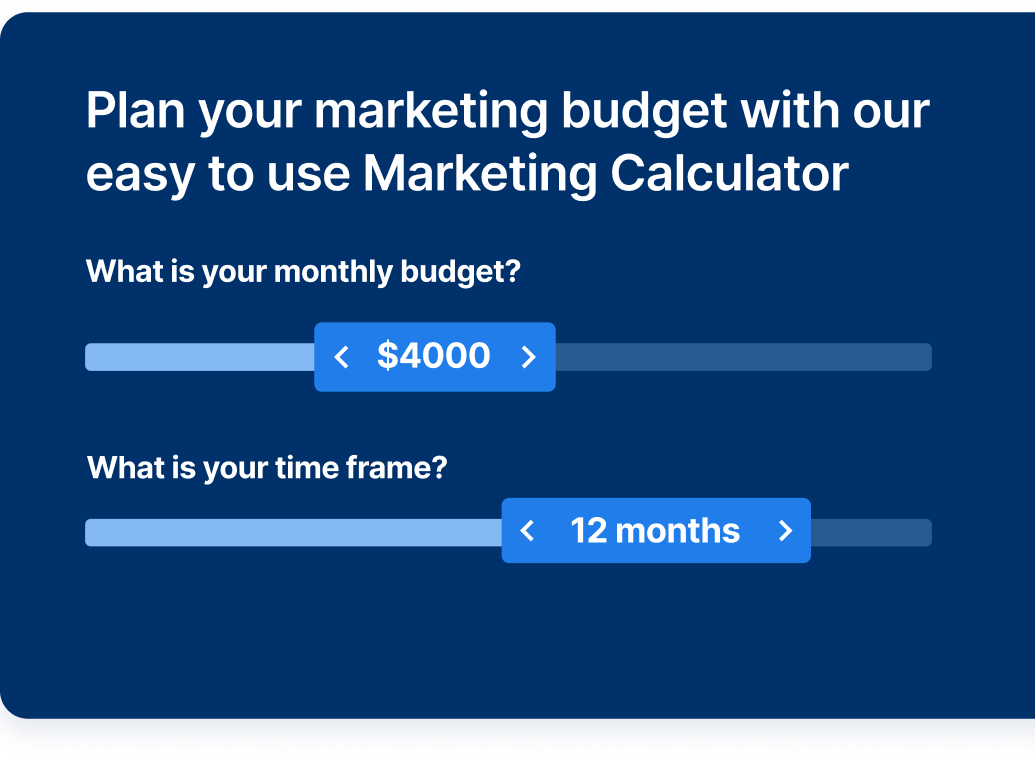
Try our free Marketing Calculator
Craft a tailored online marketing strategy! Utilize our free Internet marketing calculator for a custom plan based on your location, reach, timeframe, and budget.
Contents
- How to diagnose a drop in digital marketing performance
- Step 1: Identify when the drop started
- Step 2: Verify your tracking and reporting
- Step 3: Review recent business changes
- Step 4: Isolate the affected channel, campaign, or page
- Finding the “Why”: How to find the root cause of the performance drop
- 1. Gather Data Across Multiple Sources
- 2. Ask “Why?”
- 3. Build a list of possible causes
- Make smarter analysis your competitive advantage
Share this article


Proven Marketing Strategies
Try our free Marketing Calculator
Craft a tailored online marketing strategy! Utilize our free Internet marketing calculator for a custom plan based on your location, reach, timeframe, and budget.