


Table of Contents
- What is AI content optimization?
- What are some common AI content optimization use cases?
- What are the advantages of using AI for content optimization?
- What are the disadvantages of using AI for content optimization?
- What are the most popular AI content optimization tools?
- When should I use people vs. AI for content optimization?
- How do I get started with AI content optimization
- 1. Audit existing processes
- 2. Outline use cases
- 3. Create prompts
- 4. Get feedback
- 5. Do a learning launch
- 6. Measure effectiveness
- FAQs about AI content optimization
- Drive better results with expert AI content optimization
-
What is AI content optimization?
AI content optimization enhances content using AI for topic research, brief creation, SEO audits, and gap analysis — distinct from answer engine optimization, which targets AI search results. -
What are the main advantages of using AI for content optimization?
AI streamlines communication with clear briefs, saves time on tasks like headline creation, fills skill gaps (e.g., image design), and uncovers insights from audience and brand data. -
What are the key disadvantages of AI-driven content optimization?
AI can hallucinate inaccurate info, may be slowed by platform throttling, and isn’t ideal for creating full-quality content alone. -
When to use people vs. AI?
Use AI when it can complete a task 80% as well as a person and the output is helpful to end users, but always check AI outputs for validity, use people to write actual content, and gather team feedback to ensure successful adoption.
AI content optimization is a powerful tactic for digital marketers in 2025. By using artificial intelligence, marketers can enhance both new and existing content through data-driven insights, more informative content briefs, and faster discovery of SEO opportunities.
AI tools help analyze search intent, suggest relevant keywords, and refine on-page elements — making it easier to boost rankings, improve engagement, and achieve better marketing results.
- What is AI content optimization?
- What are some common AI content optimization use cases?
- What are the advantages of using AI for content optimization?
- What are the disadvantages of using AI for content optimization?
- What are the most popular AI content optimization tools?
- When should I use people vs. AI for content optimization?
- How do I get started with AI content optimization
- FAQs about AI content optimization
Keep reading to learn more about using AI for content optimization now!

AI Workspace for Business Teams
Imagine an AI workspace where you can collaborate with team members, share prompts, and leverage personas for generative AI.
Empower My Team with AI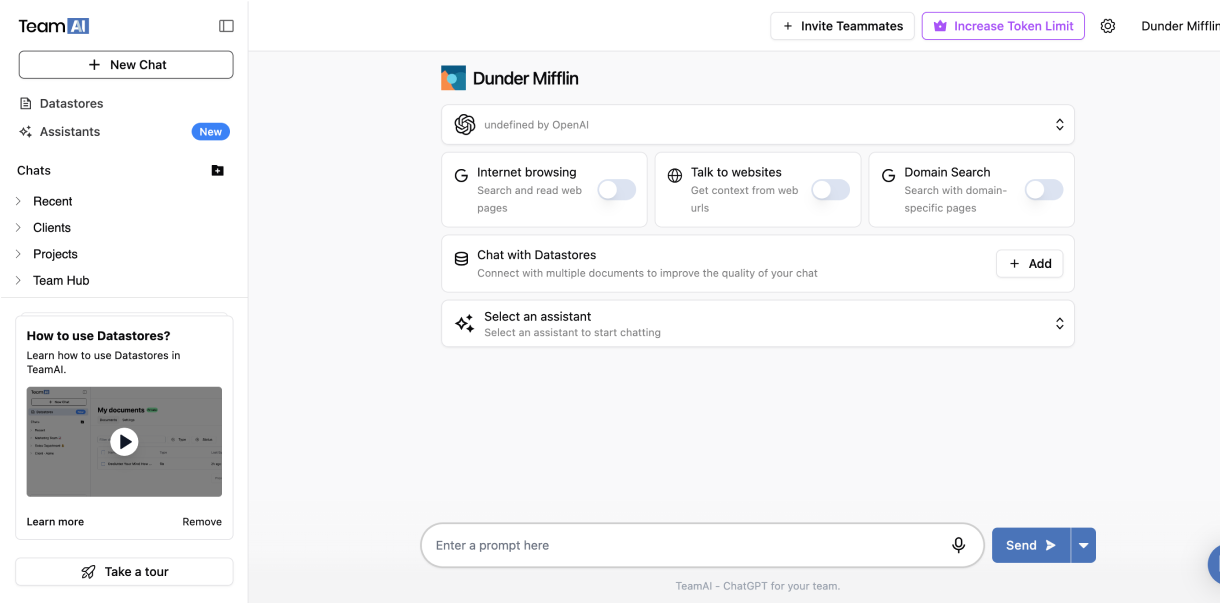
What is AI content optimization?
AI content optimization uses artificial intelligence to optimize new or existing content. AI-powered optimizations for new content include topic research and brief generation, while optimizations for existing content include SEO audits and content gap analysis.
AI content optimization shouldn’t be confused with answer engine optimization, which refers to optimizing content for AI search results.
What are some common AI content optimization use cases?

$4.4 trillion is the estimated potential economic value of increased productivity from AI use cases.
Common use cases for AI content optimization include the following:
| For new content | For existing content |
| Topic research | SEO audit |
| Content brief | Content gap analysis |
| Image generation | Image generation |
| Headline generation | Headline generation |
While some marketers use AI to write content, it’s a strategy we don’t endorse here at WebFX.
We don’t endorse AI-generated content because people-generated content tends to provide more value to users — and human connection wins in the AI era.
With people-generated content, users hear from authoritative voices in a specific sphere and learn how to solve their problems from experts.
What are the advantages of using AI for content optimization?
The advantages of using AI for content optimization include the following:
- Streamline communications: Artificial intelligence can provide valuable feedback in improving communications, whether it’s a content brief or editing feedback. With greater clarity, teams can reduce errors and improve production speeds.
- Optimize time: In its supporting role, AI can also help team members optimize their day-to-day. Whether using AI to generate headline ideas or build effective briefs, AI helps team members focus on more critical tasks, like writing content that ranks well in search results.
- Fill skill gaps: You can also fill skill gaps, like designing images, with AI. For teams without a dedicated designer, for example, AI image creation tools make it possible to create a beautiful, on-brand image to use within content.
- Unlock insights: Artificial intelligence in content optimization also offers a new perspective. Feeling stuck on what to write about? Use AI to uncover new potential topics based on your audience, services, and brand.
Together, these benefits make it possible for teams to enhance their work (and content).
What are the disadvantages of using AI for content optimization?
However, there are some disadvantages to using AI for content optimization, including:
- Accuracy: Hallucinations are one of the most common issues with AI. When AI produces inaccurate information, it’s ineffective. That’s why it’s critical for team members to vet what AI produces before using it.
- Throttling: Depending on the AI model used, like ChatGPT, businesses might experience throttling, which slows the AI’s outputs. AI platforms like TeamAI (which is free) can help companies bypass throttling and continue to move at speed.
- Effectiveness: AI isn’t for all content optimization tasks — though its effectiveness can depend on the prompt. For example, while AI can produce content, it’s unlikely to match human-generated content.
Use these disadvantages to inform how you use AI for content optimization.
What are the most popular AI content optimization tools?
If you’re ready to start using AI for content optimization, here are some of the most popular AI tools:
| Tool | Best for | Key features | Pricing |
| TeamAI | Teams needing multiple AI models | Access to ChatGPT, Claude, Gemini in one platform; standardized team usage | Free to start |
| ChatGPT | General content tasks | Topic research, headline generation, content outlines, brainstorming | Free tier available; paid plans for faster responses and newer models |
| Surfer | SEO-focused optimization | Content briefs, on-page SEO audits, content gap analysis, SERP analysis | Paid subscription |
| Jasper | Marketing teams | Templates for common content tasks, integrations with marketing tools | Paid subscription |
When should I use people vs. AI for content optimization?
Before exploring when to use people vs. AI for content optimization, remember the following:
- Check AI outputs to ensure the output’s validity
- Use people vs. AI models to write content
- Review content optimization prompts to ensure their accuracy and usefulness
Now, when considering whether to use people vs. AI for content optimization, ask the following:
- Is the AI able to complete the task effectively?
- Does the end user find the output helpful?
- How does the AI help the user?
Consider if AI can perform a task 80% as well as a person and if this is acceptable, especially since AI bait doesn’t work in the age of agentic search. If so, experiment with AI, but gather team feedback on its effectiveness to ensure successful adoption.
How do I get started with AI content optimization
🎥Video: How to get your website ready for AI search
Getting started with AI content optimization begins with the following:
1. Audit existing processes
Look at your existing workflow and processes to surface potential opportunities for using artificial intelligence. Think about team members, too, and their roles. For instance, if you opened time for so-and-so, could the organization start on a new initiative?
You’ll also want to consider who could help bring AI to these processes during this stage.
2. Outline use cases
Next, outline potential use cases for AI, like:
- Creating content briefs
- Generating image alt text
- Evaluating content against the brand’s buyer personas
- Analyzing competitor content
Keep in mind the above are AI content optimization ideas. Depending on your business and its content strategy and processes, the above ideas might not align with what would work best for your organization.
Talk with team members to also discover use cases that would help them.
3. Create prompts
Next, start drafting prompts for the chosen use cases. If you’re new to prompt writing, try these tips:
- Use “Act like a ____ expert,” like “Act like a content marketing expert”
- Use direct, concise language like “Do use bulleted lists”
- Allow for dynamic directions, like “Write a content brief for the following topic: [Topic]”
- Request variations, like “Generate four variations”
Prompts require time and experimentation, so set aside time to draft them. When it comes to adopting AI content optimization, this step often requires the most time and research. In some cases, AI tools (like TeamAI) will include prompts.
4. Get feedback
After drafting and testing the different prompts, get feedback from team members on the output. You’ll want to learn what works and what doesn’t. Based on their feedback, decide whether refining the prompt or removing it from consideration makes sense.
Then, get feedback on the updated versions.
5. Do a learning launch
Finally, do a learning launch. Make the prompts available to a few team members (preferably those most interested) and get feedback on how the prompt performs within the company’s content workflows and processes.
If possible, limit updates to critical fixes. Completing too many updates at once can create a haphazard user experience (due to so much change) and result in mixed reviews associated with different prompt versions.
6. Measure effectiveness
Following the learning launch and post-launch updates, measure the effectiveness of using AI content optimization. Consider multiple metrics, like user satisfaction (you can use Net Promoter Score), average time to complete tasks, and number of projects that require revisions.
Remember that metrics share just one part of the story — it’s also important to talk with team members one-on-one to understand their experiences, concerns, and expectations when using artificial intelligence for content optimization.
FAQs about AI content optimization
What is AI content optimization?
AI content optimization is the use of artificial intelligence to improve new or existing content. It includes tasks like topic research, content brief generation, SEO audits, content gap analysis, and headline generation. The goal is to make content more visible in search results and more useful to readers.
How does AI content optimization help with SEO?
AI helps with SEO by analyzing search intent, identifying relevant keywords, auditing on-page elements, and comparing your content to competitors. AI tools can surface optimization opportunities faster than manual analysis, helping you improve rankings and drive more organic traffic.
Can AI help my content appear in AI-generated answers?
Yes. Content that’s well-structured, clearly answers user questions, and demonstrates expertise is more likely to be cited in AI-generated answers like Google AI Overviews. AI content optimization can help you structure content in ways that both search engines and AI systems can easily understand and reference.
What are the best AI content optimization tools?
Popular tools include ChatGPT for general content tasks, Surfer for SEO-focused optimization, Jasper for marketing teams, and TeamAI for accessing multiple AI models in one platform. The best AI tools depends on your specific needs and budget.
Should I use AI to write my content?
We recommend using AI as a supporting tool rather than a content writer. AI can help with research, outlines, briefs, and optimization, but human-written content tends to provide more value to readers because it comes from authoritative voices with real expertise.
How do I write effective AI prompts for content optimization?
Start by defining a role (“Act like an SEO expert”), use clear and specific instructions, allow for dynamic inputs (like topic or keyword variables), and request multiple variations when relevant. Effective prompts require experimentation and refinement based on the outputs you receive.
How long does it take to see results from AI content optimization?
Results depend on the tasks you’re optimizing and your starting point. AI can speed up content production immediately, but improvements in rankings and traffic typically take weeks or months to materialize, similar to traditional SEO efforts.
Future-Proof Your SEO Strategy with OmniSEO®
Goodbye search engine optimization, hello search everywhere optimization.

Drive better results with expert AI content optimization
AI content optimization helps you produce better content faster. By using AI for research, briefs, audits, and analysis, you can improve rankings, match search intent more effectively, and increase your chances of being cited in AI-generated answers.
The key is using AI as a tool to support your team, not replace it. Human expertise, editorial judgment, and authentic voice still matter. AI just makes the process more efficient.
Ready to start using AI to improve your content performance? WebFX offers AI-powered marketing services designed to help you get more from your content strategy. Our team can help you implement AI tools, optimize existing content, and build a process that drives real results.
Contact us online or call 888-601-5359 to learn more.
-
 Sarah Berry is a Lead Web Marketing Consultant at one of the largest digital marketing agencies in the USA — WebFX. With more than 10,000 hours of experience, she offers practical insights and strategies to grow your digital revenue. Her work has been cited by Michigan State University, Business Insider, and Ars Technica. When she isn’t polishing her Time Magazine Person of the Year Award, she’s spending time with her flock of ducks.
 -

WebFX is a full-service marketing agency with 1,100+ client reviews and a 4.9-star rating on Clutch! Find out how our expert team and revenue-accelerating tech can drive results for you! Learn more
Try our free Marketing Calculator
Craft a tailored online marketing strategy! Utilize our free Internet marketing calculator for a custom plan based on your location, reach, timeframe, and budget.
Plan Your Marketing Budget
Table of Contents
- What is AI content optimization?
- What are some common AI content optimization use cases?
- What are the advantages of using AI for content optimization?
- What are the disadvantages of using AI for content optimization?
- What are the most popular AI content optimization tools?
- When should I use people vs. AI for content optimization?
- How do I get started with AI content optimization
- 1. Audit existing processes
- 2. Outline use cases
- 3. Create prompts
- 4. Get feedback
- 5. Do a learning launch
- 6. Measure effectiveness
- FAQs about AI content optimization
- Drive better results with expert AI content optimization
Share this article


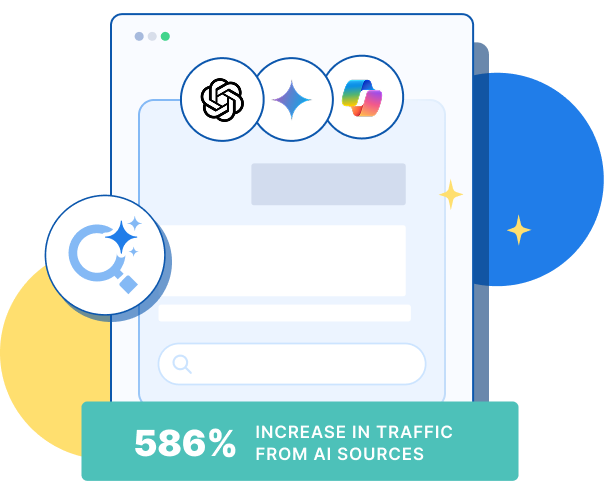
See AI Marketing in Action
Explore how WebFX helped a regional brand get discovered in AI search experiences — proving what’s possible with today’s AI-driven marketing!
Try our free Marketing Calculator
Craft a tailored online marketing strategy! Utilize our free Internet marketing calculator for a custom plan based on your location, reach, timeframe, and budget.
Plan Your Marketing Budget