



Table of Contents
- What is SEO for orthopedics?
- Why SEO matters for orthopedic practices
- Orthopedic SEO best practices [from quick wins to advanced strategies]
- Build an SEO strategy around your highest-value services
- 1. Identify your highest-value services
- 2. Map patient search behavior to these services
- 3. Evaluate your current visibility
- 4. Strengthen the page experience for your priority services
- 5. Support your priority services with additional content
- 6. Revisit your priorities regularly
- Orthopedic SEO services from WebFX
- Implement effective orthopedic SEO strategies
- Orthopedic SEO helps your practice appear when patients research symptoms, compare providers, and look for treatment options, making it a major driver of new patients.
- Local visibility matters: Optimizing your Google Business Profile, strengthening location pages, and earning patient reviews help you compete with nearby clinics and large hospital systems.
- Creating helpful, medically accurate orthopedic content builds trust and supports patients through every stage of their search — from understanding symptoms to evaluating surgery and recovery.
- Focusing your SEO on your practice’s highest-value services increases impact, whether that’s sports medicine, joint preservation, minimally invasive surgery, or other specialties.
To have a steady volume of patients, orthopedic practices must reach them at critical moments: when they’re researching symptoms, comparing providers, or evaluating treatment options.
Enter search engine optimization (SEO). SEO helps you appear at these key moments in a patient’s journey, enabling them to discover your practice and learn about the procedures you offer.
Let this guide walk you through the most effective orthopedic SEO strategies for improving your visibility, bringing more qualified patients into your practice, and promoting your highest-value services:
- What is SEO for orthopedics?
- Why SEO matters for orthopedic practices
- Orthopedic SEO best practices
- Building an SEO strategy around your highest-value services
- Orthopedic SEO services from WebFX
Want to see where your website’s SEO currently stands? Use our free SEO checker and get your detailed report today!
What is SEO for orthopedics?
Orthopedic SEO is the process of optimizing your orthopedic practice’s website and online presence to rank higher in searches related to your specialties, whether that’s knee replacement, sports injuries, or local orthopedic surgery.
By ranking in local and relevant searches for orthopedic conditions, symptoms, and procedures, you can attract more qualified patients and increase appointments for your services.
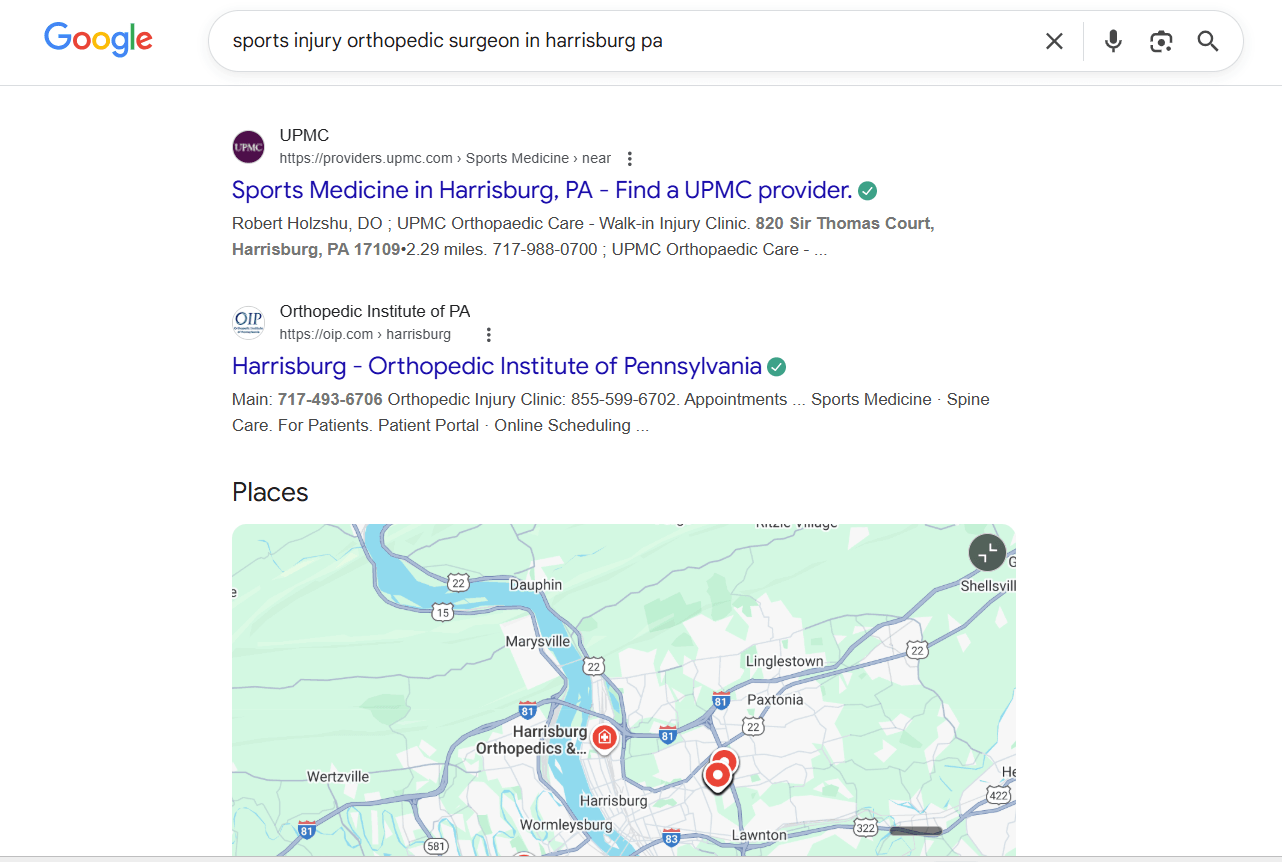
For example, a patient with recurring shoulder pain may search for “shoulder pain causes,” “shoulder pain treatment exercises,” or “orthopedic doctor near me.” If this search is relevant to your practice, orthopedic SEO strategies can help you appear prominently in these search results.
These searches reflect real patient intent, and orthopedic SEO helps you show up when prospective patients are looking for your expertise.
Why SEO matters for orthopedic practices
Orthopedic practices operate in a highly competitive healthcare landscape. Not only are you competing with nearby clinics, but you’re also rivals with established, large hospital systems.
SEO levels the playing field by helping your prospective patients find you when they start researching symptoms, comparing treatment options, and evaluating providers. With 75% of patients looking online for doctors, medical care, and other healthcare providers, search engines are one of the most important channels for orthopedic practices to reach prospective patients.
When someone searches for terms like “orthopedic surgeon near me,” “ACL tear symptoms,” or “knee replacement recovery time,” strong SEO increases your chance of appearing in those results and earning your patients’ attention.
SEO also supports your practice’s long-term growth by attracting consistent patient demand.
Your orthopedic treatments and services vary widely in value — some procedures like surgeries often generate more revenue than general visits or diagnostics. When your pages rank well for the conditions and procedures most important to your practice, you create a steadier flow of qualified patient inquiries and a predictable appointment pipeline.
Orthopedic SEO best practices [from quick wins to advanced strategies]
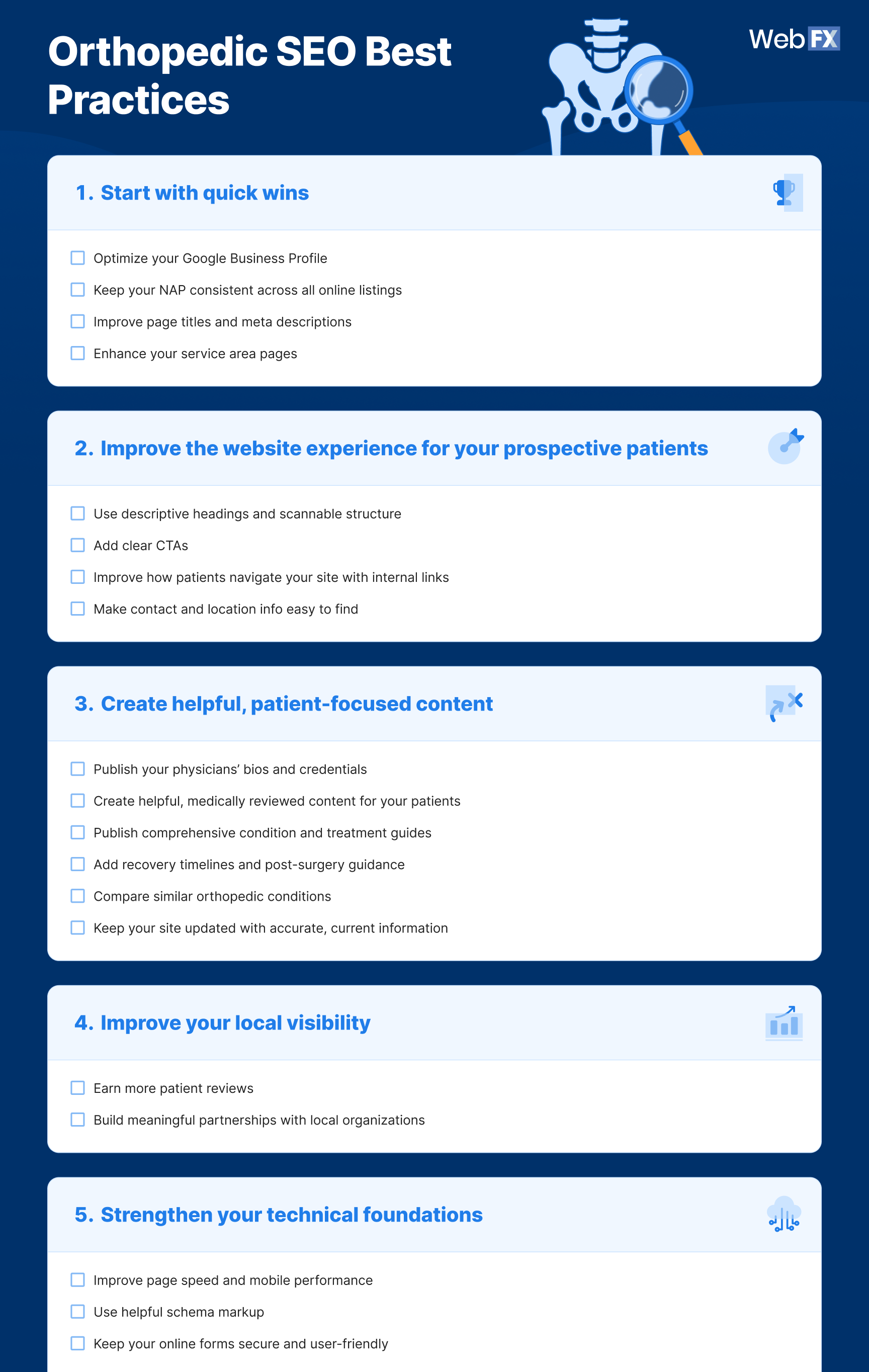
SEO can feel overwhelming, especially when you’re balancing clinical responsibilities with marketing needs. These orthopedic SEO best practices help you build momentum by starting with simple, high-impact steps before moving into strategies that support long-term visibility across local, condition-based, and procedure-focused searches:
1. Start with quick wins
These first steps don’t require technical skills but can immediately improve your visibility in local search:
Optimize your Google Business Profile (GBP)
Your prospective patients will typically discover your practice through your Google Business Profile (GBP). Because GBP feeds both local search results and the Google Maps pack, optimizing it results in high returns for orthopedic clinics.
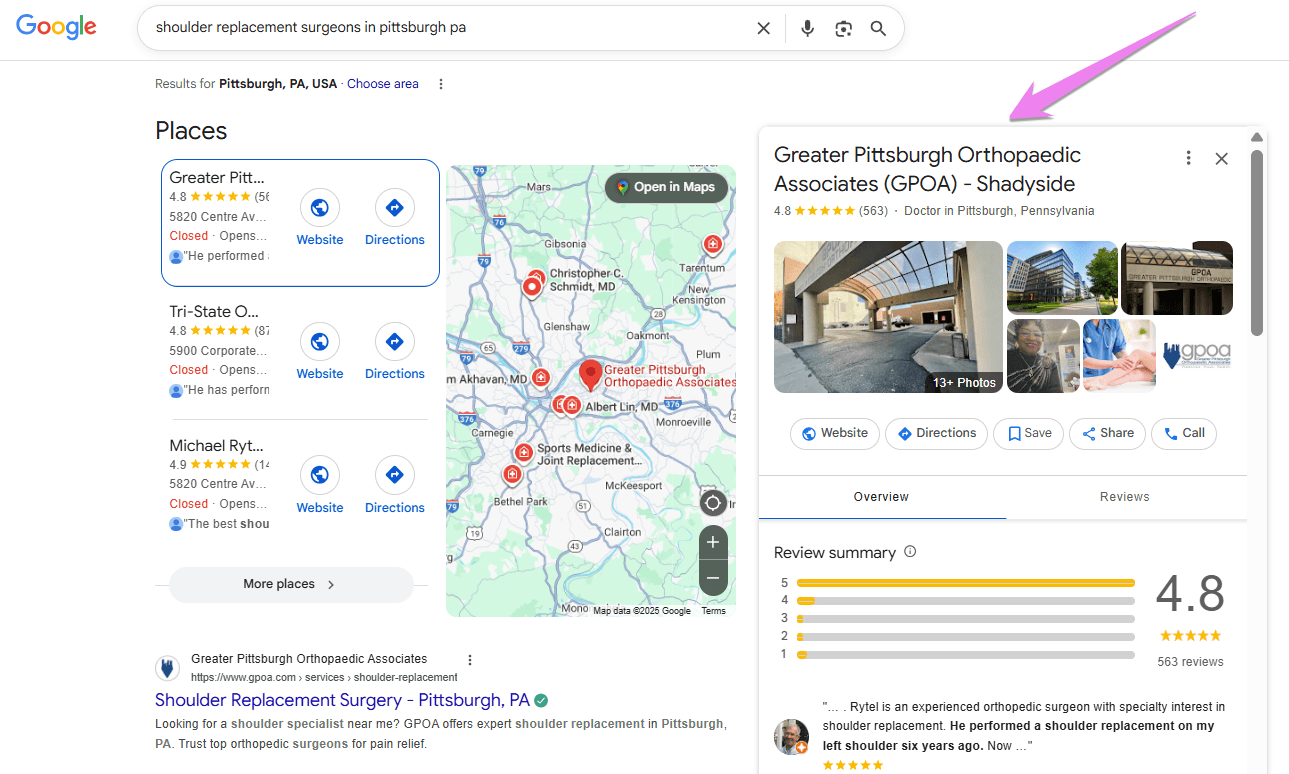
Start by claiming your GBP listing if you haven’t yet. Fill out all the information on the page. Then, you can:
- Add accurate hours, photos, and service descriptions
- Add a primary category or your specialty that closely matches your practice (for example, “Orthopedic surgeon”)
- Add relevant secondary categories (like “Sports medicine clinic”) if relevant
A comprehensive GBP profile helps Google understand your practice and improves your likelihood of appearing in “near me” searches for your clinic.
Keep your NAP consistent across all online listings
Your name, address, and phone number (NAP) should appear exactly the same across the web, including on your:
- Website
- GBP
- Local listings
- Healthcare directories like Healthgrades, Vitals, and Zocdoc
- Insurance directories like Blue Cross Blue Shield Provider Finder, Aetna Provider Directory, and Cigna Healthcare Provider Directory
Google uses NAP information to confirm your legitimacy. Minor inconsistencies (such as “Ste.” vs. “Suite”) can dilute your authority and cause ranking issues. For example, if your website uses “Suite 102,” every listing must reflect that exact formatting.
Improve your page titles and meta descriptions
Page titles and descriptions are small but significant SEO elements that may show up in search engine results pages (SERPs) and tell your prospective patients (and search engines) what your pages cover.
Clear metadata improves click-through rates, aligns your pages with actual patient search behavior, and helps Google understand your services. Updating a vague title like “Services” into “Orthopedic Treatments for Sports Injuries & Spine Care” can dramatically improve relevance.
Add or enhance service area pages
If your orthopedic practice serves patients from nearby cities or suburbs, service area pages can help you rank in those locations even if your clinic is not physically located there. These pages tell Google that you actively serve patients in that area and provide context that supports local searches.
Orthopedic search behavior includes both informational queries (e.g., “rotator cuff tear symptoms”) and location-based queries (e.g., “orthopedic surgeon in Scottsdale”). Service area pages support the latter by building local relevance and helping your practice appear in surrounding-city searches you wouldn’t otherwise rank for.
A strong service area page should include:
- The city or neighborhood name in the title and H1
- A short overview of the orthopedic services you provide
- Driving directions or distance from that city to your clinic
- Specific conditions or procedures common in that community (optional)
- Internal links to relevant treatment pages
- Clear CTAs to schedule an appointment
For example, a page titled “Orthopedic Surgeon Serving Scottsdale, AZ” that includes driving directions, featured treatments (like sports injuries), and a CTA can help you appear in Scottsdale searches even if your clinic is physically in Phoenix.
2. Improve the website experience for your prospective patients
Would you rather trust a medical practice with a clunky website or a practice with an intuitive website that helps you find information on its site? Chances are, you’ll choose the latter.
Make your website easy to use and navigate with these tips so that you’re one step closer to convincing patients you’re a helpful healthcare provider.
Use descriptive headings and a scannable structure
Orthopedic patients skim for answers, especially during episodes of pain. Clear H2s and H3s help both Google and patients understand your content quickly.
Structure your page content to make it easy for patients to skim and find answers.
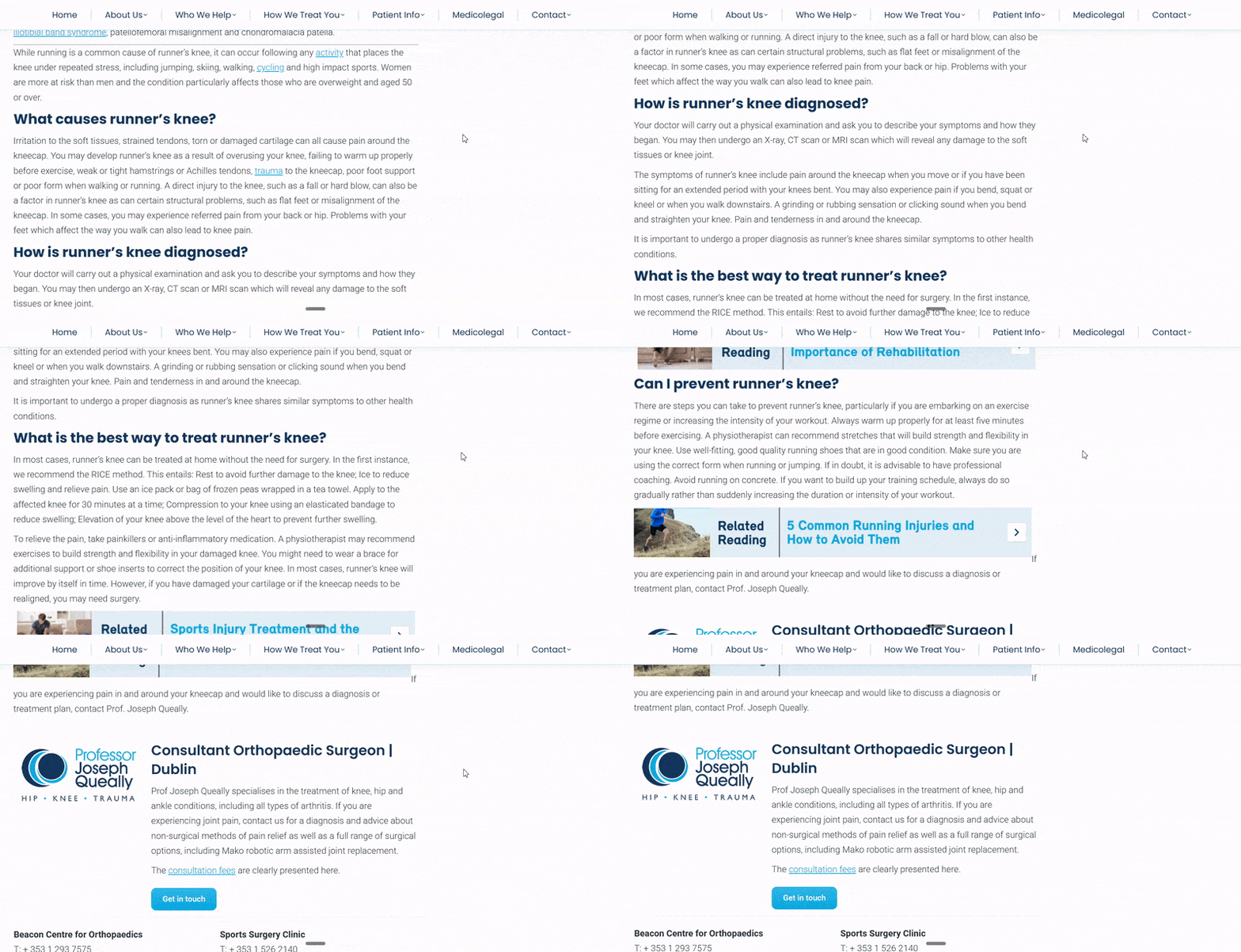
Add clear calls to action (CTAs)
Your website should make it easy for patients to take the next step, whether that’s scheduling an appointment, requesting a consultation, or calling your office for more information. Clear CTAs guide visitors who are already considering treatment and show them exactly how to move forward.
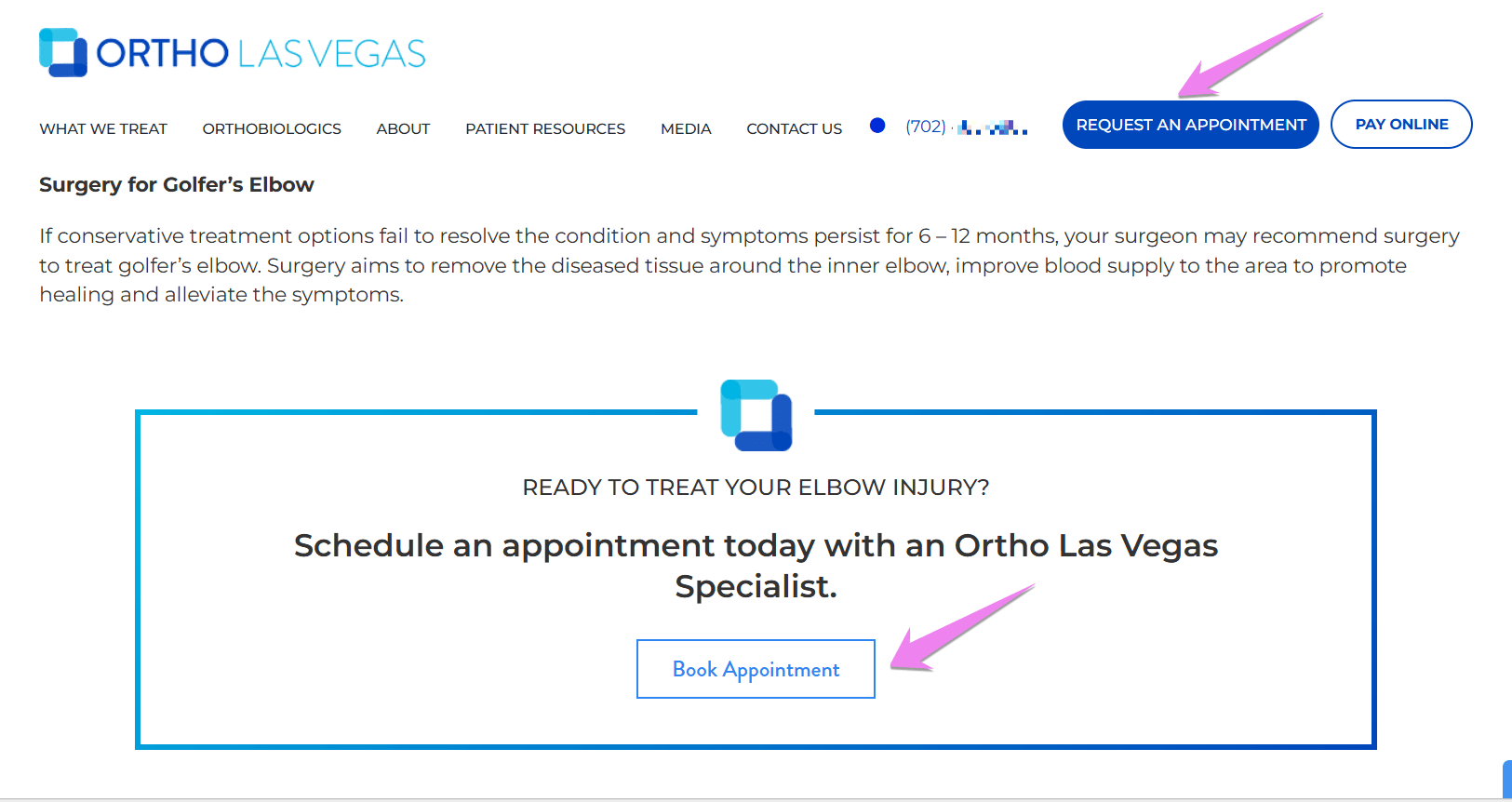
Here are some tips for adding CTAs:
- Use action-oriented language, such as “Request an appointment,” “Call us,” or “Book a consultation.”
- Place CTAs in predictable locations, such as at the top of the page, after major sections, and at the bottom of condition or treatment pages.
- Use buttons instead of text links to make the next step visually obvious.
- Keep CTAs simple and specific, and avoid vague phrasing like “Learn more.”
- Repeat CTAs on long pages, especially condition guides that require scrolling.
- Highlight quick conversions, such as click-to-call buttons for mobile users.
Imagine a patient reading through your content and feeling ready to schedule. Without a clear CTA, they may leave without taking action because they weren’t sure what to do next. Strong CTAs prevent that by giving patients a clear path to contact your practice.
Improve how patients navigate your site with internal links
Patients typically discover your website through a symptom or condition page, and they need clear pathways to learn more about treatment options you provide, your specialists’ profiles, and next steps.
Connect your pages through thoughtful internal linking to help people find information and navigate through your website without feeling lost. When patients can easily move from “What’s causing my pain?” to “How is this treated?” to “Who can help me?”, they’re more likely to stay on your site, build trust, and take action.
These connections also help Google understand your expertise by showing the relationship between your topics and treatments. Here are tips on strategically linking your pages together:
- Link symptom pages to relevant treatment pages
- Link treatment pages to surgeon bios or appointment pages
- Include “related conditions” sections for overlapping symptoms
- Add a “next step” or “recommended reading” area at the end of major pages
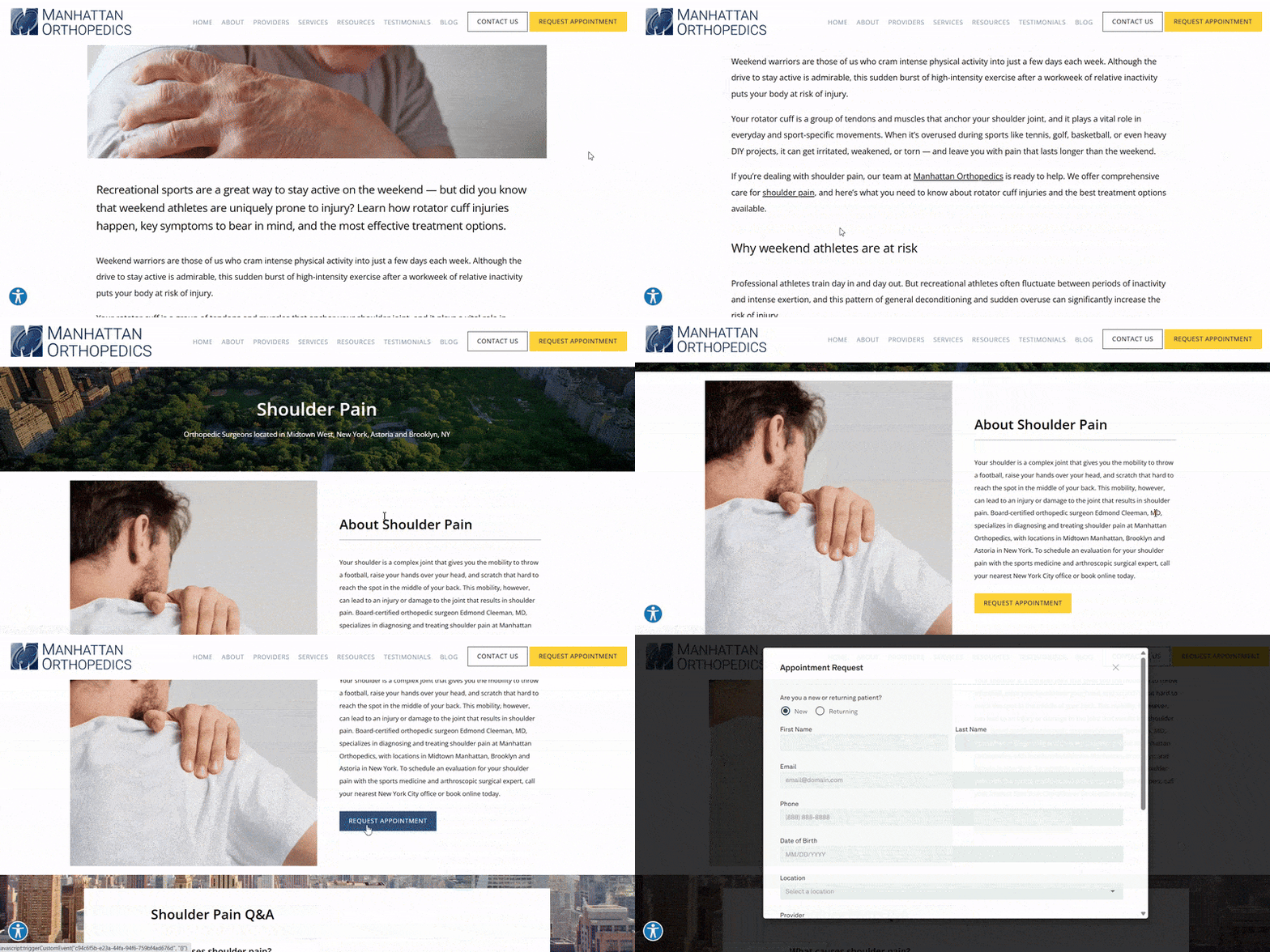
In this example, a blog post about rotator cuff injury treatments links to the shoulder pain treatment page.
Make contact and location information easy to find
Some patients only need to skim through your page and are ready to contact or visit you, so they need your clinic’s address, contact information, and office hours immediately. Help your patients take the next step by making this valuable information prominent on all your pages.
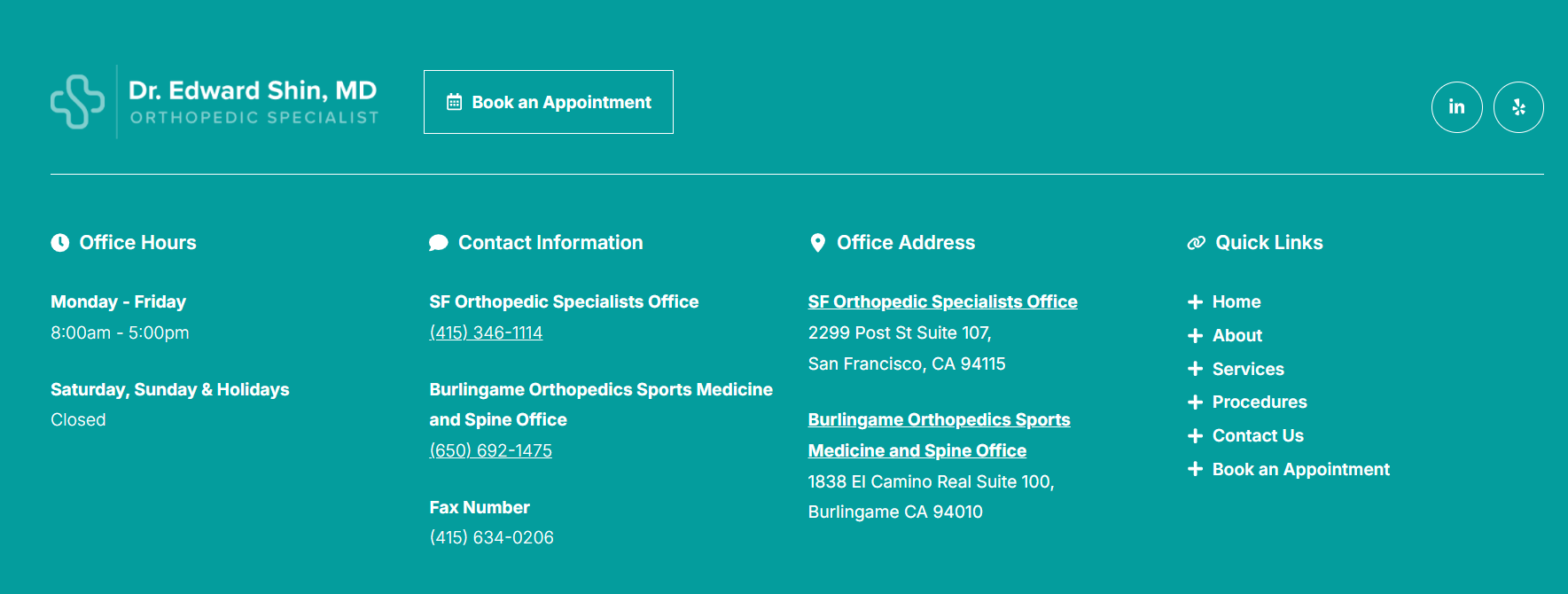
Here are some ideas:
- Add your phone number and “Schedule” button to the top of every page, ideally in the header.
- Display your hours and address in the footer, so they’re available no matter where a patient scrolls.
- Include a map embed on your Contact page or Location pages so patients can easily get directions.
- Use click-to-call and tap-to-text features for mobile devices so they can easily contact you.
- Add a dedicated “Locations” page if you serve multiple areas or operate multiple clinics.
- Include your address and phone number on major service pages, especially those with high search intent.
3. Establish your authoritativeness and build trust with helpful orthopedic content
Orthopedics sits squarely in the “Your Money or Your Life” category, where decisions can affect a patient’s mobility, quality of life, and long-term health. That’s why search engines like Google look closely at whether your website demonstrates real-world experience, clinical expertise, and reliability.
Google also evaluates content using Experience, Expertise, Authoritativeness, and Trustworthiness (E-E-A-T) guidelines. These signals help search engines understand whether your information comes from qualified professionals and can be relied on by patients.
By clearly presenting who you are, what your practice does, how you care for patients, and keeping information accurate over time, you’re boosting your E-E-A-T signals. Here are ways to demonstrate your authoritativeness while also creating helpful content that supports patient education and improves your site’s visibility:
Publish your physicians’ bios and credentials
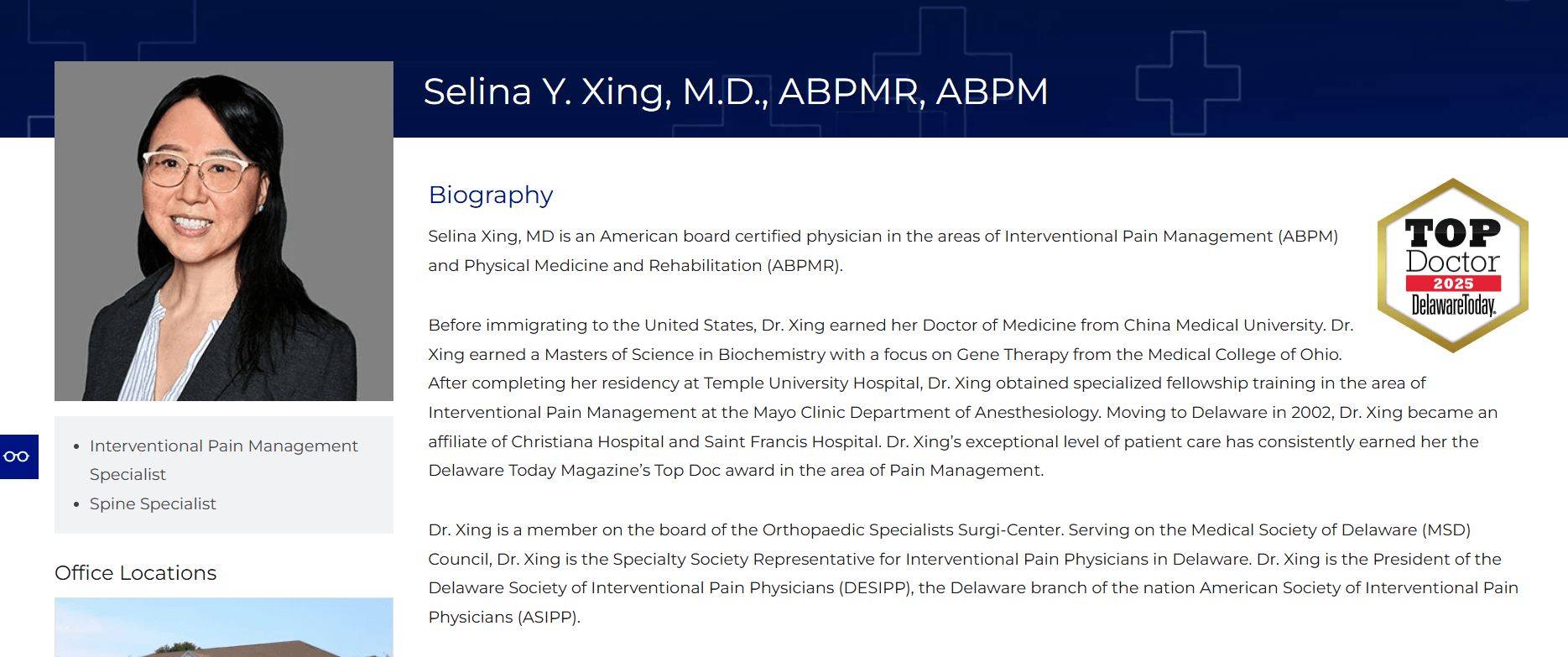
Nothing reinforces your orthopedic practice’s legitimacy and trustworthiness more than the specialists behind it. Add dedicated pages about your orthopedic doctors detailing their:
- Experience
- Certifications
- Fellowships
- Subspecialties
- Professional affiliations
Add their professional headshot to build rapport with potential patients.
Create helpful, medically reviewed content for your patients
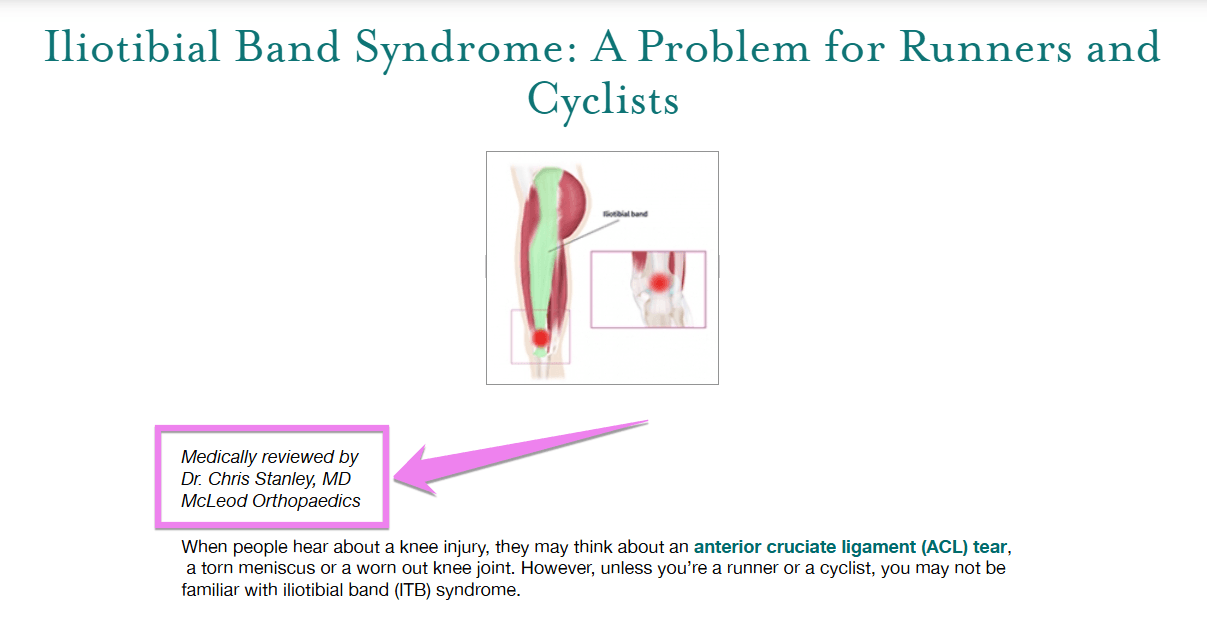
Ensure your pages that explain conditions, treatments, and recovery expectations are accurate and clinically sound by letting your team of physicians review them. Add a “Medically reviewed by Dr. [Name], [Title]” line beside the author’s byline and date to convey that a qualified expert checked your content.
Publish comprehensive condition and treatment guides
Many U.S. adults use the Internet to research health and medical information. That’s why your patients can discover your practice through your condition and treatment guides. These content pieces help patients understand what’s causing their pain and what their treatment options are.
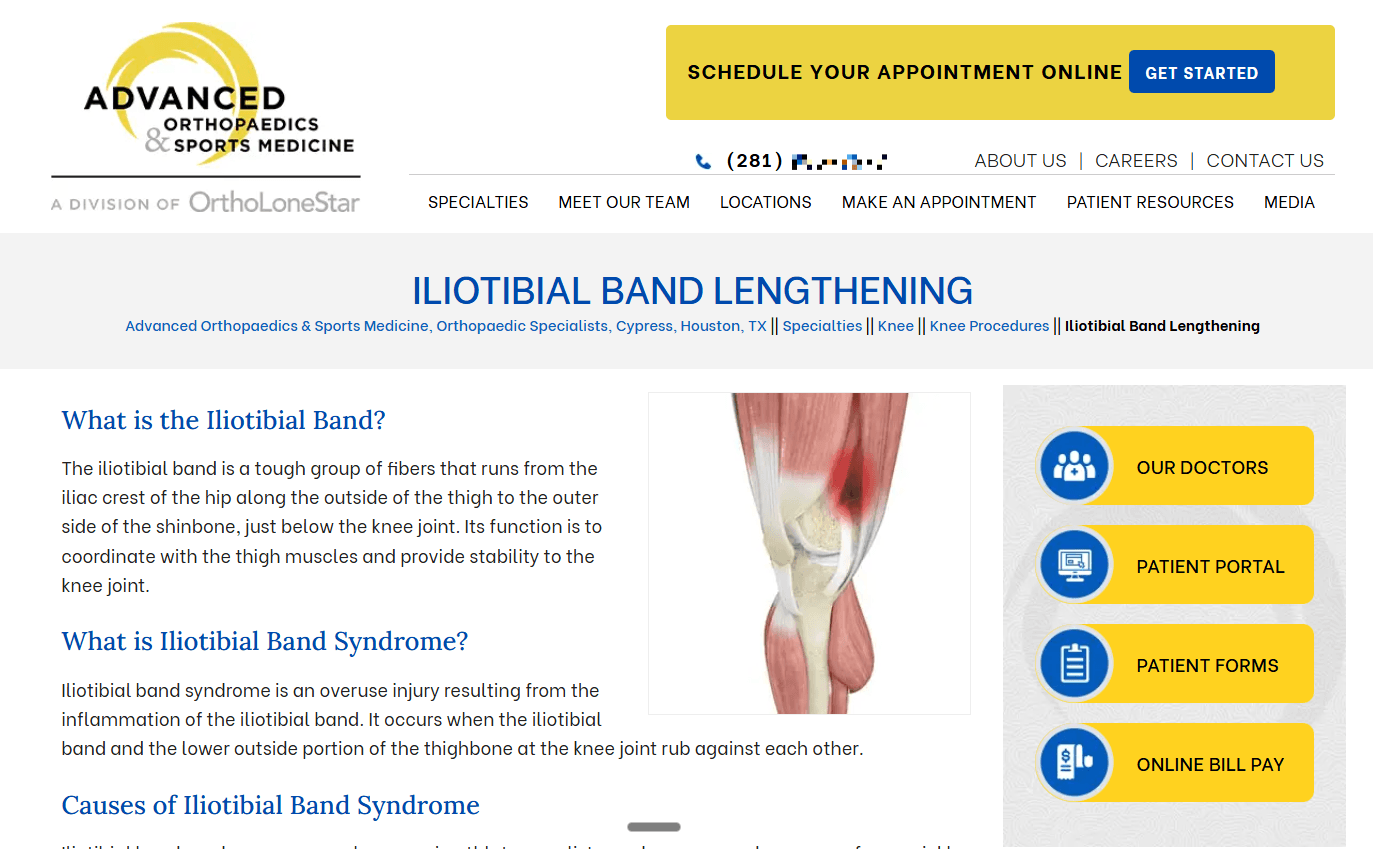
The key information you can include in your guides are the following:
- What the condition is
- Common causes and symptoms
- Diagnosis and testing
- Surgical and non-invasive treatment options
- How your orthopedic practice approaches care
- When to see an orthopedic specialist
Guides like “Meniscus Tear Symptoms and Treatment Options” or “Rotator Cuff Tear: Causes, Diagnosis, and Treatment” enable early-stage researchers to find your practice and help you earn their trust.
Add recovery timelines and post-surgery guidance
Recovery is a big concern, especially for sports medicine patients. Offering clear, general timelines helps set expectations and reduces your patients’ anxiety.
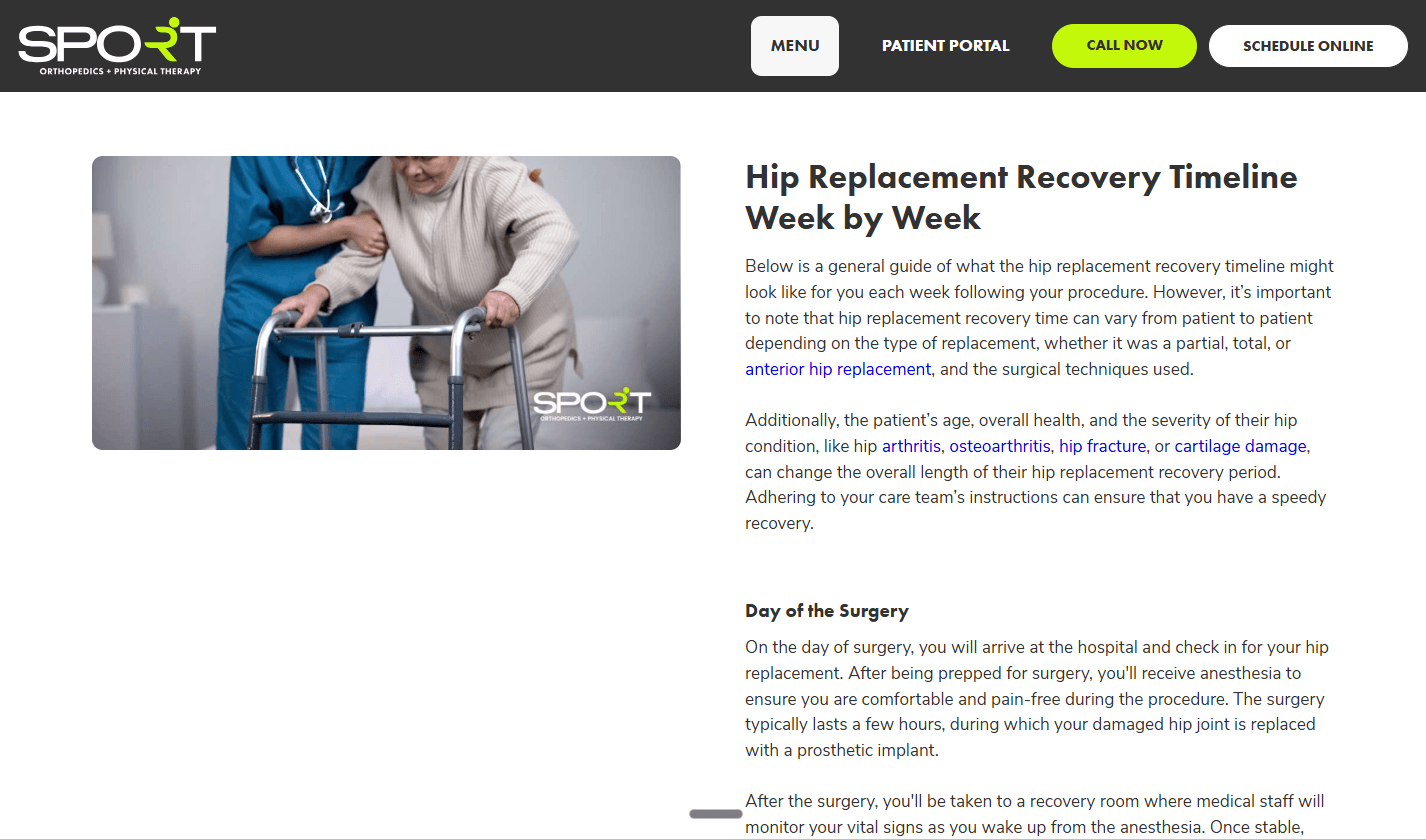
Your article can provide these details:
- Typical recovery stages
- Expected milestones
- Discomfort management
- Follow-up care
- Potential complications
Encourage your readers to contact your practice if they have any questions about recovery.
Compare similar orthopedic conditions
Musculoskeletal issues often share overlapping symptoms, which can confuse patients. These are topics they often search online before they set an appointment with your practice.
Creating comparison-style content helps them understand the differences and reminds them why they must consult an orthopedic doctor. It also helps them self-evaluate and prepare questions before their consultation with your physicians.
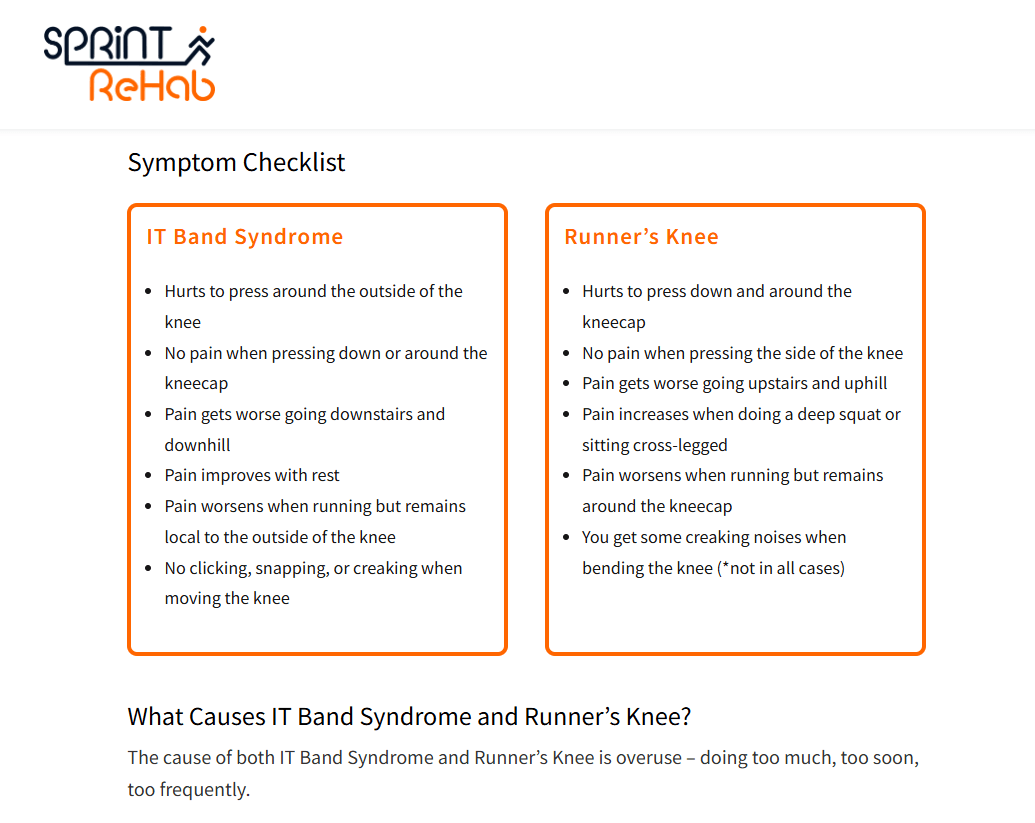
To find out which comparison content works:
- Ask your specialists which conditions their patients typically mix up.
- Identify conditions that have similar symptoms, like swelling, stiffness, and instability.
- Check keyword tools and Google Trends for “vs” search terms or comparison queries.
Pro tip: Use infographics or visuals on the page to better explain their differences.
These pieces strengthen your authority by helping patients make sense of their symptoms.
Keep your site updated with accurate, current information
Improve your website’s trust signals by updating it with accurate information for your patients. Review the following regularly:
- Office hours, locations, and contact information
- Insurance and referral requirements
- List of procedures and services
- Instructions for scheduling or preparing for appointments
If a patient calls you and learns that your website contains incorrect information, they may question the rest of your website’s credibility and even reconsider scheduling.
4. Improve your local visibility
Local SEO is crucial for orthopedic practices to reach nearby patients who are actively searching for orthopedic care, whether they’re dealing with joint pain, a sports injury, or preparing for treatment.
Here are ways you can improve your local visibility and stand out in your area:
Earn more patient reviews
Reviews of your practice influence your local rankings and shape perceptions. Before a patient schedules an appointment with you, they typically read reviews first, making your online reputation a powerful form of social proof.
Earn more glowing reviews from your patients with these tips:
- Ask patients directly at the end of successful visits
- Include a HIPAA-safe “Review us on Google” link in appointment follow-up emails
- Add a short URL or QR code at your checkout desk that directs to a review page
- Train front-desk staff to mention reviews in a natural, friendly way
Build meaningful partnerships with local organizations
Backlinks are an important SEO ranking factor, and the most valuable backlinks your practice will ever have are the ones you earn through genuine relationships in your community.
Collaborating with reputable local organizations and participating in local events can earn you backlinks. These links tell Google (and your patients) that your clinic is an active, trusted member of the community.
Here are some partnership ideas for your orthopedic practice:
- Co-host or participate in injury-prevention workshops with physical therapy clinics
- Sponsor youth sports teams or school athletic programs
- Partner with gyms, fitness centers, or running clubs for training tips or seminars
- Collaborate with wellness centers on educational content
- Participate in health fairs or hospital-led community events
- Support local foot races or recreational leagues with sports-injury resources
Organic connections within your community strengthen your authority, boost your local visibility, and help new patients discover your practice.
5. Strengthen your technical foundations
Technical SEO focuses on improving a patient’s experience on your website and helping search engines interpret your content correctly. These optimizations support stronger rankings, improve site performance, and create a better experience for your prospective patients.
Some technical updates require ongoing maintenance or development support, which is why many orthopedic practices partner with healthcare SEO agencies to manage these areas effectively:
Improve page speed and mobile performance
Would you wait for a website to load for more than a minute? Well, neither would your patients.
Slow, cluttered sites cause visitors to leave before they even see your content. So ensure your site displays properly on all devices (including mobile phones) and loads quickly with these tips:
- Compress large images
- Remove unnecessary scripts or plugins to improve your page’s speed
- Ensure videos load efficiently
- Use browser caching and optimized hosting
- Simplify mobile layouts for easier navigation
Use helpful schema markup
Schema markup helps search engines understand your pages better and may improve your visibility in rich results and other SERP features. Here are useful schema types for orthopedic practices:
- MedicalOrganization for your practice’s homepage
- IndividualPhysician for your doctors’ bios
- MedicalCondition for the conditions you treat
- MedicalProcedure for your surgery or treatment pages
- LocalBusiness for your office’s location information
Keep your online forms secure and user-friendly
Patients must feel confident submitting appointment requests or messages through your site. If you collect sensitive patient information through your forms, they must follow privacy and security best practices. You must also comply with any applicable regulations.
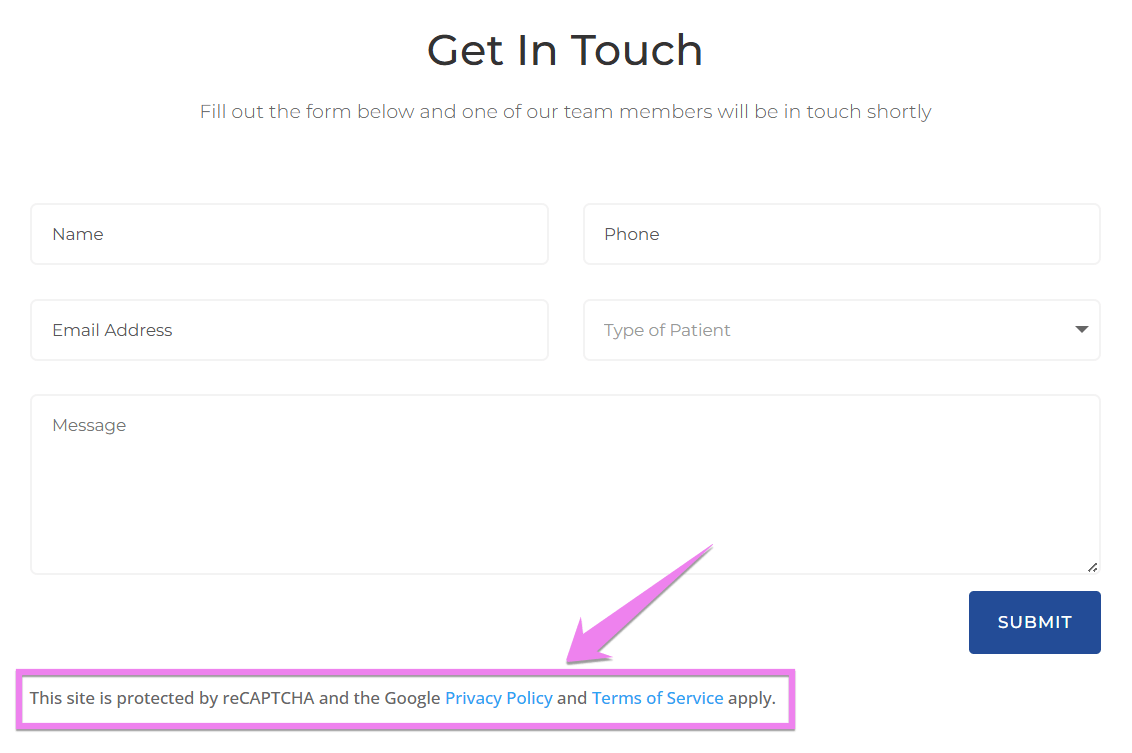
Here are other tips to keep your forms user-friendly and secure:
- Keep fields short and relevant
- Make your form mobile-friendly
- Use HTTPS across your entire site
- Include a privacy notice or reassurance about information safety
- Confirm submissions with a thank-you message or automated email
Build an SEO strategy around your highest-value services
To make your SEO efforts more intentional, focus on the orthopedic services that matter most to your practice’s growth, patient needs, and clinical strengths. Here’s a framework that can help you decide which services deserve priority in your SEO strategy:
- Identify your highest-value services
- Map patient search behavior to these services
- Evaluate your current visibility
- Strengthen the page experience for your priority services
- Support your priority services with additional content
- Revisit your priorities regularly
1. Identify your highest-value services
“Value” varies across every orthopedic practice. For example, one orthopedic practice may see higher revenue potential from hip replacement surgeries because of strong local demand, while another may prioritize sports injuries.
Consider the following when determining which services are high-value ones:
- Strong reimbursement or revenue potential
- Alignment with your physicians’ subspecialties
- High demand in your community
- Lower competition or stronger differentiation
- Long-term patient relationships
- Strong outcomes or well-established expertise
2. Map patient search behavior to these services
Once you’ve identified your priority areas, analyze how your patients search for them. Are there “near me” queries tied to these services? Do they find your site by researching their symptoms?
For example, if you’re an orthopedic surgeon specializing in sports medicine and sports-related injury treatments are a high-value service, find out if your patients discover your practice by searching “knee pain while running,” “runner’s knee recovery,” or through other search terms.
3. Evaluate your current visibility
Find out if your high-priority service pages are ranking for related keywords. In our earlier example of a sports medicine orthopedic surgeon, check whether your practice appears in the local pack for searches like “ACL reconstruction surgeon near me” if ACL surgery is one of your high-priority services.
You can also check if your educational content about ACL reconstruction appears in the search results.
4. Strengthen the page experience for your priority services
Improve the page experience for services you want to prioritize. Imagine your patient seeking your high-priority service (in our example, it’s ACL reconstruction).
Your patient is likely searching online about symptoms, diagnosis, treatment, and recovery. Ensure your pages on these topics are linked to one another, so your patient can easily navigate through your website.
As a result, you’re providing helpful, consistent information and making it easier for patients to understand their conditions and treatment options. Their pleasant website experience will make them feel confident to reach out to your practice.
5. Support your priority services with additional content
Publish additional content that will support your high-priority services. In our earlier example, an orthopedic surgeon offering ACL reconstruction surgery can consider publishing these types of content:
- Symptoms guide or infographic
- A checklist for when to see a doctor
- Recovery timeline
- Comparison pages (for example, ACL vs. MCL injury, or ACL vs. meniscus tear)
These content pieces widen your reach and help patients discover your practice.
6. Revisit your priorities regularly
Patient demand changes. Your practice evolves, so it’s best to review your priority service list every six to 12 months.
Your top priority treatments today may not be driving as many patients to your clinic after a few months for various reasons. In our sports medicine orthopedic surgeon example, they may get plenty of referrals from local physical therapy clinics for rotator cuff injuries or ankle instability cases.
Seasonal sports cycles can influence injury patterns, so demand for certain procedures may fluctuate throughout the year. Business goals may change from increasing surgical volume to focusing on non-operative care.
When these shifts happen, align your SEO efforts with the practice’s top priority services.
Orthopedic SEO services from WebFX
Investing in SEO services for orthopedics is a great way for you to earn more patients and revenue for your practice. At WebFX, we offer orthopedic SEO services that help you boost your ranking in search results and drive qualified prospects to your practice.
🎥 Our approach to healthcare marketing

Explore WebFX Healthcare Marketing Services
Here’s what you can expect from our SEO services:
Keyword research and optimization
A critical component of SEO is keyword research. When people search for your orthopedic office, they’re searching terms through Google to help them find relevant listings.
At WebFX, we’ll help you identify relevant keywords for your business and integrate them into your website. Our team will conduct keyword research to identify long-tail keywords, which contain three or more words, to help you drive qualified traffic to your website.
We’ll include those keywords in your web copy to help you rank in relevant search results and drive interested patients to your website.
Website audit
If you want to appear in relevant search results, you need to have an optimized website. With orthopedic SEO services from WebFX, you’ll get a website audit included in your package.
Our team will assess your current website and provide you with an opportunity report. This opportunity report will detail areas where we can help you improve your website to help you rank better in search results.
Title tag and meta description optimization
When you invest in SEO for orthopedic surgeons, you’ll get title tag and meta description optimization included in your page.
What does this mean? Our team of experts will optimize your title tag and meta description to help you earn more clicks and drive traffic to your website.
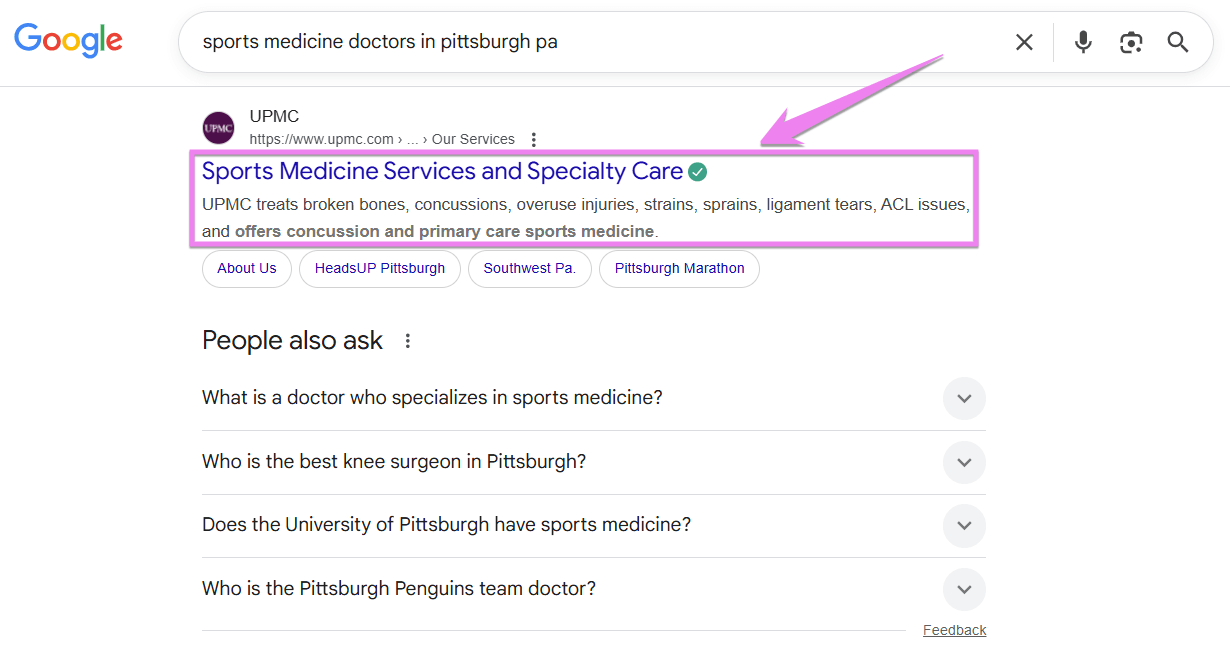
Your title tag and meta description are the two components that appear in search results. They indicate to a user whether your listing is worth visiting. By optimizing these tags, we’ll help you drive more patients to your website.
GBP optimization
When people search for an orthopedic surgeon near them, one of the first things they’ll see in the search results is GBP listings. You must optimize your listing so people visit your practice’s website first.
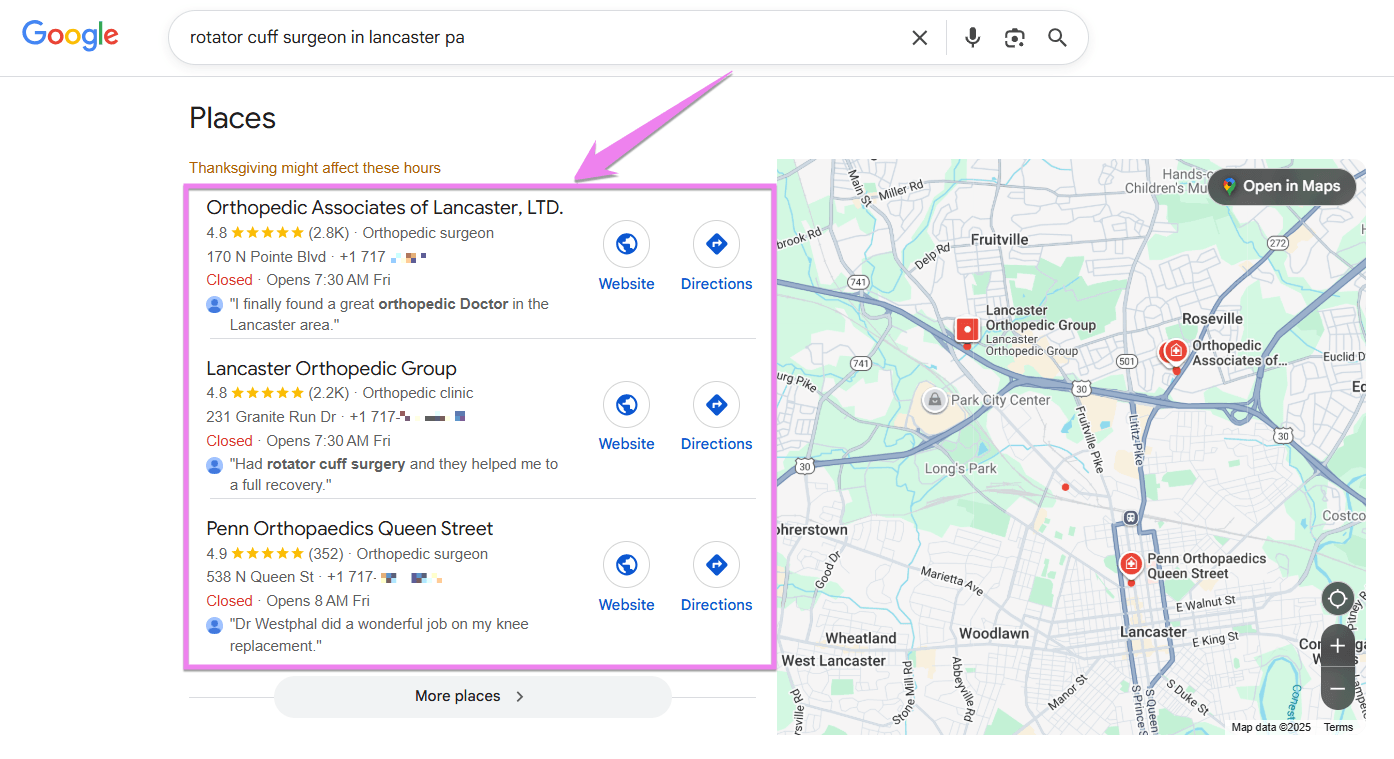
With orthopedic SEO services from WebFX, we’ll optimize your GBP to ensure it provides your audience with all the information they need.
FAQs
What is SEO for orthopedics?
SEO for orthopedics is the process of improving your orthopedic practice’s visibility in search engines to attract more qualified patients. It focuses on local SEO (Google Business Profile, reviews, citations), service and condition pages, authoritative content, technical SEO, and E-E-A-T.
How long does orthopedic SEO take to show results?
You’ll typically see early movement in 60–90 days and stronger gains in 4–6 months. Competitive specialties and new sites may require 6–12 months for top local and organic rankings.
What keywords should an orthopedic practice target?
Mix local and service terms: “orthopedic surgeon near me,” “orthopedic clinic [city],” “knee replacement surgeon [city],” “sports medicine doctor [city],” plus informational queries like “ACL tear recovery time” and “rotator cuff surgery recovery.”
How is SEO for orthopedics different from general healthcare SEO?
Orthopedic SEO emphasizes condition/treatment depth (knee, hip, shoulder, spine), multi-location and provider pages, local pack visibility, and HIPAA-aware review strategies, with strong E-E-A-T from physician bios, credentials, and patient education content.
What are the most impactful orthopedic SEO tactics?
- Optimize Google Business Profile (categories, services, photos, reviews)
- Build dedicated pages for each condition and procedure
- Add localized content and city/location pages
- Implement schema (MedicalClinic/Physician, Service, FAQ, Review)
- Improve site speed and Core Web Vitals
- Use clear CTAs (schedule, call), insurance info, and online forms
Implement effective orthopedic SEO strategies
Orthopedic SEO can improve your practice’s visibility in your community and grow your clinic’s revenue. Some SEO action items are quick updates, while others take time to do.
If you want to work with a dedicated SEO team with over 98,500+ hours of healthcare experience to help you, consider WebFX. We have a team of SEO experts ready to help you optimize your practice’s presence in search results.
They’ll take the time to understand your practice, high-priority services, and challenges. Then, they’ll craft revenue-driving SEO strategies suited to your budget and needs.
Ready to attract more patients for your orthopedic practice? Contact us online or call us today at 888-601-5359 to speak with a strategist about our SEO services!
-
 Macy Storm is a Content Marketing Consultant at WebFX. She has 5+ years of experience creating content for all digital strategies and across 10+ industries. With a B.A. in Communications, she’s used her writing skills to write over 1,000+ pages for WebFX and SEO.com. Her work has been featured by Search Engine Journal, HubSpot, Entrepreneur, Clutch, and more. When she’s not clacking her keys, she’s playing video games, reading, or counting how many times people say her puppy Daisy is cute (it’s a lot of times).
 -

WebFX is a full-service marketing agency with 1,100+ client reviews and a 4.9-star rating on Clutch! Find out how our expert team and revenue-accelerating tech can drive results for you! Learn more
Try our free Marketing Calculator
Craft a tailored online marketing strategy! Utilize our free Internet marketing calculator for a custom plan based on your location, reach, timeframe, and budget.
Plan Your Marketing Budget
Table of Contents
- What is SEO for orthopedics?
- Why SEO matters for orthopedic practices
- Orthopedic SEO best practices [from quick wins to advanced strategies]
- Build an SEO strategy around your highest-value services
- 1. Identify your highest-value services
- 2. Map patient search behavior to these services
- 3. Evaluate your current visibility
- 4. Strengthen the page experience for your priority services
- 5. Support your priority services with additional content
- 6. Revisit your priorities regularly
- Orthopedic SEO services from WebFX
- Implement effective orthopedic SEO strategies
Share this article


Help More Patients Find Your Practice
See how healthcare providers like Hurst Pediatric Dentistry increased local leads 5× with data-driven SEO from WebFX.

Try our free Marketing Calculator
Craft a tailored online marketing strategy! Utilize our free Internet marketing calculator for a custom plan based on your location, reach, timeframe, and budget.
Plan Your Marketing Budget
What to read next




Additional Reading



Health & Wellness Case Studies
Solving key challenges for healthcare
Our website isn’t driving enough traffic
Our expert SEO specialists, copywriters, and digital advertisers will help you increase your website’s rankings when your target audience searches for your treatments online, so you can continuously drive traffic and revenue for your practice, hospital, or business.

We’re opening a new location
Set your new hospital, brand, or practice up for future success with a range of digital marketing strategies that get your new practice in front of potential patients or B2B buyers.

We’re not attracting enough patients
Get a steady flow of new patients to your practice, hospital, or brand with expertly crafted strategies that provide a seamless, engaging user experience for your website visitors, encouraging them to become patients.

We have high patient turnover
Offer new treatments or services and need to get them in front of your potential client’s eyes? Our range of revenue-driving digital advertising and marketing services have you covered and reach the people who need your facility the most.
