


Powered by 237,500+ hours of industrial experience
Learn all about PPC for industrial companies in this mini-guide on how pay-per-click (PPC) advertising works, how it benefits industrial organizations, and how to get started.
Pay-per-click (PPC) advertising is one of the most beneficial strategies for promoting businesses in virtually every industry, and that certainly holds true for industrial companies.
PPC is a way of marketing to your industry’s specific target customers in search engines and on social media. It allows you to reach potential clients when they’re actively searching for your services online, based on search terms that are particularly valuable to your specific business.
Are you interested in learning more about how paid search for industrial companies fits into your marketing strategy? On this page, we’ll talk about how industrial advertising benefits your business and how to run a successful PPC campaign.
If you’d like to speak with a specialist about using PPC for your industrial company, contact us at 888-601-5359 or contact us online to learn more about our PPC services.
What is PPC for industrial companies?
PPC for industrial companies refers to the process of running paid advertising campaigns on various parts of the Internet to promote your business. Your paid ads can show up in such places as:
- Search results pages
- Social media platforms
- Third-party websites
- Mobile apps
- And more!
Explore WebFX Industrial Marketing Services
Why do industrial companies need PPC?
PPC is one of the best ways to attract qualified traffic to your website. That’s because you can target your PPC ads to customers who are the most interested in your industrial services.
For example, if you create an ad that targets the keyword “CNC machining services in [your city],” those ads will be served to users who search for that query.
This means that instead of interrupting their daily activities with advertisements they’re not interested in, you can focus your advertising efforts on reaching them while they’re actively looking for information about your industry.
Hear What It’s Like to Work With WebFX!

“We had been looking for a new SEO firm responsible for industrial companies and we found the right one with WebFX. We have had nothing but great experiences so far and don’t expect anything to change moving forward.”
Boiler Installation
How do PPC ads work?
PPC ads are a great way to advertise on any budget. That’s because you only pay for an ad when a user clicks on it.
When you start a PPC ad campaign, you’ll first have to do keyword research to gain insight into which keywords your audience searches for the most. This will help your ads successfully reach your target audience.
You’ll then bid for each keyword that you target by choosing how much you’re willing to pay for each ad every time it’s clicked. This number is known as CPC, or cost-per-click. If your bid for a keyword is higher than other bidders, your ad has a higher chance of appearing.
You can create ads that target your key customers based on demographics, interests, location, and keywords. As we mentioned before, you can set up a campaign in search engines like Google.
And if you need help with managing your PPC campaign or targeting keywords, partnering with a professional PPC company can be a huge help!
Easy industrial advertising wins
PPC can be an extremely easy win for your industrial company.
The keyword “industrial design,” for example, earns anywhere from 11.5 thousand to 33.3 thousand searches per month, and the keyword “industrial metal supply” earns 4.3 thousand to 6.5 thousand searches per month.
This shows that there is a consistent demand for industrial and manufacturing services — so there will always be customers looking for your business.
Aside from search volume, you can also determine the match type behind a keyword. Someone who uses a broad match keyword — such as “industrial company” — allows their ad to also come up for someone searching for a related keyword, like “industrial repair company“.
Since you’ll always have a steady stream of customers searching for your business, PPC can take your marketing strategy above and beyond by targeting them within search engines.
How to get started with PPC for your industrial company
There are a few key steps that go into creating the perfect PPC campaign for your industrial company:
Let’s look at each of those in more detail.
1. Choose where you’ll advertise
The first choice you should make before starting your campaign is where you want to advertise.
Google Ads is one of the best places to start an industrial PPC campaign, because Google is the most popular search engine today.
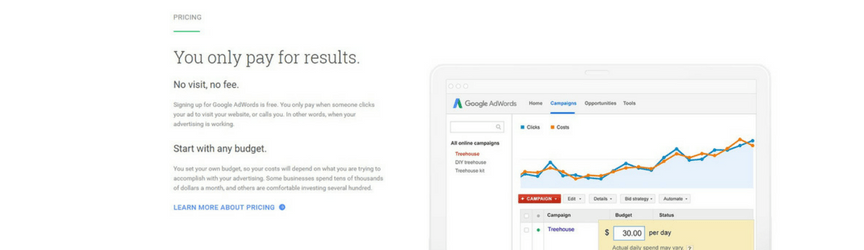
Google Ads basically acts as an auction for keywords. You choose the price that you’re willing to pay for any given industry keyword, and if your bid is among the highest, your ad will be served to your target customers. Google Ads also offers analytics to help you understand how much you spend every day and how many times your ad is clicked.
However, industrial companies can benefit from advertising through other ad networks, too. For example, some industrial businesses run display ads in trade publications, while others focus on running ads targeting engineers and procurement teams on LinkedIn. All of these can be good options for your business, too.
2. Do keyword research
If you want to properly target your audience, you should do keyword research to understand which keywords your customers are looking for.
Google’s Keyword Planner is one of the best tools for doing this. It will serve you a whole list of suggested keywords based on a phrase or category that you enter. It will also give you information like search volume, keyword trends, and cost performance.
You can use other free tools like Keywordtool.io or KeywordsFX to come up with a list of keywords that can provide great results because of high traffic and low competition.
3. Create landing pages
Landing pages are one of the most important parts of an industrial PPC campaign because it’s where a customer “lands” when they click on your ad.
When a user clicks an ad in search engine results, they expect to see exactly what the ad promoted — so don’t throw them off by sending them to the homepage of your website.
For example, if your ad promoted carbon bearings, your landing page should be the page where the customer can buy that exact product. Otherwise, they may become frustrated and bounce to another site.
A good landing page will have a clear call to action, typically with a button or link that allows them to purchase the product or contact you for more information on the same page.
4. Test your landing pages
A/B tests can help your landing pages perform their best.
You can use A/B tests to understand what elements of your landing pages are enticing customers to convert, and which elements could perform better if they were changed. For example, you could run tests on different calls to action, different button colors, or different contact forms.
Conversion rate optimization (CRO) is an ongoing process that allows you to continually ensure that you are presenting the best possible version of each landing page. Your website will yield the highest amount of conversions for your industrial company when you only use the very best landing pages possible.
FAQs about PPC for industrial companies
Here are the answers to some common questions about PPC for industrial companies:
What is PPC for industrial companies?
Industrial PPC refers to the process of running paid advertising campaigns online for your industrial marketing company. These ad campaigns can appear on search results pages, third-party websites, social media platforms, and more.
How much does industrial PPC cost?
The cost of industrial PPC varies immensely, ranging from $100–$100,000 per month. That’s because PPC costs are typically based on bids, so depending on the bids you set, the cost can fluctuate quite a bit. Other factors that affect the cost of PPC include:
- The ad networks you run your campaigns through
- The PPC tools you use
- Whether you partner with a professional advertising agency
How can you improve your industrial PPC campaigns?
Some of the most effective ways to boost your ad performance include:
- Showing your ads where you know your target audience is
- Targeting highly relevant, long-tail keywords
- Building compelling landing pages centered on specific calls to action
- Running A/B tests to see which ads perform the best
Using all of those tactics together is a great way to build a successful PPC strategy.
Ready to start using industrial advertising?
If your industrial company doesn’t have a team that can dedicate the time and effort to PPC, WebFX can help.
Our team has years of PPC campaign management experience, and we’ve worked alongside multiple industrial companies like yours to create the perfect ad campaign.
When you work with WebFX, you’ll get a dedicated account manager to help your industrial company experience all the benefits of PPC advertising — such as an increase in qualified RFQs, distributor inquiries, and sales-qualified leads.
Contact us today for a free quote!
-
 The WebFX team includes 750+ digital marketing specialists across SEO and AI search, PPC, web design, analytics, and beyond. Using proprietary RevenueCloudFX technology and transparent, data-driven strategies, we’ve collectively generated $10 billion in revenue and 24 million leads for our clients in the past five years.@webfx
 -

WebFX is a full-service digital marketing agency delivering revenue-driving strategies across online advertising, SEO and AI search optimization, and digital marketing. Backed by 1,100+ client reviews, a 4.9-star rating on Clutch, and proprietary revenue-tracking technology, our team helps businesses grow visibility and revenue across platforms, from Google to ChatGPT to LinkedIn. Discover how our expert team and revenue-accelerating tech can drive results for you. Learn more
Try our free Marketing Calculator
Craft a tailored online marketing strategy! Utilize our free Internet marketing calculator for a custom plan based on your location, reach, timeframe, and budget.
Plan Your Marketing Budget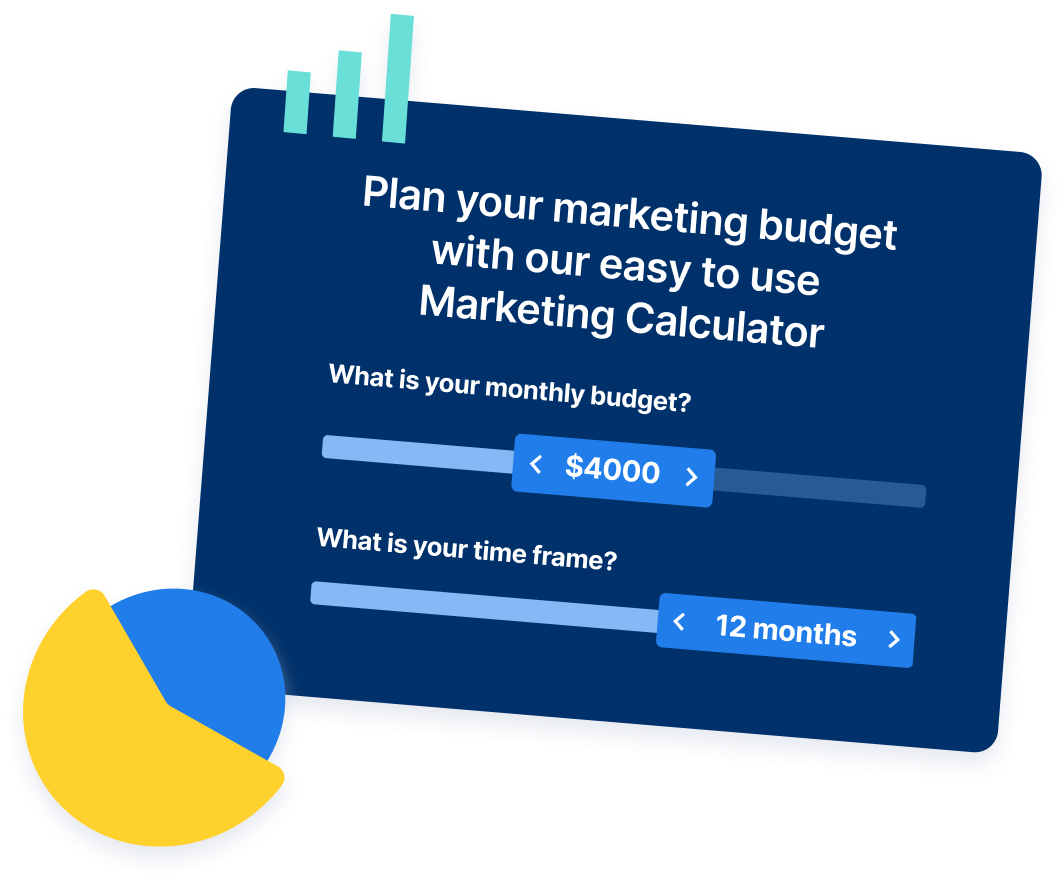
Share this article


Make Your Marketing as Efficient as Your Operations
Industrial leaders know that wasted time means lost revenue. See how a data-driven marketing system can keep your pipeline running at full capacity!
Try our free Marketing Calculator
Craft a tailored online marketing strategy! Utilize our free Internet marketing calculator for a custom plan based on your location, reach, timeframe, and budget.
Plan Your Marketing Budget




Additional Reading

Manufacturing & Industrial Case Studies
Solving key challenges for industrial companies
Our website isn’t driving enough traffic
When prospects look for industrial products online, your website needs to be one of the first results they see so you can maximize your web traffic. Make that goal a reality with WebFX.

We’re not selling enough products
Reach your sales goals with custom digital marketing plans designed to optimize your website and campaigns to maximize your conversions and product sales.

We’re struggling to retain customers
Our team specializes in helping your industrial company implement strategies that build long-term relationships with clients and foster brand loyalty so you can keep your clients coming back again and again.

Our marketing efforts aren’t providing a high return
Leverage the power of data to make smarter marketing decisions that drive a higher ROI for your company instead of relying on gut feelings with our data-driven marketing plans.
