How to Tell if Your SEO Is Working
SEO is working when your search visibility, organic traffic, engagement, and conversions improve together over several months. The clearest signs are rising impressions and rankings in Google Search Console, more engaged organic visits and key events in GA4, citations in AI answers like Google AI Overviews, and more leads or sales from organic search.












Table of Contents
- Analyzation tools you’ll need to tell if your SEO is working
- 1.Google Analytics
- 2. Ahrefs
- 3.SEMrush
- 4.Raven Tools
- 5. RevenueCloudFX
- Important numbers that determine SEO success
- 1. Website traffic
- 2. Engagement time
- 3. Bounce rate
- 4. Conversion rate
- Why the progress of SEO is hard to determine
- How to tell if SEO is working when AI answers reduce clicks
- Do you know if your SEO is working?
The benefits of SEO don’t happen overnight, but business owners still need to know early whether the investment is on track.
So while you’re waiting to see your website climb in search results and show up in AI answers, how do you know if SEO is working in the meantime?
We’ll cover the tools you can use to check your SEO, the numbers that show progress, the roadblocks that make it tricky to track, and how to read your results when AI answers reduce clicks.
WebFX has a whole team of SEO experts who can create a custom SEO plan for your unique business.
CHECK OUT OUR SEO PACKAGES AND PRICING
Analyzation tools you’ll need to tell if your SEO is working
In order to understand how SEO is affecting your website, you’ll need to use some of the best SEO tools to gather website data.
Though there is no hard and fast way to tell whether or not SEO is working, these tools offer analytics that help you determine if your SEO is on the right track.
1.Google Analytics

Google Analytics is one of the best tools for gaining insight into your website — and it’s not just used to track website traffic.
You can use GA4 to track numbers like how long users actively engage with a specific page, what share of visits are engaged, and how many key events (GA4’s name for conversions) each page produces.
2. Ahrefs
Before you use Ahrefs to track your keyword ranking, you must first incorporate valuable keywords into your content. To do your keyword research, you can use tools like Moz’s Keyword Explorer, or Keywordtool.io.
Ahrefs is an invaluable tool for tracking your keyword ranking.
Enter your URL in the search bar and you’ll see data on that page’s organic keywords, backlinks, and more.
To see how you rank for keywords, click on the blue number that shows your number of organic keywords in the top data bar.

From there, you’ll see keywords that your website ranks for, how many searches each one gets per month, how hard it is to rank for each keyword, its position in results pages, and more.
This is all useful information in knowing how well your SEO strategy is doing. If you see you’re ranking better for a lot of keywords, you know your strategy is on the right track.
3.SEMrush
SEMrush offers some crucial insight into how your SEO campaign is working with data like your websites organic search traffic, your paid search traffic, the number of backlinks your website has, and the number of organic keywords, just to name a few.
With this information, you can draw a pretty accurate conclusion of whether or not your SEO efforts are working or falling flat.
For example, one goal of SEO is to increase backlinks to your website. If you see that your backlinks are on the rise, your SEO efforts are working properly.
If you see that the number of organic keywords on your website are also increasing, it’s safe to assume that you are targeting the correct keywords for your industry and using them successfully in your content.
4.Raven Tools
Raven Tools is another platform that you can use to monitor your SEO efforts.
With Raven Tools, you can gain insight into the links you gain and how they change, which helps you to understand how successful your website is at building links.
You will also be able to see analytics like keyword and competitor intelligence and insights so you’ll always know how your keywords are performing in comparison to your competitors.
5. RevenueCloudFX
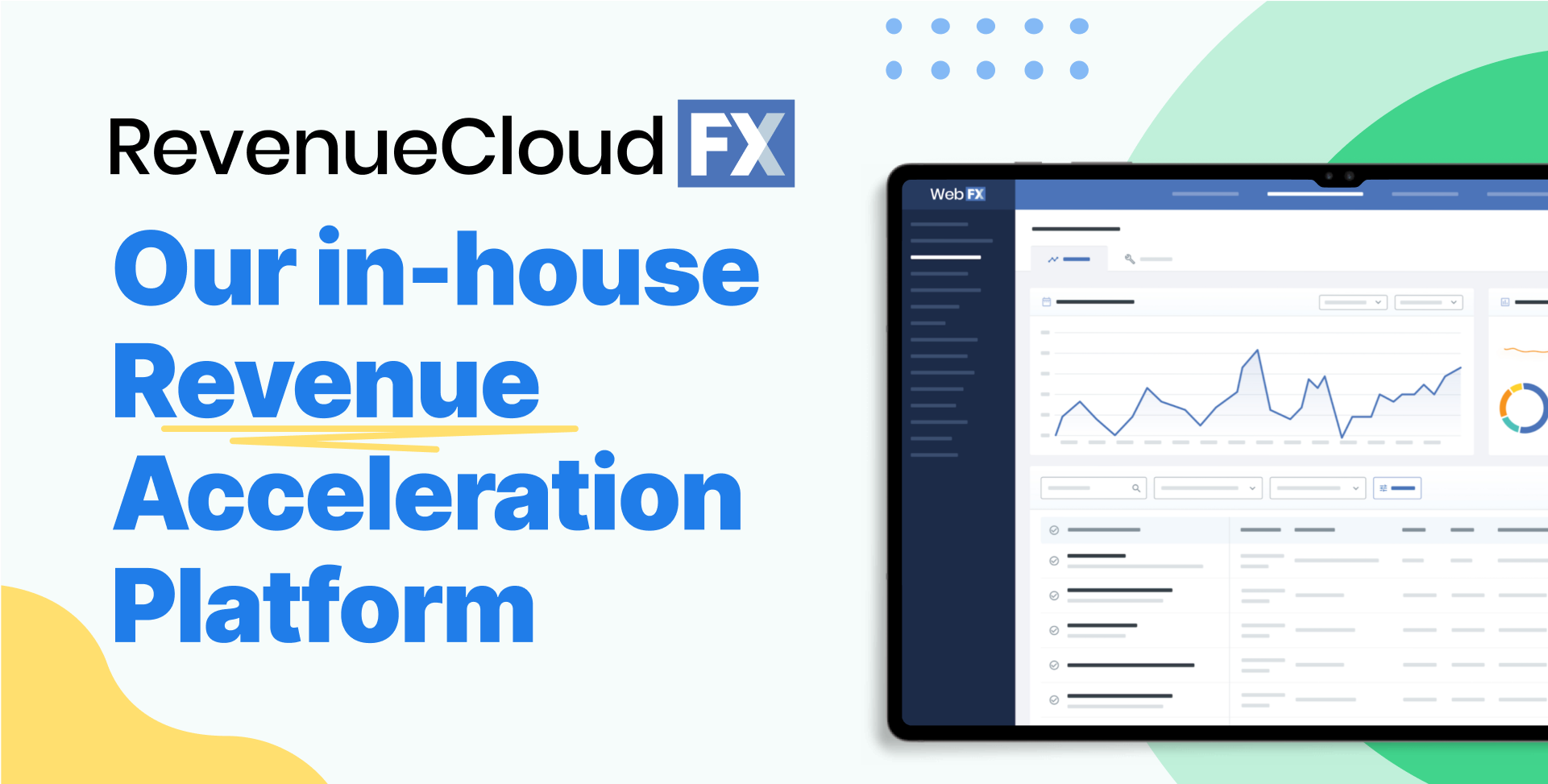
RevenueCloudFX, WebFX’s marketing platform, integrates with your CRM to connect marketing activity to revenue, so you can see how your SEO campaign is working beyond visits and rankings. It also offers detailed visitor information and analysis.
Visitor information is important to the success of your SEO campaign because it helps you to understand if your keywords are targeting the right users, and if those users are engaging.
For example, you could assume that your SEO efforts to target a specific keyword aren’t working if the information about your site visitors doesn’t always match who you’re targeting.
Seeing which organic pages drive leads and revenue can also give you hints as to how to change your SEO strategy to help it work even better.
Important numbers that determine SEO success
As we mentioned before, there are specific factors that can give you insight into whether your SEO efforts are paying off.
These KPIs, or key performance indicators, reflect the overall success of your SEO campaigns.
To see your KPIs by the number, you can use programs like Google Analytics and Ahrefs.
When your search impressions and website traffic increase, visitors engage longer, fewer visits bounce, and your conversions increase, you can bet that SEO is doing its job.
1. Website traffic
Plain and simple, if your website isn’t earning search impressions or traffic, your SEO efforts aren’t working. We can draw this conclusion because SEO is to follow certain rules that’ll help search engines rank you higher in search results, which then earns you more traffic.
When it increases, that means you are doing something right from an SEO standpoint.
Website traffic doesn’t directly affect ranking. Click-through rate (CTR) is a more useful early signal: it shows how searchers respond to your listing, so a low CTR on a page that ranks well points to a title or description worth testing.
Website traffic and results page rankings usually go hand in hand, though an AI Overview above your listing can reduce clicks even when your page ranks well. Website traffic which affects CTR, or click through rate, helps you get to the top, but once you’re there, your ranking helps you gain more traffic.
You can track this metric with Google Analytics, and check impressions, clicks, and CTR for your organic queries in Google Search Console.
2. Engagement time
In GA4, average engagement time shows how long visitors actively engage with your page.
Before beginning SEO, you may have low engagement time. This could be the result of content that doesn’t interest the visitor, or content that is poorly written.
One of the most important parts of SEO is quality content creation, and when you see engagement time increase, you know you’re doing something right.
This means that you are producing content that users are interested in, and therefore, increasing the time that users spend on your page.
Google will in turn, see that users find your content useful, and you’ll be on your way to the top of search engine results.
3. Bounce rate
In GA4, bounce rate is the percentage of sessions that weren’t engaged, meaning the visitor left quickly without viewing another page or completing a key event.
This usually means that the user didn’t find what they were looking for on your website, and went back to Google search results to find it.
GA4 shows bounce rate and its opposite, engagement rate, for each landing page. If organic bounce rate falls while clicks and key events rise, your SEO efforts are working.
4. Conversion rate
Conversion rate is potentially the most exciting number to see increase.
One of the main goals of SEO is to increase conversions or sales, so if you see that your conversions (key events in GA4) are increasing, SEO is functioning correctly.
Conversion rate increase is the product of the many SEO strategies working together to help your website increase traffic, increase the time on page, and decrease bounce rate so that site visitors are more satisfied, and ultimately end up making a purchase on your site.
We foster and form long-term partnerships so that your business has long-term results.
Over 90%
Why the progress of SEO is hard to determine
There are three major factors that make it hard to determine whether SEO is working. These three factors are out of your control, so you have to adapt to them if you want to succeed.
1. Google algorithm changes
Google constantly updates its search algorithm and the layout of its results pages.
That includes AI features. In WebFX’s study of 2.37 million U.S. keywords, 25.8% of queries showed a Google AI Overview, which can change how many clicks a ranking page earns.
These algorithm changes are out of your control but make search results better for Google’s users. There are updates that combat piracy, increase importance of mobile-friendliness, and devalue bad links, just to name a few.
Unless Google is rolling out a huge update, you won’t know what it is or when it’s coming, which means you could see lots of changes in your SEO results while the update is applied.
Fortunately, these updates don’t affect most websites very often. The updates target spam websites that use underhanded tactics to gain an edge over people who follow SEO guidelines honestly.
The best way to handle algorithm changes is to follow modern SEO guidelines as closely as you can so you minimize the chance of being hurt by an update and maximize the chance of being helped.
2. Competition
Competition is always changing. If you implement SEO to increase your position in results pages, your competitors are probably doing the same things. Everybody wants the top position in Google for their targeted keyword, and that makes it harder for you to rank as #1.
This can also affect the way you see growth because your competitors could be improving their SEO at any given time.
When your competitors change their approach to SEO, your ranking will fluctuate with it.
3. Searcher behavior
The results of SEO also have to do with the way search engine users behave online. The reason the top search results in Google have a high ranking is because Google takes note of the way users interact with your website.
Websites that satisfy users and target information they find useful, among other factors, are typically ranked higher than websites that do not. This means that any fluctuation in searcher behavior could affect the way you see SEO results.
If you own a website that sells winter boots for a discount price, chances are your sales will be up in the month or so leading up to winter, and through the early winter months. However, if the winter is unseasonably long, you may get an influx of customers in months that you hadn’t before – like February and March.
This can cause your ranking to fluctuate because your customers are searching for other things. It can also give you a poor idea of your ranking throughout the year if you’re just beginning your SEO efforts while customers shop more.
There’s also the possibility that searcher behavior could change without warning. The increased sales of winter boots could increase because they’re a popular Christmas gift that year.
How to tell if SEO is working when AI answers reduce clicks
When Google AI Overviews or assistants like ChatGPT answer a question on the results page, your SEO can be working even while organic clicks fall. In that case, judge SEO by search impressions, citations in AI answers, and the leads and revenue organic search drives, read together.
These four steps show how to read those signals side by side:
- Compare impressions to clicks. In Google Search Console, flag priority queries where impressions hold steady but clicks drop. That pattern often means an AI Overview or another search feature is answering the query, which calls for a different fix than a ranking loss.
- Track whether AI answers cite you. OmniSEO®, WebFX’s AI search visibility platform, tracks citations and mentions of your brand and competitors in ChatGPT, Perplexity, and Google AI Overviews. Review your share of voice for priority prompts each month next to your Search Console data.
- Separate AI referrals in GA4. Create a custom channel group for visits from ChatGPT, Perplexity, Gemini, and Copilot so they don’t get buried in referral traffic. It’s a small channel, so tracking it separately is the only way to see whether those visitors convert.
- Tie organic and AI visits to revenue. Connect lead and call tracking to your CRM so you can see which visits become customers. RC Mowers tied its lead and call tracking to Salesforce, which let it measure the results of its broader AI search optimization, including a 500% increase in core conversions from AI sources.
Do you know if your SEO is working?
At WebFX, we have all the tools and knowledge you need to tell if your SEO strategy is getting you results.
Our SEO and analytics team connects your rankings, traffic, and AI visibility to the leads and revenue they drive, so you get clear direction on where to invest next instead of reports to interpret. We’ve driven more than $10 billion in revenue for clients in the last 5 years.
Contact us today for a free quote on your website! We’d love to hear from you.
Table of Contents
- Analyzation tools you’ll need to tell if your SEO is working
- 1.Google Analytics
- 2. Ahrefs
- 3.SEMrush
- 4.Raven Tools
- 5. RevenueCloudFX
- Important numbers that determine SEO success
- 1. Website traffic
- 2. Engagement time
- 3. Bounce rate
- 4. Conversion rate
- Why the progress of SEO is hard to determine
- How to tell if SEO is working when AI answers reduce clicks
- Do you know if your SEO is working?
Additional Reading
- How to Hire SEO Experts Who Deliver Results (with Free Checklist)
- How to Measure Your SEO Success
- How to Measure the ROI of SEO
- Is SEO Important for Every Business?
- Is SEO Still Relevant?
- Is SEO Worth It? a Study of the Value of SEO by WebFX
- Is SEO an Ongoing Process? Yes. Here’s Why (and What to Do)
- Pay-for-Performance SEO
- SEO Budget
- SEO Partner
- SEO Questionnaire
- SEO Report
- SEO Services List
- SEO for Lead Generation
- SEO from Upwork