Is SEO Still Relevant in 2026?














Why SEO still matters
SEO matters, and it now shapes your visibility in both search results and AI answers. It’s an essential component to successful digital marketing efforts, and it can be the difference between attracting tons of website traffic and getting lost among the billions of other sites on the Internet.
So why are some people questioning its importance? Algorithm changes continue to reward high-quality content, so some marketers are starting to think that as long as they post worthwhile content, SEO doesn’t matter. They think it will take care of itself without a strategy.
While quality content is great for building customer trust and getting users to want to visit your site, it won’t be found on its own. SEO is what helps users find it in the first place, and even the best content is useless if no one ever sees it.
People browse the Internet via search engines
Think about the last time you used the Internet. How did you find what you were looking for? How did you find this exact page? I’d be willing to bet it was a search engine or an AI answer that drew on one.
Considering that they are the primary method most people use for finding information and sites, it’s important to be listed in their results. In WebFX’s AI Search Trends Report, an analysis of 2.3 billion website sessions, organic search drove 27.12% of all sessions in 2025, while generative AI platforms drove 0.18%. There’s a good chance that some of those searches relate to products or services your business offers.
So, how can you connect with the users who could potentially become your customers? The best way is with SEO. Even though it requires time and energy, it’s worth doing—and doing right.
Content visibility depends on SEO
As we mentioned, content can’t be successful without SEO. And considering that high quality content requires hours—if not days—to create, that could mean a huge loss for your company.
Your efforts could be wasted if you’re spending time and resources creating content that fails in the search engines. SEO improves the odds that your top-shelf content gets the recognition it deserves, in search results and in AI answers. And potential customers will be more likely to want to find out more about your business if they discover a helpful piece of content you published online.
Keywords are still relevant
Search engines process keywords differently than they used to. Old practices associated with keyword usage—such as keyword stuffing—now come with penalties. But keywords are still relevant to ranking well in the search engines and to being cited in AI Overviews and AI assistant answers.
You simply have to know how to properly use them.
This may seem like a negative change if you’re accustomed to simply throwing keywords into your site in random places and hoping for the best, but it is actually good news for both you and your customers. The more relevant your keywords, the more qualified your traffic will be. So even if fewer keywords means slightly fewer visitors, the ones you lose probably weren’t going to become customers anyway.
Although they may be frustrating to keep up with, you should view algorithm changes as a positive. Remember that search engines like Google don’t change their methods in order to make things hard on site owners—they’re trying to create a better experience for their users. This means that as they develop, you’ll ultimately only get the visitors that are truly interested in your content and products.
So, how can you optimize your site to attract the right visitors? Here are a few tips to help you get started:
Use tools to discover relevant keywords
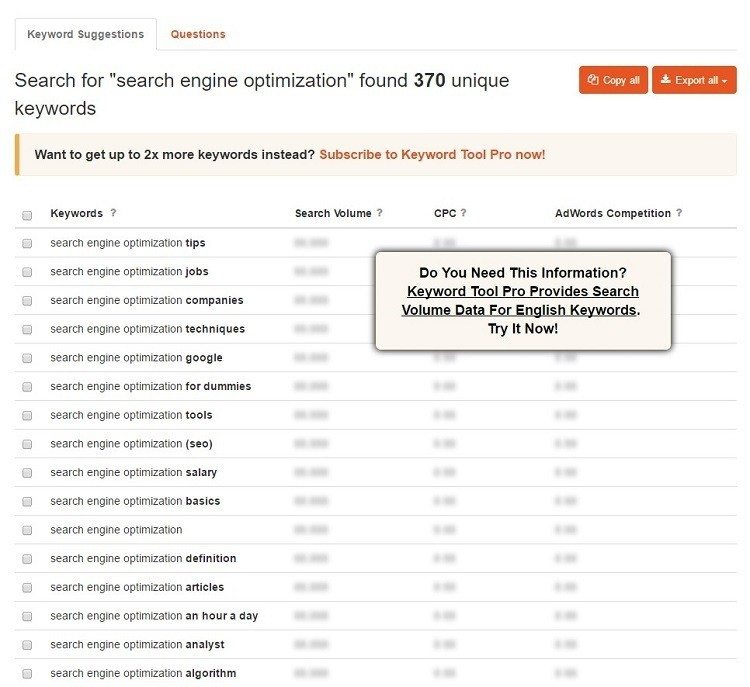
Successful SEO campaigns begin with keyword research. And keyword research tools, such as Keyword Tool, KeywordsFX, and SEMrush, allow you to pinpoint keywords and phrases that people search online to discover your business.
This will help you to create pages that attract qualified visitors to your website and help you earn more customers.
Integrate the keywords naturally
Search engines and AI systems interpret the meaning and context of your content, and they can tell when you are using certain words and phrases solely to improve your ranking. The best way to avoid being penalized for this is by integrating your keywords naturally.
This may mean using fewer keywords, and with less frequency, but that’s not necessarily a bad thing. Add keywords to your page title, headers, and meta description, then use them where they make sense in your body copy and in direct answers to common questions. If they sound awkward or forced, just don’t use them.
Focus on long-tail keywords
If you’ve spent any time doing keyword research with tools like Google’s Keyword Planner, you know that there is a lot of competition for certain keywords. Instead of trying to compete for them, focus on longer, more specific phrases that are highly relevant to your business.
Finding the right long-tail keywords and phrases, including the conversational questions people ask AI assistants, will require some time (much like all SEO), but can attract visitors who want exactly what you offer.
SEO is changing rapidly—and it can be hard to keep up with all the trends and updates. But one thing is certain: the search engines will continue to reward high-quality content, and you need SEO to make sure your audience sees the content. This makes the answer to the question “Is SEO still relevant?” a resounding yes.
Is SEO still relevant when AI answers cut your clicks?
Yes. Google’s generative AI features, including AI Overviews and AI Mode, are rooted in its core Search ranking and quality systems, and Google Search Central says optimizing for generative AI search is still SEO.
The pages that earn visibility in search are the pages AI answers draw from. What changes is how you judge whether SEO is working.
Here’s how to measure SEO with AI search in the picture:
- Track where AI answers mention you. Teams use OmniSEO®, WebFX’s AI search visibility platform, to see which prompts cite or mention their brand in ChatGPT, Perplexity, and Google AI Overviews, and which competitors appear beside them. Prompts where competitors show up and you don’t point to the pages to create or refresh next.
- Separate AI referral traffic from organic traffic. Visits from ChatGPT and other AI platforms are a small share of sessions, but they convert well. In the AI Search Trends Report, generative AI visitors converted about 1.2x higher than organic search visitors in 2025.
- Judge SEO by leads and revenue. Gartner analyst Matt Moorut advises marketers to “stop relying on traffic alone and start judging search through the lens of business outcomes.” Conversions, pipeline, and revenue from organic and AI-referred visits show whether the work pays off.
What if I don’t use SEO?
Without ongoing SEO efforts, you run the risk of losing your top-ranking spots in search results and the AI answers that draw on them. And competitors will likely jump at the chance to outrank you.
You might have the most well-designed website, but if nobody can find it, you won’t attract new customers or grow your business.
This is why it’s so important to partner with a trusted SEO agency like WebFX.
Want to learn more?
Need help doing SEO for your company’s site? Our dedicated team of web strategists is more than happy to assist you.
Don’t hesitate to contact us today for a free quote!