

Table of Contents
- The 5-step dental PPC playbook for sustainable patient growth
- 1. Build your goal and ROI baseline
- 2. Choose the right mix of PPC campaign types
- 3. Master keyword targeting
- 4. Craft high-converting ads and landing pages
- 5. Track results and train your front desk for conversion
- PPC Checklist for Dentists
- How much does PPC for dentists cost in 2026?
- Typical monthly ad spend ranges by practice goal
- PPC vs. SEO for dentists: Which is right for your practice?
- Should you hire a dental PPC agency or manage PPC in-house?
- Frequently asked questions about PPC for dentists
- Get help with PPC for dentists
-
What is PPC for dentists?
PPC (pay-per-click) advertising helps dental practices appear at the top of search results for services like emergency dentistry, implants, or Invisalign, and you only pay when someone clicks your ad or calls your office. -
Why do dentists use PPC advertising?
Dentists use PPC to attract new patients faster, reach people actively searching for care in their area, reduce wasted ad spend with better targeting, and generate more qualified calls and appointment requests. -
What makes a dental PPC campaign successful?
A strong dental PPC campaign starts with clear goals, targets the right local keywords, uses service-specific ads and landing pages, and tracks results like cost per lead, booked appointments, and return on investment (ROI). -
How much does PPC cost for dentists?
Dental PPC costs vary based on your location, competition, services, and growth goals, but the article explains that spend can range from a small foundational budget to larger investments for competitive markets or high-value procedures like implants and cosmetic dentistry. -
Should your practice manage PPC in-house or hire an agency?
Managing PPC yourself can work if you have the time and expertise to monitor keywords, budgets, and conversions closely, while hiring a dental PPC agency can help you improve targeting, tracking, and lead quality with less day-to-day effort from your team.

Powered by 98,500+ hours of healthcare experience
Get expert insights into how to use PPC for dentists to acquire new patients in this guide, which explores PPC’s benefits and shows you how to reduce wasted ad spend, get higher-quality patient calls, and improve conversion from inquiry to appointment at the front desk.
Are you trying to attract more patients to your dental practice? PPC for dentists helps you appear in front of people actively searching for services like emergency dentistry, dental implants, cosmetic dentistry, and Invisalign.
Dental PPC works best when you pair strong keyword targeting, local geo settings, service-specific landing pages, and clear tracking for calls, forms, and booked appointments. This guide shows you how to build a repeatable patient acquisition system instead of paying for clicks that never turn into revenue.
We also offer a free Dental PPC patient acquisition kit to help you apply the steps below. If you’re interested in learning how WebFX can help your practice reach more patients with PPC, call 888-601-5359 to speak with a strategist, or keep reading.

Explore WebFX Healthcare Marketing Services
The 5-step dental PPC playbook for sustainable patient growth
Use this five-step system to build PPC campaigns that attract new patient inquiries and help turn them into appointment bookings.
- Build your goal and ROI baseline
- Choose the right mix of PPC campaign types
- Master keyword targeting
- Craft high-converting ads and landing pages
- Track results and train your front desk for conversion
1. Build your goal and ROI baseline
Before you choose keywords or write ads, get clear on what success should look like for your practice.
- Pick one primary goal: For example, maybe you want a higher number of new patient inquiries, more appointment bookings, or more high-value procedure cases (implants, cosmetic services).
- Tie goals to a service: This will help you estimate ROI metrics. A campaign built for cleanings will look different from one built for implants.
- Decide what you can afford per lead: Set targets for cost per lead (CPL) and cost per booked appointment and then use those benchmarks to guide bidding and budget.

PPC metric formulas
You can track core PPC metrics while you’re planning by using these formulas:
- Return on investment (ROI) = (return–investment)/investment × 100
- Cost per click (CPC) = total cost of clicks / number of clicks
- Cost per lead (CPL) = ad spend / number of leads gained
- Conversion rate (CVR) = conversions / number of clicks
2. Choose the right mix of PPC campaign types
Most dentists start with Google Search ads, but in 2026, your best results often come from using the right mix of campaign types depending on your goals and your market.
Here’s a practical way to think about it:
|
Campaign type |
Where ads show | Best for | Example use case |
| Search Ads (Google/Bing) | Search results pages | Capturing high-intent service searches | “emergency dentist near me,” “Invisalign cost” |
| Local Services Ads (LSAs) | Google local lead unit (often above Search) | Lead-gen with trust signals and calls or messages | Competing for “dentist near me” leads with verification and reviews |
| Performance Max (PMax) | Google inventory across Search, Maps, Display, YouTube, and Gmail | Expanding reach when you have solid tracking | Promoting multiple services to drive calls or forms |
| Google Display Network for prospecting | Websites or apps in Google’s Display Network | Awareness in competitive markets | Staying visible to local patients researching options |
| Google Remarketing | Display Network and YouTube | Recovering patients who almost booked in the past | Reminding site visitors to schedule after they viewed implants page |
| Paid Social | Social feeds and stories on Meta, Instagram, or other social apps | Awareness and promoting offers, but not always high intent | Promoting new-patient specials, whitening promos |
Audience targeting improves campaign setup by refining who sees your ads and how your budget is prioritized across the audiences most likely to book.
Wherever you run PPC, take advantage of audience targeting tools like Google Analytics audience builder and Google Ads audience segments. These help ensure your campaign isn’t showing up in front of random people and instead appears in front of people more likely to need your services.
3. Master keyword targeting
This step controls waste. In competitive markets, showing up for the wrong searches is one of the fastest ways to burn budget. Here are a few ways you can use your budget more effectively.
Research PPC keywords
First, it’s important to understand what keywords potential patients enter when searching for dental services online.
To make this easier, start with one core service you want to grow, for example, dental implants, and build keyword themes around how patients actually search. Common implant themes could include:
- Price or financing: This would include keywords like “dental implants cost” and “implant financing.”
- Location and intent: Think keywords like “dental implants near me” and “implant dentist in [city].”
- Consultation-focused searches: These keywords include “implant consultation” and “best implant dentist near me.”
These themes help you avoid mixing different intents in one bucket, which is a common reason ads get clicks but not qualified inquiries.
To find and organize those keywords, you can use a simple workflow with WebFX’s free KeywordsFX tool and Google Ads Keyword Planner.
- Enter one service keyword: Start by entering one seed phrase like “dental implants” into KeywordsFX to generate related terms and questions related to the topic, like cost, near-me variants, and consultation wording.
- Review keyword volume and forecasts: Take your strongest candidates into Keyword Planner to see estimates for search volume and competition. Choose the keywords that match your goal, for example, high-intent searches that suggest someone is ready to book.
- Build ad groups around intent: Divide your chosen keywords into keyword groups or ad groups based on intent. For example, if you choose consultation-based keywords, you’ll target phrases like “implant consultation” and “implant dentist appointment”.
This makes it much easier to write relevant ads and send people to the right landing page, which can improve click-through rates and lead quality.
Target local traffic
Local targeting is important for dentists because most patients choose a provider based on proximity, and tight geo targeting helps prevent wasted spend from clicks you can’t realistically convert.
The key is to set your service area intentionally so your ads reach people who can actually book at your location. To target local traffic in Google Ads:
- Select the exact areas you serve. Specify city/ZIP codes or a radius around your practice.
- Review Google’s advanced location options, so your ads prioritize people physically in your targeted area.
- Add location exclusions for nearby towns you don’t serve.
- Set an ad schedule so call-focused ads run when your front desk can answer.
- Create separate campaigns or ad groups for different service radiuses. For example, a tighter radius for “emergency dentist” and a wider radius for high-value services patients may travel for like implants or cosmetic dentistry.
Add negative keyword targeting
To reduce wasted spend, build and maintain a negative keyword list, so your ads don’t show for searches that don’t match your practice. This especially applies to terms tied to free or low-cost intent, jobs, schooling, DIY, or services and insurance types you don’t accept.
A good way to tell if something should be a negative keyword is to ask: “If someone searched this, would they realistically become a paying patient for our practice?” If the answer is “no” or it consistently drives clicks without leads, it likely belongs on your negative list.
To build your list, start with a starter set of obvious mismatches and then use the Google Ads search terms report to find the real phrases people typed before clicking your ad. Google recommends using the search terms report for negative keyword ideas and organizing negatives by themes.
Each week during your first month, and then monthly after that, scan search terms for anything irrelevant or low-intent, and add those terms as negatives at the right level. For instance, you might choose campaign-level if it’s wrong for your whole practice, or ad group-level if it’s only wrong for one service line.
Once compiled, add your negatives to a negative keyword list in Google Ads’ Shared Library so you can apply them across multiple campaigns and keep exclusions consistent as you scale.
4. Craft high-converting ads and landing pages
Once you’ve got the right targeting, the next job is turning clicks into real new patient inquiries.
Create custom landing pages
Create customized landing pages for each of your PPC ads. These pages are where you’ll send users who click each of your specific ads.
This means that your text ads and landing pages should emphasize the same topic or services. For example, if your PPC ad mentions cosmetic dentistry, your landing page should highlight the cosmetic dentistry services you offer.
Your landing pages should also include clear calls-to-action (CTAs) that encourage potential patients to take the next step and contact you to schedule an appointment.
Creating custom landing pages will help to establish consistency and ensure that prospects don’t lose interest and hit the back button before contacting you.
Highlight your USPs
In a competitive local market, your PPC ads need a clear reason for someone to choose your practice over the office down the street. Highlight what makes you different to help your ads stand out and drive more qualified calls and appointment requests.
Unique selling points (USPs) are the specific qualities that set your practice apart from competitors.
Dental USPs can be anything, like:
- Service quality or results
- Services offered and areas of expertise
- Certifications and individual honors
- Practice awards, honors, and recognitions
- Patient reviews
- Insurances accepted
Optimize your ads for phone calls
You can also use your PPC advertisements to generate phone calls.
Google will charge you the same amount for a phone call as they do for a normal click to your landing page.
In order to maximize call-in leads, you can include your phone number in all of your advertisements and set your ads to only display when you’re in the office. This will ensure that all the calls are answered by a real person who can help turn prospects into patients.
Use ad assets
Standard PPC ads only allow a limited amount of space. However, you can purchase ad assets that allow you to provide more detailed information about your practice.
For example, location assets display an address, phone number, and other key information, such as your business hours. And site link assets allow you to display links to multiple service pages instead of one landing page.
These assets or extensions will help you extend the reach of your dental PPC ads and attract even more patients.
5. Track results and train your front desk for conversion
A lead is only valuable if it turns into an appointment booking. Focus on these two actions to effectively convert leads.
Analyze PPC results
Don’t forget to analyze and evaluate your PPC campaigns. There are a variety of tools, including Google Analytics, that you can use to uncover valuable information to improve your PPC strategy in the future.
For dentists, the most useful PPC success metrics to track typically include:
- CPC
- CPL
- Conversion rate
- Cost per booked appointment
- ROI
You can also use PPC result information to test new ad copy and keywords. To do this, you would need to use your campaign performance data to spot what’s driving qualified leads or wasting spend. You’ll then rewrite ads or adjust keywords or negatives to double down on winners and cut irrelevant traffic. This will help you create new titles and copy that will lead to the most clicks and conversions.
Train your front desk team
Your front desk or scheduling team is the last step of the PPC funnel. Provide training that teaches your team to effectively secure paid leads. Some things you can teach them include:
- Answer calls or respond to forms quickly
- Confirm the service needed
- Verify the caller’s phone number and email
- Offer the next available appointment option
- Confirm location, directions, and what to bring
- Set follow-up steps for missed calls and voicemails
These simple checks protect your PPC investment because paid leads are often time-sensitive. If a caller can’t reach you quickly or doesn’t get a clear next step, they’ll move on to another practice.
By confirming needs and contact details, offering a concrete appointment time, and following up on missed calls, your front desk helps turn expensive clicks into booked patients and a more accurate picture of PPC ROI.
Free Dental PPC Checklist
Dental PPC Patient Acquisition Kit
Download this free step-by-step checklist to reduce wasted ad spend, improve lead quality, and increase booked appointments! Includes a realistic timeline, fill-in worksheet, and monthly KPI tracker.
Get My Free ChecklistHow much does PPC for dentists cost in 2026?
Dental PPC costs $0.01–$1 per click on average. Based on our latest research, many businesses spend an average of $100–$100,000 per month in 2026. Dental PPC costs depend heavily on your location, competition, services, and how fast you want to grow.
PPC management from an agency or freelancer can cost $100–$5,000 per month on average. If you want a deeper budgeting walk-through, we provide a revenue-based method and formula for calculating PPC budget.
According to WebFX’s 2026 healthcare benchmarks, consumer-focused health and wellness shows a B2C CPL of around $98 and B2C CPCs of $1.50–$3.50 for basic services, $3.50–$6.00 for specialized services, and $6 or more for premium services. Dental services also show a 10.40% conversion rate, among the highest in healthcare.
Typical monthly ad spend ranges by practice goal
Because dental PPC costs vary by market competition, service mix, and how aggressively you want to grow, it helps to start with planning anchors. These are sample monthly spend ranges tied to common practice goals.
Use the table below as a baseline, then pressure-test it with ROI calculations to determine how much a booked patient is worth to your services.
|
Practice goal |
Example monthly ad spend | What you’re optimizing for | Example outcomes (illustrative) |
| Foundational visibility | $1,500–$3,000 | Consistent new patient inquiries | $2,250/mo → ~750 clicks → ~78 leads → ~16 booked → ~$4,680 revenue → ~108% ROI
Based on: $3 CPC, 10.40% CVR, 20% booked rate, $300/booked patient |
| Competitive market growth | $3,000–$7,000 | Higher lead volume and stronger coverage | $5,000/mo → ~1,111 clicks → ~116 leads → ~23 booked → ~$6,933 revenue → ~39% ROI
Based on: $4.50 CPC, 10.40% CVR, 20% booked rate, $300/booked patient |
| High-value case focus | $7,000+ | Implant/cosmetic intent and quality leads | $8,500/mo → ~1,417 clicks → ~147 leads → ~22 booked → ~$55,250 revenue → ~550% ROI
Based on: $6 CPC, 10.40% CVR, 15% booked rate, $2,500/booked patient |
How to read the ROI examples: Each example follows the same funnel: budget → estimated clicks → estimated leads → estimated booked appointments → estimated revenue → ROI.
Disclaimer: These ROI figures are examples for planning, not guarantees. Replace the assumptions (CPC, CVR, booked rate, and patient value) with your own numbers to estimate ROI more accurately.
PPC vs. SEO for dentists: Which is right for your practice?
Most practices get better results when they use a mixture of PPC and SEO strategies. PPC helps you promote specific services and show up immediately for high-intent searches. In contrast, SEO builds long-term visibility so you’re less dependent on ad spend over time.
|
Factor |
PPC | SEO |
| Speed to results | Fast | Slower |
| Long-term value | Ongoing cost | Compounds over time |
| Cost structure | Pay per click/lead | Pay with time/content/investment |
| Targeting precision | Very high | Medium-high |
PPC can drive results today, but SEO helps you build a sustainable patient pipeline for the future. For example, with a tailored local SEO strategy, Hurst Pediatric Dentistry saw a 540% increase in leads from organic search and a 3872% increase in SEO sessions.
Learn how we increased organic leads by 540%, and SEO sessions by 3872% for a dental practice.

Dental practices often hire a dental PPC agency when they want better lead quality, clearer ROI tracking, tighter geo targeting, and less day-to-day campaign management. If you’re comparing dental PPC services with managing Google Ads yourself, the right choice depends on your time, internal expertise, and how aggressively you want to grow.
Should you hire a dental PPC agency or manage PPC in-house?
DIY can work if you have time to learn and actively manage your dental PPC campaigns. An agency can help you prioritize your PPC budget in the areas that drive high-impact improvements, like tighter targeting, better conversion tracking, and stronger landing pages, so you’re not managing every detail yourself.
Here’s a quick look at DIY vs. getting a specialized dental PPC agency to do it for you.
|
Factor |
DIY PPC | Agency |
| Cost | Lower management cost | Higher management cost |
| Time investment | High | Lower |
| Expertise required | High | Provided |
| Risk of waste | Higher | Lower |
If you find that hiring an agency will be more convenient for you, you need to ensure that you vet an agency that knows what they’re doing. You’ll know if they’re the right fit by asking them the right questions:
- How do you track calls and booked appointments (not just clicks)?
- How do you prevent wasted spend? Do you use negative keywords, geo filters, and schedules?
- What does reporting include? Do you track CPL, CVR, booked appointment rate, and ROI?
- How do you approach compliance for healthcare-related ads?
Frequently asked questions about PPC for dentists
What is PPC for dentists?
PPC (pay-per-click) for dentists is a form of online advertising where a practice selects keywords to trigger ads at the top of search results, and only pays when someone clicks the ad. It helps practices reach people actively searching for dental services.
How does PPC advertising work for a dental practice?
PPC advertising for a dental practice works by placing your ads in front of people actively searching for your services, then charging you only when people take an action like clicking to your site or calling. Here are the steps of the process:
- You set up a campaign around specific dental services, like emergency, implants, Invisalign, and define your service area.
- You create ads and send clicks to a relevant page or drive calls.
- You track results such as calls, forms, and booked appointments and optimize bids, keywords, and ads over time.
What are the benefits of using PPC for a dental office?
The biggest benefit of PPC for dentists is that you only pay when people click your advertisements. This means that if nobody clicks on your ads, you won’t pay a cent.
In addition, you don’t have to wait for results. With PPC advertising, your ads can start driving qualified traffic to your website as soon as you launch them. This means that if you want to quickly increase the traffic to your dental practice’s site, PPC advertising is a great option.
How much does PPC cost for dentists?
PPC cost for dentists can range widely, but WebFX research shows PPC averages about $0.01–$1 per click, and many businesses spend $100–$100,000 per month on PPC in 2026.
Where your practice lands in those ranges depends on factors like:
- Your location
- Competition
- Which services you advertise
- How tightly you target
- How well your ads and landing pages convert
How can I measure the success of a dental PPC campaign?
You can measure the success of your dental PPC campaign by focusing on outcomes that connect to booked patients:
- CPC and CPL: These show what you’re paying for traffic and leads, helping you judge whether your spend is efficient for your market and the services you’re promoting.
- Conversion rate: This shows how often clicks result in real patient inquiries like calls or forms, indicating whether your ads and landing pages match what searchers want.
- Booked appointment rate: This shows how many leads become scheduled appointments, revealing whether you’re attracting the right patients and converting them effectively at the front desk.
- ROI: This compares revenue from new patients to what you spent on PPC, so you can confirm whether the campaign is driving profitable growth rather than just clicks.
You should also review the drivers behind performance. These are usually the levers that influence changes in costs, lead quality, and booking volume:
- Geographic and audience targeting
- Bidding strategy
- Keyword quality and negative keywords
- Sending traffic to dedicated landing pages
What are the key aspects of an effective dentist PPC campaign?
Strong dentist PPC campaigns usually include:
- Campaign structure by service: Create separate campaigns or ad groups for each core service so your keywords, ads, budgets, and landing pages match what patients are searching for, improving lead quality and ROI.
- Local targeting and schedule alignment: Limit ads to the areas you actually serve and run call-focused ads during office hours, so you’re paying for leads you can realistically convert.
- Dedicated landing pages with clear CTAs: Send each ad to a page built for that service with one clear next step, so visitors don’t get lost and bounce.
- Call and lead tracking: Track calls and form submissions back to the campaign and keyword that drove them, so you can tell what’s generating real inquiries.
- Ongoing optimization: Regularly review search terms and performance data to add negative keywords, refine messaging, and improve pages, so wasted spend goes down and booked appointments go up over time.
Get help with PPC for dentists
When you build PPC campaigns around the right services, locations, and conversion goals, your practice can generate more qualified patient calls and appointment requests faster. WebFX helps dental practices manage PPC with strategy, tracking, landing pages, and optimization built around booked-patient ROI.
At WebFX, our team of award-winning PPC specialists will work to understand your practice and implement PPC solutions designed to meet your business goals.
Our team knows how to manage your PPC campaigns to get the greatest return on investment (ROI). In fact, our PPC search marketing campaigns have frequently driven a 25% performance lift and $28M in PPC revenue.
Interested in learning more about how PPC advertising can benefit your dental practice? Contact us today to find out more and get a free quote.
-
 The WebFX team includes 750+ digital marketing specialists across SEO, PPC, web design, analytics, and beyond. Using proprietary RevenueCloudFX technology and transparent, data-driven strategies, we’ve collectively generated $10 billion in revenue and 24 million leads for our clients in the past five years.@webfx
 -

WebFX is a full-service marketing agency with 1,100+ client reviews and a 4.9-star rating on Clutch! Find out how our expert team and revenue-accelerating tech can drive results for you! Learn more
Try our free Marketing Calculator
Craft a tailored online marketing strategy! Utilize our free Internet marketing calculator for a custom plan based on your location, reach, timeframe, and budget.
Plan Your Marketing Budget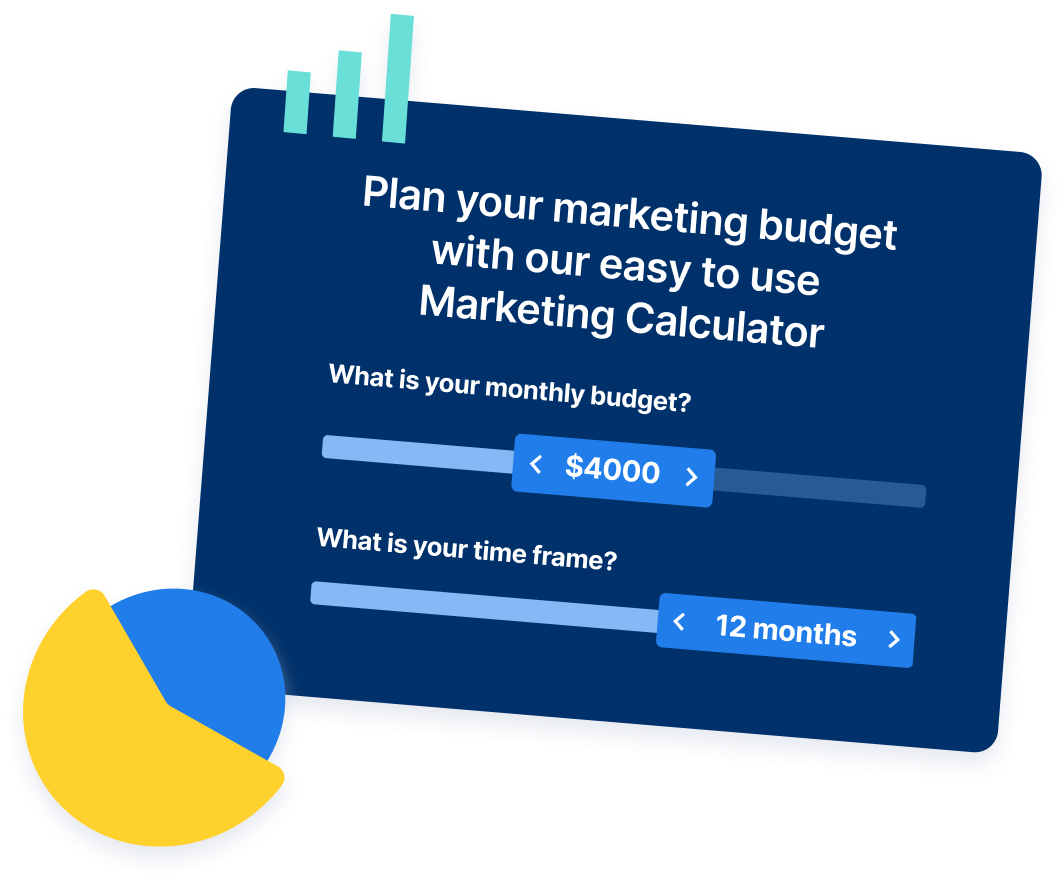
Table of Contents
- The 5-step dental PPC playbook for sustainable patient growth
- 1. Build your goal and ROI baseline
- 2. Choose the right mix of PPC campaign types
- 3. Master keyword targeting
- 4. Craft high-converting ads and landing pages
- 5. Track results and train your front desk for conversion
- PPC Checklist for Dentists
- How much does PPC for dentists cost in 2026?
- Typical monthly ad spend ranges by practice goal
- PPC vs. SEO for dentists: Which is right for your practice?
- Should you hire a dental PPC agency or manage PPC in-house?
- Frequently asked questions about PPC for dentists
- Get help with PPC for dentists
Share this article


Help More Patients Find Your Practice
See how healthcare providers like Hurst Pediatric Dentistry increased local leads 5× with data-driven SEO from WebFX.
Try our free Marketing Calculator
Craft a tailored online marketing strategy! Utilize our free Internet marketing calculator for a custom plan based on your location, reach, timeframe, and budget.
Plan Your Marketing Budget
What to read next