



Table of Contents
- What is SEO for construction companies (and why it matters more than ever)
- The winning SEO strategies for contractors
- How to measure construction SEO success (KPIs that matter)
- Hiring an SEO agency vs. DIY: making the right choice
- Start building a more predictable SEO pipeline with WebFX
- FAQs about SEO for construction companies
- SEO for construction companies ensures your business appears when potential clients search for building, remodeling, or contracting services in their area.
- Local SEO is the backbone of construction SEO because it determines whether your company appears when someone searches for builders or contractors near them.
- Google Business Profile should include accurate primary and secondary categories, clearly defined service areas, consistent NAP (name, address, phone number), project photos, regular Google posts, and active responses to reviews and questions.
- High-performing portfolio pages should read like case studies with descriptive headlines including project type and location, high-quality images or video, narrative outlining challenge and solution, technical details, client testimonials, and relevant CTAs.
- DIY SEO works for limited service areas with low competition, while hiring an agency makes sense for competitive markets, multiple service locations, unstable Google Business Profile visibility, or when SEO needs to support predictable growth and lead generation.
SEO for construction companies is one of the most reliable and predictable ways to generate project inquiries and signed contracts. It positions your business at the exact moment a potential client is searching for a builder, contractor, or construction company in their area.
That’s the upside. The frustration is getting there, especially for a construction company owner juggling a team and ongoing projects, or a marketing leader working hard to keep leads flowing through all channels.
This is because SEO optimization can be a complex and slow process that may take anywhere between three and six months to start driving reliable results.
Here’s an SEO guide for construction companies built for that reality. It focuses on clear priorities, practical steps, and strategies that help you regain year-round visibility while building a sustainable search presence that supports long-term growth.
- What is SEO for construction companies (and why it matters more than ever)
- The winning SEO strategies for contractors
- How to measure construction SEO success (KPIs that matter)
- Hiring an SEO agency vs. DIY: making the right choice
What is SEO for construction companies (and why it matters more than ever)
SEO for construction companies is about making sure your business shows up when potential clients actively search for building, remodeling, or contracting services in their area.
More importantly, it’s about positioning yourself as the first and most credible option they see in their search results pages (SERPs) — the one that feels established, experienced, and worth contacting.
It matters now more than ever because the internet search and buying behavior has evolved significantly in the AI era. According to industry data, 96% of homeowners start their search for construction companies and other local businesses online.
Unlike paid ads, which stop driving results the moment you stop paying, SEO builds an asset that continues to drive visibility and inquiries over time.
Commercial vs. residential SEO: What’s the difference?
Commercial and residential construction SEO share the same foundation, but they differ in intent and execution.
| Commercial construction SEO | Residential construction SEO |
| Targets high-value, specific keywords | Targets broader service + location searches |
| Longer sales cycles | Shorter decision timelines |
| Heavy emphasis on case studies and credentials | Heavy emphasis on reviews and trust signals |
| B2B decision-makers | Individual homeowners |
In both cases, detailed project portfolios play a big role. Commercial buyers want proof of scope and outcomes. Residential buyers want reassurance and quality.
The winning SEO strategies for contractors
Effective construction SEO is about focusing only on the strategies that directly influence local visibility and help you earn more signed contracts. For most contractors, those strategies fall into three pillars:

Pillar 1: Local SEO: The fastest path to consistent local visibility
Local SEO is the backbone of construction SEO. It determines whether your company appears when someone searches for builders or contractors near them.
The most common mistake construction companies make is treating local SEO as a one-time setup. In reality, it is an active system with three core areas.
1. Mastering your Google Business Profile (GBP)
Your Google Business Profile functions as a live marketing channel for your construction business. It influences calls and website visits while helping you build credibility in local results.
At a minimum, it should include:
- Accurate primary and secondary categories
- Service areas clearly and realistically
- Consistent name, address, and phone number
- Project photos and regular Google posts
- Active responses to reviews and questions
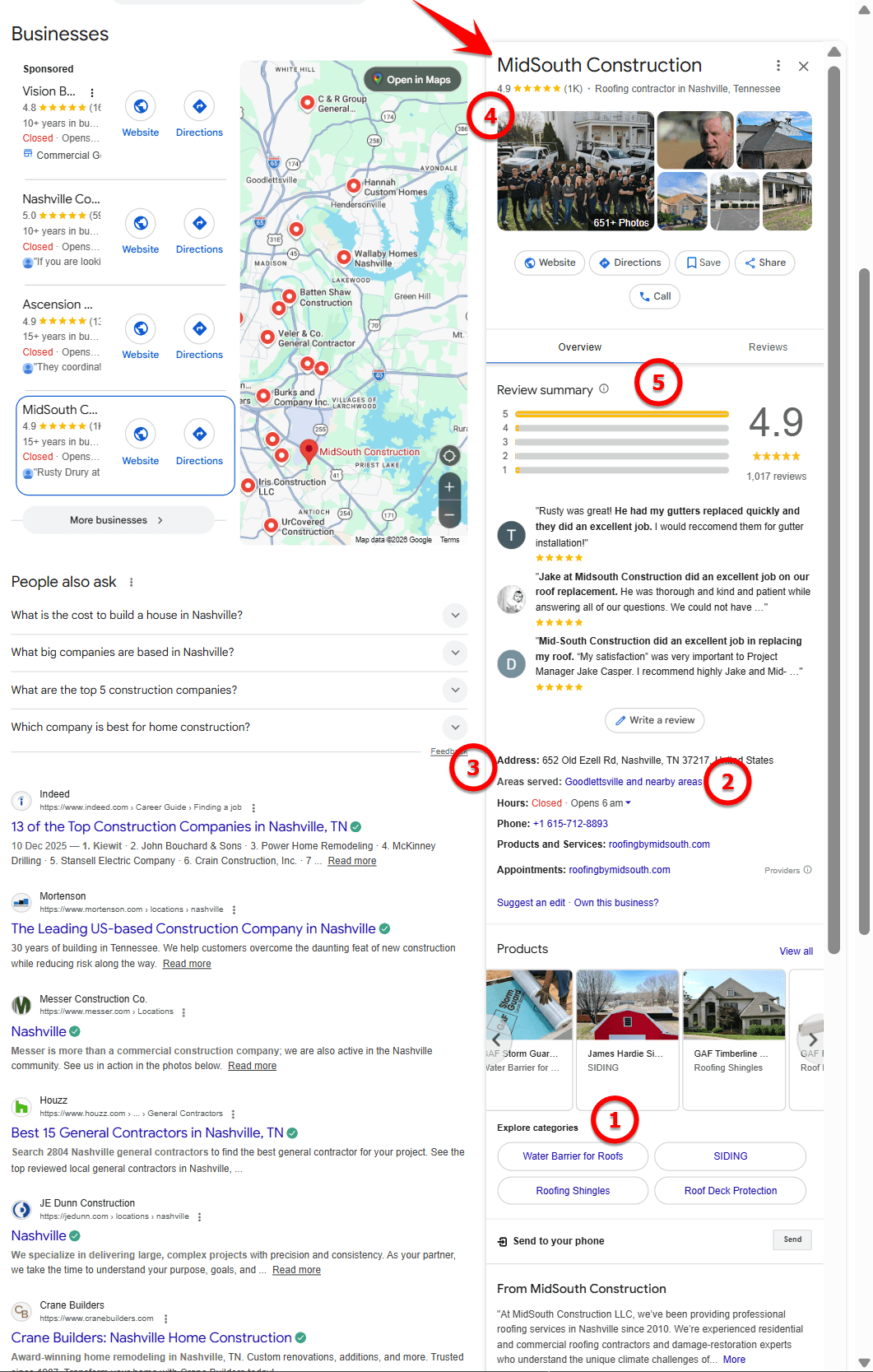
Consistency and accuracy across your website and directories become even more critical, as a way to avoid GBP suspension or long verification loops.
2. Building local citations and directories
Citations are mentions of your business across trusted directories and industry sites. They confirm your company’s legitimacy. Consistency in citations matters more than volume.
High-impact citations for construction companies often come from:
- Industry associations
- Local chambers of commerce
- Supplier and partner websites
- Regional business directories
These citations support GBP authority and reinforce trust signals search engines rely on because they carry more authority than generic listings.
3. On-page local signals
Your website should make it immediately clear where you operate and who you serve. Location pages help search engines confirm local relevance and assist potential clients to quickly decide whether you’re a good fit.
Strong on-page local signals include:
- Location references in title tags and headings to reinforce geographic relevance
- Embedded Google Maps on contact or location pages to validate your service area
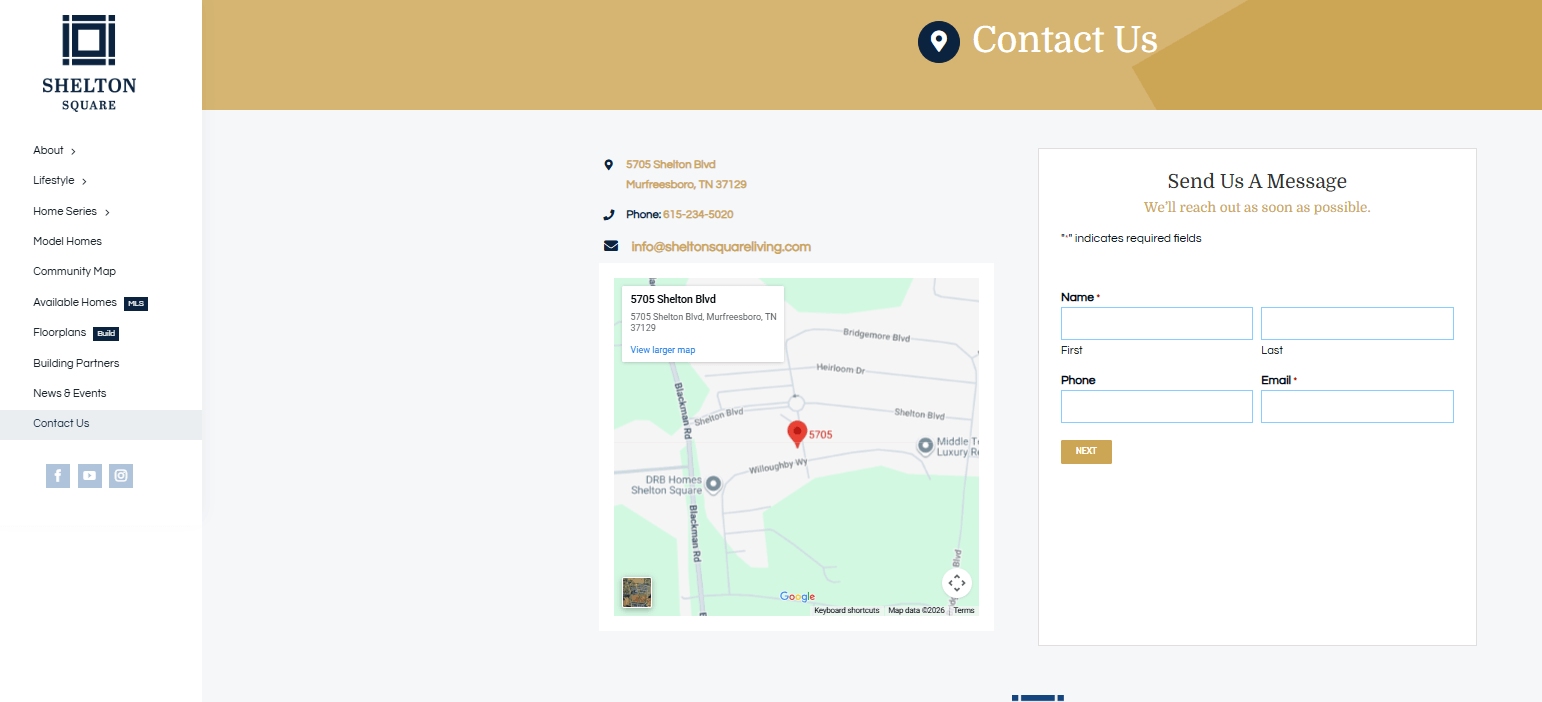
- Dedicated location pages only when you genuinely serve multiple cities or regions
When applied thoughtfully, this approach works just as well for single-metro contractors as it does for companies serving multiple regions without overcomplicating your site or your SEO strategy.
Pillar 2: On-page SEO and content: Turn your website into a lead machine
Many construction websites function as digital placeholders rather than business drivers. Strategic on-page SEO is what you need to transform your construction website into a lead-generation magnet.
It works in tandem with local visibility, which brings prospects to your doorstep — read website. Then, on-page SEO and content translate them into project inquiries and signed contracts.
A well-optimized and high-performing website acts as proof that libraries answer questions, demonstrate expertise, and reduce risk.
Optimizing your core service pages
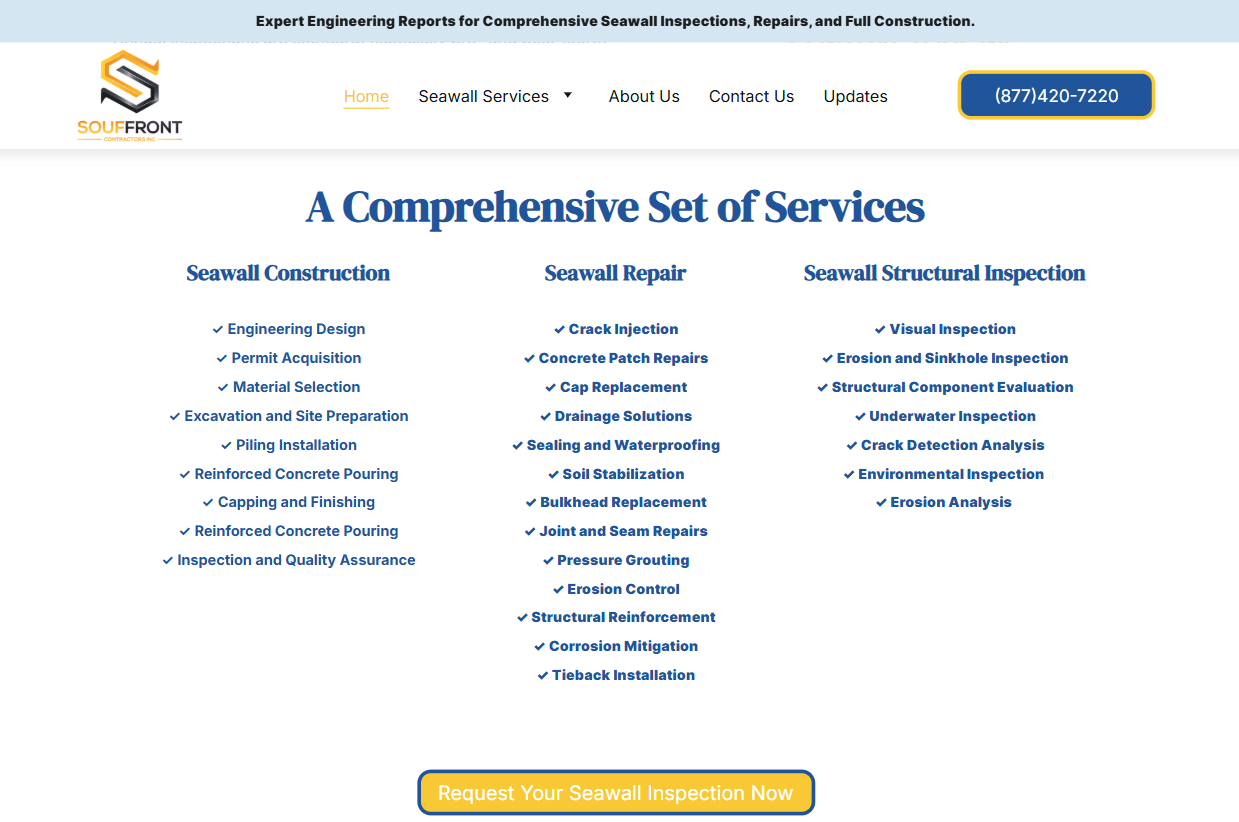
In 2026, on-page SEO requires you to have dedicated and well-optimized core service pages on your website, and here’s how to go about it:
- Include a clear headline and geo-modified title tag for the service and location
- Create detailed answers to common questions
- Add testimonials or visual proof of work
- Include a strong and clear project inquiry CTA
Blueprint for a high-ranking project portfolio page
Many construction companies leave revenue on the table because they lack portfolio pages. These pages attract long-tail searches from buyers looking for exactly what you build. Effective portfolio pages explain what you built, where you did it, and how your team delivered results.
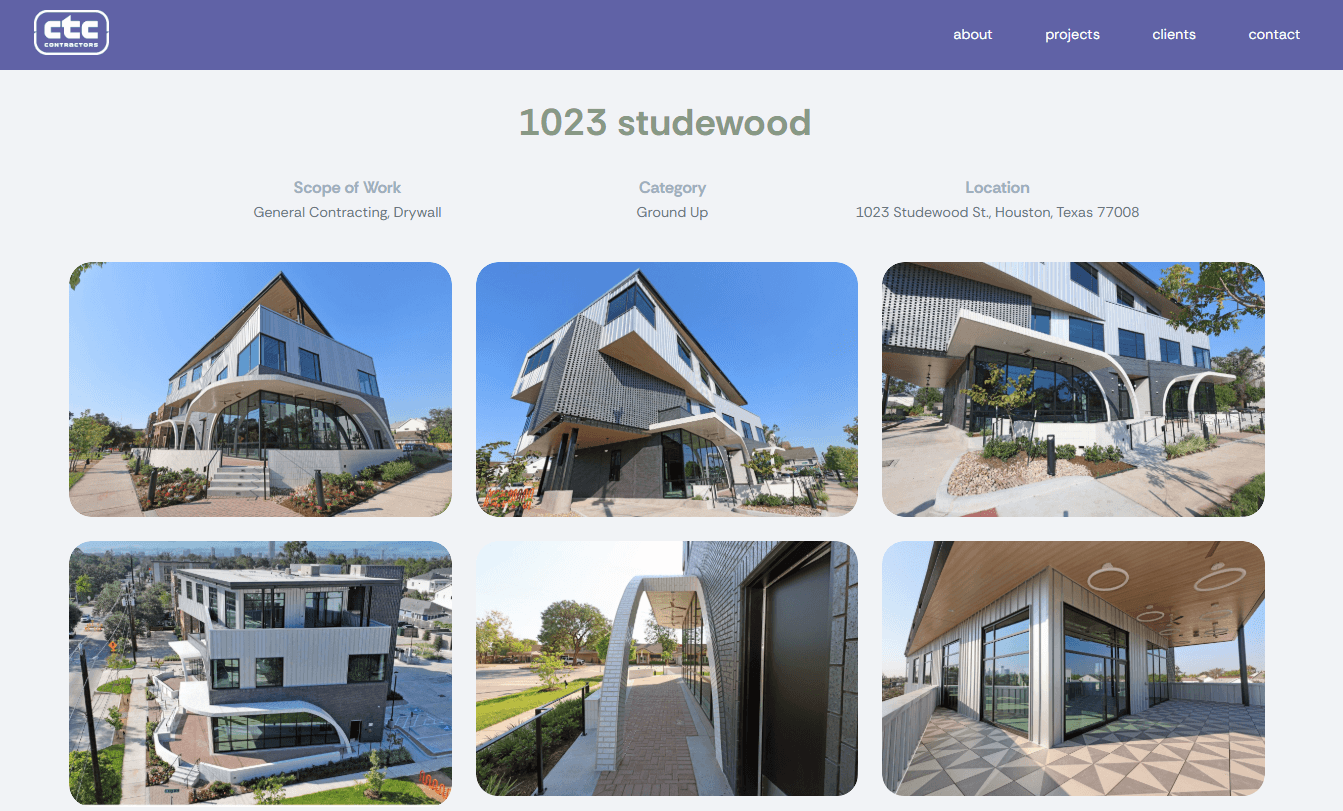
One of the best practices to keep in mind when creating your portfolio page is ensuring it reads like a case study. This makes a greater impact and delivers better results than the good ol’ photo gallery. Additionally, high-performing portfolio pages should also include:
- A descriptive headline with project type and location
- High-quality images or video
- A narrative outlining the challenge, solution, and result
- Technical details such as materials, timeline, and scope
- A client testimonial, when available
- A CTA tied to similar projects
Optimizing for AI search and voice search
It’s time for every business owner to admit that AI is eating into traditional search traffic, and you have to keep up! Failure to adapt will have you missing out on traffic, impressions, and visibility. Optimizing for AI search and voice search will ensure you appear right when and where potential clients are looking for you.
The first rule for optimizing for both AI and voice search is to use more conversational keywords, because user search behavior has evolved to include more of these.
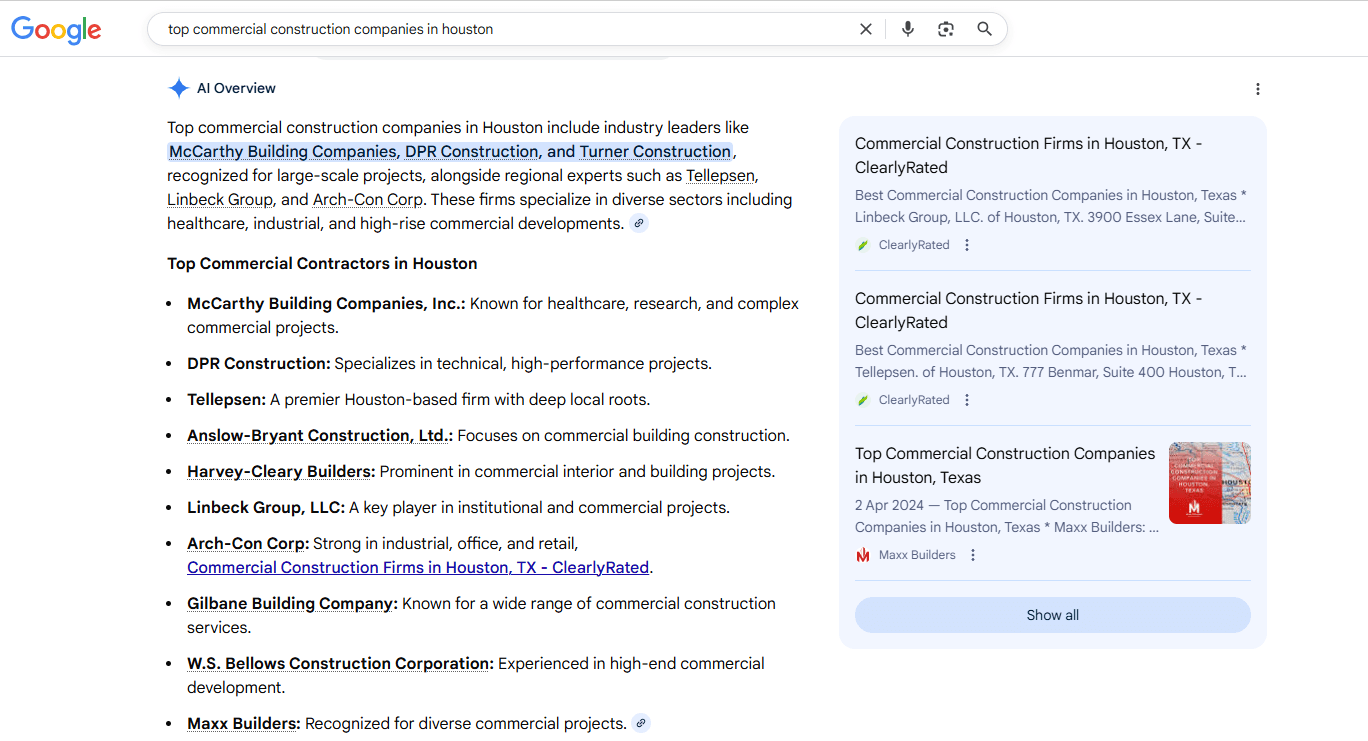
The following tips will also help to ensure you improve visibility on AI overviews, ChatGPT, Perplexity, Gemini, and other AI-powered search engines, as well as voice searches:
- Answer common questions directly within your content
- Add concise FAQs to service and project pages
- Use structured data to help platforms understand your offerings
- Structure content for scanability with clear headings, bullet points, tables, and graphics
- Demonstrate expertise with original data, statistics, case studies, and author bios with clear credentials
Pillar 3: Building authority with off-page SEO
To build your reputation beyond your website, you need off-page SEO. When done right, it reinforces everything your website says about your business.
Off-page SEO practices, like link building, social management, and review management, help search engines confirm that your company is legitimate, experienced, and recognized beyond its own site.
That’s why the quality of your backlinks matters far more than quantity, especially for smaller and mid-sized contractors.
Optimizing for off-page SEO now matters more than ever because the AI revolution has forced search engines to evaluate authority across the entire site rather than just page signals. The most effective approaches of off-page SEO for contractors include:
- Sponsoring local events or trade organizations
- Earning links from suppliers and partners
- Publishing expert commentary in industry publications
- Focusing on a small number of high-quality mentions
- Sharing project stories with local media or trade outlets
- Maintaining active membership in industry associations
How to measure construction SEO success (KPIs that matter)
One of the biggest reasons construction companies lose confidence in SEO is the lack of clear measurement. Yes, you can see rankings move, traffic fluctuate, but if it’s not clear whether this progress is real or just noise, it’s easy to lose faith in your SEO efforts.
Measuring SEO success starts with a mindset shift. It’s about acknowledging the fact that SEOrequires months of consistent optimization efforts.
It involves building a system that steadily increases qualified project inquiries while lowering your reliance on paid channels.
To measure the success of your construction SEO efforts:
1. Start with the outcomes
A strong SEO strategy produces results you can feel operationally. For construction companies, SEO success should always tie back to business outcomes. The question isn’t “Did rankings go up?” It’s:
- Are we getting more qualified project inquiries?
- Are those inquiries coming from the right service areas?
- Is SEO becoming a reliable part of the pipeline?
2. Focus on KPIs that actually matter for contractors
Instead of tracking everything, focus on a small set of metrics that reflect real progress:
- Calls, website clicks, and direction requests from GBP show local visibility is working.
- Organic traffic to the highest-intent pages, like service, location, and project pages.
- Non-branded keyword visibility to see how new prospects are finding you.
- Local pack and map visibility to ensure your business appears exactly when high-intent buyers search for a contractor.
- Cost per lead over time, SEO should gradually reduce your average cost to acquire a project inquiry.
3. Essential SEO tools
You need SEO monitoring tools that show you significant insights and the impact of your SEO efforts. Here are some you can never go wrong with:
- Google Analytics tracks traffic and conversions
- Google Search Console monitors visibility and performance
- A simple rank tracker provides local insight
Hiring an SEO agency vs. DIY: Making the right choice
There’s no single right answer when it comes to handling SEO in-house or hiring an agency. The right choice depends on your goals, internal capacity, and how critical consistent lead flow is to your business.
DIY SEO offers control but demands time and expertise. Agency partnerships provide scale, experience, and accountability. What matters most is understanding what each path actually requires and the trade-offs that come with it.
DIY SEO vs. hiring an agency at a glance
| Consideration | DIY SEO | Hiring an SEO agency |
| Upfront cost | Lower | Higher |
| Time investment | High | Low |
| Learning curve | Steep | Minimal |
| Access to tools | Limited | Advanced |
| Execution consistency | Depends on availability | Structured and ongoing |
| Risk of missteps | Higher | Lower |
| Best for | Stable, low-competition markets | Competitive or growth-focused markets |
When DIY SEO makes sense
In scenarios where foundational SEO work, such as basic local optimization, service page updates, and content improvements, can produce steady results. It can work when:
- Your business serves a limited service area
- Competition in your market is low to moderate
- You have time to learn, test, and execute consistently
- SEO is a secondary growth channel, not your primary source of project inquiries
When hiring an SEO agency is the better option
An experienced agency brings structure, tools, and proven processes that are difficult to replicate internally, especially while managing crews, projects, and daily operations. Hiring an agency often makes more sense when:
- Your market is competitive or crowded
- You serve multiple cities or regions
- Google Business Profile visibility is unstable or mission-critical
- SEO needs to support predictable growth
Questions to ask before hiring an SEO agency
When hiring a construction SEO agency, there are a few key questions you must ask to protect your investment:
- Can you show results from construction clients?
- How do you measure success?
- What is your approach to link building?
- How do you handle local visibility challenges?
FAQs about SEO for construction companies
Here are some of the questions business owners of construction companies ask:
What is SEO for construction companies?
SEO for construction companies improves your visibility in search results so qualified prospects can find and contact you when they need construction services.
Why is SEO important for a construction business?
SEO has numerous benefits for construction businesses, including:
- Generating a consistent flow of high-quality project inquiries
- Building trust in their local market
- Reducing long-term reliance on paid advertising
- Creating a durable marketing asset that supports growth over time
How much does construction SEO cost?
Budgets vary by scope and competition. Established construction companies often invest monthly retainers that align with growth goals rather than quick wins. The key is matching investment to realistic outcomes.
Monthly SEO investment often falls into these ranges:
- $1,500–$3,000: Local foundation work, GBP optimization, and basic content support
- $3,000–$6,000: Competitive growth with service pages, project portfolios, and authority building
- $6,000+: Multi-location or aggressive expansion strategies
Higher tiers generally reflect broader scope, faster execution, and deeper reporting.
What are the best SEO strategies for contractors?
The most effective SEO strategies for contractors focus on three areas:
- Dominating local search with a fully optimized Google Business Profile
- Creating detailed service and project portfolio pages that demonstrate expertise
- Building high-quality authority through relevant local and industry partnerships
How can I improve local SEO for my construction company?
You can improve local SEO by:
- Fully optimizing your Google Business Profile
- Keeping your business name, address, and phone number consistent across online directories
- Creating website content that clearly references your services and service areas.
What kind of content should a construction website have for SEO?
A strong construction website should include:
- Detailed service pages for each specialty
- Location pages when serving multiple cities
- In-depth project portfolio pages or case studies
How long does SEO for construction companies take to deliver measurable results?
How long doe SEO for construction companies take to see results?
On average, SEO for construction companies takes three to six months to start seeing measurable results. In more competitive markets or with newer websites, it can take up to a year before meaningful gains in rankings and lead volume become consistent. SEO is not an immediate fix — it requires sustained optimization, content development, and authority building to drive long-term growth in traffic and conversions.
Start building a more predictable SEO pipeline with WebFX
Effective SEO for construction companies is built as a system that combines local visibility, on-page content optimization, and reliable authority signals. This way, you have a sustainable way to generate project inquiries and signed contracts over time.
However, many construction companies still overlook an opportunity that sits right on their website: their completed projects. When optimized correctly, project portfolio pages help attract future clients who are actively searching for a contractor they can trust.
If you’d like help building or refining a complete SEO strategy for your construction business, our team at WebFX is here to help you take the next step with confidence. Talk to a WebFX strategist on 888-601-5359 or request a proposal to build a system that delivers consistent, qualified project inquiries
-
 Lornah Ngugi is a seasoned digital marketing writer with 6+ years of experience translating complex marketing strategies into engaging, results-driven content. She holds a B.S. in Business Information Technology and is certified in HubSpot Academy, Google Analytics, LinkedIn Marketing, and Google Digital Academy. Lornah regularly contributes to the WebFX blog and SEO.com, where she’s authored hundreds of marketing guides that help readers turn their goals into measurable results through practical, data-informed insights. When she’s not writing, you’ll find her enjoying a quiet walk in the park, sipping black coffee, or finding creative inspiration in a good chocolate bar.
 -

WebFX is a full-service marketing agency with 1,100+ client reviews and a 4.9-star rating on Clutch! Find out how our expert team and revenue-accelerating tech can drive results for you! Learn more
Try our free Marketing Calculator
Craft a tailored online marketing strategy! Utilize our free Internet marketing calculator for a custom plan based on your location, reach, timeframe, and budget.
Plan Your Marketing Budget
Table of Contents
- What is SEO for construction companies (and why it matters more than ever)
- The winning SEO strategies for contractors
- How to measure construction SEO success (KPIs that matter)
- Hiring an SEO agency vs. DIY: making the right choice
- Start building a more predictable SEO pipeline with WebFX
- FAQs about SEO for construction companies
Share this article


Outrank Local Competitors This Season
See how home service pros like you are dominating local Google results and booking more jobs.
Try our free Marketing Calculator
Craft a tailored online marketing strategy! Utilize our free Internet marketing calculator for a custom plan based on your location, reach, timeframe, and budget.
Plan Your Marketing Budget




Additional Reading



Home Services Case Studies
FAQs about SEO for construction companies
Here are some of the questions business owners of construction companies ask:
What is SEO for construction companies?
SEO for construction companies improves your visibility in search results so qualified prospects can find and contact you when they need construction services.
Why is SEO important for a construction business?
SEO has numerous benefits for construction businesses, including:
- Generating a consistent flow of high-quality project inquiries
- Building trust in their local market
- Reducing long-term reliance on paid advertising
- Creating a durable marketing asset that supports growth over time
How much does construction SEO cost?
Budgets vary by scope and competition. Established construction companies often invest monthly retainers that align with growth goals rather than quick wins. The key is matching investment to realistic outcomes.
Monthly SEO investment often falls into these ranges:
- $1,500–$3,000: Local foundation work, GBP optimization, and basic content support
- $3,000–$6,000: Competitive growth with service pages, project portfolios, and authority building
- $6,000+: Multi-location or aggressive expansion strategies
Higher tiers generally reflect broader scope, faster execution, and deeper reporting.
What are the best SEO strategies for contractors?
The most effective SEO strategies for contractors focus on three areas:
- Dominating local search with a fully optimized Google Business Profile
- Creating detailed service and project portfolio pages that demonstrate expertise
- Building high-quality authority through relevant local and industry partnerships
How can I improve local SEO for my construction company?
You can improve local SEO by:
- Fully optimizing your Google Business Profile
- Keeping your business name, address, and phone number consistent across online directories
- Creating website content that clearly references your services and service areas.
What kind of content should a construction website have for SEO?
A strong construction website should include:
- Detailed service pages for each specialty
- Location pages when serving multiple cities
- In-depth project portfolio pages or case studies
How long does SEO for construction companies take to deliver measurable results?
How long doe SEO for construction companies take to see results?
On average, SEO for construction companies takes three to six months to start seeing measurable results. In more competitive markets or with newer websites, it can take up to a year before meaningful gains in rankings and lead volume become consistent. SEO is not an immediate fix — it requires sustained optimization, content development, and authority building to drive long-term growth in traffic and conversions.
Solving key challenges for home services companies
Our website isn’t ranking in the search results for home services
When people or businesses need home services in their area, they take to search engines like Google. Ensure your website appears at the top of the results when your target audience needs your services.

We’re struggling to grow our team
Expanding your team and growing your business go hand-in-hand. If you need help growing your team with talented and friendly employees, our recruitment marketing services have you covered.

We’re not generating enough leads
Are people visiting your website but not getting in touch with you? Our expert marketing specialists and web designers can optimize all areas of your website so you can attract and convert more of your target audience to use your home services.

We’re not attracting new customers
Having trouble increasing your online visibility, so you can attract new customers? Our award-winning marketing services get your brand in front of the right people in your local area.
