



- Solar installation is an inherently local service, and 60% of online traffic goes to the top three search results — ranking in Google’s Map Pack and local organic results puts your company in front of high-intent customers at the exact moment they’re comparing installers in their area.
- Solar SEO works best when it’s local-first. Google Business Profile optimization, reviews, and citation accuracy drive the fastest visibility and lead gains.
- A clear site structure matters more than generic keywords. Separate service pages and intent-based targeting help Google rank the right pages for the right searches.
- Effective solar content reduces purchase hesitation by providing project case studies with real photos and data, video testimonials from satisfied customers, cost calculators, simple FAQs addressing common concerns, and clear explanations of incentives and financing options on service-specific landing pages.
- Measuring the right metrics shows real progress. Map Pack visibility, GBP actions, and organic leads matter more than raw traffic.
- Solar SEO is a long-term investment with measurable ROI. Even a few closed installations from organic search can justify consistent SEO spend.
The U.S. solar power market is projected to reach $104 billion by 2032, and as demand accelerates, competition for local visibility is intensifying just as fast. Today, solar companies don’t lose business because demand is low, they struggle because they’re invisible where high-intent buyers are searching.
Effective SEO for solar companies focuses on a local-first strategy to unlock more booked jobs. This strategy is built to help your business show up in Google Maps and local search results, earn trust through reviews and proof of work, and convert searchers who are actively looking for solar installers in your service area.
To help you put this strategy into action, we created a free Solar SEO Launch Kit. It includes:
- A Local Visibility Scorecard to quickly audit how well your solar company shows up in local search
- A 90-Day Action Plan that turns this guide into a clear, step-by-step roadmap you can follow
This guide walks you through the exact framework solar companies use to move from “not showing up” to generating consistent, qualified solar prospects. We focus on what drives results fastest while avoiding generic SEO advice that doesn’t reflect how solar customers actually search.
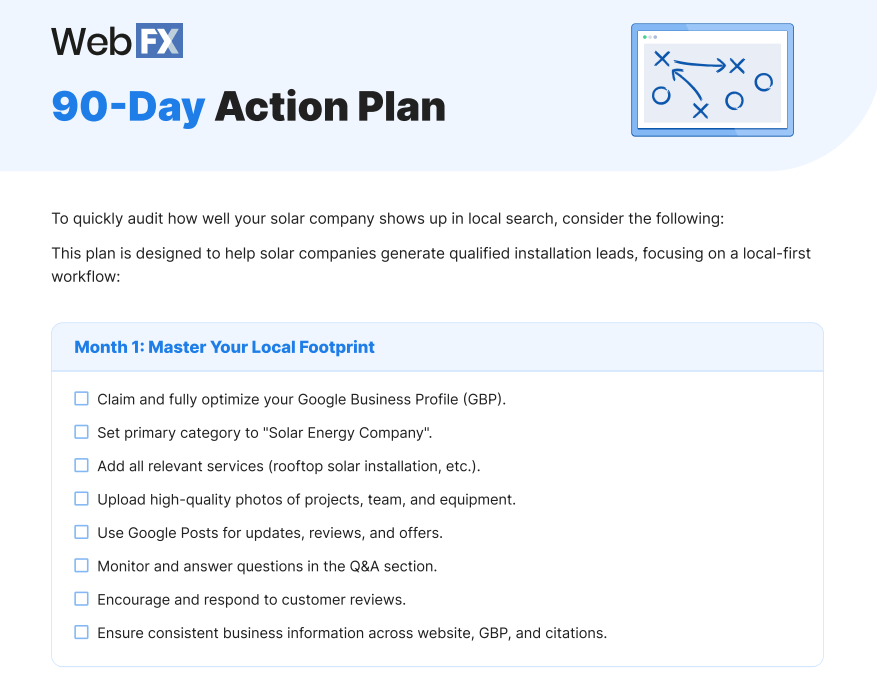
Download Now: 90-Day SEO Solar Action Plan
Your 5-step solar SEO framework for sustainable lead generation
Ranking a solar company in Google isn’t about chasing every SEO tactic at once. It’s about following a clear, local-first workflow that builds visibility, trust, and conversions in the order they matter most.
The following five-step framework translates into a 90-Day Action Plan, providing access to 96% of prospective clients who discover local businesses online and 46% of Google searches with local intent. It’s designed to help solar companies generate qualified installation leads, not just traffic.
Step 1: Master your local footprint
Your solar company’s Google Business Profile (GBP) makes or breaks your local SEO efforts. It’s the first point of interaction for when homeowners search for “solar installers near me” or “solar companies in [city].”
Google relies heavily on your GBP data, reviews, and location signals to assess your trustworthiness and legitimacy in your service area. If your profile is incomplete, inconsistent, or inactive, even a well-built and mobile-friendly website will struggle to rank locally.
To master your local footprint, start by claiming your GBP and fully optimizing it for solar services:
- Set your primary category to Solar Energy Company
- Add all relevant services, such as rooftop solar installation, commercial solar systems, and solar battery storage
- Upload recent, high-quality photos of completed local projects, your team, and equipment
- Use Google Posts to share project updates, customer reviews, or seasonal offers
- Monitor and answer questions in the Q&A section to remove buyer friction
- Encourage customers to leave reviews and be proactive in replying to both positive and negative reviews
- Ensure your business information matches exactly across your website, GBP, and citations
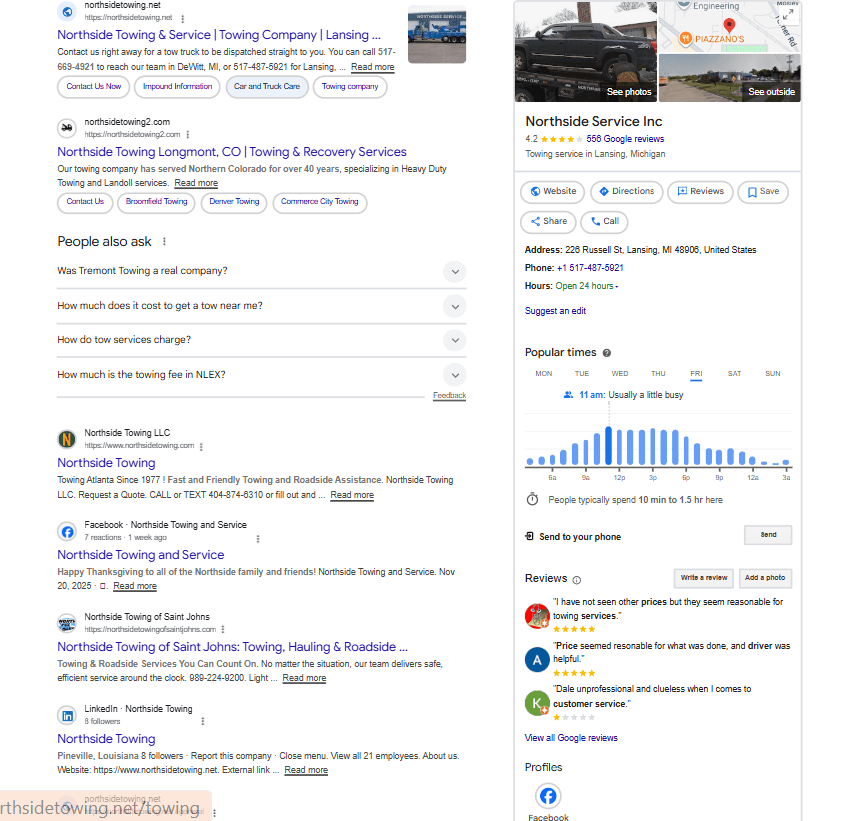
Local SEO is proven to drive measurable results. For instance, after WebFX implemented a local SEO strategy focused on Google Business Profile optimization and citation management, Northside Towing achieved a 72% increase in inbound calls from local search.
Step 2: Build your on-page SEO foundation
Once your local presence is established, your website needs to clearly communicate what you offer, who it’s for, and where you operate. For solar companies, on-page SEO involves more than including keywords on a page; it also involves structuring your site so Google and potential customers immediately understand your business offerings and values.
That foundation starts with intent-based solar keyword research.

Solar searches span multiple stages of the buying journey, and each stage deserves its own focus:
- High-intent searches, such as “best solar installers near me” or “solar company in [city],” signal readiness to book
- Evaluation-stage searches, like “solar panel cost calculator” or “solar battery storage options,” reflect active comparison
- Early research searches, including “solar incentives in [state],” help build trust earlier in the decision process
To support this intent, solar companies shouldn’t rely on a single catch-all page. Yes — separate pages for different services are essential. Dedicated pages for residential solar, commercial solar, and battery storage allow Google to rank the most relevant page for each query while giving users a clearer path to conversion.
On-page SEO also depends heavily on web design and user experience, especially on mobile. Clear navigation, fast load times, and prominent calls to action make it easier for users to take the next step and reinforce quality signals for Google.
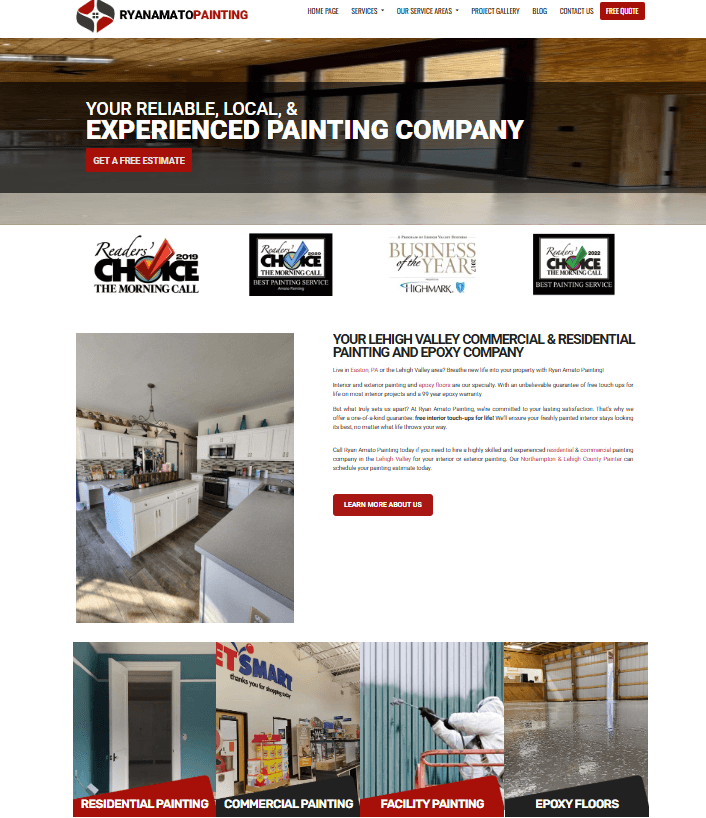
By restructuring their website around local keyword intent and improving page focus, service differentiation, and usability, WebFX helped Ryan Amato Painting turn visibility into momentum.
That foundational work led to a 125% increase in organic traffic and a 120% increase in SEO-driven leads, proving that when site structure reflects how customers actually search, rankings and conversions grow together.
Step 3: Create content that converts homeowners & businesses
Once you’ve solved the visibility problem, you need to keep solar prospects engaged and informed. At this stage, the role of content shifts from attracting clicks to reducing hesitation around a high-commitment purchasing decision.
Successful content creation for solar companies involves establishing clarity, trust, and proof with your audience to support direct conversions:
- Project case studies with before and after photos, location context, and real installations
- User-generated content in the form of customer reviews and video testimonials
- Cost and savings tools
- Simple FAQs addressing common concerns
- Clear explanations of incentives, financing, or timelines
For best results, these formats shouldn’t live in isolation. High-performing solar companies combine them on service-specific, location-focused landing pages that guide visitors toward a consultation. When prospects see proof of work, hear from real customers, and understand the value upfront, they’re far more likely to take the next step.
Step 4: Earn authority with high-quality local backlinks
At this point, your solar company may be visible, well-structured, and supported by strong content — but Google still needs confidence that your business is trustworthy and that you’re not exaggerating your own accomplishments. That’s where local backlinks come in.
For solar companies, link building isn’t about chasing hundreds of links or using complicated SEO tactics. It’s about earning mentions from reputable, locally relevant sources that confirm you’re a real business serving a real community.
The most effective local backlinks for solar companies usually come from:
- Local news outlets covering renewable energy projects or community initiatives
- Partnerships with homebuilders, real estate professionals, or HOAs
- Sponsorships of local events, sustainability programs, or community organizations
- Regional business directories and industry associations
These links act as credibility signals. When trusted local organizations reference your solar company, Google is more likely to view your business as authoritative within your service area — which supports stronger local and organic rankings. The key is quality and relevance, not volume.
Step 5: Measure, analyze, and iterate for growth
It takes some time and consistency for your SEO wins to be obvious. That’s why tracking the right benchmarks matters more than chasing quick spikes. Once your local foundation and on-page structure are in place, consistent measurement helps you understand what’s improving, what needs adjustment, and when results start to stack.
For solar companies, the most meaningful SEO metrics are tied directly to local visibility and lead activity, not vanity traffic numbers. For instance, you need to keep an eye out for your Google Map Pack rankings for priority service-area searches and GBP actions, including calls, direction requests, and website clicks. Don’t forget to track form submissions and consultation requests from service and location pages.
Tools like Google Analytics (GA4), Google Search Console, Google Business Profile insights, and a basic rank tracker are usually enough to monitor progress against the 90-Day Action Plan in the Solar SEO Launch Kit.
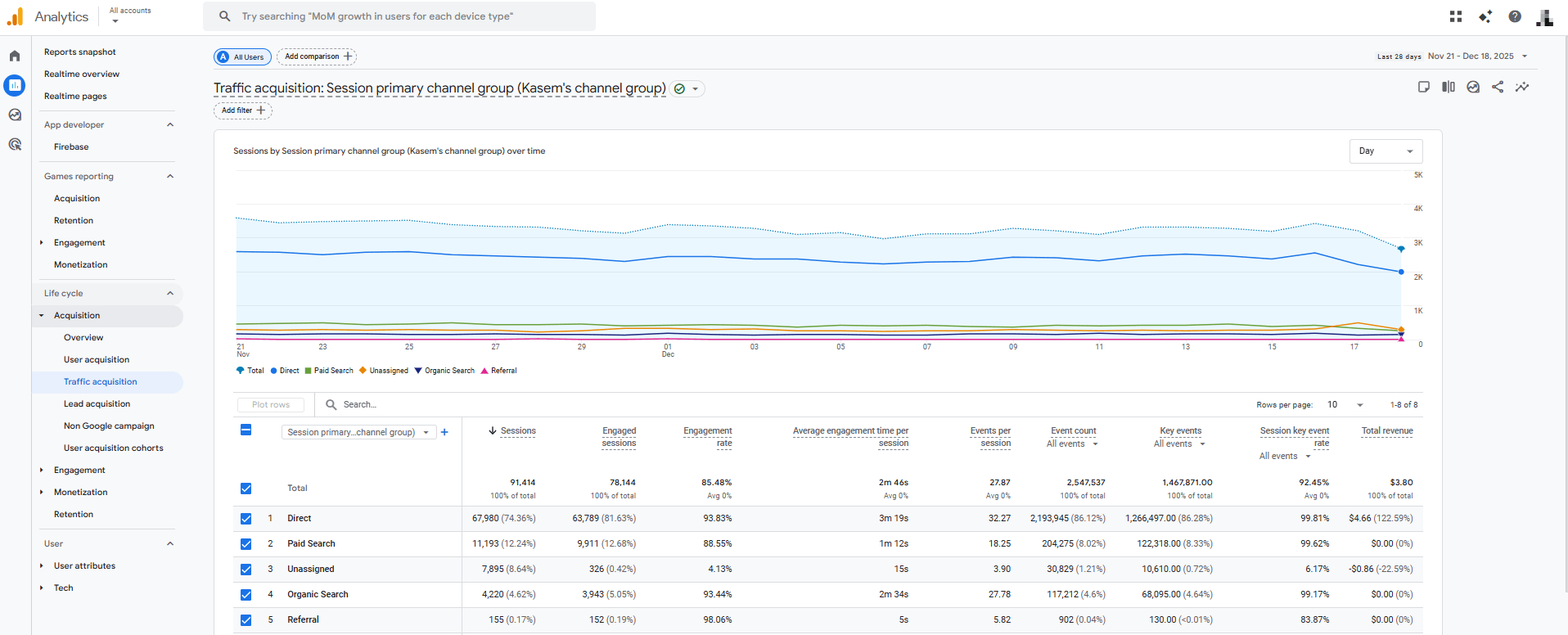
Over time, this consistency reveals the compounding impact of local SEO. After implementing a structured local SEO strategy and tracking performance over time, Asbury Electric recorded a 50% year-over-year increase in impressions from local search — a clear signal that their visibility was steadily growing in their target market.
Solar SEO budgeting: How to calculate your investment & ROI
When thinking about SEO budget, think about it as a long-term investment, not as a one-off thing that you set and forget. To see a real boost in calls, inquiries, bookings, and revenue, you need an ongoing SEO campaign that runs for at least three months, which is typically when early ROI begins to appear.
Working with a reputable solar SEO agency, like WebFX, gives you a definitive range of what you can expect to pay from month to month. We recommend that B2C companies allocate 5–10% of their revenue to marketing, and small businesses average about 12.3%.
You can then use the following formula to estimate ROI to connect SEO leads to real sales outcomes:
Estimated SEO ROI = (Average project value × Close rate × Monthly SEO leads) – Monthly SEO investment
Common pitfalls: 3 solar SEO mistakes to avoid
Solar SEO can drive consistent, high-quality leads but only if the fundamentals are handled correctly.
1. Inconsistent business information across the web
Local SEO depends on trust signals, and inconsistent NAP data (Name, Address, Phone number) is one of the fastest ways to erode them.
When your Google Business Profile, website, and directories don’t match exactly, Google struggles to validate your business location, which can weaken Map Pack visibility.
- Audit your listings regularly
- Eliminate duplicates and outdated profiles
- Keep your contact information identical everywhere it appears
2. Ignoring online reviews
Reviews influence both rankings and conversions, especially for high-investment services like solar. Companies that neglect reviews or fail to respond to negative feedback often lose trust before prospects ever reach the website. Respond to all reviews professionally and use feedback to address common concerns publicly.
3. Hiring a generic SEO agency without solar or local experience
Not all SEO strategies translate well to solar. Agencies that don’t understand service-area businesses, long sales cycles, or local lead generation often focus on traffic metrics instead of booked consultations.
FAQs about SEO solar companies
What are the most effective SEO strategies for a solar company?
Solar installation is an inherently local service, and most prospects search for installers near them when they’re ready to act. With 60% of online traffic going to the top three search results, local visibility makes a measurable difference.
Ranking in the Google Map Pack and local organic results puts your company in front of high-intent customers at the exact moment they’re comparing options.
How can I optimize my Google Business Profile for a solar company?
Start by selecting Solar Energy Company as your primary category then:
- Add all relevant services, such as rooftop solar installation and solar battery storage
- Upload high-quality photos of your team and completed projects
- Use Google Posts to share updates, offers, or recent installations
- Keep your profile active and complete improves both rankings and engagement
What type of keywords should a solar company target for SEO?
Solar companies should target a mix of location-based and intent-driven keywords to capture prospects both ready to book and earlier in the research process, supporting long-term organic growth.
High-intent searches include keywords, like “[city] solar installers” or “solar companies near me” and informational searches would typically include keywords, such as “how much do solar panels cost in [state].”
What kind of content helps solar companies rank higher on Google?
Content that builds trust and demonstrates expertise performs best for solar SEO. This includes local project case studies with real photos and data, video testimonials from satisfied customers, and detailed service pages for residential, commercial, and battery storage solutions. Sites that consistently publish this type of content also benefit from stronger organic visibility — blogs alone can lead to 434% more indexed pages.
Your next SEO steps to turn local search visibility into solar installations
Solar SEO doesn’t have to feel uncertain or overwhelming. When you focus on the fundamentals, SEO becomes a repeatable system, not a guessing game.
This guide outlines a proven, local-first framework solar companies use to move from low visibility to consistent, qualified lead generation. Whether you manage marketing in-house or work with a partner, the key is execution — doing the right things in the right order.
To help you take the next step, download our free Solar SEO Launch Kit. It includes a Local Visibility Scorecard to quickly assess where you stand today and a 90-Day Action Plan to turn this framework into clear, actionable next steps.
-
 Lornah Ngugi is a seasoned digital marketing writer with 6+ years of experience translating complex marketing strategies into engaging, results-driven content. She holds a B.S. in Business Information Technology and is certified in HubSpot Academy, Google Analytics, LinkedIn Marketing, and Google Digital Academy. Lornah regularly contributes to the WebFX blog and SEO.com, where she’s authored hundreds of marketing guides that help readers turn their goals into measurable results through practical, data-informed insights. When she’s not writing, you’ll find her enjoying a quiet walk in the park, sipping black coffee, or finding creative inspiration in a good chocolate bar.
 -

WebFX is a full-service marketing agency with 1,100+ client reviews and a 4.9-star rating on Clutch! Find out how our expert team and revenue-accelerating tech can drive results for you! Learn more
Try our free Marketing Calculator
Craft a tailored online marketing strategy! Utilize our free Internet marketing calculator for a custom plan based on your location, reach, timeframe, and budget.
Plan Your Marketing Budget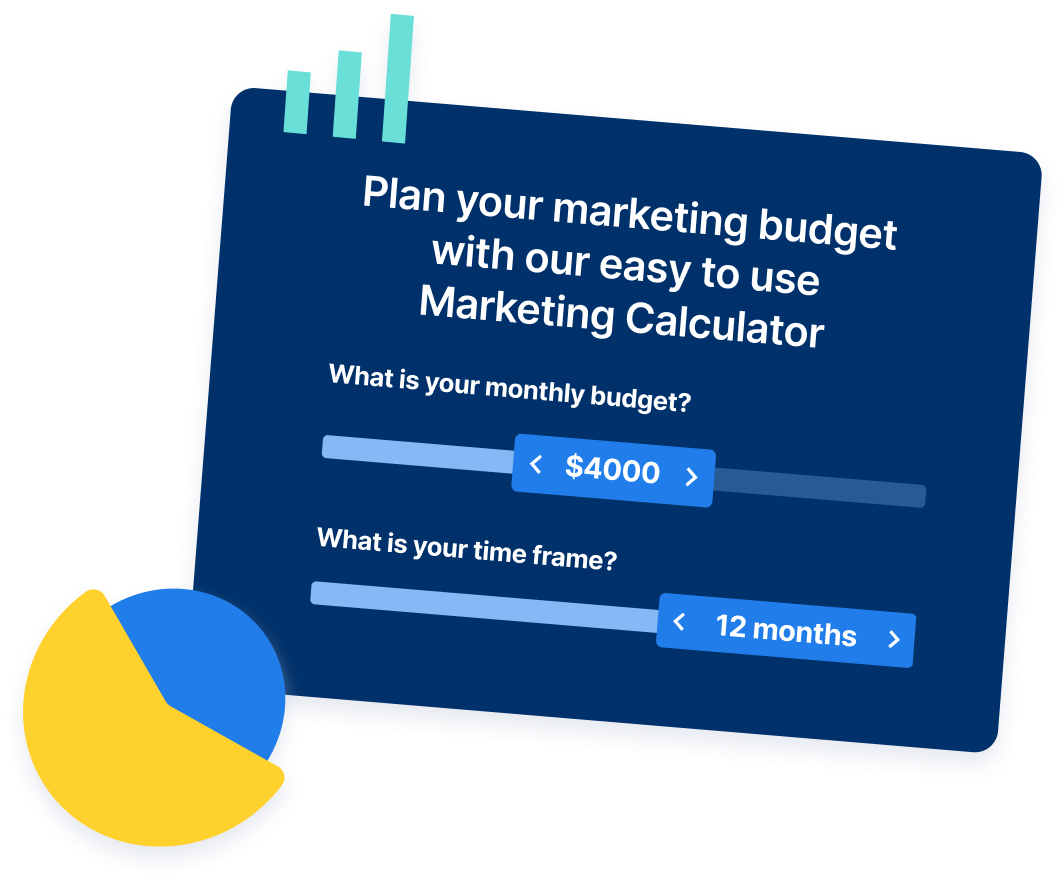
Share this article


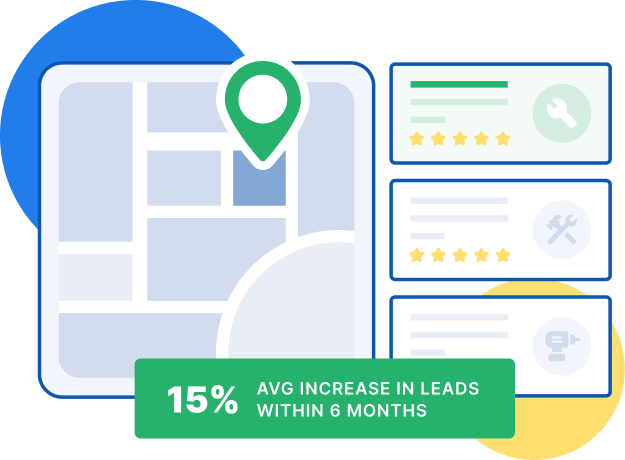
Outrank Local Competitors This Season
See how home service pros like you are dominating local Google results and booking more jobs.
Try our free Marketing Calculator
Craft a tailored online marketing strategy! Utilize our free Internet marketing calculator for a custom plan based on your location, reach, timeframe, and budget.
Plan Your Marketing Budget
What to read next




Additional Reading



Home Services Case Studies
FAQs about SEO solar companies
What are the most effective SEO strategies for a solar company?
Solar installation is an inherently local service, and most prospects search for installers near them when they’re ready to act. With 60% of online traffic going to the top three search results, local visibility makes a measurable difference.
Ranking in the Google Map Pack and local organic results puts your company in front of high-intent customers at the exact moment they’re comparing options.
How can I optimize my Google Business Profile for a solar company?
Start by selecting Solar Energy Company as your primary category then:
- Add all relevant services, such as rooftop solar installation and solar battery storage
- Upload high-quality photos of your team and completed projects
- Use Google Posts to share updates, offers, or recent installations
- Keep your profile active and complete improves both rankings and engagement
What type of keywords should a solar company target for SEO?
Solar companies should target a mix of location-based and intent-driven keywords to capture prospects both ready to book and earlier in the research process, supporting long-term organic growth.
High-intent searches include keywords, like “[city] solar installers” or “solar companies near me” and informational searches would typically include keywords, such as “how much do solar panels cost in [state].”
What kind of content helps solar companies rank higher on Google?
Content that builds trust and demonstrates expertise performs best for solar SEO. This includes local project case studies with real photos and data, video testimonials from satisfied customers, and detailed service pages for residential, commercial, and battery storage solutions. Sites that consistently publish this type of content also benefit from stronger organic visibility — blogs alone can lead to 434% more indexed pages.
Solving key challenges for home services companies
Our website isn’t ranking in the search results for home services
When people or businesses need home services in their area, they take to search engines like Google. Ensure your website appears at the top of the results when your target audience needs your services.

We’re struggling to grow our team
Expanding your team and growing your business go hand-in-hand. If you need help growing your team with talented and friendly employees, our recruitment marketing services have you covered.

We’re not generating enough leads
Are people visiting your website but not getting in touch with you? Our expert marketing specialists and web designers can optimize all areas of your website so you can attract and convert more of your target audience to use your home services.

We’re not attracting new customers
Having trouble increasing your online visibility, so you can attract new customers? Our award-winning marketing services get your brand in front of the right people in your local area.
