


Table of Contents
- Email marketing benchmarks: Terminology
- Email marketing benchmarks: Overall averages
- Email marketing benchmarks: Industry
- Email marketing benchmarks: Open rates by day of the week
- Email marketing benchmarks: Click-through rates by day of the week
- Email marketing benchmarks: Takeaways
- How to improve your email marketing performance
- FAQs about email marketing benchmarks
- Beat your industry’s email marketing benchmark data
- What are the overall average email marketing benchmarks? Across all industries, the average open rate is 19.21%, click-through rate is 2.44%, unsubscribe rate is 0.89%, and bounce rate is 2.48% — providing baseline metrics to measure your campaign performance against.
- Which industries have the highest email open rates? Government emails lead with 30.5% open rates, followed by nonprofits at 25.2% and education at 23.4%, likely due to their audiences’ higher engagement with institutional communications compared to commercial marketing.
- What are the best days to send marketing emails? Tuesday and Wednesday consistently show the highest open rates across most industries, while Monday, Thursday, and Friday typically underperform due to holiday schedules, weekend preparation, and Monday email catch-up time.
- How can you improve your email open rates? Run A/B tests on subject lines, experiment with different sender names and addresses, personalize subject lines, make them more concise and transparent, and adjust send times based on your industry’s benchmark data.
- Why do bounce rates matter for email campaigns? High bounce rates indicate deliverability issues from invalid email addresses or spam triggers — you can reduce them by avoiding purchased lists, requiring double opt-in, removing invalid addresses, and sending to fresh rather than stale lists.
Is your email marketing campaign missing, meeting, or beating your industry’s averages? Find out with this email marketing benchmark breakdown*, which covers industry averages for:
- Open rates
- Click-through rates (CTRs)
- Unsubscribe rates
- Bounce rates
Start comparing your company’s performance to your market’s average now!
Table of Contents
- Email marketing benchmarks: Terminology
- Email marketing benchmarks: Overall averages
- Email marketing benchmarks: Industry
- Email marketing benchmarks: Open rates by day of the week
- Email marketing benchmarks: Click-through rates by day of the week
- Email marketing benchmarks: Takeaways
- How to improve your email marketing performance
If you’re looking to improve your email marketing benchmarks, ask for help! With email marketing services from WebFX, you can get a custom email marketing strategy that helps your business increase its open rates and even conversion rates. Browse our email marketing plans now to learn more!
Join 200K smart marketers for the hottest marketing news and insights in your inbox. “*” indicates required fieldsDon’t miss our Revenue Weekly emails!
Inline Subscription Form

Email marketing benchmarks: Terminology
Got some questions about click-through rate or bounce rate? Check out this quick summary:
- Open rate: Open rate is the percentage of subscribers that opened your email, based on the number of email recipients. If you send an email to 100 recipients, for instance, and 50 open it, your open rate is 50%.
- Click-through rate: Click-through rate is a strategy-level metric because it measures the percentage of subscribers that clicked on a link or image in an email, based on the total number of emails sent.
- Unsubscribe rate: Unsubscribe rate is the percentage of subscribers that unsubscribed from an email, based on the total number of recipients. If you send an email to 100 recipients, for example, and 25 unsubscribe, your unsubscribe rate is 25%.
- Bounce rate: Bounce rate is the percentage of emails that were not delivered, based on the total number of emails sent. Emails can bounce for a variety of reasons, including spam issues, server errors, and more. There are two types of bounces: hard and soft bounces.
Email marketing benchmarks: Overall averages

$36 to $40 for every dollar spent is the average return on investment (ROI) through email marketing.
Email marketing benchmarks studies by Campaign Monitor and Mailchimp featured data from more than 25 industries. With the table below, you can see the overall averages for open rate, click-through rate, unsubscribe rate, and bounce rate:
| Overall Average | Percent |
|---|---|
| Average open rate | 19.21% |
| Average click-through rate | 2.44% |
| Average unsubscribe rate | 0.89% |
| Average bounce rate | 2.48% |
Email marketing benchmarks: Industry
Check out the table below to view email marketing benchmarks by industry:
| Industry | Open rate | Click-through rate | Unsubscribe rate | Bounce rate |
|---|---|---|---|---|
| Advertising and marketing | 19.30% | 2.60% | 0.20% | 1.10% |
| Agriculture, forestry, fishing, and hunting | 20.50% | 3.50% | 0.20 | 0.50 |
| Automotive and aerospace | 12.60% | 1.20% | 0.20% | 0.80% |
| Beauty and personal care | 16.65% | 1.92% | 0.30% | 0.26% |
| Construction, contracting, manufacturing | 22.40% | 3.20% | 0.30% | 2.20% |
| Consumer packaged goods | 14.50% | 1.60% | 0.10% | 0.40% |
| Ecommerce | 15.68% | 2.01% | 0.27% | 0.19% |
| Education | 23.40% | 3.00% | 0.20% | 1.10% |
| Engineering, architecture, design | 20.40% | 3.00% | 0.20% | 1.10% |
| Financial services | 20.20% | 2.50% | 0.20% | 1.20% |
| Food and beverage | 13.00% | 1.20% | 0.10% | 0.30% |
| Government | 30.50% | 4.10% | 0.20% | 1.30% |
| Health and fitness | 21.48% | 2.69% | 0.40% | 0.30% |
| Healthcare services | 19.70% | 2.70% | 0.20% | 1.00% |
| Insurance | 21.36% | 2.13% | 0.25% | 0.67% |
| IT, tech, software services | 17.60% | 2.50% | 0.20% | 0.90% |
| Legal | 22.00% | 2.81% | 0.22% | 0.52% |
| Logistics and wholesale | 18.90% | 2.20% | 0.30% | 1.20% |
| Media, entertainment, publishing | 18.10% | 3.10% | 0.10% | 0.40% |
| Nonprofit | 25.20% | 2.60% | 0.20% | 1.00% |
| Other | 19.10% | 2.40% | 0.20% | 1.10% |
| Pharmaceuticals | 18.58% | 2.25% | 0.17% | 0.39% |
| Professional services | 18.00% | 1.80% | 0.20% | 0.80% |
| Real estate, design, construction | 19.90% | 3.60% | 0.20% | 1.40% |
| Recruitment and staffing | 21.14% | 2.53% | 0.30% | 0.45% |
| Restaurants | 19.77% | 1.34% | 0.28% | 0.37% |
| Retail | 13.90% | 2.10% | 0.10% | 0.40% |
| Travel, hospitality, leisure | 15.70% | 1.60% | 0.10% | 0.50% |
| Unknown | 17.50% | 2.70% | 0.20% | 0.70% |
| Average | 19.21% | 2.44% | 0.89% | 2.48% |
Email marketing benchmarks: Open rates by day of the week
When should your business send its emails? Use this email marketing benchmark data to find out! In the table below, you can see your industry’s average open rates by day of the week, which you can use to improve your email send strategy.
| Industry | Sunday | Monday | Tuesday | Wednesday | Thursday | Friday | Saturday |
|---|---|---|---|---|---|---|---|
| Advertising and marketing | 18.90% | 19.20% | 19.70% | 19.60% | 18.60% | 19.30% | 19.50% |
| Agriculture, forestry, fishing, and hunting | 18.50% | 20.00% | 21.10% | 20.20% | 19.60% | 21.50% | 20.80% |
| Automotive and aerospace | 11.40% | 12.90% | 12.50% | 13.80% | 12.10% | 12.60% | 12.80% |
| Beauty and personal care | Unavailable | Unavailable | Unavailable | Unavailable | Unavailable | Unavailable | Unavailable |
| Construction, contracting, manufacturing | 21.20% | 22.50% | 21.30% | 26.00% | 22.70% | 22.00% | 22.50% |
| Consumer packaged goods | 15.90% | 14.90% | 14.20% | 13.70% | 15.70% | 14.00% | 14.90% |
| Ecommerce | Unavailable | Unavailable | Unavailable | Unavailable | Unavailable | Unavailable | Unavailable |
| Education | 25.70% | 22.20% | 24.90% | 23.20% | 24.90% | 23.30% | 20.20% |
| Engineering, architecture, design | 21.20% | 20.00% | 21.50% | 20.80% | 19.50% | 19.00% | 20.30% |
| Financial services | 20.20% | 20.50% | 20.30% | 21.00% | 20.10% | 19.90% | 19.80% |
| Food and beverage | 12.00% | 12.70% | 13.20% | 13.90% | 12.10% | 13.50% | 13.10% |
| Government | 30.40% | 31.10% | 30.40% | 30.30% | 31.90% | 30.20% | 29.20% |
| Health and fitness | Unavailable | Unavailable | Unavailable | Unavailable | Unavailable | Unavailable | Unavailable |
| Healthcare services | 18.30% | 20.10% | 19.70% | 20.90% | 18.80% | 19.70% | 20.60% |
| Insurance | Unavailable | Unavailable | Unavailable | Unavailable | Unavailable | Unavailable | Unavailable |
| IT, tech, software services | 17.30% | 17.50% | 17.90% | 17.70% | 17.80% | 17.60% | 17.50% |
| Legal | Unavailable | Unavailable | Unavailable | Unavailable | Unavailable | Unavailable | Unavailable |
| Logistics and wholesale | 16.90% | 20.40% | 18.40% | 20.50% | 18.70% | 18.00% | 20.70% |
| Media, entertainment, publishing | 18.50% | 17.90% | 18.80% | 17.40% | 18.70% | 17.90% | 17.30% |
| Nonprofit | 24.90% | 25.90% | 25.00% | 26.20% | 24.90% | 24.60% | 25.60% |
| Other | 16.80% | 19.40% | 20.10% | 20.20% | 18.60% | 19.00% | 19.40% |
| Pharmaceuticals | Unavailable | Unavailable | Unavailable | Unavailable | Unavailable | Unavailable | Unavailable |
| Professional services | 17.00% | 18.20% | 18.00% | 18.70% | 17.50% | 18.20% | 18.50% |
| Real estate, design, construction | 19.70% | 19.80% | 19.80% | 20.60% | 19.20% | 20.20% | 19.60% |
| Recruitment and staffing | Unavailable | Unavailable | Unavailable | Unavailable | Unavailable | Unavailable | Unavailable |
| Restaurants | Unavailable | Unavailable | Unavailable | Unavailable | Unavailable | Unavailable | Unavailable |
| Retail | 14.90% | 13.50% | 14.70% | 13.00% | 14.70% | 13.70% | 13.90% |
| Travel, hospitality, leisure | 15.40% | 15.70% | 16.00% | 15.60% | 15.50% | 15.60% | 15.90% |
| Unknown | 17.20% | 17.70% | 17.70% | 17.50% | 17.40% | 17.40% | 17.20% |
Email marketing benchmarks: Click-through rates by day of the week
Get insight into when your target audience is most likely to engage with your emails by checking out this table. You can learn which days of the week post the highest click-through rates in your industry in this table.
| Industry | Sunday | Monday | Tuesday | Wednesday | Thursday | Friday | Saturday |
|---|---|---|---|---|---|---|---|
| Advertising and marketing | 2.30% | 2.70% | 2.60% | 2.90% | 2.40% | 2.60% | 2.70% |
| Agriculture, forestry, fishing, and hunting | 3.40% | 3.20% | 3.60 | 3.10 | 3.50 | 3.90% | 3.50% |
| Automotive and aerospace | 1.10% | 1.30% | 1.10% | 1.50% | 1.20% | 1.20% | 1.50% |
| Beauty and personal care | Unavailable | Unavailable | Unavailable | Unavailable | Unavailable | Unavailable | Unavailable |
| Construction, contracting, manufacturing | 3.50% | 3.00% | 3.10% | 3.2 | 3.90% | 3.20% | 3.10% |
| Consumer packaged goods | 1.60% | 1.60% | 1.60% | 1.50% | 1.70% | 1.60% | 1.60% |
| Ecommerce | Unavailable | Unavailable | Unavailable | Unavailable | Unavailable | Unavailable | Unavailable |
| Education | 3.40% | 2.80% | 3.10% | 2.90% | 3.50% | 2.90% | 2.60% |
| Engineering, architecture, design | 3.30% | 2.90% | 3.20% | 3.20% | 3.10% | 2.90% | 3.10% |
| Financial services | 2.50% | 2.60% | 2.60% | 2.60% | 2.50% | 2.50% | 2.40% |
| Food and beverage | 1.10% | 1.10% | 1.20% | 1.20% | 1.30% | 1.30% | 1.10% |
| Government | 4.10% | 4.20% | 4.50% | 4.10% | 4.60% | 3.90% | 3.70% |
| Health and fitness | Unavailable | Unavailable | Unavailable | Unavailable | Unavailable | Unavailable | Unavailable |
| Healthcare services | 2.30% | 2.80% | 2.60% | 3.10% | 2.60% | 2.80% | 2.80% |
| Insurance | Unavailable | Unavailable | Unavailable | Unavailable | Unavailable | Unavailable | Unavailable |
| IT, tech, software services | 2.50% | 2.50% | 2.60% | 2.50% | 2.50% | 2.60% | 2.50% |
| Legal | Unavailable | Unavailable | Unavailable | Unavailable | Unavailable | Unavailable | Unavailable |
| Logistics and wholesale | 2.00% | 2.40% | 2.30% | 2.10% | 2.40% | 2.10% | 2.30% |
| Media, entertainment, publishing | 3.10% | 3.00% | 3.10% | 3.00% | 3.20% | 3.00% | 2.90% |
| Nonprofit | 2.50% | 2.70% | 2.60% | 2.70% | 2.50% | 2.50% | 2.60% |
| Other | 2.20% | 2.70% | 2.20% | 2.60% | 2.60% | 2.30% | 2.40% |
| Pharmaceuticals | Unavailable | Unavailable | Unavailable | Unavailable | Unavailable | Unavailable | Unavailable |
| Professional services | 1.60% | 1.90% | 1.70% | 2.00% | 1.70% | 1.90% | 1.90% |
| Real estate, design, construction | 3.40% | 3.50% | 3.50% | 3.70% | 3.40% | 3.70% | 3.50% |
| Recruitment and staffing | Unavailable | Unavailable | Unavailable | Unavailable | Unavailable | Unavailable | Unavailable |
| Restaurants | Unavailable | Unavailable | Unavailable | Unavailable | Unavailable | Unavailable | Unavailable |
| Retail | 2.40% | 2.00% | 2.60% | 1.90% | 2.40% | 2.10% | 2.20% |
| Travel, hospitality, leisure | 1.60% | 1.60% | 1.70% | 1.50% | 1.60% | 1.60% | 1.70% |
| Unknown | 2.60% | 2.70% | 2.70% | 2.60% | 2.60% | 2.60% | 2.60% |
Email marketing benchmarks: Takeaways
The email marketing benchmark data from Mailchimp and Campaign Monitor includes more than 500 data points. That’s a lot to analyze and break down, which is why we’ve done the work for you and compiled some of the most notable takeaways.
The top-performing industries in email marketing
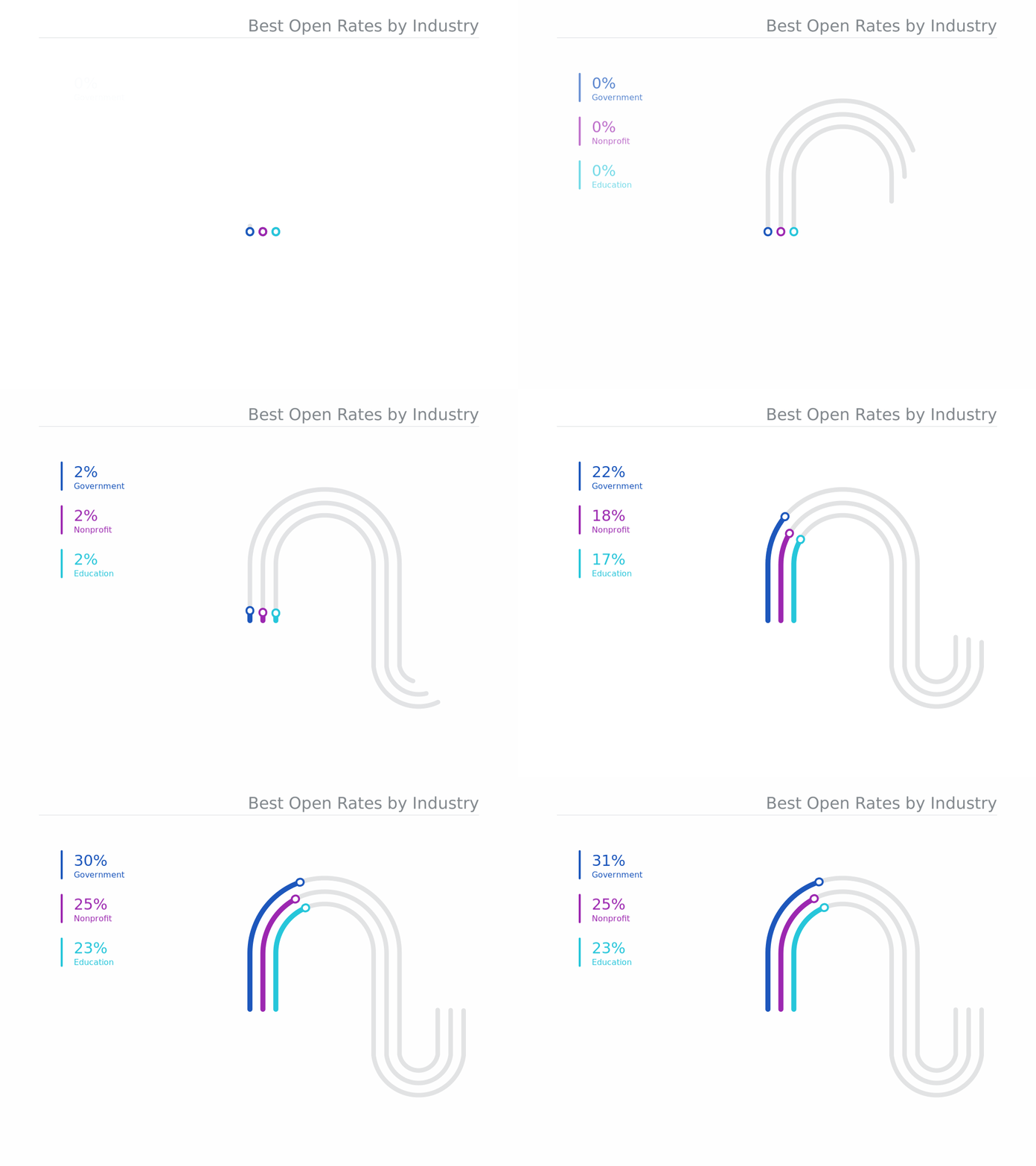 When it comes to email marketing, the following industries lead the way:
When looking at the top-performing industries in email marketing, remember their unique audiences. Someone receiving an email from an educational institute, like their kid’s school, is naturally more inclined to open and interact with those emails.
The best days for sending emails
Across industries, Wednesday and Tuesday performed when it came to open rates — even when looking at some business-to-business (B2B) email marketing benchmarks. 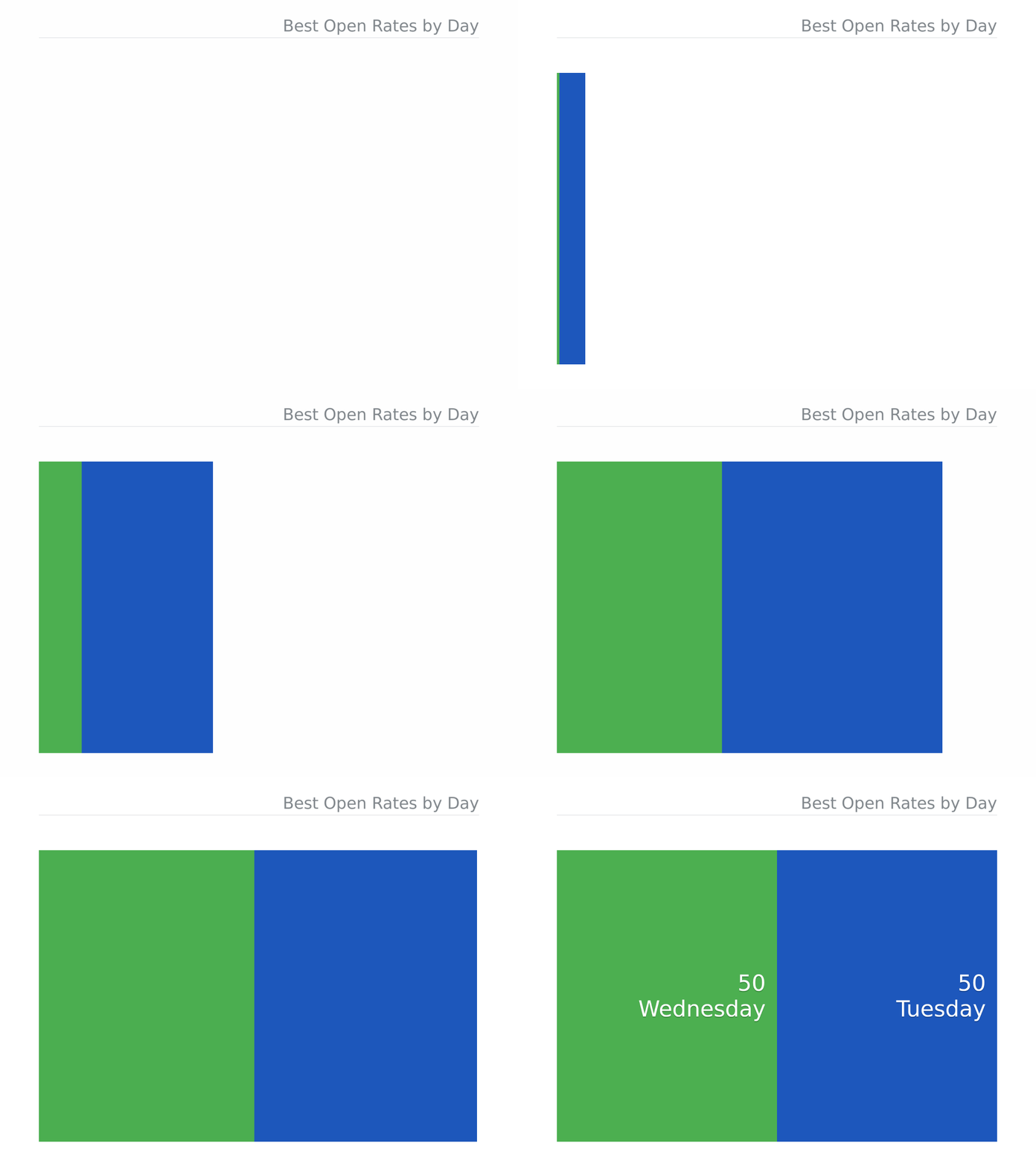 It’s critical to achieve a high open rate because that’s the gateway to people interacting with your email, whether by reading your content, visiting your site, or contacting your team. If you’re looking to increase your average click-through rate for email, though, the day is highly dependent on your industry. Refer to the table “Email marketing benchmarks: Click-through rates by day of the week” to determine the best day for earning high click-through rates.
The worst days for sending emails
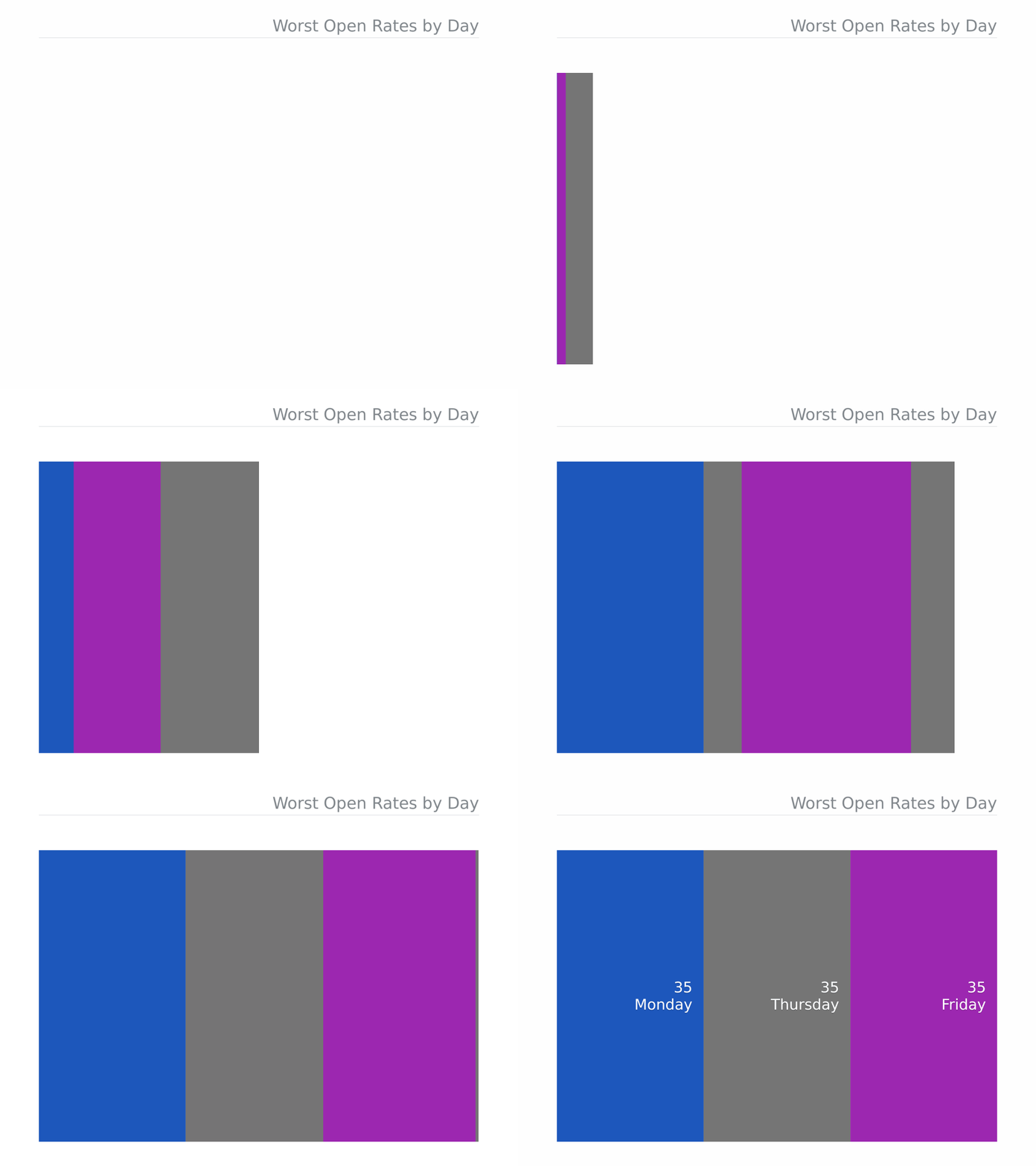 When sending emails, most businesses see the least return from the following send days:
- Monday
- Thursday
- Friday
Why do Monday, Thursday, and Friday often underperform? In some cases, federal holidays and the upcoming weekend can cause people to unplug from their email. On Mondays, many people also spend time catching up on important emails, like work email, leaving your emails left unopened. For the best results with your send days, reference your industry’s email marketing benchmark data. This information will help you focus on the best days for your market, which you can test in your email campaigns.
How to improve your email marketing performance
With insight into your industry’s email marketing benchmark data, you can start to make plans for improving yours. Whether you’re looking to improve your open rate (which is a great place to start) or decrease your unsubscribe rates, the following how-to tips can help:
How to improve your average email open rate
Your business can increase its average email open rate with a few strategies, like:
- Running A/B tests on your subject lines
- Experimenting with different sender names and email addresses
- Changing send times, whether time of day or day of the week
- Trying different email lengths
- Personalizing email subject lines
- Making subject lines more concise and transparent
If you’d like to learn more about improving your average open rate for email, check out these articles:
- How to A/B Test Email Campaigns
- 13 Best Practices for Writing Email Subject Lines
- 6 Tips for Finding the Best Times for Sending Your Emails
How to improve your average email click-through rate
Your company can start to improve its average email click-through rate with strategies like:
- Creating more targeted subscriber segments
- Writing more transparent and to-the-point calls to action (CTAs)
- Offering more compelling incentives, like limited-time free shipping
- Developing a consistent and clear brand voice
You can learn more about increasing your average click-through rate for email with these resources:
- 5 Ways to Segment Your Email List
- 9 Tips for Increasing Your Email Marketing Conversion Rate
- How to Develop a Consistent Tone of Voice
How to improve your average email bounce rate
Your business can work on improving its average bounce rate with these tips:
- Avoid purchasing email lists
- Remove invalid email addresses
- Require a double opt-in
- Send email content to fresh vs. stale email lists
- Stay away from sending spammy content
Get more advice for decreasing your average bounce rate for email with these articles:
- What Is Double Opt-In Email Marketing?
- How to Create an Opt-In Email Marketing Strategy
- 10 Email Marketing Tools for Sending Your Emails
How to improve your average email unsubscribe rate
Your company can begin improving its average email unsubscribe rate by:
- Developing subscriber segments to keep emails relevant
- Reducing how often you send emails
- Building a subscriber list vs. purchasing a subscriber list
- Implementing a double opt-in strategy
Remember, churn is normal for email marketing. Someone with zero chance of recommending your brand or purchasing your products doesn’t offer much value to your business and its email marketing strategy. You can learn more about improving your average unsubscribe rate for email with these resources:
- How Often Should You Send Your Emails?
- 7 Email Segmentation Strategies You Should Use
- 5+ Tips for Building Your Email List
FAQs about email marketing benchmarks
What is a good email open rate?
The average email open rate across industries is 19.21%. Anything above 20% is considered good, and rates above 25% are excellent. However, benchmarks vary by industry. Government averages 30.5%, while automotive averages just 12.6%. Compare your performance to your specific industry.
What is a good email click-through rate?
The average email click-through rate is 2.44%. Rates above 2.5% are considered good, and anything above 3.5% is excellent. Top-performing industries like government (4.1%) and agriculture (3.5%) see higher CTRs due to highly engaged audiences.
What is a good email unsubscribe rate?
The average unsubscribe rate is 0.89%. Anything below 0.5% is considered healthy. Some churn is normal. Focus on keeping unsubscribe rates low by sending relevant, valuable content to well-segmented lists.
What is a good email bounce rate?
The average bounce rate is 2.48%. Aim for below 2%. High bounce rates hurt your sender reputation and deliverability. Maintain clean lists by removing invalid addresses and avoiding purchased email lists.
What day of the week is best to send emails?
Tuesday and Wednesday generally see the highest open rates across industries. However, the best day varies by industry and audience. Use the benchmark data as a starting point, then test different send days to find what works for your subscribers.
How do I improve my email open rate?
Improve open rates by A/B testing subject lines, personalizing sender names, optimizing send times, and making subject lines concise and transparent. Segment your audience to ensure emails are relevant to each recipient.
How do I improve my email click-through rate?
Improve CTR by creating targeted subscriber segments, writing clear and compelling CTAs, offering valuable incentives, and ensuring email content matches subject line promises. Test different layouts and CTA placements.
How often should I send marketing emails?
Email marketing frequency depends on your industry and audience expectations. Most businesses send 1-4 emails per month. Too many emails increase unsubscribes; too few cause subscribers to forget you. Test different frequencies and monitor unsubscribe rates.
What’s the difference between hard and soft bounces?
Hard bounces are permanent delivery failures (invalid email address, domain doesn’t exist). Soft bounces are temporary issues (full inbox, server down). Remove hard bounces immediately; monitor soft bounces and remove addresses that consistently fail.
See how WebFX connects every click, lead, and sale into one measurable system built to grow your bottom line.
Turn Your Marketing Into a Revenue Engine
Beat your industry’s email marketing benchmark data
No one wants to settle for average, which is why email marketing benchmark data is so handy. With this market data, you can map your goals for increasing your open rates, click-through rates, and more. Improving these email marketing metrics isn’t easy, though, which is why many businesses partner with an email marketing agency like WebFX.
At WebFX, we build a custom email marketing strategy for your business — and we tailor it to drive results. Just in the past five years, we’ve helped our clients use channels like email to generate more than $2.4 billion in revenue and over 6.3 million leads. If you’re ready to achieve similar results, contact us online or give us a ring at 888-601-5359 today!
Data sources and methodology
This email marketing benchmark data comes from Mailchimp and Campaign Monitor, two respected email software companies. Both businesses analyzed millions of emails — in fact, Campaign Monitor analyzed more than 30 billion emails — to compile this data.
-
 Sarah Berry is a Lead Web Marketing Consultant at one of the largest digital marketing agencies in the USA — WebFX. With more than 10,000 hours of experience, she offers practical insights and strategies to grow your digital revenue. Her work has been cited by Michigan State University, Business Insider, and Ars Technica. When she isn’t polishing her Time Magazine Person of the Year Award, she’s spending time with her flock of ducks.
 -

WebFX is a full-service marketing agency with 1,100+ client reviews and a 4.9-star rating on Clutch! Find out how our expert team and revenue-accelerating tech can drive results for you! Learn more
Try our free Marketing Calculator
Craft a tailored online marketing strategy! Utilize our free Internet marketing calculator for a custom plan based on your location, reach, timeframe, and budget.
Plan Your Marketing Budget
Table of Contents
- Email marketing benchmarks: Terminology
- Email marketing benchmarks: Overall averages
- Email marketing benchmarks: Industry
- Email marketing benchmarks: Open rates by day of the week
- Email marketing benchmarks: Click-through rates by day of the week
- Email marketing benchmarks: Takeaways
- How to improve your email marketing performance
- FAQs about email marketing benchmarks
- Beat your industry’s email marketing benchmark data
Share this article


Proven Marketing Strategies
Try our free Marketing Calculator
Craft a tailored online marketing strategy! Utilize our free Internet marketing calculator for a custom plan based on your location, reach, timeframe, and budget.
Plan Your Marketing Budget
What to read next