


Table of Contents
- AI optimization basics FAQs
- AI search engines and platforms FAQs
- AI ranking factors and citation FAQs
- How to optimize content for AI search FAQs
- AI visibility and tracking FAQs
- AI optimization strategy and planning FAQs
- AI optimization challenges and mistakes FAQs
- AI optimization timeline and results FAQs
- AI optimization costs and resources FAQs
- Outsourcing FAQs
- The future of AI search FAQs
- Got more AI optimization questions? We’ve got answers.
- What is AI optimization and why does it matter? AI optimization involves making your content discoverable in AI-powered search tools like ChatGPT, Perplexity, and Google AI Overviews, which is crucial because generative AI traffic is now growing 165x faster than traditional organic search.
- Which AI platforms should businesses prioritize for optimization? Businesses should focus on major AI search platforms including ChatGPT, Perplexity, Google’s AI Overviews, and Gemini, as these tools are increasingly being used by customers to find recommendations and information instead of traditional search engines.
- What factors influence AI ranking and citations? Specific signals determine whether your content gets cited in AI-generated answers, including content quality, authority, relevance, and structured data, though AI ranking factors differ from traditional SEO metrics.
- How long does it take to see results from AI optimization? AI optimization requires realistic timeline expectations similar to traditional SEO, with results varying based on content quality, competition, and implementation strategy, though the article emphasizes setting appropriate expectations for ROI and visibility improvements.
- What are common mistakes in AI optimization strategies? Common challenges include failing to adapt traditional SEO tactics for AI search, not tracking AI visibility properly, overlooking platform-specific optimization requirements, and standing still while AI search rapidly evolves and changes how customers find information.
Your customers already ask ChatGPT for recommendations. At the same time, Google AI Overviews, Gemini, Copilot, and Perplexity keep changing how people find answers online.
That shift has made AI optimization a priority for businesses that want more visibility in AI-generated results. Instead of focusing only on traditional rankings, brands now need content that AI systems can discover, understand, trust, and cite.
This FAQ guide answers 50+ common questions about AI optimization, including what it is, how AEO and GEO relate to it, which ranking factors influence citations, and how to improve your visibility across AI-powered search tools.
Use the links below to jump to the topic you want to explore.
- AI optimization basics FAQs
- AI search engines and platforms FAQs
- AI ranking factors FAQs
- How to optimize for AI search FAQs
- AI visibility and tracking FAQs
- AI optimization strategy and planning FAQs
- AI optimization challenges and mistakes FAQs
- AI optimization timeline and results FAQs
- AI optimization costs and resources FAQs
- The future of AI search FAQs
AI optimization basics FAQs
Before diving into tactics and tools, it helps to understand what AI optimization actually is and why it is crucial for your business. Learn the fundamentals with these AI optimization FAQs:
🎥Video: How AI can help your business | 5 incredible benefits of AI in marketing
What is AI optimization?
AI optimization is the practice of optimizing your content so AI-powered platforms can find, understand, and cite it when generating answers. This includes AI search engines like Perplexity and SearchGPT, AI chatbots like ChatGPT and Gemini, and AI search features like Google AI Overviews.
The goal goes beyond just ranking. AI optimization aims to get your brand mentioned, cited, or recommended in AI search.
What is AEO (answer engine optimization)?
Answer engine optimization (AEO) focuses on making your content easy for AI-powered answer engines to understand, trust, and cite when responding to user questions. Unlike traditional SEO that optimizes for page rankings, AEO optimizes for answer readiness.
Key AEO tactics include:
- Structuring content with clear headings and direct answers near the top
- Using scannable formats like lists, tables, and definitions
- Implementing strategic schema markup (FAQ, HowTo, Article)
- Adding original data, expert commentary, and firsthand experience
What is GEO (generative engine optimization)?
Generative engine optimization (GEO) is the practice of optimizing your website content to appear in generative AI search results, including Google AI Overviews, ChatGPT, Claude, and Perplexity. The focus is on increasing visibility in AI-generated responses, not just traditional search rankings.
70% of Gen Zers already use generative AI, and 52% trust it to help make decisions. As AI reshapes how users search, GEO helps ensure your brand shows up where your audience is actually looking.
What’s the difference between AEO and GEO?
AEO and GEO overlap significantly, but have slightly different emphases:
- AEO focuses on getting cited by answer engines that pull direct answers from the web.
- GEO focuses on appearing in generative AI responses that synthesize information from multiple sources.
In practice, most businesses need both. AEO ensures your content is citation-ready. GEO ensures you’re visible across the full spectrum of AI-powered search experiences. Many marketers use the terms interchangeably since the core tactics align.
How is AI optimization different from SEO?
Traditional search engine optimization (SEO) focuses on ranking pages in the search engine results page (SERP). AI optimization focuses on getting cited in AI-generated answers. Here’s how they compare:
| SEO | AI Optimization |
| Optimizes for rankings | Optimizes for citations |
| Targets keywords | Targets entities and conversational queries |
| Measures traffic | Measures visibility and mentions |
| Focuses on pages | Focuses on passages and sections |
Is AI optimization replacing SEO?
No. AI optimization extends SEO, it doesn’t replace it. Traditional SEO remains foundational because:
- AI platforms like ChatGPT and Perplexity pull from indexed, well-ranked content
- Google AI Overviews heavily favor pages with strong organic rankings
- Technical SEO (crawlability, structured data, site speed, mobile-friendliness) still affects AI discoverability
SEO gets you indexed and ranked. AI optimization gets you cited and recommended. You need both to stay visible as search evolves.
What is OmniSEO?
OmniSEO® is WebFX’s holistic approach to search optimization that extends beyond traditional search engines to optimize your visibility across all platforms. Instead of optimizing for Google alone, OmniSEO® ensures your brand is discoverable wherever your audience searches, including:
- Traditional search engines (Google, Bing)
- AI answer engines (ChatGPT, Perplexity, Gemini)
- AI search features (Google AI Overviews, Bing AI summaries)
- Social platforms and other discovery channels
OmniSEO® combines proven SEO fundamentals with platform-specific strategies tailored to your unique audience’s search behaviors, making sure your brand stays visible in both established and emerging search channels.
Do I need AI optimization?
It depends on your industry, goals, and how much you rely on organic search. But for most businesses, the answer is yes.
You likely need AI optimization if:
- Your industry has high AI Overview trigger rates
- Your audience already uses AI tools like ChatGPT or Gemini for research
- You depend on organic search for leads or sales
- Your competitors are already showing up in AI-generated answers
1 in 4 U.S. searches now trigger an AI Overview, and generative AI traffic is growing fast. To get real results, you need to build visibility before competitors flood AI results. If you wait until they’re entrenched, you’ll spend more time and budget trying to unseat them.
How do I convince leadership to invest in generative engine optimization?
Present the facts. More than two billion people use AI Overviews each month. Hundreds of millions of people use ChatGPT each week. How people search is changing. Businesses looking to get found online need to adapt.
AI search engines and platforms FAQs
ChatGPT, Perplexity, Gemini, AI Overviews… the list keeps growing. These common questions about AI optimization break down where your audience is searching and which platforms deserve your attention.
🎥Video: Will AI chatbots kill Google search?
What AI search engines should I optimize for?
Focus on the platforms your audience actually uses. According to our recent survey of AI users, usage favors a few clear leaders:
| AI Tool | % of Users |
| ChatGPT | 75.4% |
| Gemini (Google) | 63.8% |
| Microsoft Copilot | 38.6% |
| Claude (Anthropic) | 9.8% |
| Perplexity | 8.0% |
Platforms like Claude and Perplexity have smaller but loyal audiences, particularly for research-heavy and complex reasoning tasks. Start with the big players, then expand based on where your specific customers spend time.
How do Google AI Overviews work?
Google AI Overviews use generative AI to synthesize information from multiple web sources into a single, summarized answer at the top of the search results. When triggered, the AI pulls relevant content from indexed pages, summarizes key points, and displays source links beneath the response.
Based on our recent study of 2.3m keywords, AI Overviews appear more often for:
- Informational queries
- Long-tail searches with 7+ words
- YMYL topics like health, finance, and education
To appear in AI Overviews, your content needs strong organic rankings, a clear structure, and direct answers to user questions.
What’s the difference between AI Overviews and featured snippets?
Both appear at the top of Google search results, but they work differently:
| Factor | Featured Snippets | AI Overviews |
| Source | Pulls from one page | Synthesizes from multiple pages |
| Format | Exact quote or extraction | AI-generated summary |
| Attribution | Single source link | Multiple source links |
| Trigger | Specific query types | Broader, often informational queries |
Featured snippets quote your content directly. AI Overviews paraphrase and combine information from several sources. You can appear in both, but AI Overviews require your content to be structured for AI comprehension, not just keyword targeting.
What is query fan-out?
Query fan-out is a technique AI search experiences like AI Mode use to generate sub-queries based on a user’s initial query. Running these queries helps the AI form a more comprehensive response that anticipates a user’s follow-up questions.
Do I need to optimize for every AI platform?
No. You don’t need platform-specific strategies for every AI tool. Core AI optimization tactics (like clear content structure, authoritative sourcing, and schema markup) improve visibility across most platforms simultaneously.
AI ranking factors and citation FAQs
Getting cited by AI isn’t random. Specific signals influence whether your content gets pulled into AI-generated answers. The questions on AI optimization here focus on the ranking factors that actually drive those citations:
🎥Video: 5 important factors for ranking in Google AI search
What are the main AI search ranking factors?
AI search engines evaluate content differently from traditional search. Based on our research, the most impactful AI ranking factors across platforms include:
- Online reputation: AI platforms favor brands with strong reviews, ratings, and mentions on review sites, directories, and social media.
- SEO fundamentals: Sites that rank well in organic search appear more often in AI results.
- Website authority: Quality backlinks, brand mentions from reputable sources, and original research signal trustworthiness to AI systems.
- Large language models (LLMs): Different AI platforms use different LLMs (GPT-4, Gemini, Claude), which affects how they generate responses and select citations.
The weight of each factor varies by platform. Google AI Overviews lean heavily on organic rankings, while ChatGPT places more emphasis on brand mentions and online reputation.
Does domain authority matter for AI visibility?
Yes, but not in isolation. Domain authority (DA) reflects your site’s overall backlink strength and trustworthiness. AI platforms don’t use DA as a direct ranking factor, but the signals that build DA also influence AI visibility:
- Sites with higher authority tend to rank better organically, which increases AI Overview citation chances.
- Authoritative domains get mentioned more often across the web, which AI models recognize during training.
- Quality backlinks signal credibility, making AI systems more likely to trust and cite your content.
Think of domain authority as a proxy. It doesn’t directly cause AI citations, but the same factors that build DA (quality content, backlinks, brand recognition) also improve your AI visibility.
What is E-E-A-T, and why does it matter for AI?
E-E-A-T stands for Experience, Expertise, Authoritativeness, and Trustworthiness. Google uses this framework to evaluate content quality, and it directly impacts AI visibility.
| Factor | What It Means | How to Demonstrate It |
| Experience | Firsthand knowledge of the topic | Share case studies, personal anecdotes, original data |
| Expertise | Deep knowledge in a specific field | Display credentials, author bios, expert contributors |
| Authoritativeness | Recognition as a go-to source | Earn backlinks, media mentions, industry citations |
| Trustworthiness | Accuracy and reliability | Cite sources, keep content updated, be transparent |
For AI optimization, E-E-A-T is essential because AI systems are designed to surface trustworthy, accurate information. Content that demonstrates real experience and expertise stands out in a sea of generic, AI-generated material.
Do backlinks help with AI citations?
Yes. Backlinks remain one of the strongest signals of content authority, and that authority influences AI visibility in several ways:
- Organic rankings: Backlinks boost your search rankings, and higher-ranked pages are more likely to be cited in AI Overviews.
- Brand recognition: Links from reputable sites increase your brand mentions, which AI models pick up on.
- Trust signals: AI platforms favor content from sites that other authoritative sources reference.
Quality matters more than quantity. A few backlinks from respected industry publications or news sites carry more weight than dozens of low-quality directory links. Focus on earning links through original research, expert commentary, and genuinely useful content to improve your chances of being cited directly by AI answer engines.
How do online reviews and brand mentions affect AI visibility?
Online reputation is one of the top AI ranking factors. AI platforms favor brands with strong online reviews, ratings, and brand mentions, especially for “best of” and recommendation queries.
When users ask ChatGPT or Perplexity for recommendations, these tools often pull from review platforms like Google Business Profile, G2, Yelp, and Capterra. The more your brand is mentioned positively across review platforms, the more likely AI systems are to recognize and cite you.
To improve your AI visibility through online reputation, encourage customers to leave reviews on relevant platforms and respond to both positive and negative feedback. For local businesses, a strong Google Business Profile with consistent positive reviews significantly increases your chances of appearing in AI-powered local results.
How to optimize content for AI search FAQs
Understanding AI optimization is one thing. Actually doing it is another. These frequently asked AI optimization questions get into the practical tactics that help your content get cited, not just indexed:
🎥Video: Should AI write all of your website content?
How do I optimize content to get cited by AI?
AI systems look for content that’s easy to understand, clearly structured, and backed by credible signals. To improve your chances of getting cited:
- Structure for scannability: Use clear headings that mirror how users phrase questions, lead each section with a direct answer, then expand with details. Break up content with bullet points, numbered lists, and tables.
- Demonstrate expertise: Add original data, case studies, and firsthand experience. You can also create author bios with credentials and cite reputable sources to support your claims.
- Optimize for entities, not just keywords: Define key terms clearly — AI systems need to understand what you’re talking about. You should also cover related concepts and questions within the same content and use consistent terminology throughout your site.
- Build authority signals: Earn backlinks from reputable sites, get mentioned on review platforms and industry publications, and maintain a consistent brand presence online.
The goal is to make your content the most credible, comprehensive, and easy-to-parse answer for the questions your audience is asking.
How do I get cited in ChatGPT?
ChatGPT pulls information from its training data and, with browsing enabled, from live web sources. To increase your chances of getting cited in ChatGPT:
- Build brand recognition: ChatGPT favors well-known brands that appear frequently across the web. Invest in PR, guest posts, and industry mentions.
- Get mentioned on platforms ChatGPT references: This includes Reddit, Quora, Wikipedia, and major publications. User-generated discussions often influence AI recommendations.
- Create definitive, comprehensive content: ChatGPT tends to cite sources that provide thorough, authoritative answers rather than thin or generic content.
- Optimize for Bing: ChatGPT’s browsing feature pulls from Bing’s index. Strong Bing SEO can improve your visibility in ChatGPT responses.
Keep in mind that ChatGPT doesn’t always cite sources, and when it does, the citations can be inconsistent. Focus on building overall brand authority rather than optimizing for ChatGPT specifically.
How do I rank in Google AI Overviews?
Google AI Overviews pull from pages that already perform well in organic search. To improve your chances of appearing:
| Focus area | Why it matters for AI Overviews | What to do |
| Start with strong SEO fundamentals | AI Overviews mostly pull from pages that already rank well in organic search (75% of citations come from the top 12 results). | Make sure your page is indexed; keep it mobile-friendly and fast; fix technical SEO issues so Google can crawl and trust your content. |
| Structure content for AI comprehension | Clear structure makes it easier for Google’s AI to extract and summarize your answer. | Use H2/H3 headings that match common questions; lead each section with a direct 40-60 word answer; use lists, tables, and definitions where it makes sense. |
| Target the right queries | AI Overviews appear more often for informational queries (39.4% trigger rate), long-tail searches with 7+ words (54.7%), and YMYL topics like health, finance, and education (up to 51.6%). | Prioritize informational, long-tail, and YMYL-style topics where users want explanations, comparisons, or guidance. |
| Implement schema markup | Schema markup helps Google understand your content structure and increases your odds of being surfaced in rich results and AI Overviews. | Add FAQ, HowTo, and Article schema that accurately reflects your content; validate your markup so it’s clean and in sync with what’s on the page. |
Focus on being the best answer, not just ranking for the keyword.
What is structured data, and do I need it for AI?
Structured data (also called schema markup) is code you add to your website that helps search engines understand your content. It labels elements like FAQs, how-to steps, products, reviews, and organizational information in a standardized format.
Structured data for AI helps by:
- Making your content easier for AI systems to parse and extract
- Increasing your chances of appearing in rich results and AI Overviews
- Clarifying relationships between entities (your brand, products, authors, topics)
The most useful schema types for AI optimization include:
| Schema Type | Best For |
| FAQ | Question-and-answer content |
| HowTo | Step-by-step guides and tutorials |
| Article | Blog posts and news content |
| Organization | Company information and brand details |
| Product | Ecommerce and product pages |
| Review | Customer reviews and ratings |
Structured data alone won’t get you cited, but it removes friction and helps AI systems understand what your content is about.
What is LLM seeding?
LLM seeding is the practice of placing a brand name or the brand’s content across websites, like Reddit, LinkedIn, and Medium, in order to improve discovery and mentions by LLMs.
How do I optimize for conversational queries?
AI users search differently from traditional Google users. Instead of typing fragmented keywords, they ask complete questions in natural language. To optimize for conversational queries:
| Tactic | What it means in AI optimization context | Practical example / action |
| Match how people actually ask | Target full, natural-language questions instead of just short keyword phrases. | Use H2s like “What’s the best CRM for small businesses?” and include variants in the copy. |
| Answer directly, then expand | Lead with a concise answer, then add supporting details, examples, and context. | First sentence answers the question; the next few explain why and add evidence. |
| Cover follow-up questions | Anticipate and answer the next 2-3 questions users are likely to ask on that topic. | Add sections like “How much does it cost?” or “What features should I prioritize?” |
| Use conversational language | Write like a helpful expert talking to a customer, not a textbook. | Use “you,” avoid jargon unless needed, and read sections out loud for flow. |
The shift toward conversational search means your content should read like a helpful expert answering questions, not a keyword-stuffed page.
What content formats work best for AI optimization?
AI systems favor content formats that are easy to parse, extract, and summarize. The most effective formats include:
- FAQ pages: Question-and-answer structure aligns perfectly with how AI generates responses.
- How-to guides: Step-by-step content gets cited for instructional queries.
- Comparison tables: AI can easily extract and present structured comparisons.
- Definitions and glossaries: Clear explanations of terms help AI understand and cite your content
- Listicles: Numbered or bulleted lists are easy for AI to scan and summarize.
Formats that tend to perform less well:
- Long, unbroken paragraphs without a clear structure
- Heavily promotional content with little to no informational value
The best approach is matching your format to the user’s search intent. If someone asks “how to,” give them steps. If they ask “what is,” give them a definition. If they want options, give them a comparison.
Can I optimize old content for AI search?
Yes. Updating existing content is often faster and more effective than creating new pages from scratch. Here’s how to optimize old content for AI:
- Audit for structure: Add clear headings that match common questions, break long paragraphs into scannable sections, and insert lists, tables, and definitions where appropriate.
- Update for accuracy and freshness: Replace outdated statistics with current data, remove references to old trends or discontinued products, and add recent examples and case studies.
- Enhance for E-E-A-T: Add author bios with credentials, include firsthand experience and original insights, and cite reputable, up-to-date sources.
- Implement schema markup: Add FAQ, HowTo, or Article schema if not already present, and ensure your schema matches the actual content on the page.
- Check your rankings: Prioritize updating pages that already rank in positions 5-20. These pages have authority but may need optimization to break into AI Overview citations.
Content refreshes can deliver faster results than new content because the page already has backlinks, authority, and indexing history.
How do I build topical authority for AI search?
Topical authority means becoming the go-to source for a specific subject area. AI systems recognize and favor sites that demonstrate deep, comprehensive expertise on a topic. To build topical authority:
| Pillar | What it means for topical authority | Example actions |
| Create content clusters | Organize content around a pillar topic with related subpages. | Build a pillar page on “AI optimization” with supporting pages on AEO, GEO, AI Overviews, tools, etc. |
| Cover topics thoroughly | Answer the full set of questions users have on a topic. | Expand thin posts into 1,500-2,500-word guides that cover definitions, examples, comparisons, and FAQs. |
| Demonstrate expertise | Show real experience, not just rephrased information. | Add case studies, original data, and expert quotes from your team to key pages. |
| Earn recognition | Get other reputable sites to treat you as a go-to resource. | Pitch industry publications, contribute guest posts, and secure links from relevant trade sites. |
AI looks for this pattern over time, not in a single post.

AI Workspace for Business Teams
Imagine an AI workspace where you can collaborate with team members, share prompts, and leverage personas for generative AI.
Empower My Team with AI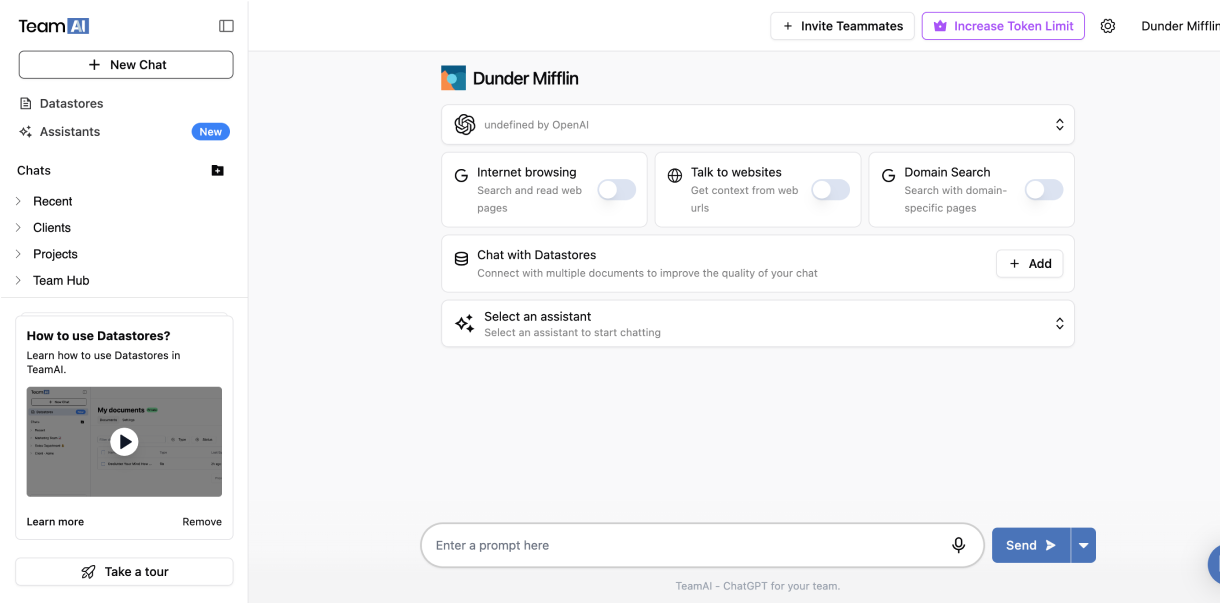
AI visibility and tracking FAQs
Tracking AI visibility isn’t as straightforward as checking your Google rankings. Let’s get into how to measure what’s working and prove value to stakeholders:
🎥Video: What is OmniSEO™? A modern SEO strategy for the age of AI
How do I track AI visibility, and what tools should I use?
AI visibility tracking requires a mix of manual checks and specialized tools since there’s no single dashboard that shows where your brand appears across all AI platforms. Here’s how to approach it:
Manual monitoring:
- Run test prompts in ChatGPT, Gemini, Perplexity, and Google to see if your brand gets mentioned.
- Search for your target keywords and note which sources get cited.
- Track findings in a spreadsheet weekly or monthly to spot trends.
Tools for AI visibility tracking:
| Tool | What It Tracks |
| Google Search Console | AI Overview impressions and clicks (under Search Appearance filter) |
| Semrush | Keywords triggering AI Overviews, and whether your pages appear |
| Ahrefs | Pages appearing in AI Overview SERPs |
| Google Analytics 4 (GA4) | Referral traffic from AI platforms (with custom channel setup) |
| OmniSEO® | Brand mentions, citations, and visibility across AI platforms |
Start with manual checks to understand your baseline, then layer in tools as your AI optimization efforts scale.
Can I track traffic from ChatGPT or Perplexity?
Yes, but it requires setup in Google Analytics 4 (GA4). AI platforms don’t show up in standard traffic reports by default.
How to track AI referral traffic in GA4:
- Go to Admin > Data Display > Channel Groups
- Click Create new channel group
- Add a new channel called “Generative AI”
- Use this regex to track traffic sources:
^(meta\.ai|perplexity\.ai|perplexity|chat\.openai\.com|claude\.ai|chat\.mistral\.ai|gemini\.google\.com|bard\.google\.com|chatgpt\.com|copilot\.microsoft\.com|anthropic\.com|deepmind\.com|deepseek\.com)(\/.*)?$ - Exclude these sources from your Referral channel to avoid double-counting
- Save and set as your primary channel group
View AI traffic in your reports:
- Go to Reports > Acquisition > Traffic acquisition
- Change the primary dimension to Session default channel group
- Look for “Generative AI” as a traffic source
- Add a secondary dimension, like Session source or Landing page, for deeper analysis
Note: It may take 15-30 minutes for GA4 to start showing data after setup.
How do I measure AI optimization success?
Traditional metrics like rankings and traffic don’t fully capture AI visibility. Instead, track a combination of presence, engagement, and impact signals:
| Metric type | Examples specific to AI optimization | Why it matters |
| Presence metrics | Citation frequency in AI Overviews; brand mentions in ChatGPT/Gemini; share of voice vs. competitors. | Shows whether AI systems are starting to notice and surface your brand at all. |
| Engagement metrics | Referral traffic from AI tools; bounce rate; pages per session from AI visitors. | Indicates how AI-sourced visitors interact with your site once they click through. |
| Impact metrics | Leads and revenue from AI referrals; conversion rate vs. organic; pipeline influenced by AI traffic. | Ties AI visibility back to business outcomes leadership cares about. |
Start with presence metrics to establish your baseline, then layer in engagement and impact tracking as your AI visibility grows.
How do I prove AI optimization ROI to leadership?
AI attribution isn’t as clean as paid media or traditional SEO, which makes proving ROI challenging. Use a “then, now, next” framework to build your case:
| Stage | What to document | How to use it with leadership |
| Then | Baseline visibility: current citations, mentions, and AI traffic. | Show the starting point and set realistic expectations. |
| Now | Changes in citations, AI traffic, engagement, and lead quality. | Demonstrate progress and early wins from AI optimization work. |
| Next | Projected impact if you keep investing (or if you stop). | Frame AI optimization as a long-term growth lever, not a one-off experiment. |
Position AI visibility metrics as leading indicators. Just like early SEO efforts focused on rankings before traffic, AI optimization builds presence before revenue attribution catches up.
How do I know if my competitors are ranking in AI search?
Competitive monitoring in AI search requires manual testing and the right tools. Here’s how to track where your competitors show up:
Manual competitive checks:
- Run prompts for your target queries in ChatGPT, Gemini, and Perplexity
- Note which brands get mentioned or cited
- Test “best [product/service] for [use case]” queries to see recommendation patterns
Tool-based tracking:
| Tool | Competitive Feature |
| Semrush | Compare AI Overview presence across domains |
| Ahrefs | See which competitor pages appear in AI Overview SERPs |
| OmniSEO® | Track share of voice and mention frequency vs. competitors |
Key questions to answer:
- Which competitors appear in AI Overviews for your target keywords?
- Who gets cited most often in ChatGPT or Perplexity for your category?
- What content formats are competitors using that earn AI citations?
Track this monthly to spot trends. If competitors are gaining AI visibility while you’re stagnant, that’s an early warning sign to accelerate your optimization efforts.
AI optimization strategy and planning FAQs
You’ve got the tactics down. Now comes the harder part: Figuring out where to focus. The following questions on AI optimization help you prioritize, plan, and pivot your efforts where they’ll have the most impact:
🎥Video: Intro to generative engine optimization for awesome AI search results
How do I create an AI optimization strategy?
Start with your existing SEO foundation, then layer in AI-specific tactics. Use the AI visibility ladder as your framework. Each step builds on the last, moving from basic visibility to becoming a go-to source AI platforms cite and recommend:
Step 1: Foundation (traditional SEO)
- Ensure your site is crawlable, mobile-friendly, and fast
- Use clear, keyword-rich H1s, structured headers, and internal links
- Submit and maintain your sitemap
Step 2: Relevance (align with AI search context)
- Use long-tail keywords that reflect how users ask questions
- Structure content using BLUF format (Bottom Line Up Front)
- Add FAQ sections with schema to match AI Overviews
Step 3: Trust (strengthen E-E-A-T signals)
- Add author bios with credentials and experience
- Link to high-authority third-party sources
- Keep content updated with fresh, accurate information
Step 4: Influence (earn mentions and external signals)
- Encourage reviews on G2, Trustpilot, and Google Business Profile
- Earn PR placements and backlinks from authoritative sources
- Engage in relevant Reddit threads and industry forums
Should I create different content for different AI platforms?
No. You don’t need platform-specific content strategies. The core tactics that improve AI visibility work across most platforms simultaneously:
- Clear content structure with direct answers
- Strong E-E-A-T signals (experience, expertise, authority, trust)
- Schema markup for better content interpretation
- Backlinks and brand mentions that signal authority
Where platforms differ is in what they emphasize:
| Platform | Primary Signals |
| Google AI Overviews | Organic rankings, structured content, schema markup |
| ChatGPT | Brand mentions, Bing rankings, online reputation |
| Perplexity | Source authority, citation-ready formatting, recency |
| Gemini | Google index, E-E-A-T signals, comprehensive coverage |
Focus on creating the best, most authoritative content for your topics. If your content is structured well and backed by strong authority signals, it will perform across platforms without needing separate versions.
Can small businesses compete in AI search?
Yes. AI search rewards relevance and authority, not company size.
Here’s where small businesses can win:
- Niche topical authority: AI platforms favor depth over breadth. A specialist with comprehensive content on one topic often outperforms generalists covering everything superficially.
- Authentic E-E-A-T signals: Real owners with real expertise and real customer relationships demonstrate experience that’s hard to fake at scale.
- Reviews and online reputation: AI platforms like ChatGPT and Google AI Overviews pull heavily from review sites when recommending services. Strong reviews on Google Business Profile, Yelp, and industry-specific platforms directly influence AI recommendations.
- Faster content updates: Small teams can refresh content and respond to AI visibility gaps faster than large organizations with complex approval processes.
You can compete effectively with these best practices:
- Focus on your specific niche rather than trying to cover everything
- Build topical authority with in-depth, data-informed content
- Invest in reviews and actively respond to customer feedback
- Create content demonstrating genuine firsthand experience
If you’re struggling in AI search, the problem usually isn’t your team size — it’s generic, thin content that doesn’t showcase your expertise.
How do I optimize for local AI searches?
Use the AMP method to structure your local AI optimization strategy:
| Step | Focus | Example actions |
| Amplify | Your website and on-site content | Ensure AI crawlers aren’t blocked in your robots.txt file; create in-depth local content; add LocalBusiness/FAQ schema. |
| Mold | Listings and reviews | Optimize Google Business Profile; standardize NAP; request and respond to reviews. |
| Perfect | Monitoring and iteration | Run periodic AI prompts for local queries; track citations; refine content and listings. |
86% of AI citations for local search queries come from brand-influenced sources like your website and business listings. That means you have direct control over most of what AI says about your business locally.
What industries are most affected by AI search?
AI Overviews and AI-generated answers appear more frequently in some industries than others. According to our study of 2.37m keywords, these industries see the highest AI Overview trigger rates:
| Industry | AI Overview Trigger Rate |
| Health | 51.6% |
| Family & Community | 39% |
| Jobs & Education | 33% |
| Finance & Insurance | 32.1% |
Why these industries are most affected:
- High volume of informational queries (“what is,” “how to,” “symptoms of”)
- YMYL (Your Money or Your Life) topics where Google prioritizes authoritative answers
- Complex decision-making processes where users seek guidance
If you’re in a high-trigger industry, AI optimization isn’t optional. Your competitors are likely already appearing in AI answers for queries your customers are asking.
AI optimization challenges and mistakes FAQs
Even the best AI optimization strategies hit roadblocks. These AI optimization FAQs call out the most common mistakes, troubleshooting tips, and how to protect your brand as AI search evolves:
🎥Video: How to win back traffic from AI
What are the biggest AI optimization mistakes?
Most businesses make the same errors when starting with AI optimization:
- Ignoring traditional SEO: AI platforms heavily favor content that already ranks well organically. If you skip SEO fundamentals, AI won’t be able to find and cite your content.
- Creating content without clear answers: AI systems extract direct answers to serve users. Burying your main point under lengthy intros gets you ignored. Structure content with the answer first, details second (BLUF format).
- Neglecting E-E-A-T signals: Missing author bios, credentials, citations, or data sources hurts your credibility. Outdated content that hasn’t been refreshed signals low trustworthiness.
- Blocking AI crawlers: Some businesses unknowingly block AI bots in their robots.txt file. If AI can’t crawl your content, it can’t cite you.
- Chasing platforms instead of quality: Trying to game individual AI systems rather than creating genuinely authoritative content wastes effort. The tactics that work across platforms are the same: clarity, authority, and trust.
Why isn’t my content showing up in AI results?
If your content isn’t appearing in AI-generated answers, check these common issues:
- Crawlability problems: AI crawlers may be blocked in your robots.txt file. Check for bots like ChatGPT-User, GPTBot, PerplexityBot, and Google-Extended. If blocked, AI can’t access your content to cite it.
- Weak organic rankings: Strong SEO foundations are still vital for AI visibility. If you’re not ranking organically, AI likely won’t find you either.
- Content structure issues: Answers buried deep in the page, missing clear headings that match common questions, or no schema markup to help AI parse your content can all hurt visibility.
- Low authority signals: Few or no quality backlinks, limited brand mentions in articles, reviews, and forums, or missing reviews on platforms that AI references (Google Business Profile, G2, Yelp) reduce your chances of being cited.
- Content doesn’t match query intent: Your content may answer a related question, but not the specific one users are asking. AI platforms prioritize content that directly addresses user queries. Run manual checks in ChatGPT, Perplexity, and Google to see what’s being cited, then reverse-engineer what those sources are doing differently.
How do I protect my brand reputation in AI search?
AI platforms pull information from across the web, which means inaccurate or negative content can surface in AI-generated answers. Here’s how to protect your brand:
- Control the controllable: Most AI citations for local queries come from sources you control, like your website and business listings. Keep your website, Google Business Profile, and directory listings accurate and up-to-date.
- Monitor AI responses: Regularly search for your brand in ChatGPT, Perplexity, Gemini, and Google AI Overviews. Document what AI says about your business and track changes. Use AI visibility tools to automate monitoring.
- Build positive signals: Actively collect customer reviews on Google, Yelp, and industry platforms. Respond to all reviews, positive and negative. Earn mentions and backlinks from authoritative sources.
- Address inaccuracies: If AI is surfacing incorrect information, identify the source. Update your owned properties with accurate information. Create content that directly addresses and corrects misconceptions.
- Strengthen E-E-A-T: Publish expert content with clear author attribution. Cite credible sources and include verifiable data. Keep content fresh and accurate.
How do I complete with the brands dominating AI answers?
Compete with brands dominating AI answers using a long-tail strategy. Focus on the deeper conversations that are relevant to your business, similar to targeting long-tail keywords in search engine optimization.
Should I block AI crawlers from my site?
In most cases, no. Blocking AI crawlers means your content can’t be cited in AI-generated answers, which reduces your visibility as AI search grows.
Here’s what blocking means in practice:
- AI platforms like ChatGPT, Perplexity, and others won’t be able to read your content
- You won’t appear in their responses, even if you have the best answer
- Competitors who allow crawling will get cited instead
That said, blocking might make sense in a few scenarios:
- You have proprietary content you don’t want summarized or reproduced
- You’re concerned about AI training on your copyrighted material
- Your business model depends on users visiting your site (though blocking may reduce that traffic over time)
Keep this trade-off in mind:
- Blocking AI crawlers means missing a fast-growing discovery channel
- Users who find you through AI tend to be high-intent
You can check your current settings by:
- Reviewing your robots.txt file for disallow rules targeting AI bots
- Looking for these common AI crawler names: GPTBot, ChatGPT-User, PerplexityBot, Google-Extended, Anthropic-AI
For most businesses, the visibility benefits of allowing AI crawlers outweigh the risks.
How do I know if AI search is hurting my traffic?
Use your analytics software (like Google Analytics 4) and rank tracking software (like Google Search Console) to see if AI search is hurting your traffic. GA4 will often show fewer organic visits while Google Search Console will show declining clicks but increased impressions (which are from appearing in Google’s AI search experiences).
What should I do about traffic lost due to AI search?
Expect it. Due to AI search, businesses will see fewer, but more qualified visitors to their websites. Companies looking to reclaim some of this lost traffic can optimize for Google’s AI Overviews and AI Mode, which sit above the traditional organic results and have greater visibility.
What if my generative engine optimization efforts aren’t driving results?
When generative engine optimization isn’t driving results, consider the strategy, tracking, optimizations, and timeframe. For example, does Google Analytics 4 have a dedicated channel group for Generative AI? Is your strategy focused on the most popular conversations or the ones most relevant and niche to your business? Do your optimizations start with the quickest, most impactful ones? And has it been a few months or a few weeks waiting for results?
AI optimization timeline and results FAQs
Investing in AI optimization raises fair questions about timeline and ROI. These AI optimization questions help set realistic expectations for what AI visibility can deliver and when:
🎥Video: Is your marketing team using AI like this?
How long does AI optimization take to see results?
AI optimization timelines depend on your starting point and the platforms you’re targeting.
- For Google AI Overviews: Results can appear within weeks if you already rank organically. If you need to build organic rankings first, expect 4-6 months.
- For ChatGPT and other LLMs: ChatGPT’s training data updates periodically, not in real-time, so changes to your content may take months to reflect in its responses. However, ChatGPT Search (with web browsing) can surface current content faster.
- For Perplexity: Perplexity searches the live web, so changes can appear quickly. Strong authority signals and recent content tend to get cited faster.
- Factors that speed up results: Already ranking in the top 10 organically, strong existing backlink profile and brand mentions, clear content structure optimized for AI citation, and active reviews on platforms that AI references.
- Factors that slow results: Starting from scratch with SEO, low domain authority, and content that doesn’t directly answer common queries.
AI optimization is an ongoing process, not a one-time fix. The businesses seeing results fastest are those building on strong SEO foundations.
What results can AI optimization drive?
AI optimization can impact multiple business metrics:
- Visibility and brand awareness: Your brand gets mentioned when AI answers relevant questions, increasing share of voice in your industry and exposing you to users who may never click through to a website.
- Traffic: AI Overviews and answer engines include source links, and users who click through tend to be further along in their research. AI traffic is currently small but growing significantly faster than organic.
- Conversions: Users arriving via AI have already received context about your business, making them higher-intent visitors who are closer to a decision.
- Competitive positioning: Early movers gain visibility before competition intensifies, and being cited by AI builds credibility and trust. Competitors who ignore AI search lose visibility to those who optimize.
- What to track: Brand mentions in AI responses (manual checks or AI visibility tools), traffic from AI sources in Google Analytics (ChatGPT, Perplexity referrals), AI Overview impressions in Google Search Console, and share of voice compared to competitors.
Does AI traffic convert better than organic traffic?
Yes. Generative AI traffic converts 23% better than traditional organic search traffic.
There are a few reasons AI traffic converts better:
- Pre-qualified visitors: Users have already received information about your business from AI before clicking.
- Higher intent: AI users often ask specific questions, indicating they’re further in their research.
- Better context: AI provides summaries and comparisons, so visitors arrive more informed.
- Fewer tire-kickers: The extra step of being cited by AI filters out casual browsers.
There’s a trade-off to consider:
- AI traffic volume is still small compared to organic
- Early investment positions you for larger returns as adoption increases
To measure AI traffic performance:
- Set up a custom “Generative AI” channel in GA4 to track referrals from ChatGPT, Perplexity, and other AI platforms
- Compare conversion rates between AI traffic and other channels
- Monitor engagement metrics (time on site, pages per session, bounce rate)
Can AI-generated content rank in AI search results?
It can, but human-created content has advantages.
AI search platforms tend to prioritize:
- Unique insights, original research, and firsthand experience
- Content demonstrating genuine expertise (E-E-A-T signals)
- Accuracy, specificity, and verifiable information
- Fresh perspectives that add value beyond what’s already available
AI-generated content often falls short in key areas:
- Lacks original insights or unique data
- Can miss the nuance and specificity that comes from real expertise
- May contain inaccuracies that hurt credibility
- Tends to rehash existing information rather than adding new value
The practical approach is to blend both:
- Use AI as a tool to assist content creation, not replace human expertise
- Add original research, case studies, and expert commentary
- Include specific examples from real experience
- Verify all facts and cite credible sources
- Have subject matter experts review and enhance AI drafts
Google and other platforms are getting better at identifying low-value AI content. The businesses winning in AI search are those combining AI efficiency with genuine human expertise.
AI optimization costs and resources FAQs
Before you invest, you need to understand the costs involved. These questions about AI optimization walk through typical budgets, the tools and resources involved, and whether to build in-house or partner with experts:
🎥Video: 5 must-have AI marketing tools for rockstar marketers
How much does AI optimization cost?
AI optimization costs vary based on your approach. Here are some of the current market ranges we’re seeing across agencies and tool providers in 2026:
If you’re going the DIY route with tools:
- Basic AI writing and AI SEO tools: Free, or $10 – $50 per month
- Advanced AI and SEO tools: $60 – $250+ per month
- AI visibility tracking software: $50 – $1,000+ per month
- Custom enterprise software: Usually requires custom pricing due to the need for deep integrations and a more complex setup and use
If you’re working with an agency:
- GEO services typically range from $1,500 to $50,000+/month
- Pricing depends on business size, website complexity, and strategy scope
- Enterprise-level campaigns with multiple platforms cost more
Several factors influence cost:
- Strategy scope: The size of your website, your unique goals, and the number of pages you want to create or optimize. The larger and more complex the strategy, the higher the cost.
- In-house management: Hiring a team of GEO experts and investing in third-party tools and platforms will incur extra costs.
- Agency partnership: Your chosen agency and its pricing packages will determine your overall costs.
- Tools and software: The tools and platforms you use, from creating and optimizing content to tracking your results, can add to your investment.
What tools do I need for AI optimization?
You don’t need every tool on the market. Start with essentials and expand based on needs:
Essential (free or low-cost):
- Google Search Console (track AI Overview impressions)
- Google Analytics 4 (monitor AI referral traffic)
- Manual visibility tracking in ChatGPT, Perplexity, or Gemini
For SEO foundations:
For AI visibility tracking:
- AI visibility tools that monitor brand mentions across LLMs
- Options include dedicated platforms or features within existing SEO tools
For content optimization:
For advanced needs:
- OmniSEO® for comprehensive AI visibility tracking across AI platforms
- Competitor benchmarking tools
- Custom GA4 dashboards for AI traffic attribution
Do I need to change my website for AI optimization?
Not necessarily. Most AI optimization builds on existing SEO best practices:
You likely already have (or should):
- Clear site structure and navigation
- Mobile-friendly, fast-loading pages
- Quality content targeting relevant keywords
- Basic schema markup
Changes that help AI optimization:
- Content structure: Lead with direct answers, use clear headings that match common questions.
- Schema markup: Add FAQ, HowTo, Article, and LocalBusiness schema where relevant.
- Author attribution: Add author bios with credentials and experience.
- Crawlability: Ensure AI bots aren’t blocked in robots.txt.
You probably don’t need:
- A complete website redesign
- New technology or platforms
- Separate content for different AI systems
Focus areas by priority:
- High priority: Content structure, schema markup, and E-E-A-T signals
- Medium priority: AI crawler access, internal linking, and content freshness
- Lower priority: Platform-specific optimizations (most tactics work across AI systems)
If your site follows modern SEO best practices, you’re already partway there. AI optimization is about refinement, not reinvention.
Should I hire an agency or do AI optimization in-house?
It depends on your resources, expertise, and goals.
In-house might be the right fit if:
- You have dedicated SEO/marketing staff with bandwidth
- Your team can stay current on rapidly changing AI search trends
- You have a budget for tools and ongoing training
- Your optimization needs are straightforward
An agency might make more sense if:
- You lack in-house AI/SEO expertise
- You need faster results and can’t afford a learning curve
- You want access to proprietary tools and data like OmniSEO®
- You need a comprehensive strategy across multiple platforms
- Your industry is highly competitive in AI search
Before signing with an agency, ask these questions:
- What AI platforms do you track and optimize for?
- How do you measure AI visibility and ROI?
- What proprietary tools or technology do you use?
- Can you show case studies or results from similar businesses?
Outsourcing FAQs
What is a generative engine optimization agency?
A generative engine optimization agency helps organizations appear in AI search experiences, whether as a direct mention or a cited source, through on-site and off-site optimizations.
What deliverables do these agencies include as a part of a generative engine optimization strategy?
Deliverables included with a generative engine optimization strategy include an initial brand visibility audit and competitor analysis, on-site and off-site optimizations, and ongoing reporting. Where agencies vary is in which on-site and off-site optimizations they perform and how they report AI search performance.
When should I hire a generative engine optimization agency?
Consider hiring a generative engine optimization agency when you don’t have the time, skills, or resources to manage, scale, or track your AI search visibility.
Do I need an agency for generative engine optimization or just a tool?
Whether you need an agency or a tool for generative engine optimization depends on your specific goals. An agency manages the development and implementation of your AI search strategy, while a tool like OmniSEO supports in-house management by tracking performance and surfacing opportunities.
What are the benefits to outsourcing generative engine optimization?
Benefits to outsourcing generative engine optimization are similar to outsourcing other digital marketing strategies. You’ll access experts in the field, saving your team time while also improving your AI search visibility at a rate most cost-effective than in-house management.
What does a generative engine optimization agency do?
A generative engine optimization agency is responsible for managing and maintaining an organization’s AI search optimization strategy. This task can include developing strategy, tracking mentions, optimizing on-site pages for LLM crawlers, and practicing digital PR.
What is the difference between an SEO agency and a generative engine optimization agency?
The difference between an SEO agency and a generative engine optimization agency is SEO agencies focus on an organization’s performance in organic search results while generative engine optimization agencies focus on an organization’s performance in AI search experiences, like Google’s AI Overviews or ChatGPT conversations.
How do you outsource generative engine optimization?
Outsource generative engine optimization by understanding the organization’s budget, objectives, and metrics for success. Then, research generative engine optimization to understand the basics (and spot red flags when interviewing agencies). Use this internal and external information to start your search for generative engine optimization companies.
What questions should I ask a generative engine optimization agency?
Ask a generative engine optimization company questions like:
- How long have you optimized for AI search experiences?
- How do you measure brand mentions and citations in AI search?
- Have you worked in my industry before?
- How soon can I expect to see results?
- How many people will be working on my account?
If hiring an AI search optimization company requires buy-in from other departments or leader, compile their questions in advance. You can then ask these during initial calls and vet agencies faster.
What are the most common mistakes when hiring a generative engine optimization agency?
The most common mistakes when hiring a generative engine optimization agency include hiring without reviewing the agency’s deliverables (which should be specific vs. vague) and hiring without researching the agency’s history through reviews, referrals, and case studies.
What red flags should I look for in generative engine optimization agencies?
Red flags to look for in generative engine optimization agencies include missing trust signals (like having only a few reviews), result guarantees (like appearing in ChatGPT conversations within 30 days), and too-good-to-be-true pricing (generative engine optimization is often more expensive than search engine optimization due to the cost of tracking a brand’s mentions and citations across multiple platforms).
How do you choose a generative engine optimization agency?
Choose a generative engine optimization agency by meeting each agency (whether over the phone or in-person) to understand their approach, process, and tracking capabilities. Then, ask for references or case studies to see how the agency’s approach generated measurable results, and if those results align with your metrics for success.
How can I effectively compare AI search optimization agencies?
Compare AI search optimization agencies by considering what matters most to your organization. For example, are you looking for a full-service solution that includes the service and software for optimizing and tracking your visibility? Do you prefer an agency that’s local to your area? Is the agency within your available spend?
You can build these considerations out through a pros and cons list or scored rubric in Google Sheets or Microsoft Excel. For bonus points, do the comparison within an AI tool and see how well the agency’s optimized their AI search presence.
Which agencies are the best at generative engine optimization?
The agencies that are best at generative engine optimization are often those with a background in search engine optimization (which is foundational to AI search visibility) and with the capabilities to attribute AI search performance to business objectives, like qualified leads and online sales.
What is an example of a generative engine optimization agency?
WebFX is an example of a generative engine optimization agency. The company provides AI search optimization services along with the necessary AI search visibility software to help organizations improve their visibility and measure its impact. The company has more than five public-facing case studies on generative engine optimization.
What are some best practices when working with a generative engine optimization agency?
Best practices when working with a generative engine optimization agency include providing valuable information about your brand, like it’s target audience, highest-priority products or services, and business objectives. This information helps the agency build an effective strategy, which serves as the foundation to your generative engine optimization success.
How can I tell if my generative engine optimization agency is doing a good job?
You can tell if a generative engine optimization agency is doing a good job by looking at the metrics. Are you seeing increased brand mentions through your tracking software, for example? Is the business receiving more referral traffic from LLMs? And, are bottom-line metrics growing, whether through direct, organic, or referral marketing channels?
How soon should I expect results from a generative engine optimization agency?
Generative engine optimization agencies can deliver results in under three months for organizations with an established search engine optimization foundation (as SEO is critical to AI search visibility). Companies new to SEO will likely see results in six months.
The future of AI search FAQs
AI search isn’t slowing down. Standing still in AI search means falling behind. These questions on AI optimization help you anticipate what’s coming and prepare your business for the next wave of changes:
🎥Video: Has AI finally outpaced organic search? We dive into the data.
How will AI search evolve in 2026 and beyond?
AI search is still in early stages, and several AI trends are shaping its future:
AI is becoming part of the daily tech stack:
- 1 in 3 people now use AI multiple times per day, alongside tools like email and traditional search
- 65% use AI for research and fact-finding, putting AI in direct competition with Google Search
- ChatGPT and Gemini command 85% of AI tool usage, with loyalties consolidating around a few leaders
Traditional search is integrating more AI:
- Google continues expanding AI Overviews and AI Mode
- Bing is deepening Microsoft Copilot integration
- Expect AI-generated answers to appear in more query types
- New AI browsers like Atlas, Comet, and Dia are combining search, summarization, and task completion with native AI integration
Specialized AI search is on the rise:
- Vertical-specific AI tools for shopping, travel, healthcare, and B2B research
- ChatGPT’s shopping features and in-chat purchasing
- AI agents that can complete tasks, not just answer questions
Conversational and multimodal search is expanding:
- Younger generations already search more conversationally (Gen Z averages 5.83 words per query vs. shorter queries from older generations)
- Voice search, image search, and video search powered by AI
- Multi-turn conversations replacing single queries
Search is fragmenting across platforms:
- Users searching across Google, ChatGPT, Perplexity, TikTok, Reddit, and social platforms
- No single platform will dominate all discovery
- OmniSEO® approach becomes essential for comprehensive visibility
Some things will stay the same:
- Quality content, authority, and trust remain foundational
- E-E-A-T signals are critical regardless of the platform
- Businesses with strong brands and reputations have advantages
Will zero-click search kill my website traffic?
Zero-click searches are increasing, but they won’t kill website traffic entirely.
Here’s the reality:
- 60% of searches now end without users clicking on a website
- AI Overviews are estimated to cause a 140% decrease in organic visibility
- For informational queries, especially, users often get answers without clicking
Context matters, though:
- Transactional and commercial queries still drive clicks
- Users researching complex decisions often visit multiple sources
- AI citations can drive highly qualified traffic
- Brand visibility in AI answers builds brand awareness even without clicks
You can adapt by:
- Focusing on queries where users need more than a quick answer
- Optimizing for AI citation to capture visibility even in zero-click scenarios
- Building brand recognition so users seek you out directly
- Diversifying traffic sources (email, social, paid, referral)
- Tracking metrics beyond traffic: brand mentions, share of voice, assisted conversions
There are still opportunities here:
- Being cited in AI answers positions you as a trusted source
- Users who do click through are more qualified
- Early optimization builds an advantage as AI search grows
Zero-click search changes the game, but it doesn’t end it. The businesses that adapt will find new ways to capture value.
Does AI use my content to train its models?
It depends on the AI system and your settings.
Here’s how AI training works:
- Large language models (LLMs) like GPT are trained on massive datasets that may include web content
- Training happens periodically, not in real-time
- Once trained, the model uses that learning to generate responses
There are a few things you can control:
- Robots.txt: You can block AI crawlers from accessing your site (though this also prevents citation).
- Terms of service: Some AI companies respect opt-out requests.
- Common AI bots: This includes GPTBot, ChatGPT-User, Google-Extended, Anthropic-AI, and PerplexityBot.
The trade-off is worth understanding:
- Blocking AI crawlers prevents your content from being used for training
- But it also prevents your content from being cited in AI responses
- You lose visibility in a fast-growing channel
There are risks to consider:
- 52% of respondents cite intellectual property infringement as a risk of AI
- AI may summarize or paraphrase your content without direct attribution
- Legal frameworks around AI and copyright are still evolving
For most businesses, the visibility benefits of allowing AI access outweigh the training concerns. Focus on creating content that builds your brand when cited, and monitor how AI represents your business to address inaccuracies.
How should I prepare my business for AI-powered search?
Start now, but don’t abandon what’s working.
Start with your foundation:
- Strengthen your SEO fundamentals (technical health, content quality, backlinks)
- You can’t skip SEO and expect AI visibility
Build your content for AI citation:
- Structure content with clear, direct answers
- Add schema markup (FAQ, HowTo, Article, LocalBusiness)
- Strengthen E-E-A-T signals (author bios, credentials, citations)
- Create content that demonstrates genuine expertise and experience
Invest in your reputation:
- Collect reviews on Google Business Profile, industry platforms, and review sites
- Earn backlinks and brand mentions from authoritative sources
- Engage in relevant communities (Reddit, industry forums, social platforms)
Monitor your visibility and adapt:
- Track your AI visibility across platforms
- Set up GA4 to measure AI referral traffic
- Run regular manual checks in ChatGPT, Perplexity, and Google AI Overviews
- Watch what competitors are doing and how AI cites them
Think omnichannel:
- AI search is one part of a fragmented discovery landscape
- Adopt an OmniSEO® approach that covers traditional search, AI platforms, and social discovery
- Don’t put all your eggs in one search basket
To win in AI search, you can’t sit back and “see what happens.” You have to treat AI optimization as part of your core SEO program while the field is still relatively open.
Future-Proof Your SEO Strategy with OmniSEO®
Goodbye search engine optimization, hello search everywhere optimization.
Got more AI optimization questions? We’ve got answers.
With the right AI optimization in place, you can elevate your search strategy and start showing up in tools like ChatGPT, Perplexity, and Google AI Overviews.
At WebFX, we help businesses like yours earn their spot in AI-driven results. With 30+ years of digital expertise backed by 750+ marketing experts, we know what AI picks up and what gets passed over.
Don’t let AI search leave you behind. Contact us online or call 888-601-5359 to speak with a strategist about our next-gen AI optimization services today.
-
 Albert Dandy Velasquez blends SEO strategy with compelling storytelling to help businesses boost their visibility and revenue online. With a B.A. in English and certifications from HubSpot, Semrush, and Google Analytics, he has written and optimized hundreds of articles on organic SEO, content strategy, and user experience. He regularly contributes to the WebFX blog and SEO.com, creating content that helps readers turn marketing goals into measurable results. When he’s off the clock, he’s usually exploring new neighborhoods on two wheels, filming travel content, or chasing golden hour with a coffee in hand.
 -

WebFX is a full-service marketing agency with 1,100+ client reviews and a 4.9-star rating on Clutch! Find out how our expert team and revenue-accelerating tech can drive results for you! Learn more
Try our free Marketing Calculator
Craft a tailored online marketing strategy! Utilize our free Internet marketing calculator for a custom plan based on your location, reach, timeframe, and budget.
Plan Your Marketing Budget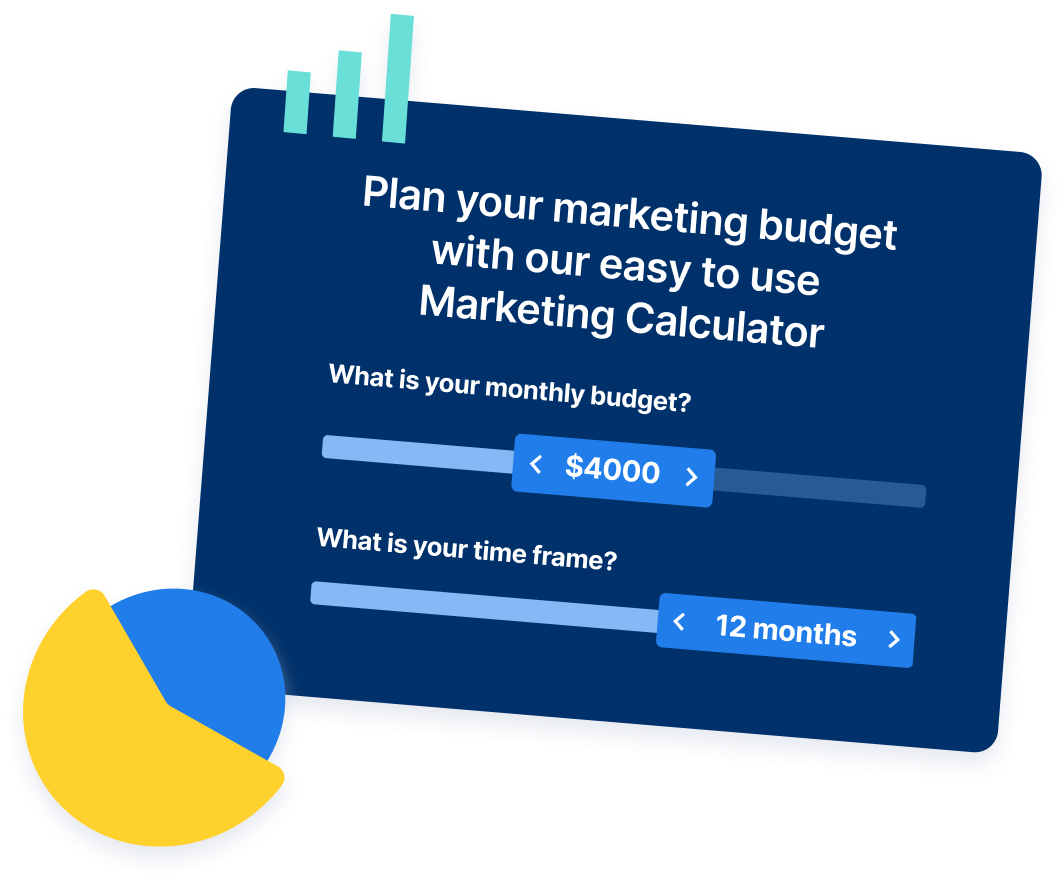
Table of Contents
- AI optimization basics FAQs
- AI search engines and platforms FAQs
- AI ranking factors and citation FAQs
- How to optimize content for AI search FAQs
- AI visibility and tracking FAQs
- AI optimization strategy and planning FAQs
- AI optimization challenges and mistakes FAQs
- AI optimization timeline and results FAQs
- AI optimization costs and resources FAQs
- Outsourcing FAQs
- The future of AI search FAQs
- Got more AI optimization questions? We’ve got answers.
Share this article


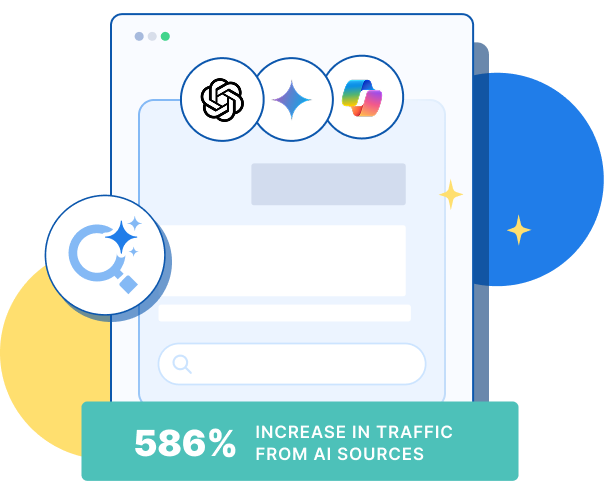
See AI Marketing in Action
Explore how WebFX helped a regional brand get discovered in AI search experiences — proving what’s possible with today’s AI-driven marketing!
Try our free Marketing Calculator
Craft a tailored online marketing strategy! Utilize our free Internet marketing calculator for a custom plan based on your location, reach, timeframe, and budget.
Plan Your Marketing Budget