


Table of Contents
- What is content marketing?
- How does content marketing work?
- 1. Start with research and a content plan
- 2. Create helpful, high-quality content
- 3. Share your content
- 4. Engage and nurture your audience
- 5. Convert ready-to-buy leads
- 6. Analyze results and refine your strategy
- Why is content marketing important?
- What is an example of content marketing?
- Types of content marketing
- How to get started with content marketing in 10 steps
-
What is content marketing?
Content marketing is the process of creating and sharing valuable content, such as blogs, videos, and guides, to attract, educate, and convert your audience. Instead of pushing a hard sell, you use helpful information to build relationships that lead to long-term customers and increased revenue. -
Why is content marketing important?
It helps you build long-term visibility, brand awareness, and trust with your audience. Over time, that trust turns into higher-quality leads and more confident buyers. -
How does content marketing work?
Content marketing works by following a cycle of researching your audience, planning topics, creating content, and sharing it where people spend time online. As you track performance, you refine your strategy so each new piece of content works even harder for your business. -
How do you get started with content marketing?
You can get started with content marketing by defining your audience, planning relevant topics, and creating high-quality content that answers their questions. From there, you promote your content and measure the results, allowing you to continually improve your strategy.

How Content Marketing Works
Content marketing works by researching your audience and content topics, creating helpful and high-quality content, publishing and sharing your content, and guiding users to take action such as making a purchase or contacting your business.
In this content marketing guide, we’ll discuss the content marketing definition, how content marketing works, and share some tips for creating great content.
- What is content marketing?
- How does content marketing work?
- 1. Start with research and a content plan
- 2. Create helpful, high-quality content
- 3. Share your content
- 4. Engage and nurture your audience
- 5. Convert ready-to-buy leads
- 6. Analyze results and refine your strategy
- Why is content marketing important?
- What is an example of content marketing?
- Types of content marketing
- How to get started with content marketing in 10 steps
Need help creating valuable content that ranks in search results and engages your audience? Consider outsourcing your content marketing to an agency like WebFX!
Contact us online or call us today at 888-601-5359 to learn more about our content marketing plans.
What is content marketing?
Content marketing is the creation and distribution of online material like blog posts, videos, and guides to attract, engage, and educate readers about a topic, product, or business. Distribution methods for content marketing include social media, paid advertising, and search engine optimization (SEO).
How does content marketing work?
Content marketing isn’t a one-time task. It’s a continuous process that helps you attract, nurture, and convert your audience over time. At a high level, here’s how content marketing works from first idea to measurable results.
- Start with research and a content plan
- Create helpful, high-quality content
- Share your content
- Engage an nurture your audience
- Convert ready-to-buy leads
- Analyze results and refine your strategy
1. Start with research and a content plan
Every strong content strategy starts with research. You’ll look at who your audience is, what they care about, and which questions they ask online so you can plan content that actually answers their needs.
That process includes doing keyword research and market analysis to see which topics and phrases people search for most. With that information, you can build a content plan that outlines what you’ll create, why you’re creating it, and how it supports your business goals.
2. Create helpful, high-quality content
Once you have a plan, you can start creating content that speaks directly to your audience. That might include blog posts, videos, ebooks, or guides that educate, solve a problem, or help someone make a decision.
High-quality content is accurate, easy to understand, and aligned with your brand’s voice so it feels consistent wherever people interact with you. When your content is genuinely helpful, people are more likely to stay on your site, explore additional pages, and remember your brand.
3. Share your content
Great content needs distribution to do its job. After you publish a piece, you’ll share it across the channels where your audience already spends time — your website, email newsletter, and social media platforms.
This step helps you get more eyes on your content so it can start driving traffic, engagement, and leads. You can also repurpose content across formats, like turning a blog post into a short video or email series, to extend its reach even further.
4. Engage and nurture your audience
As people interact with your content, they start to build a relationship with your brand. Someone might discover you through an educational blog post, follow you on social media, and then sign up for your email list after downloading a guide.
Each touch point gives you a chance to answer more questions, remove barriers, and move them further down the sales funnel. When you consistently show up with relevant information, you make it easier for people to trust you and feel confident choosing your business.
5. Convert ready-to-buy leads
When your audience gets closer to making a decision, they’ll look for content that helps them compare options and feel secure in their choice.
Content like pricing pages, service pages, detailed product descriptions, and case studies gives them the information they need to take that final step. These pieces highlight what makes your business unique, showcase your expertise, and outline the next steps so leads know exactly how to contact you, request a quote, or make a purchase.
6. Analyze results and refine your strategy
The last step in the process is reviewing how your content performs so you can keep improving your strategy. You’ll look at metrics like traffic, engagement, time on page, and conversions to see which pieces drive the strongest results.
From there, you can update underperforming content, create more pieces like your top performers, and refine your topics or formats based on what your audience responds to most. Platforms like RevenueCloudFX make this stage easier by pulling your data into one place so you can see which content generates the most leads and revenue.
Why is content marketing important?
You know the content marketing definition, but what about its benefits? Check out these benefits that explain why content marketing works well for so many businesses.
- Reach your audience where they are: When you create content across different formats, such as blogs and videos, you improve your business’s reach to your target audience, show up for the queries they care about, and give them the information they need to move through the buying funnel. This is why content marketing is so effective at bringing in new business, generating three times more leads than outbound marketing. In fact, 72% of businesses report that content marketing increases their leads.
- Build brand awareness: When you share valuable information with your audience, they spend time getting familiar with your brand. They’ll get to know your company and your brand, which helps nurture these visitors into leads and eventually clients.
- Increase close rates: With content marketing, you can create a content library for your website visitors, plus for your sales team, which they can share with qualified leads to help close the deal. This direct impact on the bottom line is why 67% of marketers feel confident that they can calculate the revenue that comes directly from their content marketing efforts.
- Position your brand as a thought leader: Consistently publishing high-quality, educational content helps you show up as a trusted voice in your space. This kind of thought leadership supports your E-E-A-T signals and makes it easier for people to view your brand as the go-to resource in your industry.
- Drive sustainable, long-term visibility: While ad campaigns stop driving traffic when you pause spend, strong content continues to earn clicks and views long after it goes live. That sustainability makes content marketing a smart way to build visibility and results over time.
- Build customer trust: Helpful, honest content shows your audience that you care about their questions — not just the sale. Over time, that transparency and reliability builds trust, which is essential for turning visitors into long-term customers.
You can choose to implement your content marketing strategy in-house or hire a content marketing agency to take care of strategizing and creating optimized content for you!
Jumpstart your content and discover post ideas with our free content toolkit.
Explore: Is Content Marketing Worth It?
What is an example of content marketing?
Let’s look at content marketing in the wild. When you search “kinds of christmas trees” in a search engine, you’ll be met with some results like this:
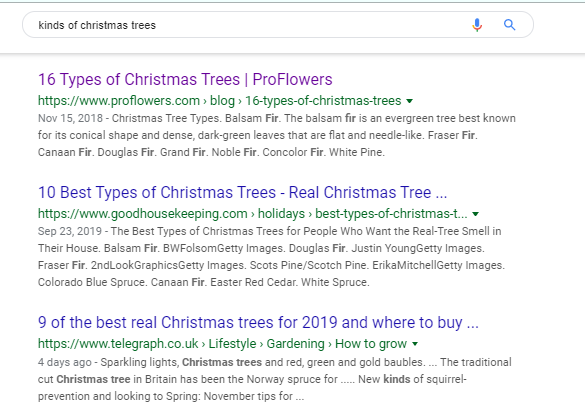
The top three results are blog posts from different companies detailing various types of Christmas trees. These pieces of content have a few different goals:
- Educate readers about types of Christmas trees
- Help readers choose the best type of tree for their needs
- Provide readers an option for purchasing the type of tree they want
What’s important to note with this content marketing example is that the content has goals — these sites didn’t write the blog post just to write it.
They wrote it because they researched their audience’s needs and knew how to address them. In this case, the companies used a blog post to achieve their goals, but as you’ll see next, this is just one of many forms content marketing can take.
Types of content marketing
When most people think of content, they only thing of blogging. While blogging is an effective way to produce and share content, many other mediums fall under content marketing, too, like:
- Blogs: Blogs help you attract organic traffic, answer common questions your audience searches for, and address pain points within a branded digital environment.
- Videos: Video content keeps users engaged and can reach broader audiences on platforms like YouTube, social media, and your website.
- Ebooks: Ebooks provide in-depth information that your audience can download, making them great for lead generation and nurturing.
- Infographics: Infographics simplify complex ideas into visual formats that are easy to understand and share.
- SEO content: SEO-driven pieces, such as product or service pages and case studies, help you target high-intent queries, improve search visibility, and bring in qualified traffic.
- Webinars: Webinars allow you to teach, demonstrate, or walk through solutions while interacting with your audience in real time.
- Online guides: Guides offer comprehensive explanations of topics your audience cares about and support long-term visibility.
- Long-form content: In-depth long-form pieces build authority and help you compete for competitive keywords.
How to get started with content marketing in 10 steps
🎥Video: How to create a content marketing plan
Your content marketing strategy is a powerful way to get leads to find your business and choose you when they’re ready to convert. If you want to drive the right leads, you need a quality content marketing strategy that helps the right people find your business.
Learn how to do content marketing with these steps:
- Establish your target audience
- Understand the buyer’s journey
- Brainstorm industry-relevant topics
- Create high-quality, evergreen content
- Make your content engaging
- Optimize for search engines
- Make your site user-friendly
- Publish content regularly
- Promote your content
- Analyze your results
If you want more help getting started with content marketing, working with the best content marketing companies is a great option.
1. Establish your target audience
Before you start creating content, you need to know who you’re marketing to so you can give your content a sense of direction. That means determining our target audience.
Think about your audience’s attributes — what are their defining characteristics? Look at audience information like:
- Demographics
- Socioeconomic status
- Buying habits
- Interests
When you know your audience better, you can create more personalized content for them by addressing topics that appeal to them and providing them with valuable information.
2. Consider the buyer’s journey
You’ll also want to consider the buyer’s journey, or how people go from discovering a product or service to becoming a paying customer.
Here are the three main stages in the buyer’s journey:
- Awareness: A person discovers a problem or need, and starts researching possible solutions.
- Consideration: The person reviews options and narrows them down to one that will best fit their needs.
- Decision: The person chooses the best solution.
When you understand the buyer’s journey, you can develop a more effective content marketing strategy that targets each stage. This way, you can provide content for people at every stage of the journey and increase your chances of attracting leads and deliver content at critical points when your audience needs it most.
3. Brainstorm industry-relevant topics
Once you’ve identified your target audience and better understood who they are and what they want, you’ll want to start brainstorming different subjects they’d be interested in.
Get ideas by researching what topics people in your industry cover. Many businesses try to make content on trending topics because they want to drive traffic to their site. If the issue isn’t related to your industry, it won’t drive the valuable traffic that turns into customers for your business.
Come up with a list of key terms related to your business. By brainstorming ideas, you’ll come up with more valuable content ideas you can use to attract new leads.
Keyword research will help you find relevant topics for your content. You can use keyword research tools, like KeywordsFX or Keyword Tool, to find relevant keywords for your page. When you use these keyword research tools, you find a list of relevant keywords, their search volume, their cost per click (CPC) value, and more.
4. Create high-quality, evergreen content
If you want to know how to do content marketing right, start by focusing on your content’s quality. Now, that’s not to say you shouldn’t post content often, which you should (we’ll dive into that soon), but if you’re going to publish content, it needs to be high quality.
Posting 10 low-quality 500-word articles isn’t going to be as effective as three high-quality, informative 1500-word articles.
Users want information that gives them everything they need. Your audience will feel discouraged by your content because it doesn’t provide answers or give enough information to satisfy their needs.
When you define your content marketing strategy, make sure you’re also creating evergreen content. Evergreen content is content that’s timeless and typically focuses on answering common questions in your industry. It is often valuable to your business because of its sustainability over time.
In other words, if someone sees it six months after publication, it’s still relevant. This type of content still may need updating occasionally, but it will maintain its relevance as you update it.
Overall, evergreen content will help you have a more sustainable content marketing strategy. By creating high-quality, evergreen content, you’ll drive better results with your content marketing strategy.
5. Make your content engaging
To make your content more valuable, make it engaging for users. When users view your content but quickly leave the page or avoid clicking through on your page, Google takes it as a sign that your content is not helpful. This leads to lower rankings and authority on industry topics.
To prove Google otherwise, you need to make your content more engaging to gain longer dwell times, shorter bounce rates, and higher CTRs.
One unique strategy to do this is to implement marketing gamification on your social media and other formats. Or, add links to other related content, enable comments and shares, and ensure your content is mobile-friendly.
When your content is engaging, users are more likely to stay on your page, interact with your brand, and explore additional resources, which supports better performance across your content marketing strategy.
6. Optimize for search engines
When people want content, they’ll often turn to search engines to help them find it. When they look at the search results, users determine which listings are most relevant by looking at the title tag.
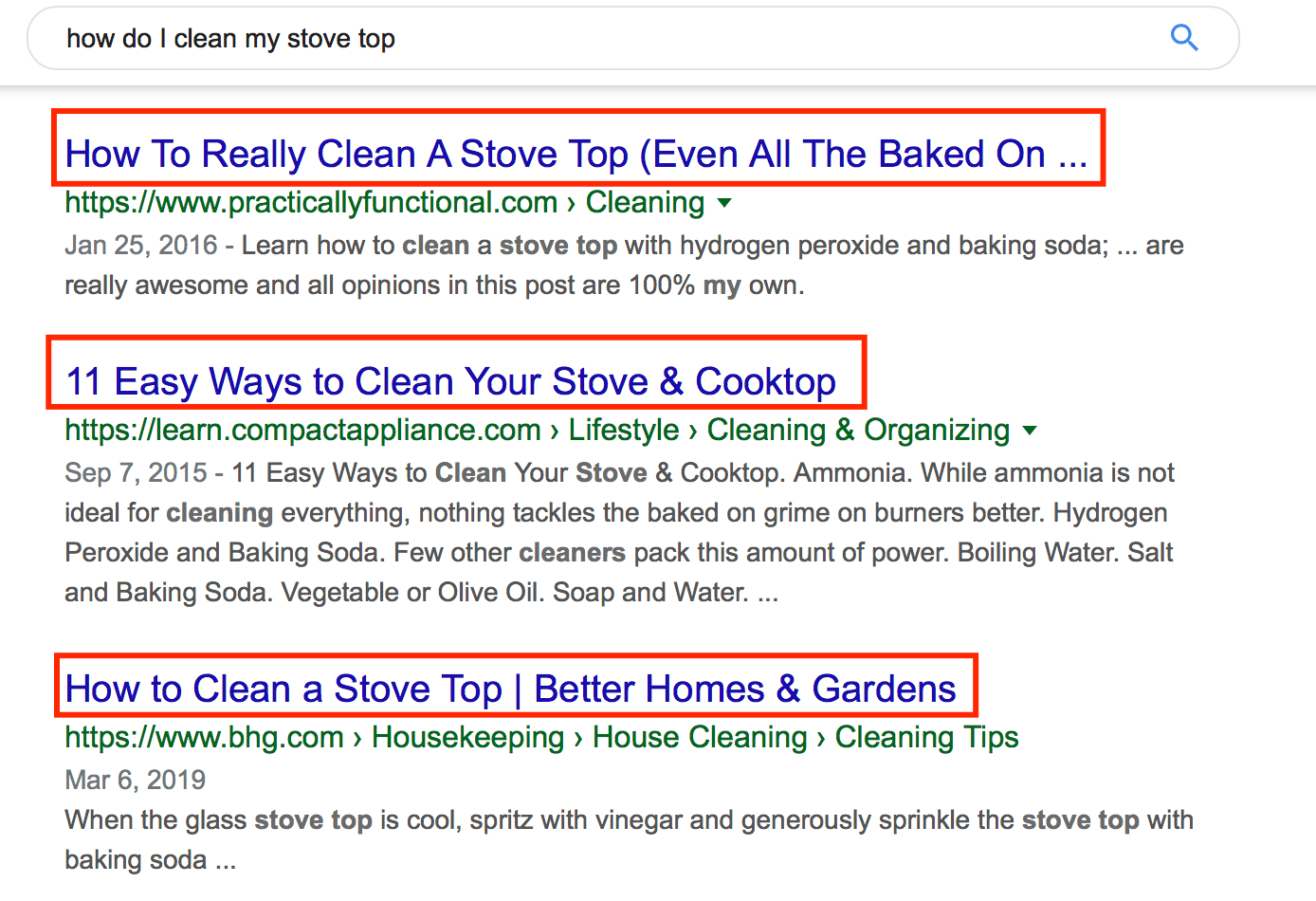 The title tag is the first thing your audience sees when they look in the search results.
They will use your title tag to determine page relevancy. You must make a descriptive and informative title tag, so your audience knows what to expect when they click on your article.
A good title tag will get users to click on your page and check out your information. It’s an excellent practice for helping you earn more leads for your business.
From there, you’ll also want to optimize other search elements like your meta description and on-page keywords. An engaging meta description can encourage more clicks, while naturally integrating relevant keywords into your content helps search engines understand what your page is about, helping your page rank for the right topics.
7. Make your site user-friendly
If you’re posting content on your website, make sure your site is user-friendly. You can have great content, but if your audience can’t access and interact with it easily, they’ll leave your site and visit a competitor’s website instead.
You can optimize your page by:
- Improving your page speed
- Making your site mobile-friendly
- Using high-quality video content
- Integrating relevant keywords into your content
- Breaking up text into smaller paragraphs
- Using colors wisely
- Writing for humans, not search engines
A positive user experience makes it easier for visitors to read, watch, and act on your content, which can lead to better engagement and more conversions.
8. Publish content regularly
It’s not enough to create a blog post once every three months and expect success. Content marketing requires regular publishing so you can continually drive traffic to your site and keep up with competitors.
Not to mention, posting content frequently helps people discover your business from different channels.
Help your business publish content frequently by creating a content calendar. A calendar will help you stay organized and know when you’re posting content. This tool also lets you fill any content gaps — or areas where you don’t have content.
9. Promote your content
Content promotion helps you reach more people interested in your business.
Social media is a great place to promote content.
You can share blog posts, videos, and infographics with your audience. They can quickly check out your content and share it on their own social media pages if they like it. For example, Patagonia shares a link to their YouTube channel to show off their newest content.

You can also promote content through email marketing, paid ads, or partnerships to give your best pieces even more visibility.
10. Analyze your results
Once your content has been live for a while, take time to review how it performs. Look at metrics like traffic, time on page, conversions, and engagement to see which topics and formats resonate most with your audience.
Analyzing your results helps you understand what’s working and where you have opportunities to improve. You can use tools like Google Analytics and RevenueCloudFX to track performance, identify top-performing pieces, and guide your future content ideas.
Over time, this data-driven approach will help you build a stronger, more effective content marketing strategy.
We foster and form long-term partnerships so that your business has long-term results.
Over 90%
Frequently Asked Questions: How Content Marketing Works
What is content marketing?
Content marketing is a strategic approach focused on creating and distributing valuable, relevant, and consistent content to attract and engage a target audience. The goal is to drive profitable customer action by building trust and authority through useful information rather than direct sales messages.
How does content marketing work?
Content marketing works by developing and sharing high-quality content—such as blog posts, videos, infographics, and case studies—that addresses the needs and interests of your audience. This content attracts visitors, builds credibility, and nurtures leads through the buyer’s journey until they convert into customers.
Why is content marketing important?
Content marketing is important because it helps businesses build trust, establish authority, improve search engine rankings, and generate qualified leads. Consistent, valuable content can increase brand visibility and customer loyalty over time.
What types of content are used in content marketing?
Common types of content used in content marketing include:
- Blog posts
- Videos
- Podcasts
- Infographics
- eBooks
- White papers
- Case studies
- Social media posts
- Webinars
- Newsletters
The best types depend on your target audience and business goals.
How can content marketing help with SEO?
Content marketing supports SEO by providing search engines with relevant, keyword-optimized content that meets user intent. High-quality content earns backlinks, increases dwell time, and signals authority—all of which help improve search rankings.
How do you measure the success of content marketing?
The success of content marketing can be measured using metrics such as website traffic, engagement rates, lead generation, conversion rates, SEO rankings, and return on investment (ROI). Tools like Google Analytics and RevenueCloudFX help you monitor performance and understand which pieces deliver the best results.
How long does it take to see results from content marketing?
Content marketing is a long-term strategy. Typically, businesses start to see measurable results within 3 to 6 months, depending on content frequency, quality, competition, and SEO optimization. Over time, results compound as content gains authority and visibility.
What are the key steps in creating a content marketing strategy?
The key steps in creating a content marketing strategy include:
- Defining your goals
- Identifying your target audience
- Performing keyword research
- Planning your content calendar
- Producing high-quality content
- Promoting your content across multiple channels
- Analyzing results to refine the strategy
Who should use content marketing?
Any business, regardless of size or industry, can benefit from content marketing. It is particularly effective for companies that want to build long-term customer relationships, establish authority in their niche, and attract inbound leads organically.
What are some common content marketing mistakes to avoid?
Common mistakes in content marketing include:
- Failing to define clear goals: Your content should always support your strategy and business goals.
- Neglecting audience research: If your topics don’t align with your target audience’s interests, your engagement drops.
- Producing low-quality or inconsistent content: Low-quality posts and inconsistent scheduling makes it harder to build long-term visibility.
- Ignoring SEO best practices: Without optimization, your content may not reach the people searching for it.
- Not measuring results: Tracking results helps you identify areas for improvement in your content strategy.
A well-planned strategy avoids these pitfalls and ensures sustainable growth.
Want to learn more about how content marketing works?
Content marketing is a valuable tool at your business’s disposal. It’s a great way to help you attract more valuable leads to your page and get them familiar with your brand. If you aren’t sure how to get started with a content marketing strategy, WebFX can help.
With over 750 content marketing-savvy experts on hand, we’ll help you develop a content marketing campaign that works for your business.
Ready to learn more? Contact us online or give us a call at 888-601-5359 to speak with a strategist about our content marketing services!
-
 Macy Storm is a Content Marketing Consultant at WebFX. She has 5+ years of experience creating content for all digital strategies and across 10+ industries. With a B.A. in Communications, she’s used her writing skills to write over 1,000+ pages for WebFX and SEO.com. Her work has been featured by Search Engine Journal, HubSpot, Entrepreneur, Clutch, and more. When she’s not clacking her keys, she’s playing video games, reading, or counting how many times people say her puppy Daisy is cute (it’s a lot of times).
 -

WebFX is a full-service marketing agency with 1,100+ client reviews and a 4.9-star rating on Clutch! Find out how our expert team and revenue-accelerating tech can drive results for you! Learn more
Try our free Marketing Calculator
Craft a tailored online marketing strategy! Utilize our free Internet marketing calculator for a custom plan based on your location, reach, timeframe, and budget.
Plan Your Marketing Budget
Table of Contents
- What is content marketing?
- How does content marketing work?
- 1. Start with research and a content plan
- 2. Create helpful, high-quality content
- 3. Share your content
- 4. Engage and nurture your audience
- 5. Convert ready-to-buy leads
- 6. Analyze results and refine your strategy
- Why is content marketing important?
- What is an example of content marketing?
- Types of content marketing
- How to get started with content marketing in 10 steps
Share this article


Proven Marketing Strategies
Try our free Marketing Calculator
Craft a tailored online marketing strategy! Utilize our free Internet marketing calculator for a custom plan based on your location, reach, timeframe, and budget.
Plan Your Marketing Budget