



Table of Contents
- Getting started with digital marketing
- Strategy and planning
- Branding and messaging
- Audience and targeting
- SEO and content
- AI and digital marketing
- Paid advertising and conversion
- Email, SMS, and social media marketing
- Video marketing
- Reviews and reputation
- Social proof
- Customer retention
- Marketing funnels and B2B
- Website and ecommerce
- Hiring and recruitment marketing
- Event marketing
- Digital marketing agency vs. in-house
- Get expert help with your digital marketing
Digital marketing helps you reach the right customers online, measure what’s working in real time, and compete for the same audience as much larger companies without a corporate-sized budget.
This guide compiles 70+ digital marketing FAQs covering strategy, branding, audience targeting, SEO, AI search, paid advertising, email, social media, and more. Every answer gets straight to the point, so you can quickly find what you need, apply it, and see how it affects your bottom line.
Head straight to the topics that matter most to you using the links below.
- Getting started with digital marketing
- Strategy & Planning
- Branding & Messaging
- Audience & Targeting
- SEO & Content
- AI and digital marketing
- Paid Advertising & Conversation
- Email, SMS & Social Media
- Video Marketing
- Reviews & Reputation
- Social Proof & Testimonials
- Customer Retention
- Marketing Funnels & B2B vs. B2C
- Website & Ecommerce
- Hiring & Recruitment Marketing
- Event Marketing
- Digital marketing agency vs. in-house
Getting started with digital marketing
Why is digital marketing important for businesses of any size?
Over 6 billion people use the Internet, and your customers are among them, searching for products, comparing options, and making purchases every day. Digital marketing matters because it lets you:
- Target the right audience precisely
- Measure every campaign in real time
- Compete for the same audience as larger companies without a corporate-sized budget
SEO and PPC both rank based on relevance rather than spend, which means a well-optimized page from a small business can outrank a major brand for the same keyword.
What are the biggest advantages of digital marketing over traditional marketing?
Digital marketing’s strongest advantages are:
- Affordability: campaigns cost significantly less than TV, print, or radio
- Precise targeting: define your audience by age, gender, occupation, interests, and behavior
- Measurability: every channel comes with real-time tracking tools
- Adaptability: change campaigns immediately when something isn’t working
The passive customer acquisition that comes from content and SEO is also a meaningful differentiator: once content is ranking, it brings in leads continuously without additional spend.
Should your business use traditional marketing, digital marketing, or both?
Both, if budget allows. The combination produces results neither achieves alone. Traditional marketing builds broad awareness and drives active customer acquisition at scale; digital marketing captures passive acquisition through content and SEO while retargeting the audience traditional channels warmed up. Think of it like a stock portfolio: diversifying across multiple marketing channels means a single underperforming strategy doesn’t stall your growth, and when one channel performs well, it amplifies everything running alongside it.
What’s the difference between digital marketing and Internet marketing?
Digital marketing is the broader term: it covers any marketing that uses a digital platform, including:
- TV ads
- Digital billboards
- Radio spots
- SMS
Internet marketing is a subset that specifically requires the Internet to reach an audience, covering strategies like SEO, PPC, email, and social media. In practice, most of the strategies businesses use day-to-day fall under both categories.
What’s the difference between traditional media and new media?
Traditional media covers non-digital channels: television, radio, print, direct mail, and billboards. New media, also called digital media, covers online channels: SEO, PPC, content marketing, social media, and email. The practical differences come down to five things:
- How each is distributed and accessed
- Cost
- How audiences interact with your brand
- How easily results can be tracked
- How precisely you can target your intended audience
New media wins on all five for most businesses, though traditional channels still deliver value for local awareness and audiences that are difficult to reach online.
Does having a website mean you don’t need a digital marketing strategy?
A website is a starting point, not a strategy. Without SEO, content marketing, or paid advertising driving people to it, most visitors simply won’t find it. Over 70% of people research a company online before visiting or buying, which means your site needs to be discoverable, not just functional. Think of your website as the destination and digital marketing as everything that gets people there.
What digital marketing mistakes do businesses make most often?
Eight mistakes come up consistently:
- Setting vague goals without tracking them
- Targeting too broad an audience
- Neglecting website design and user experience
- Skipping SEO
- Failing to remarket to leads who already showed interest
- Abandoning blogging too early
- Ignoring social media
- Spreading resources too thin across too many strategies at once
Most share a common root: launching campaigns without a clear plan for measuring success or sustaining execution over time.
Strategy and planning
What is a digital marketing plan and what should it include?
A digital marketing plan is a structured outline of how your business will promote itself online. At minimum, a solid plan includes:
- Your brand definition and unique selling points
- Target audience identified through buyer personas
- SMART goals
- The channels you’ll use: SEO, PPC, email, social media, content
- A budget
- A timeline
- A measurement strategy
Without one, digital marketing becomes a collection of disconnected tactics that are hard to prioritize, coordinate, or evaluate.
How much does digital marketing cost?
Digital marketing costs depend on your goals, the channels you use, and whether you run it in-house, hire freelancers, or work with an agency. The average cost of an in-house digital marketing team starts at $200,000 per year.
Costs also work differently by channel: SEO and PPC management are usually monthly retainers, paid ad spend is a separate line item on top of management, and web design is often a one-time project cost.
A more useful question than “what does it cost” is “what return does it generate,” since a higher spend that produces profitable leads beats a cheap program that produces none. To estimate a plan for your goals and budget, try our free marketing calculator.
How do you set goals for a digital marketing plan?
Set both large goals and the smaller milestones that lead to them, and make every goal SMART:
- Specific: aims to achieve a precise action
- Measurable: trackable with clear KPIs
- Achievable: realistic given your budget and resources
- Relevant: aligned with your business direction
- Timely: has a clear deadline
“Earn more subscribers” is not a goal; “gain 50 new email subscribers each quarter” is one you can actually track and act on.
What’s the difference between marketing goals and marketing objectives?
Goals are broad statements of what you want to achieve: increase revenue, improve brand awareness, grow conversion rate. Objectives address the how and why in specific detail, defining the actions and benchmarks that will get you to the goal. Think of goals as the destination and objectives as the turn-by-turn directions: a goal might be to increase lead volume, while the objective is to generate 50 qualified leads per month through SEO content by Q3.
What are the most important marketing goals a business should set?
Ten goals cover the full scope of what marketing can achieve:
- Building brand awareness
- Ranking higher in search results
- Increasing website traffic
- Establishing industry authority
- Boosting engagement
- Generating qualified leads
- Converting users
- Increasing revenue
- Improving customer lifetime value
- Making smarter decisions with data
Most teams shouldn’t try to tackle all ten at once. Newer brands typically prioritize awareness and traffic first, while more established businesses focus on leads, conversions, and retention.
What’s the difference between vanity metrics and valuable metrics?
Vanity metrics look impressive on the surface but don’t tell you whether your marketing is actually driving business results: high page views or social media followers feel meaningful but don’t directly connect to leads or revenue. Valuable metrics provide a deeper read on campaign performance and inform real decisions, such as:
- Conversion rate
- Cost per lead
- Revenue attributed to a specific channel
The key is context: vanity metrics aren’t useless, but they only become meaningful when compared against the valuable metrics that show whether surface-level numbers are translating into outcomes that matter.
What is a good ROI for digital marketing, and how do I measure it?
A good digital marketing ROI depends on your channel and industry, but the baseline is earning back more in revenue than you spend, with strong channels returning several dollars for every dollar invested. You can calculate it with a simple formula:
ROI = (revenue from marketing − cost of marketing) ÷ cost of marketing × 100
The ratio alone doesn’t tell the whole story, though. Track your cost per lead alongside your customer lifetime value, because a lead that looks expensive can still be an excellent deal when each customer is worth a lot over time.
This is where the difference between vanity metrics and valuable metrics matters most: revenue attributed to a channel tells you whether your marketing is actually working, while raw traffic numbers don’t.
How do you create and use a marketing calendar?
Start by choosing a platform (Google Sheets works well for most teams since it’s easy to share), then work through these steps before putting anything on the calendar:
- Define your goals
- Identify your marketing strategies
- Establish your target audience
- Chart your selling cycle to account for seasonal peaks
- Add important dates like holidays, product launches, and company milestones
- Map out how long each project will actually take, including revision time
Planning timelines in reverse from your deadlines prevents the common mistake of underestimating how much lead time content and campaigns require.
How do you run a competitor analysis and SWOT analysis for your marketing plan?
A competitor analysis examines:
- Who you’re up against
- What strategies they use
- How they position themselves
- Where there are gaps you could fill
A SWOT analysis turns that outward view inward, identifying your:
- Strengths: areas where your business excels
- Weaknesses: areas where competitors have an edge
- Opportunities: things you can do that competitors aren’t
- Threats: things that could hurt your business
Running both before committing to a strategy means your plan is built around reality rather than assumptions.
What’s the difference between short-term and long-term digital marketing strategies?
Short-term strategies that start delivering results within about a week:
- PPC advertising
- Geofencing advertising
- Social media ads
Long-term strategies that take four months to a year or more to show meaningful results:
- SEO
- Content marketing
- Web design
The most effective approach for most businesses is running both simultaneously: short-term tactics generate immediate revenue while long-term strategies build the foundation that sustains growth.
What is integrated online marketing and why does it matter?
Integrated marketing means diversifying your strategies across multiple channels (SEO, PPC, content, social media, email) so they work together toward the same goals rather than operating in isolation. The practical benefits are:
- Resilience: if one strategy underperforms, others continue driving results
- Consistency: a unified brand voice across every touchpoint
- Compounding returns: each channel reinforces the others
Businesses that rely on a single channel are one algorithm change or platform shift away from losing most of their traffic.
What is omnichannel marketing and how is it different from multichannel marketing?
Multichannel marketing means reaching people across multiple platforms but typically sharing the same message everywhere. Omnichannel marketing goes further: it delivers tailored messaging that meets people at different stages of their buying journey. For example, a yoga studio using an omnichannel approach might:
- Post on social media that a new class is available
- Serve a video ad explaining the benefits to past students
- Send current students a discount code via email
- Follow up with an SMS reminder a few days before class
Almost 70% of customers rely on multiple channels to complete a single transaction, and omnichannel retail customers spend an average of 4% more in-store and 10% more online compared to single-channel customers.
What is revenue marketing vs. growth marketing, and which does your business need?
Revenue marketing focuses on driving short-term sales by acquiring and converting customers quickly. Growth marketing takes a longer view: building brand awareness, reputation, and customer loyalty. The KPIs differ too:
- Revenue marketing KPIs: ROI, conversion rate, average sales cycle length
- Growth marketing KPIs: customer lifetime value (CLV), customer retention rate, net promoter score (NPS)
Revenue marketing is the floor: without it, a business doesn’t survive. Growth marketing determines the ceiling: it’s what allows a business to scale. The practical answer is to run both.
Branding and messaging
What’s the difference between branding and marketing?
Branding is who your company is, while marketing is what you do to promote that identity. Your brand is the image and qualities you want people to associate with your business (Apple’s reputation for innovation, for example), and your marketing is the specific campaigns and content you create to reinforce that image. The two are inseparable: your branding shapes how you market, and your marketing builds your brand.
What makes a brand successful?
The brands people recognize most (Coca-Cola, Apple, Nike) succeed because of four things:
- A strong, consistent brand identity
- A clear understanding of their target audience
- Effective marketing across multiple channels
- Consistently high-quality products or services
About 86% of consumers consider brand authenticity when making purchase decisions, which means the identity you project has to be genuine, not just visually polished.
What elements make up a strong brand identity?
Brand identity is built from:
- Logo: the most visually recognizable element
- Color scheme: carries into every graphic and design asset
- Typography: creates a consistent look and feel across content
- Imagery: cohesive with other visual elements
- Tone of voice: how your brand feels in written communication
All of them need to work together consistently across every touchpoint. Inconsistency across any of these elements weakens the overall impression, making it harder for people to recognize and remember your brand.
How do you write a compelling marketing message?
Start with your customer, not your product. The process looks like this:
- Research their needs, wants, and pain points through market research and social listening
- Build buyer personas so your messages speak directly to each segment
- Identify your unique selling propositions and frame your product as the solution
- Keep the message concise and customer-focused rather than feature-focused
- Check what competitors are saying so your positioning carves out distinct territory
The most memorable messages also evoke an emotional response: humor works when it fits the brand, and inspiration works differently but just as powerfully, as Nike’s campaigns demonstrate.
What’s the difference between marketing and advertising?
Marketing is the broader umbrella that covers everything involved in getting a product from creation to the consumer, including:
- Defining your audience
- Setting pricing
- Determining where to sell
- Building your brand identity
- Promoting your offerings
Advertising is one specific component: a paid, persuasive message designed to make your product known to the right audience. Everything your business does to position itself and reach customers is marketing; advertising is the paid, direct communication piece within that larger effort.
What are marketing personas and why do you need them?
Marketing personas are fictional but data-based characters that represent distinct segments of your target audience, built from real demographics, behaviors, values, and goals. To create accurate ones:
- Use Google Analytics for age, gender, and location data
- Pull job titles and industries from lead forms, surveys, and LinkedIn profiles
- Review customer feedback to identify what your audience consistently values
- Give each persona career context: where they work, what they’re responsible for
- Humanize the data with a name, backstory, and even hobbies
Run every major marketing decision through the lens of your personas, revisit them every few months, and get input from your sales team to verify your assumptions.
Audience and targeting
What is a target audience and why does defining one matter?
A target audience is a group of consumers with similar demographics who are most likely to engage with your business. Defining one is what separates marketing that converts from marketing that reaches everyone and moves no one. With a clear audience profile, you can:
- Choose the right channels
- Craft consistent messaging
- Build brand loyalty by making people feel understood
Without it, you’re spending budget on people unlikely to buy while missing the ones who are.
Why is qualified traffic more important than total traffic?
High visitor numbers are meaningless if those visitors have no intent to buy. Unqualified traffic:
- Consumes your budget without contributing to revenue
- Skews your analytics
- Inflates vanity metrics without improving conversion rates
Targeting your marketing to specific buyer personas ensures the people finding your site are genuinely interested in what you offer. Local SEO is a clear example: searches that include a location term bring a smaller but far more qualified audience, because someone searching for your service in your city is already showing intent to buy.
Does generational marketing actually work?
Generational marketing is largely unreliable and most marketers should stop using it as a targeting framework. The core problems are:
- No one agrees on when generations begin or end
- The traits assigned to each generation are unsourced stereotypes
- The groups change as they age: data gathered today won’t apply to the same audience in ten years
- Many traits attributed to specific generations turn out to be universal
You’re better off targeting by measurable demographics like age brackets, location, income, and actual behavior pulled from your analytics platform.
SEO and content
How do you build an effective SEO strategy?
Three fundamentals move the needle most:
- Long-tail keywords: target three or more words that match what your specific audience is searching for
- Page speed: improve load times using Google PageSpeed Insights
- Mobile-friendliness: ensure your site passes Google’s Mobile-Friendly Test, since Google uses mobile-first indexing
SEO typically takes six months to a year before showing meaningful results, and the most common mistake is abandoning it before it has a chance to work. Once content is ranking, it continues generating traffic without ongoing spend, which is what makes SEO one of the highest-ROI investments in digital marketing.
Why is content essential to digital marketing?
Content is the foundation every other digital marketing strategy is built on:
- SEO needs it to rank in search results
- PPC needs it for landing pages
- Social media needs it to share
- Conversion rate optimization needs it to test and improve
Without content, a website gives visitors no reason to come and search engines nothing to index. A well-written page continues informing potential customers and ranking in search results for years after publication, at no additional cost. That long shelf life is what separates content from paid advertising.
What is inbound marketing and how does it differ from outbound?
Outbound marketing pushes messages to audiences who didn’t ask for them: cold calls, TV commercials, direct mail. Inbound marketing earns attention by being useful when qualified leads are already looking for answers. The key advantages of inbound are:
- Companies are three times more likely to see higher ROI than with outbound
- Content lives on your site indefinitely and continues generating traffic for free
- It builds trust and relationships rather than interrupting people
Unlike traditional advertising, which stops the moment you stop paying, inbound content continues working long after it’s published.
What’s the difference between SEO and inbound marketing?
SEO focuses on attracting traffic by improving your website’s visibility and rankings. Inbound marketing focuses on converting that traffic into leads and customers by giving visitors content and experiences that meet their needs. Think of SEO as the tool that gets people to your door and inbound marketing as what convinces them to come inside and stay. Neither works well without the other:
- Inbound marketing without SEO means your content may never be found
- SEO without inbound marketing means visitors leave immediately because the site doesn’t serve their needs
We foster and form long-term partnerships so that your business has long-term results.
Over 90%
How do you write a case study that converts prospects?
Eight steps produce the best results:
- Define a clear purpose before you start
- Choose an enthusiastic client whose results were genuinely significant
- Pick the right format: written, video, or infographic
- Ask open-ended interview questions that generate usable quotes
- Let the client tell the story in their own words rather than turning it into a sales pitch
- Make it universally relatable even to readers whose situation differs
- Use data and concrete results to show impact rather than just describe it
- Actively promote it through internal links and social media
The most common mistake is making the case study about the company rather than the client. Prospects want to see an authentic experience, not a pitch.
AI and digital marketing
How is AI changing digital marketing?
AI is changing digital marketing in two main ways: how customers discover businesses, and how marketers do the work.
On the discovery side, people increasingly ask tools like ChatGPT, Perplexity, Google Gemini, and Google AI Overviews for recommendations instead of scrolling through a page of search results. Getting cited in those answers is becoming its own visibility channel.
On the execution side, marketers use AI to draft content, build and test ad variations, analyze performance data, and personalize campaigns faster than before.
The fundamentals haven’t changed: you still win by knowing your audience, earning trust, and measuring results. What’s changed is that the places where customers find you now include AI tools, not just search engines and social feeds.
What is AI search optimization, and how does it fit into my digital marketing?
AI search optimization is the practice of structuring your content and online presence so that AI-powered tools cite and recommend your business when people ask them questions. You’ll also see it called generative engine optimization (GEO) or answer engine optimization (AEO).
It fits into your digital marketing as an extension of SEO rather than a separate discipline. The goal is the same one your SEO work already serves, which is getting found when customers are looking for what you offer.
The difference is that instead of ranking on a Google results page, you’re aiming to be the source an AI tool quotes in its answer. To learn more, you can dig deeper into our approach to AI search and what AI search optimization costs.
How do I get my business found in AI search tools like ChatGPT and Google AI Overviews?
You get found in AI search by giving these tools content they can easily read, trust, and quote. Five things make the biggest difference:
- Lead each page with a direct, one- to two-sentence answer to the question it targets, then expand below it.
- Structure content with clear headings, short sections, lists, and tables that AI tools can pull from cleanly.
- Add FAQ and other relevant schema markup so tools can interpret your content accurately.
- Build credibility signals like clear author expertise, first-party data, case studies, and third-party mentions on sites like G2 and industry directories.
- Keep your information current so AI answers reflect what you actually offer today.
To know whether it’s working, ask these tools questions in your category and see whether your brand comes up. If it doesn’t yet, that gap is your starting point. For more, see why you’re not ranking in AI.
Will AI search hurt my website traffic?
AI search changes the kind of traffic you get more than it erases it. Some informational questions that used to send visitors to your site now get answered directly inside an AI summary, so raw clicks for those queries can drop.
At the same time, the people who do click through from an AI answer often arrive further along in their decision, which means they tend to convert at a higher rate than a typical search visitor.
The practical move is to focus on being the source AI tools cite and on the quality of the traffic you earn, not just total pageviews. Measure the leads and conversions coming from AI referrals so you can see the real business impact instead of watching session counts alone.
How can I use AI tools in my day-to-day marketing?
You can use AI across most of your marketing workflow to move faster and make sharper decisions. Common uses include:
- Content: Draft outlines, first drafts, and variations that you then refine and fact-check.
- Paid ads: Generate and test multiple ad copy and creative options quickly.
- Analytics: Summarize performance data and surface trends worth acting on.
- Personalization: Tailor emails and on-site content to specific audience segments.
- Research: Speed up competitor and keyword research so you spend more time on strategy.
AI works best as an accelerator with a human in the loop. Review everything before it goes live for accuracy, brand voice, and originality, since AI-generated content that’s published unchecked can introduce errors or read as generic, both of which undercut the trust you’re trying to build.
Does AI search optimization replace SEO, or do I still need both?
You need both. AI search optimization builds on SEO rather than replacing it. AI tools pull from the same web content that search engines crawl, so the technical health, quality content, and authority that help you rank in Google are the same signals that help you get cited in AI answers.
The best approach is to treat AI search optimization as an added layer on a healthy SEO foundation, using the SEO fundamentals covered earlier as the base you build on.
Paid advertising and conversion
What is conversion rate optimization (CRO) and why does it matter?
CRO is the process of improving your website so more of your existing visitors turn into paying customers, without spending more on traffic or advertising. If 1% of your 1,000 monthly visitors convert, doubling that rate doubles your revenue from the same traffic. The biggest mistakes are:
- Testing more than one variable at a time, which makes it impossible to know what moved the needle
- Letting tests run too long without a meaningful result
- Setting up tests with technical errors that skew the data
What is A/B testing and how do you use it?
A/B testing means creating two or more versions of a page or element and splitting your traffic between them to see which converts better. The process looks like this:
- Version A is your original (control)
- Version B includes one specific change
- Traffic is split between both versions
- After a sufficient period, the version with the higher conversion rate wins and gets implemented
Tools like Google Optimize, Visual Website Optimizer, and Optimizely run these tests and integrate with your analytics to track results.
What is remarketing and why does it improve conversions?
Remarketing means targeting ads, emails, or social content specifically at people who have already visited your site or started the purchase process. You can remarket through:
- Display ads served on other websites
- Dynamic remarketing that shows the specific products a user viewed
- Social media remarketing on platforms like Facebook and Instagram
- Abandoned cart emails
Because these people have already demonstrated interest, they’re far easier to persuade than cold audiences seeing your brand for the first time.
What are the main differences between digital marketing and trade shows?
Trade shows offer:
- Face-to-face interaction with potential customers
- Direct competitor analysis in real time
- A physical brand presence that creates lasting impressions
However, they’re expensive: exhibitors spend an average of 31% of their total marketing budget on events, and 54% say their biggest frustration is the inability to track results. Digital marketing reaches a far larger audience at lower cost and gives you full visibility into what’s working. For most businesses, digital marketing delivers a stronger and more measurable ROI.
Email, SMS, and social media marketing
What’s the difference between SMS marketing and email marketing, and when should you use each?
The key differences:
| SMS | ||
|---|---|---|
| Average open rate | 98% | 21% |
| Average CTR | 6.1% | 2.6% |
| Cost per message | $0.01–$0.05 | $9–$1,000/month |
| ROI | High for time-sensitive offers | $44 return per $1 spent |
SMS is ideal for time-sensitive, single-action messages. Email is better for personalized, multi-content campaigns and long-term nurturing. The best answer for most businesses is to use both in parallel, reinforcing the same message across multiple touchpoints.
How do you increase online consumer engagement?
Seven approaches work consistently:
- Creating a lifecycle email newsletter that reaches customers at every stage
- Personalizing communication with names and relevant data so messages feel individual
- Responding to every interaction immediately so customers never feel ignored
- Asking for feedback after purchases to keep conversations going
- Sending surveys to understand what customers and prospects want
- Staying active on social media with content that informs rather than just sells
- Using a sales engagement platform to centralize and automate customer interactions
The underlying principle across all seven is the same: consistent, genuine communication that makes customers feel heard and valued.
Why is personalization important in marketing, and how do you do it?
Personalized marketing can increase sales by 10% and generate an ROI five to eight times your marketing spend. 80% of customers are more likely to do business with companies that offer personalized experiences. To build personalization into your strategy:
- Start with data you already have: Google Analytics demographics, ecommerce purchase history
- Layer in additional data through surveys, CRM software, and social media remarketing tools like Facebook Pixel
- Build detailed audience personas that go beyond age and gender to answer questions like what motivates a purchase and what objections exist before buying
- Treat each channel as a separate but coordinated effort: your Instagram might highlight company culture while your LinkedIn focuses on industry news
How do you use first-party data to improve your marketing?
The process runs in five steps:
- Collect: gather data through your website, analytics platforms, and social media
- Store: unify it in a customer data platform (CDP) that tracks the full customer journey
- Analyze: examine behavior metrics like bounce rate, conversion rate, time on page, and traffic sources
- Evaluate: identify customer trends to understand who is actually buying and what they have in common
- Optimize: use those insights to improve your website experience and create personalized campaigns
First-party data is also becoming more strategically important: with Apple and Google phasing out third-party cookies, data you own directly is the most future-proof foundation for digital marketing.
Video marketing
Why is video marketing effective, and do you need professional equipment?
When given a choice of how to learn about a product, nearly 70% of people choose short videos over text or infographics. Key video marketing statistics:
- Adding video to a landing page can increase conversions by up to 80%
- Including video in email increases click-through rates by 200–300%
- 84% of people have purchased a product because of a marketing video
- Viewers retain 95% of a message watched in a video vs. 10% of what they read
You don’t need professional equipment. A smartphone on a tripod with a lavalier microphone and good lighting produces results, and the content of your video matters more than how it was produced.
What types of videos work best for marketing?
Match your video type to your goal:
- Customer testimonials: 89% effectiveness rating; let past buyers do the convincing
- Tutorial / how-to videos: 30% of people search YouTube specifically for how-to content
- Product demonstration videos: 90% of users say video helps them decide whether to purchase
- Educational videos: build authority and help prospects make confident decisions
- Culture videos: show the people behind the brand and build trust
Also match video type to funnel stage: educational and social media videos attract new audiences at the top; testimonials and product demos close conversions at the bottom.
How do you build a video marketing strategy and measure its results?
A complete video strategy covers five stages:
- Setting goals tied to real business outcomes
- Choosing where you’ll distribute the video based on where your audience spends time
- Selecting the right video type for your funnel stage
- Producing through pre-production, production, and post-production
- Measuring performance against the goals you set at the start
To measure results, compare key metrics for an equivalent period before and after launch: website traffic, time on page, conversion rate, and leads generated. If most viewers leave in the first 30 seconds, the issue is likely the intro; if click-through on the video is low, a new thumbnail may be enough to turn things around.
What are the benefits of B2B video marketing specifically?
Four benefits stand out for B2B companies:
- Better brand awareness and engagement: pages with video keep users engaged three times longer than those without
- Excellent ROI: over 90% of marketers say video has improved their ROI, and 87% say it helped drive more leads and sales
- Higher conversion rates: adding video to landing pages can increase conversion rates by up to 80%
- Elevated search rankings: video increases time on site, adds content depth, and earns backlinks through shares
With 71% of B2B companies already using video marketing, it’s moved well past being optional for most industries.
Reviews and reputation
Why do reviews matter and where should you collect them?
88% of people trust consumer reviews as much as recommendations from friends and family. Collect reviews in three places:
- Google Business Profile: affects local search rankings and visibility directly
- Industry-specific third-party sites: where comparison shoppers actively evaluate options; examples include Home Advisor for home services, G2 and TrustRadius for software, and OpenTable for restaurants
- Social media: platforms like Facebook where customers can leave feedback with minimal friction
A rating between four and five stars is the sweet spot: all five-star reviews can raise suspicion about authenticity, while anything in the one-star range reliably deters conversions.
How do you get more reviews without violating platform rules?
Seven strategies work without incentivization:
- Asking enthusiastic customers in person at the moment they express satisfaction
- Displaying a “People Love Us on Yelp” sticker prominently if you’ve received one
- Adding direct links to your review profiles on your website
- Claiming your listing on every major platform so customers can find where to leave a review
- Consistently responding to existing reviews to show others their feedback will be acknowledged
- Sending automated post-purchase emails requesting feedback within a day or two
- Including review calls to action in your email newsletter footer
Reducing friction is the biggest factor: most happy customers never think to leave a review simply because they don’t know where to go or aren’t prompted at the right moment.
How do you respond to reviews, positive and negative, to build your brand?
Respond to every review because your responses are as much for future prospects as they are for the reviewer. For each type:
- Positive reviews: thank the customer sincerely and specifically acknowledge what they mentioned
- Negative reviews: start with a genuine apology, offer a clear explanation of what went wrong, and provide an immediate actionable resolution such as a refund, a direct contact, or a coupon
Avoid:
- Scripted, copy-paste replies that read like PR templates
- Aggressive or defensive responses that damage your reputation further
- Ignoring reviews entirely: 95% of people who have a negative experience are motivated to share it
How do you get more Google reviews specifically?
Three practical tactics work consistently:
- Including a physical review card with product shipments that gives customers a QR code or direct link to your Google profile
- Sending a follow-up email within a day or two of purchase while the experience is fresh
- Responding visibly to existing reviews so future customers can see you’re actually listening
To create a custom Google review link:
- Visit developers.google.com/places/place-id
- Search for your business and copy the Place ID
- Insert it into: http://search.google.com/local/writereview?placeid=[PLACE ID]
Use it in follow-up emails, on review cards, and anywhere else you ask customers for feedback.
What business review sites should every small business be on?
At minimum, claim your listings on:
- Google Business Profile: affects local search rankings directly
- Yelp: the most traffic-heavy consumer review destination, especially strong for local businesses
- Facebook: 2.7 billion monthly users with the added benefit of paid advertising
- Better Business Bureau: broad reach and strong influence on purchasing decisions
Industry-specific sites also matter:
- Home Advisor for home services
- G2 and TrustRadius for software companies
- OpenTable for restaurants
- Glassdoor for employer reputation and hiring
Social proof
What is social proof and how do you use it effectively?
Social proof is the psychological phenomenon where people look to the actions and opinions of others to guide their own decisions. Four approaches work consistently:
- Displaying social share counts and review numbers prominently on product pages and landing pages
- Featuring real people through testimonials with photos or blogger endorsements rather than generic quotes
- Adding trust symbols like payment security logos or industry certifications that signal reliability by association
- Using trigger words like “only 2 left” or “5,000 people have signed up” that create urgency
According to Nielsen, 46% of customers worldwide use social media to help make purchase decisions, which means the social signals around your product actively influence whether people buy.
Why do customer testimonials matter and how do you collect them?
92% of users trust recommendations from other people over a brand, which means testimonials carry more persuasive weight than anything you say about yourself. To collect them:
- Ask directly by email after a positive purchase experience. It’s the most underused method
- Repurpose reviews from Google, Facebook, Yelp, Angi, or industry-specific directories with the reviewer’s permission
- Incentivize participation through contest entries rather than direct payments: it produces more authentic feedback
Once you have permission, turn reviews into branded graphics or styled screenshots, then share them across your website and social profiles.
Customer retention
Why is customer retention more valuable than acquisition?
Retaining an existing customer costs ten times less than earning a new one. Seven tactics that SMBs have proven work consistently:
- Referral programs: reward both the referrer and the new customer
- Inspiring mission: create emotional loyalty beyond the product itself
- Subscription services: generate predictable revenue and reduce the temptation to shop elsewhere
- Social proof: reassure at-risk customers through reviews and testimonials
- Active social media engagement: respond to comments to show customers they’re valued as individuals
- Educational resources: build confidence and motivate repeat purchases
- Convenience improvements: reduce friction at every step of the shopping experience
What is lead nurturing and what strategies work best?
Lead nurturing is the process of staying engaged with potential customers after they first show interest, guiding them toward conversion rather than hoping they come back on their own. The most effective strategies are:
- Segmented email marketing: group subscribers by interests, buying habits, and location so people receive relevant content
- Remarketing ads: show people ads for products they already viewed across display networks and social media
- PPC ads: build brand familiarity over time so that when a prospect is ready to buy, your name is already recognizable
- Blog content: the more a prospect learns from your content, the more confident they become, which makes the eventual decision to convert feel less like a risk
Marketing funnels and B2B
What is the marketing funnel and how does it work?
A marketing funnel visualizes the customer journey from first discovering your brand to making a purchase. The three broad sections are:
- Top of funnel (TOFU): awareness; short videos, infographics, and social media posts work best here
- Middle of funnel (MOFU): interest and consideration; how-to guides, email newsletters, product videos, and customer reviews build trust
- Bottom of funnel (BOFU): decision and action; customer testimonials, special offers, free trials, simplified contact forms, and live demos give prospects the confidence they need to convert
It’s shaped like a funnel because the number of people who make it from awareness to action shrinks at each stage. Your job is to minimize that drop-off by delivering the right content at each step.
How does the marketing funnel differ for B2B vs. B2C businesses?
B2B buyers:
- Enter the funnel with more focused intent
- Spend more time in the comparison and decision stages
- Often involve multiple stakeholders in the decision
- Interact directly with sales representatives at the bottom of the funnel
- Respond best to case studies, demos, and reports
B2C buyers:
- Spend more time building interest
- Frequently cycle back and forth between consideration and decision
- Often complete the entire purchase process without speaking to anyone from your company
- Respond best to remarketing, social proof, and frictionless conversion paths
What’s the difference between B2B and B2C marketing?
B2B marketing targets other businesses and their decision-makers, emphasizing:
- Expertise and results
- ROI data and case studies
- Long-term relationships built on trust and reliability
B2C marketing targets individual consumers in their personal lives, emphasizing:
- Emotion and relatability
- How a product brings happiness, convenience, or enjoyment
- Speed and frictionless purchase experience
B2B buying cycles are longer and involve multiple stakeholders; B2C cycles are shorter and put a premium on simple navigation and strong SEO so products surface immediately when someone starts searching.
Website and ecommerce
What should you do immediately after launching a website?
Several things should happen right after launch, ideally before going public:
- Create a sitemap.xml file so search engines can properly crawl your site
- Create a robots.txt file to control which pages search engines should and shouldn’t index
- Install Google Analytics to track who visits your site and how they behave
- Connect Google Search Console for visibility into indexing errors and keyword data
- Set up uptime monitoring: a free tool like UptimeRobot tracks up to 50 sites and sends email alerts the moment one goes offline
- Test your site’s speed using a tool like Google PageSpeed Insights
Most of these tasks take under an hour total, but skipping them leaves your new site flying blind.
What makes a website user-friendly and high-converting?
Good UX combines six core elements:
- Value: visitors immediately see why your product or service matters to them
- Usability: the site is responsive and addresses customer needs intuitively
- Functionality: everything on the site makes sense and serves a clear purpose
- Adaptability: the site works seamlessly across all devices
- Navigation: two to three clicks max to find anything
- Design: visually compelling without distracting from content
75% of website credibility opinions stem from design, and 47% of people expect a page to load in two seconds or less. Slow, unattractive sites drive visitors directly to competitors.
How do you add an online store to an existing website?
Four approaches cover every situation:
- Add ecommerce functionality directly: tools like Snipcart, Selz, or Shoprocket work for self-hosted sites
- Install an ecommerce plugin: WooCommerce is the most popular option for WordPress sites
- Use the Shopify Buy Button: a fast, low-effort solution for sites with a few products ($9/month)
- Build a separate ecommerce site: on platforms like Shopify, BigCommerce, or Squarespace when your current host doesn’t support ecommerce
Whichever approach you choose, optimize every product page around long-tail keywords, keep title tags under 60 characters, and write meta descriptions under 155 characters that give shoppers a clear reason to click.
What are the most important steps to make a website secure?
Nine steps cover the full scope:
- Choose a host with web application firewall (WAF) and DDoS protection
- Select a CMS that receives regular security updates
- Audit plugins and add-ons for outdated or vulnerable extras
- Enable tiered access levels for different staff members
- Enforce strong passwords and two-factor authentication
- Set up automatic backups stored in a secure location
- Keep security subscriptions current and enable auto-renewal
- Install an SSL certificate to encrypt data and switch from HTTP to HTTPS
- Build in dedicated testing time before and after launch
Outdated plugins are one of the most common entry points for attacks. Once a plugin stops being maintained, it becomes a known vulnerability that hackers can exploit.
Hear from HydroWorx, who saw a 131% increase in organic forms by partnering with WebFX

WebFX is a Partner in Driving Results
 Watch the Video Testimonial
How can you tell if your website has been hacked?
Six methods let you check quickly and for free:
- Review the “Security Issues” report in Google Search Console
- Run your URL through Google’s Safe Browsing tool at Google’s Transparency Report
- Watch for notifications from your hosting provider or browser
- Search “site:yourdomain.com” on Google and look for a “This site may be hacked” warning
- Investigate critical site files like .htaccess and .php for malicious code (if you have a developer available)
- Use Google’s URL Inspection Tool to check for cloaked content that shows different pages to visitors versus search engines
If your site has been hacked, act fast: contact your hosting provider or a specialized third party, request a re-check through Google Search Console once resolved, and notify any affected customers without delay.
What should you look for when choosing a CMS?
Eight characteristics separate a good CMS from one that creates problems:
- Intuitiveness: an interface non-technical users can operate without frustration
- Flexibility: the ability to customize design without being locked into templates
- Extensibility: plugins and modules that expand functionality
- No programming required: WYSIWYG editors for publishing without coding knowledge
- Performance: optimized for fast page load times
- Security: granular user permissions and security-specific plugins
- Documentation and community: strong support from an active user base
- Web standards: ensures cross-browser compatibility and easier long-term maintenance
WordPress is the most practical starting point for most businesses: free, open source, works for any industry, and offers a WYSIWYG editor for non-developers.
Should you create a new domain or a subdomain for a subsidiary?
Choose a new domain when:
- The two businesses are in unrelated industries
- You want the subsidiary to have a fully independent brand identity
- You plan to sell the subsidiary in the future and need a clean handoff
Choose a subdomain when:
- The subsidiary is closely related to the parent company’s topic area
- You want the subsidiary to benefit from the parent site’s existing link portfolio and search credibility
- You don’t need the subsidiary to operate as a standalone brand
The risks of a subdomain are SEO mismatch (unrelated content hurts rankings for both sites) and memorability: customers must remember two company names, so the subsidiary never develops a fully independent brand identity.
Hiring and recruitment marketing
What’s the difference between Indeed and Glassdoor for employers?
The two platforms serve different purposes:
- Indeed: over 200 million monthly visitors and 25,000 partner sites; best for volume and reaching the widest possible candidate pool; offers free listings with optional pay-per-click promotion
- Glassdoor: 41 million monthly visitors, but 69% are senior-level candidates; best for higher-level positions and showcasing company culture through structured employee reviews
Even candidates who find your listing on Indeed are likely to check your Glassdoor profile before applying, so maintaining a presence on both matters. Try both platforms and let the results tell you where to focus your budget.
Event marketing
How do you market an event successfully?
Before the event:
- Create a dedicated website with registration as the primary call to action
- Establish an official hashtag early and use it consistently across all platforms
- Publish a detailed schedule as soon as possible, even a rough one
- Send multiple email reminders including a direct link to the event on the day itself
- Create a list of speakers, notable attendees, or vendors to generate interest
During the event:
- Post on social media as often as possible using your hashtag
- Retweet and reshare attendee content in real time
- Monitor social channels for complaints that need a quick response
After the event:
- Announce next year’s date immediately and offer early bird discounts
- Post photo galleries, video recaps, and presentation slides to show non-attendees what they missed
- Send personalized thank-you notes to speakers, vendors, and standout attendees
- Keep your website and social channels activ in the months between events
What are the most effective holiday marketing strategies?
The highest-impact moves are:
- Start early: 50% of people begin holiday purchases before Halloween
- Retarget: 96% of visitors leave without buying; remarketing ads and abandoned cart emails recover them
- Use email: create seasonal campaigns that highlight limited-time offers and promotions
- Use video: 90% of users say video helps them make purchase decisions
- Take an omnichannel approach: coordinate social media, email, paid ads, and in-store promotions around the same festive messaging
Additional tactics worth implementing:
- Offer free items with a minimum purchase threshold to increase average order value
- Launch or promote loyalty programs with holiday-specific deals
- Use influencer marketing to reach new audiences in your niche
- Create festive PPC ad copy that emphasizes gifting
Small businesses should also take advantage of:
- Small Business Saturday: a dedicated shopping event without direct competition from major retailers on Black Friday
- Cyber Monday: especially valuable for ecommerce businesses with distinct offers from their Black Friday promotions
- Local updates: buy-online-pickup-in-store, in-store pickup, and gift wrapping create convenience advantages that larger retailers often execute poorly
Digital marketing agency vs. in-house
Should I hire a digital marketing agency or build an in-house team?
Whether you hire a digital marketing agency or build an in-house team, the right choice comes down to your budget, your timeline, and the range of skills your marketing needs.
An agency gives you a full team of specialists across SEO, PPC, content, design, and analytics for less than the cost of hiring each of those roles, and you get their expertise immediately.
An in-house team gives you more day-to-day control, deeper knowledge of your brand, and people whose only focus is your business.
Many companies land on a mix of both. They keep brand strategy and daily execution in-house while handing specialized or resource-heavy channels to an agency.
If you’re weighing the two, start with an honest look at what skills you already have, what you’d need to hire for, and how fast you need results.
When does it make sense to hire a digital marketing agency?
It makes sense to hire a digital marketing agency when keeping up with your marketing starts pulling you away from running your business, or when your goals outgrow what your current team can handle. A few of the clearest signs it’s time:
- Your strategy feels dated, and you don’t have time to keep pace with new platforms and tactics like AI search.
- Marketing keeps competing with your day-to-day responsibilities for attention.
- Your team lacks deep expertise in a channel you need, such as SEO, PPC, or content.
- You’re scaling quickly and can’t hire and train fast enough to keep up.
- You can’t clearly connect your marketing to leads, sales, or revenue.
If a few of those sound familiar, an agency can fill the gaps without the cost of building a full in-house team. You can walk through the full list in our guide on the signs you need to hire a marketing agency.
What should I look for when choosing a digital marketing agency?
Look for an agency that’s transparent, proves its results, and specializes in the channels that match your goals. Even with a shortlist in hand, a few traits separate the contenders from the pretenders:
- Transparency, with clear deliverables, upfront pricing, and straightforward reporting.
- Proven outcomes, backed by case studies and client reviews with real before-and-after metrics in your industry.
- Specialization that goes deep in the channels tied to your goals, whether that’s SEO, PPC, or CRO.
- Operational fit, including a dedicated point of contact and a clear reporting cadence.
- A strong presence of their own, since an agency that ranks well and keeps its own site sharp practices what it preaches.
Before you commit, run a quick credibility check: Does the agency have an updated site, credible reviews, clear contact info, and relevant case studies? For the full framework, see our guide on how to choose a digital marketing agency.
What are red flags to watch for when hiring a digital marketing agency?
The clearest red flag is an agency that can’t connect its work to your bottom line. Watch for these warning signs before you sign:
- Vague deliverables or a refusal to explain exactly what you’re paying for.
- Prices that seem too good to be true, which usually signal thin or automated work.
- Guaranteed rankings or overnight results, which no reputable agency can promise.
- A requirement to own your website, ad accounts, or data, so you lose everything if you leave.
- Few reviews, or a pattern of negative ones, especially about communication or results.
Skipping a real conversation before signing is its own risk. A quick call or meeting tells you a lot about how an agency communicates and whether they’re genuinely interested in your goals.
How much does it cost to hire a digital marketing agency?
Hiring a digital marketing agency costs most businesses between $1,000 and $12,000 per month on a retainer, though smaller businesses often spend less and larger, full-service campaigns can run above $15,000 per month.
What you pay depends on the services you choose, your business size and goals, the agency’s experience, and how competitive your industry is.
Beyond the retainer, agencies use a handful of common pricing models:
- Monthly retainers, from about $1,000 to $12,000+, for ongoing strategy and management.
- Hourly rates, roughly $50 to $500 per hour, for consulting or one-off help.
- Per-project fees, from $1,000 to $50,000+, for single efforts like a site redesign.
- Performance-based pricing, tied to specific results like leads generated.
- Tiered packages, with fixed sets of services and optional add-ons.
Cost also varies by service, since a single channel like email sits at the lower end, while multichannel campaigns run higher. For a full breakdown by service and business size, see our guide on marketing agency cost, or map out your own plan with our free marketing calculator.
Don’t miss our Revenue Weekly emails!
Join 200K smart marketers for the hottest marketing news and insights in your inbox.
Inline Subscription Form
“*” indicates required fields
Get expert help with your digital marketing
Digital marketing works when it’s built on strategy. The tactics covered in these FAQs, from SEO and paid ads to email, content, and AI search, deliver the most when they work toward the same goals and you measure what actually drives revenue. That coordination is what separates busy marketing from growth you can track.
That’s what we do at WebFX. For over 30 years, our team of 750+ specialists has helped businesses grow online, driving more than $10 billion in revenue and 24 million leads for our clients in the past five years alone.
Ready to put these answers to work? Contact us online or call 888-601-5359 to talk with a strategist about our digital marketing services today.
-
 The WebFX team includes 750+ digital marketing specialists across SEO and AI search, PPC, web design, analytics, and beyond. Using proprietary RevenueCloudFX technology and transparent, data-driven strategies, we’ve collectively generated $10 billion in revenue and 24 million leads for our clients in the past five years.@webfx
 -

WebFX is a full-service digital marketing agency delivering revenue-driving strategies across online advertising, SEO and AI search optimization, and digital marketing. Backed by 1,100+ client reviews, a 4.9-star rating on Clutch, and proprietary revenue-tracking technology, our team helps businesses grow visibility and revenue across platforms, from Google to ChatGPT to LinkedIn. Discover how our expert team and revenue-accelerating tech can drive results for you. Learn more
Try our free Marketing Calculator
Craft a tailored online marketing strategy! Utilize our free Internet marketing calculator for a custom plan based on your location, reach, timeframe, and budget.
Plan Your Marketing Budget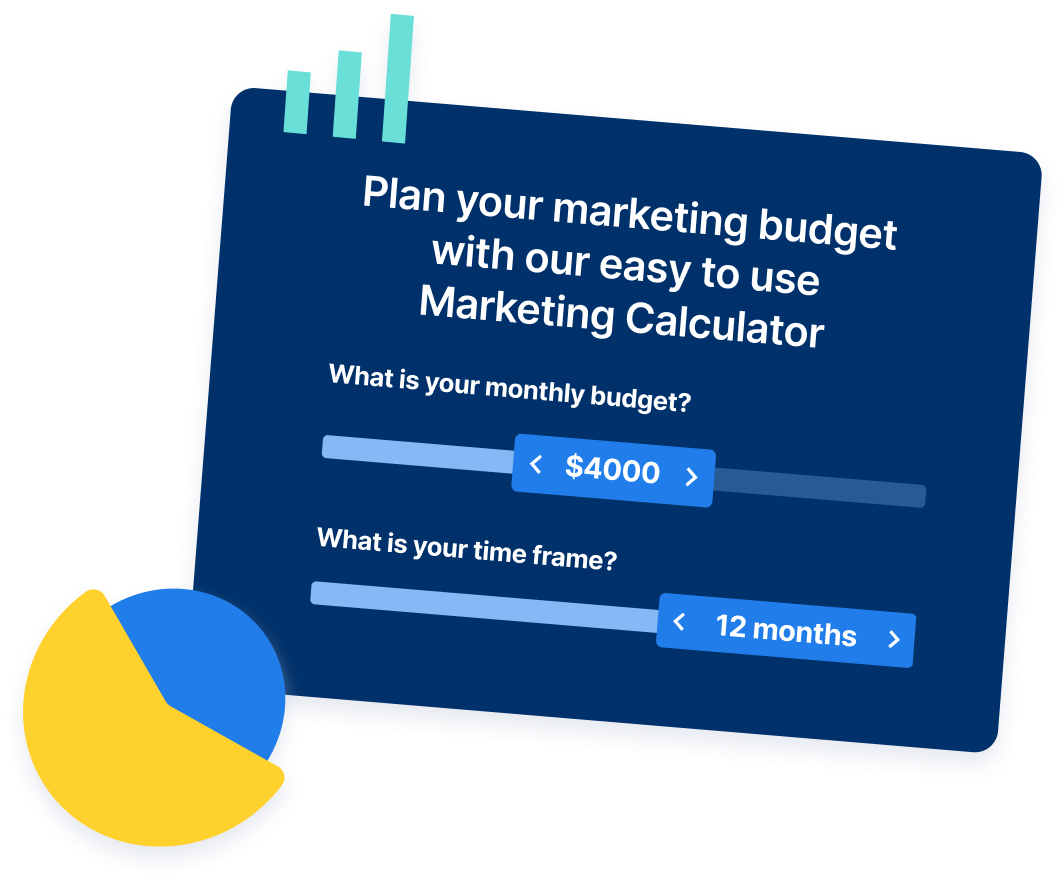
Table of Contents
- Getting started with digital marketing
- Strategy and planning
- Branding and messaging
- Audience and targeting
- SEO and content
- AI and digital marketing
- Paid advertising and conversion
- Email, SMS, and social media marketing
- Video marketing
- Reviews and reputation
- Social proof
- Customer retention
- Marketing funnels and B2B
- Website and ecommerce
- Hiring and recruitment marketing
- Event marketing
- Digital marketing agency vs. in-house
- Get expert help with your digital marketing
Share this article


Proven Marketing Strategies
Try our free Marketing Calculator
Craft a tailored online marketing strategy! Utilize our free Internet marketing calculator for a custom plan based on your location, reach, timeframe, and budget.
Plan Your Marketing Budget
What to read next




Don’t miss our Revenue Weekly emails!
Join 200K smart marketers for the hottest marketing news and insights in your inbox.
Inline Subscription Form
"*" indicates required fields