


Table of Contents
- What are SEO examples?
- 1. Long-tail keyword targeting for high-intent traffic
- 2. White space
- 3. Compelling title tag and meta description
- 4. Reputable backlinks
- 5. Fast page speeds
- 6. Responsive design
- 7. User-friendly navigation
- 8. E-E-A-T optimization
- 9. Position-zero results
- 10. Local SEO
- 11. User-generated content
- Let WebFX optimize your marketing with superior SEO tactics
The 11 SEO examples to implement on your business website include:
SEO examples show how real businesses use search engine optimization to drive traffic, leads, and revenue. While theory explains the tactics, real-world examples reveal what actually delivers results, especially in today’s AI-driven search landscape.
This guide highlights 11 proven SEO examples used by high-performing companies, along with how each tactic impacts visibility, user experience, and conversions. Each example is designed to help you identify what to prioritize based on your business goals.
Use these insights to focus your SEO efforts on strategies that generate measurable impact — not just rankings.
What are SEO examples?
SEO examples are real-world applications of search engine optimization strategies that show how businesses improve their visibility in search results.
Instead of explaining SEO tactics in theory, we’re using examples to demonstrate how specific SEO strategies, like targeting long-tail keywords or improving page speed, lead to measurable outcomes.
The following 11 SEO examples provide a practical way to evaluate which SEO strategies are worth prioritizing based on business goals and competitive landscape:
- 1. Long-tail keyword targeting for high-intent traffic
- 2. White space
- 3. Compelling title tag and meta description
- 4. Reputable backlinks
- 6. Responsive design
- 7. User-friendly navigation
- 8. E-E-A-T optimization
- 9. Position-zero results
- 10. Local SEO
- 11. User-generated content
1. Long-tail keyword targeting for high-intent traffic
Long-tail keywords help you attract users who are actively searching for specific solutions on Google, AI search engines, or social media platforms. With long-tail keywords, you’re able to better match user intent by answering their questions more specifically, making them more likely to convert.
Cleveland Clinic is an example of a website that targets highly specific, problem-based keywords like “symptoms of vitamin D deficiency in adults” instead of broad terms like “vitamin deficiency.”
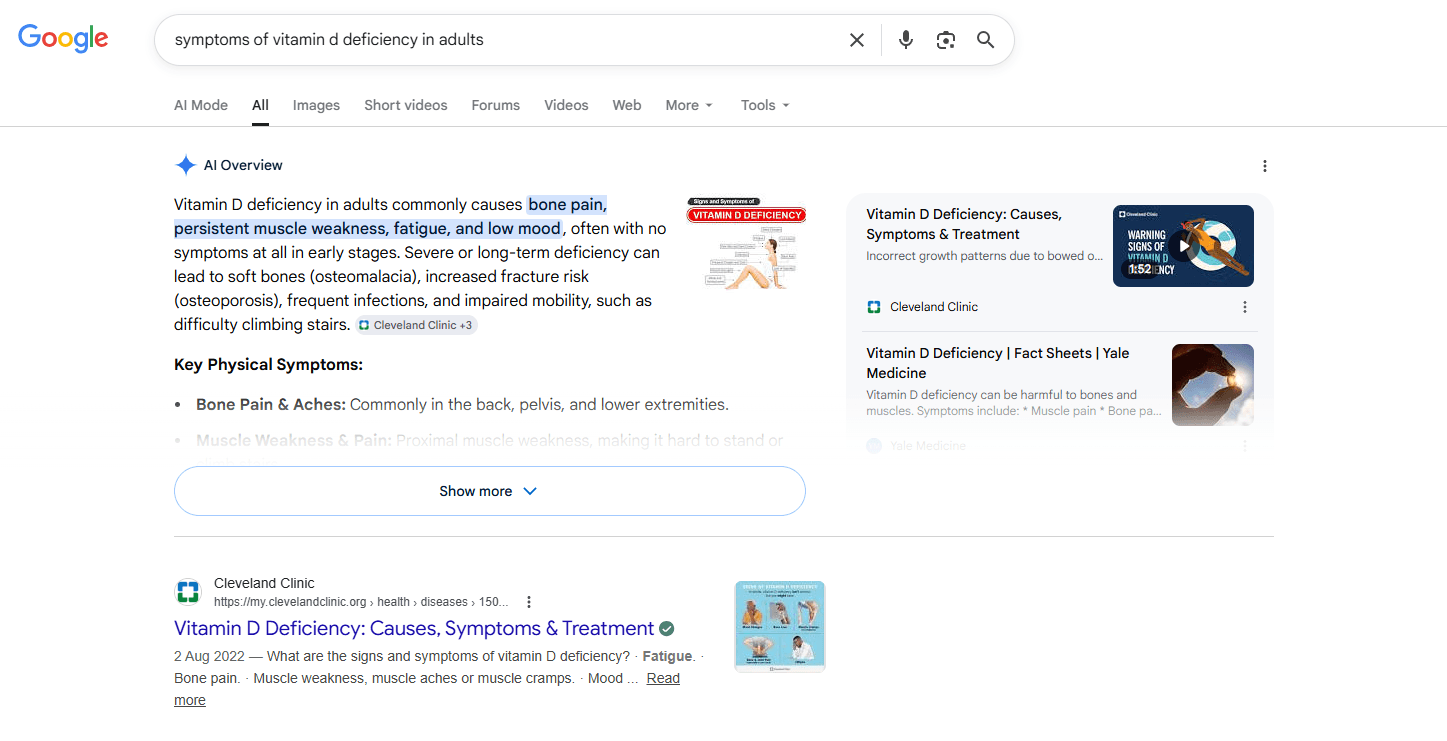
As a result, the web pages consistently appear in top organic positions, AI Overviews, featured snippets, and other zero-click searches. It also increases your chances of being selected for citations by AI search engines, like ChatGPT, Google AI Mode, Claude, and Perplexity.
2. White space
When pages feel cluttered or overwhelming, users are more likely to leave quickly without reading or taking any action. With higher bounce rates and lower time on page, search engines will start to assume your content is weak and consequently reduce your rankings over time.
White space on a page improves the visual comfort, making it easier for page visitors to spend more time on a page and engage more meaningfully. Strategic spacing also draws attention to what matterson a page, like headings, key messages, and calls to action. It reduces distractions and helps users follow a clear path toward conversion.
The Apple website has really nailed the power of white space. Instead of overwhelming users with dense text, Apple uses intentional white space across its product pages to highlight key information and guide user attention. Each section focuses on a single message with ample spacing between elements.
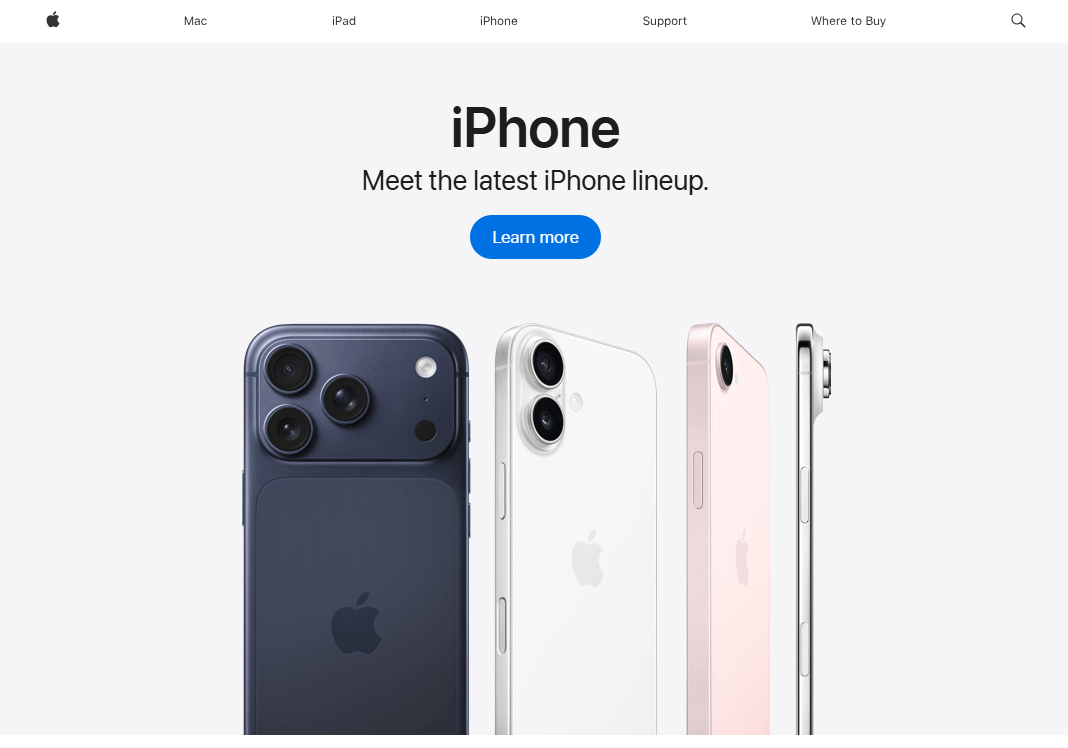
This layout makes content easier to scan and keeps users focused on key value propositions, improving engagement and increasing the likelihood of conversion.
3. Compelling title tag and meta description
Even while click-through rates are plummeting fast due to zero-click search availability, you still want to get clicks on your results, whether organically on Google SERPs or in AI search results.
Title tags and meta descriptions act as your first impression in search results, directly influencing whether users click through to your pages. So, you need to optimize these SEO elements to attract more clicks to your pages.
Asbury Electric partnered with WebFX to improve their online visibility and performance. Part of the optimizations we made included optimizing on-page elements, like meta descriptions, title tags, and header tags.
Now, Asbury Electric title tags and meta descriptions clearly communicate their services and location, using long-tail keywords like “residential electrician in Gloucester Point.” As a result, more of their pages match high-intent local searches, which translates to a 50% year-on-year increase in impressions from local SEO.
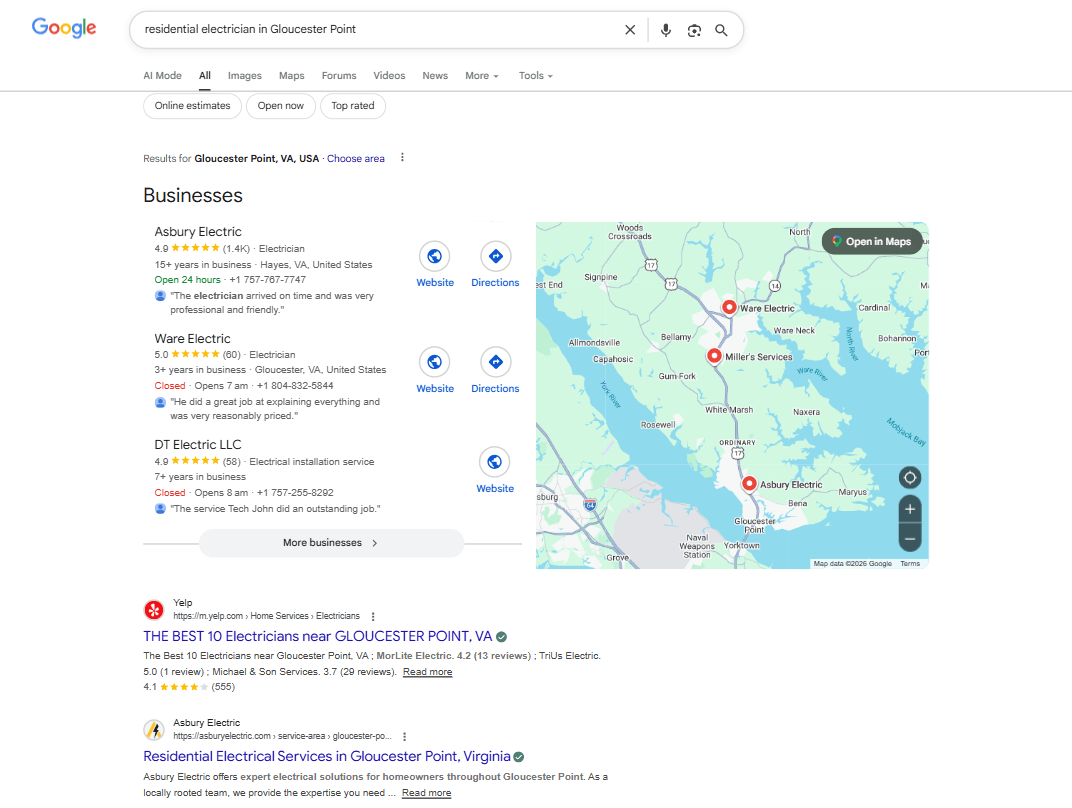
You can use our Google Preview Tool to check out how your title tags and meta descriptions look like before publishing.
4. Reputable backlinks
Backlinks remain one of Google’s strongest ranking signals. When authoritative websites link to your content, it signals that your site is trustworthy and valuable, helping you rank higher in competitive search results.
Ahrefs has mastered the power of earning backlinks by publishing data-driven research and SEO studies that other websites frequently cite. These “linkable assets” provide unique insights that naturally attract references from blogs, publications, and industry resources.
This strategy generates consistent, high-quality backlinks, strengthening domain authority and helping Ahrefs rank for competitive keywords. Creating content worth referencing is one of the most effective ways to build authority and improve rankings at scale.
5. Fast page speeds
Page speed directly impacts how users interact with your website. In fact, one in four visitors leave a page if it takes more than four seconds to load. This may also end up reducing conversions and sending negative engagement signals to search engines.
Amazon found that every 100-millisecond delay in page load time reduced sales by 1%, showing how even small performance issues can have a measurable impact on revenue.
Faster-loading pages keep users engaged, reduce bounce rates, and increase the likelihood of conversions — all of which contribute to stronger SEO performance.
Here’s a page speed and performance checklist you can use to measure site speed and performance.
6. Responsive design
With 51% of all searches worldwide happening on mobile devices, your website needs to deliver a seamless experience across all screen sizes. Google uses mobile-first indexing, meaning it primarily evaluates the mobile version of your site when determining rankings.
Airbnb uses responsive design to ensure its website adapts seamlessly across devices, from desktop to mobile. Listings, images, and booking options are structured to remain easy to navigate regardless of screen size.
This consistent experience allows users to browse and complete bookings or make inquiries without friction, improving engagement and conversion rates across devices. This also means that they don’t lose users as they switch between devices before converting.
7. User-friendly navigation
Clear, structured navigation helps both users and search engines understand your website. When visitors can quickly find what they’re looking for, they’re more likely to stay engaged and take action, while search engines can more easily crawl and index your pages.
All Pro Trailer Superstore partnered with WebFX to redesign their website in order drive more traffic and higher return on investment (ROI). We worked on the navigation to make it easier for users to find trailers and services.
As a result, All Pro Superstore 114% increase in SEO conversions because of the reduced friction in the buying process.
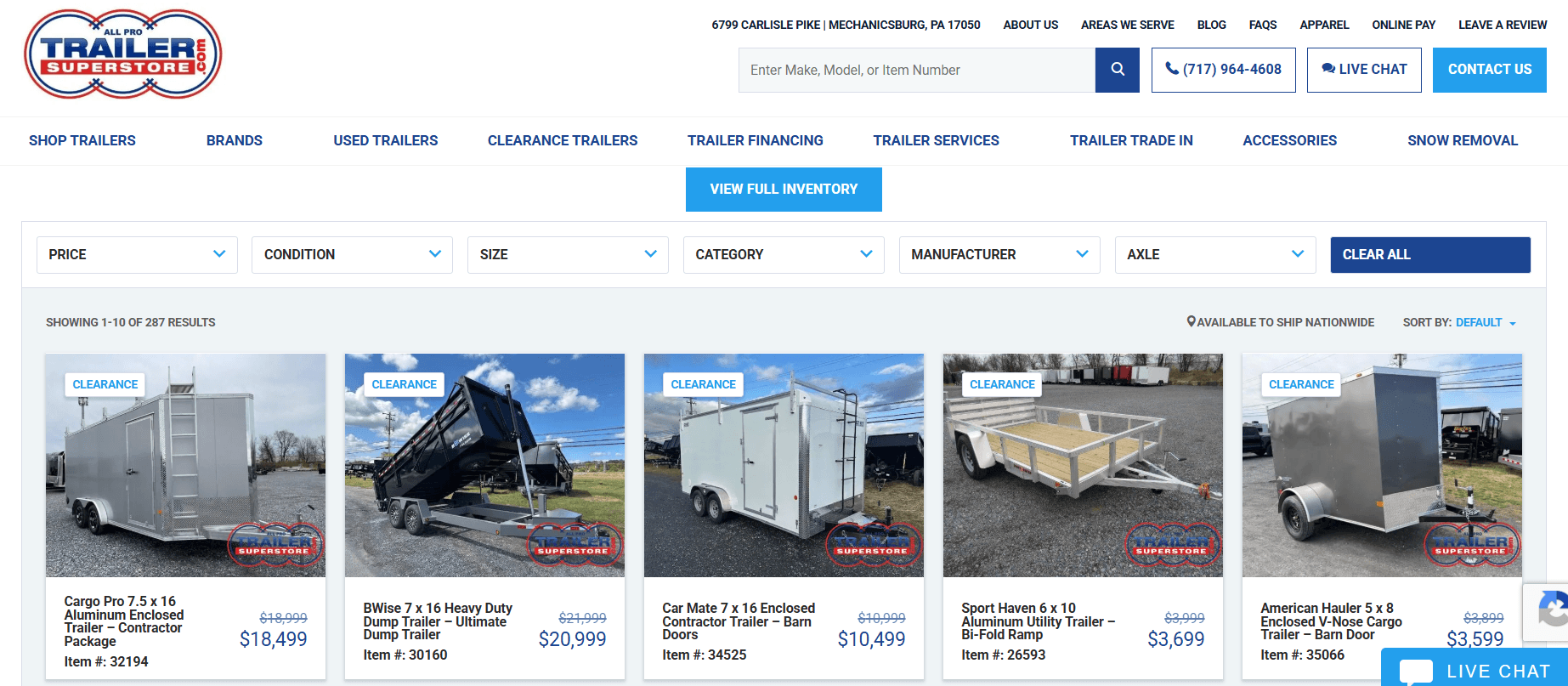
Strong navigation is essentials your site grows for guiding users to high-value pages and helping search engines understand your content structure.
8. E-E-A-T optimization
Clear signals of experience, expertise, authority, and trust (E-E-A-T) help both users and search engines evaluate the credibility of your website.
When your content demonstrates real expertise and your brand reinforces trust, users are more likely to engage and convert. At the same time, search engines are more likely to rank your pages for competitive queries.
Stockwell partnered with WebFX to strengthen its online presence and establish greater authority in the logistics industry. As part of this effort, we developed custom content tailored to freight forwarding and international shipping, including optimized service pages and informational content designed to match specific search intents.
This approach not only improved keyword visibility but also demonstrated Stockwell’s industry expertise, helping build trust with new audiences and supporting stronger search performance.
As competition increases, strong E-E-A-T signals become essential for both rankings and conversion, helping position your business as a credible, reliable choice.
9. Position-zero results
Position zero refers to search results that appear above traditional organic listings, including featured snippets and AI-generated overviews. These placements give your content more visibility even when users don’t click through, helping build brand awareness and authority.
Mayo Clinic consistently appears in AI Overviews and featured snippets for high-intent health queries like “appendicitis symptoms,” where its content is used to generate summarized answers at the top of search results.
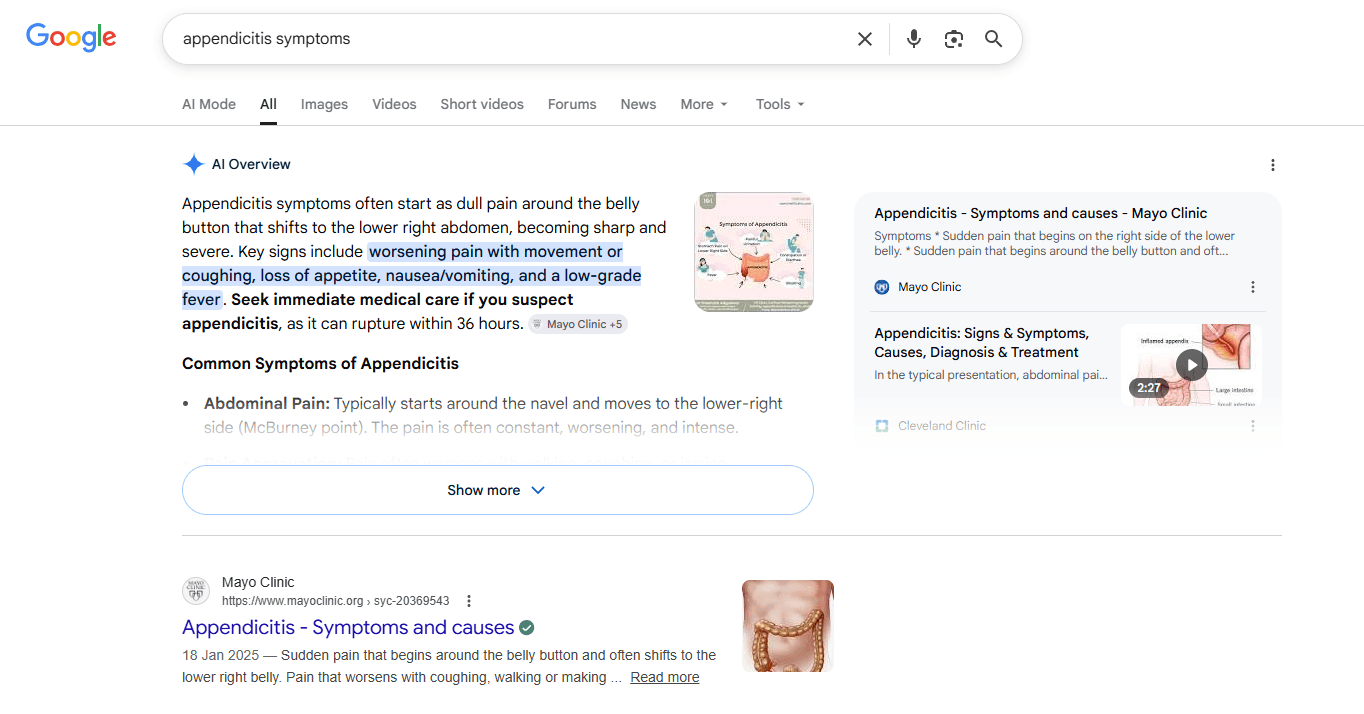
By providing clear, structured answers to common questions, Mayo Clinic earns top visibility across multiple search features, reinforcing trust and capturing attention even in zero-click searches.
As search behavior shifts toward AI-generated answers, ranking alone is no longer enough. Structuring your content to directly answer user queries increases your chances of being featured in these high-visibility placements.
10. Local SEO
Local SEO helps your business appear in search results when users are looking for services in a specific area. These searches often have high intent, meaning users are ready to take action — whether that’s making a call, booking a service, or visiting a location.
Record Head partnered with WebFX to improve its visibility in local search results and attract more qualified leads. As part of this effort, we optimized its Google Business Profile, targeted location-specific keywords, and strengthened its presence across key service areas.
These improvements helped the music lovers haven rank in the local 3-pack across multiple locations, increasing visibility among nearby customers and driving more high-intent leads.
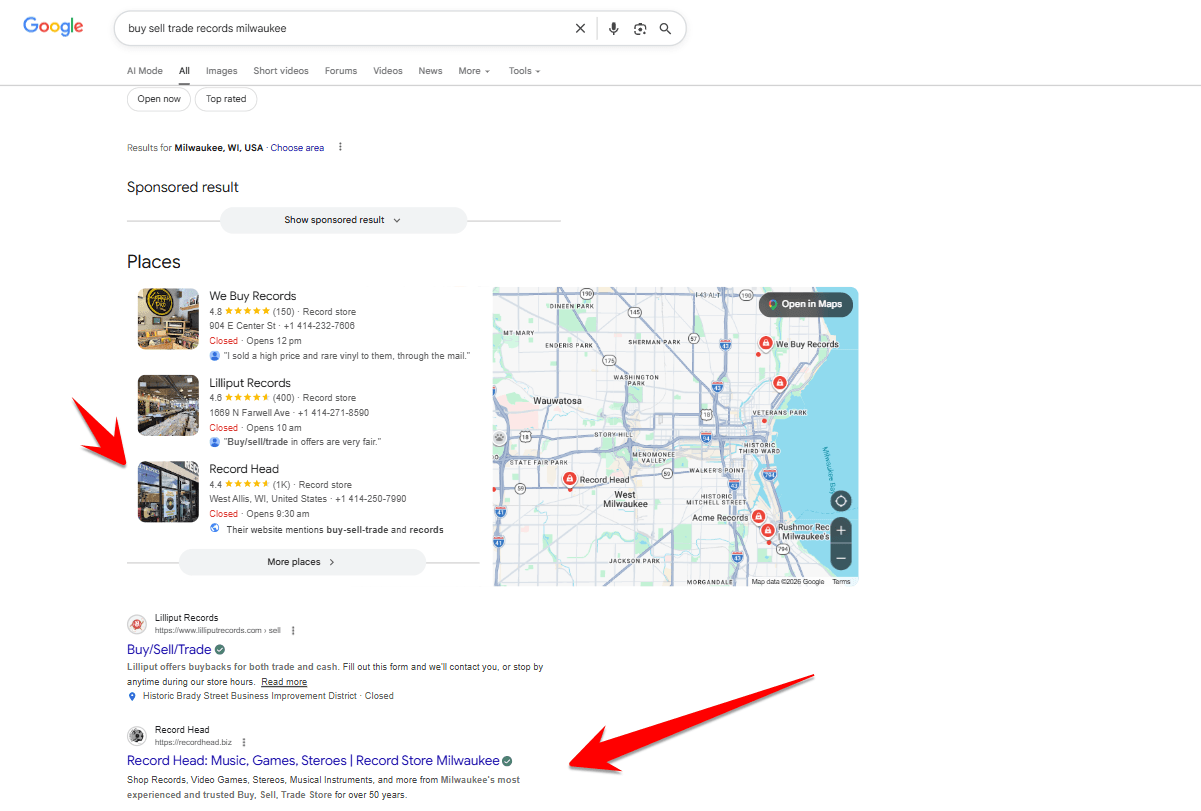
As more users rely on local search to find services, strong local SEO becomes essential for capturing ready-to-convert traffic and standing out in competitive markets.
11. User-generated content
User-generated content (UGC), such as reviews, testimonials, and customer photos, helps build trust and keeps your website content fresh. Search engines value regularly updated, relevant content, while users rely on peer feedback to evaluate businesses before making a decision.
Amazon incorporates customer reviews and ratings directly into its product pages, allowing users to see real feedback before making a purchase.
This continuous stream of user-generated content adds relevant keywords, keeps pages updated, and increases user engagement. All of which contribute to stronger search visibility and higher conversion rates.
As competition increases, UGC becomes a powerful way to build trust at scale while supporting SEO performance through fresh, relevant content.
Let WebFX optimize your marketing with superior SEO tactics
The difference between ranking and generating revenue comes down to execution. These SEO examples highlight how small, focused optimizations across your site can improve visibility, keep users engaged, and move them toward conversion.
With over 30+ years of experience and 115+ awards, our SEO web design agency knows what it takes to get your site ranking in Google search results. When you partner with us you get access to 220+ seo experts and a dedicated account representative to keep a close eye on your SEO campaigns and advise on optimizations.
If you’re ready to turn these SEO examples into measurable results for your business, explore WebFX’s SEO services or request a free proposal to see how you can grow your visibility and revenue from search.
-
 Lornah Ngugi is a seasoned digital marketing writer with 6+ years of experience translating complex marketing strategies into engaging, results-driven content. She holds a B.S. in Business Information Technology and is certified in HubSpot Academy, Google Analytics, LinkedIn Marketing, and Google Digital Academy. Lornah regularly contributes to the WebFX blog and SEO.com, where she’s authored hundreds of marketing guides that help readers turn their goals into measurable results through practical, data-informed insights. When she’s not writing, you’ll find her enjoying a quiet walk in the park, sipping black coffee, or finding creative inspiration in a good chocolate bar.
 -

WebFX is a full-service digital marketing agency delivering revenue-driving strategies across online advertising, SEO and AI search optimization, and digital marketing. Backed by 1,100+ client reviews, a 4.9-star rating on Clutch, and proprietary revenue-tracking technology, our team helps businesses grow visibility and revenue across platforms, from Google to ChatGPT to LinkedIn. Discover how our expert team and revenue-accelerating tech can drive results for you. Learn more
Try our free Marketing Calculator
Craft a tailored online marketing strategy! Utilize our free Internet marketing calculator for a custom plan based on your location, reach, timeframe, and budget.
Plan Your Marketing Budget
Table of Contents
- What are SEO examples?
- 1. Long-tail keyword targeting for high-intent traffic
- 2. White space
- 3. Compelling title tag and meta description
- 4. Reputable backlinks
- 5. Fast page speeds
- 6. Responsive design
- 7. User-friendly navigation
- 8. E-E-A-T optimization
- 9. Position-zero results
- 10. Local SEO
- 11. User-generated content
- Let WebFX optimize your marketing with superior SEO tactics
Share this article


SEO Success with KOA
Try our free Marketing Calculator
Craft a tailored online marketing strategy! Utilize our free Internet marketing calculator for a custom plan based on your location, reach, timeframe, and budget.
Plan Your Marketing Budget