
Digital Marketing for Transportation and Logistics Companies
Learn all about the most effective digital marketing strategies for transportation and logistics companies in this rundown, which explores search engine optimization, pay-per-click advertising, and more.
-
 insights from 149,000+ hours of logistics marketing experience

Table of Contents
- 8 logistics company marketing strategies
- 1. High-intent SEO to capture shippers searching for freight solutions
- 2. Hyper-targeted PPC to fill your lanes and reduce wasted ad spend
- 3. Social media marketing to stay top-of-mind with supply chain decision-makers
- 4. Conversion-focused web design that makes requesting a quote effortless
- 5. Content marketing that builds trust with shippers and freight brokers
- 6. Email automation to nurture long B2B logistics sales cycles
- 7. Video marketing to showcase your fleet, facilities, and on-time performance
- 8. Earning trust through industry directories and review platforms
- FAQs about digital marketing for logistics and transportation companies
- WebFX knows digital marketing for transportation and logistics companies
- We Drive Results for Transportation Companies
Digital marketing for logistics and transportation companies means using channels like SEO, PPC, social media, content, email, and video to get in front of shippers, brokers, and supply chain decision-makers when they’re actively comparing providers.
In an industry with tight competition for shippers, defined regional service areas, and complex B2B buying cycles, a strong online presence is often the difference between winning that next RFQ or losing it to a competitor.
Think about how your buyers choose partners today. When a shipper has a time-sensitive load, they’re likely to search for “LTL freight shipping in [region],” visit a few websites, glance through LinkedIn profiles, and look at reviews on industry directories. Having a visible, trustworthy presence across those touchpoints helps your company stand out and earn a spot on their shortlist.
So, how can you harness that for your own logistics company marketing? Below, we’ll walk through a list of strategies you can use to master digital marketing for transportation and logistics companies and turn more of those searches into RFQs, booked loads, and long-term contracts.
Read on to learn more. Then consider partnering with WebFX’s team of over 750 experts for our digital marketing services. Just call us at 888-601-5359 or contact us online to get started today!
8 logistics company marketing strategies
There are several strategies you can use to optimize your logistics company marketing online. Some involve using paid ads, while others are about harnessing organic traffic — but they all serve the purpose of drawing the right users to your site and converting them into high-value customers.
Here are six stellar digital marketing strategies for transportation and logistics companies.
- High-intent SEO to capture shippers searching for freight solutions
- Hyper-targeted PPC to fill your lanes and reduce wasted ad spend
- Social media marketing to stay top-of-mind with supply chain decision-makers
- Conversion-focused web design that makes requesting a quote effortless
- Content marketing that builds trust with shippers and freight brokers
- Email marketing to nurture long B2B logistics sales cycles
- Video marketing to showcase your fleet, facilities, and on-time performance
- Earning trust through industry directories and review platforms
1. High-intent SEO to capture shippers searching for freight solutions
Search engine optimization (SEO) is a strategy that involves optimizing your web content to rank in Google search results. The idea is that when users search for something related to what you have on your website, they can find your page in search results and visit your site.
The key to SEO is to satisfy all of Google’s ranking algorithms. First and foremost, that means targeting relevant keywords in your content. For example, if you have a page about your LTL services, you might target keywords like “LTL freight shipping to [region]” or “LTL carrier in [city]” to show up when shippers search for providers in your lanes.
Other SEO tactics for transportation and logistics companies include:
- Earning qualified backlinks from industry sites, directories, and partners
- Using internal links on your site to connect service pages, case studies, and resources
- Using HTTPS and fixing technical issues that slow down your site
- Optimizing images with descriptive alt text (for example, “LTL freight truck at warehouse in Dallas”)
- Setting up Google Business Profile and optimizing it for key terminals or locations
You can also create content that targets high-intent searches like “cross-border logistics provider in [city]” or “refrigerated trucking company near me,” helping you show up when shippers are ready to request quotes.
With a successfully run SEO campaign, whether you manage your strategy in-house or invest in SEO services from an agency, you can drive more qualified organic traffic, RFQs, and long-term shipper relationships from search.
2. Hyper-targeted PPC to fill your lanes and reduce wasted ad spend
Organic results aren’t the only way to reach users through Google search results. You can also set up pay-per-click (PPC) advertising, running ads at the very top of Google’s search engine results pages (SERPs). PPC enables you to target high-intent searches and specific geographies, helping you reach the shippers most likely to fill your lanes.

To launch a PPC campaign, you can use Google Ads. There, you can set up your ads and bid on specific keywords you want to target. For a logistics or transportation company, that might be terms like “same-day pallet delivery [city]” or “port drayage company near [port].” Whenever someone looks up a keyword, Google will display ads based on:
- Bid amount
- Quality Score (Google’s assessment of an ad’s overall quality and relevance)
With the right keyword strategy, you can also exclude low-intent terms and reduce wasted spend — for example, filtering out job seekers or people looking for definitions instead of services.
Alternatively, you can also invest in PPC services from an experienced agency to help manage and optimize your campaigns, test ad copy, and find the keywords that consistently generate RFQs!
With an optimal bidding strategy and a high enough quality score, you can get your ad to show for all the right searches, hopefully beating out your competitors in the process. Best of all, you only have to pay for your ads when people click on them!
3. Social media marketing to stay top-of-mind with supply chain decision-makers
Did you know that 93% of industrial manufacturing marketers use LinkedIn as an organic social media platform and claim that it performs the best? That means that your competitors are likely using this platform to win over the supply chain and logistics leaders you want to reach. Platforms like LinkedIn, Facebook, Instagram, and YouTube are prime opportunities to build brand awareness, stay visible in your core markets, and reinforce your credibility.
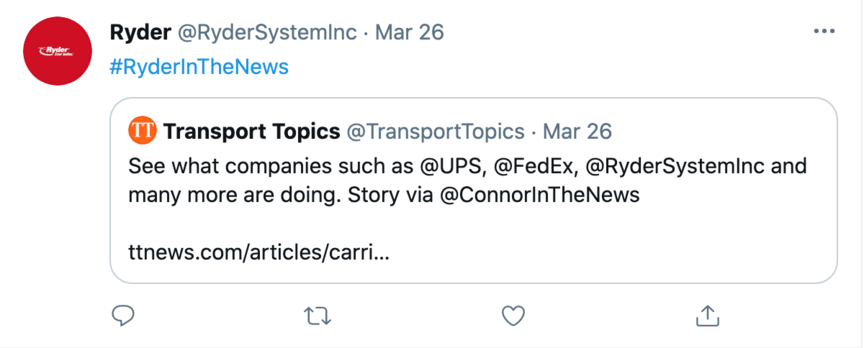
For logistics and transportation, LinkedIn is often the most important channel because it’s where supply chain managers, freight brokers, and logistics directors spend their professional time. You can share case studies, thought leadership, and industry news, and use LinkedIn Ads to target decision-makers by job title, industry, or company size.
Facebook and Instagram can help you build an employer brand, highlight your fleet, and connect with local communities in the regions you serve. YouTube is ideal for operations and behind-the-scenes video — think terminal tours, equipment spotlights, or explainers on how your cross-border process works.
You can start by creating a social media account for your business and posting engaging content like infographics or videos. As you attract views and followers, you can use the attention to draw people to your site.
You can also harness paid social media advertising, which allows you to place ads right in users’ social media feeds. These ads typically even let you target specific demographics and locations, ensuring your social media advertising costs are being put toward the most relevant possible audience.
Through a combination of organic posts and paid ads, social media can help you stay top-of-mind with supply chain decision-makers, support sales conversations, and ultimately generate more quote requests and partnership opportunities.
Hear What It’s Like to Work With WebFX!

“Ever since signing on with WebFX, we have had nothing but POSITIVE results across the board. Everyone that we have worked with has been wonderful, and really makes an effort to understand our business and how to get the best results possible!”
Transportation Company
4. Conversion-focused web design that makes requesting a quote effortless
Nearly all your online marketing is intended to lead users back to one place: Your website. That means your site needs a compelling web design that makes it easy for busy logistics buyers to find information and request quotes.
Having good web design means having a site that’s intuitive, functional, and visually appealing. Here are some of the best tactics for bringing those traits to your site:
- Make your site mobile-friendly
- Optimize your page speeds
- Simplify your navigation
- Use plenty of white space
- Brand your site visually
A site that fails to meet these requirements will likely end up with a significantly high bounce rate, meaning many of its visitors will have hit the “back” button not long after arriving at the page.
But when your site satisfies your audience’s needs and expectations, they’ll be inclined to stick around longer and possibly end up converting.
5. Content marketing that builds trust with shippers and freight brokers
Another valuable transportation marketing strategy is content marketing, which involves creating informative web content to attract users to your site and answer their biggest questions.
The content you create can be written, like blog posts and guides, or it can be some form of multimedia, like videos or downloadable checklists.
For logistics and transportation companies, strong content topics might include:
- Route and lane guides (for example, “Complete guide to shipping from the U.S. to Mexico”)
- Port or warehouse resources, such as “What to know before shipping through [port]”
- Customs and compliance checklists for cross-border shipments
- Industry-specific shipping guides for verticals like retail, manufacturing, or healthcare
Whatever the format, your web content needs to communicate valuable information to users and be built around specific keywords.
Make sure your content always matches user search intent — that is, the reason users searched for it in the first place. If you write a page to target “what do transportation companies do,” the page should actually address that question, rather than just talking up your services.
If you don’t write for search intent, users will quickly realize that the page holds no value for them, and they’ll leave. After enough people do that, Google will pick up on it and rank you lower in search results.
When content marketing is done well, it answers common shipper questions, supports your sales team with resources they can share, and generates more qualified traffic and RFQs from search and email.
6. Email automation to nurture long B2B logistics sales cycles
Email marketing is at its most effective when used as a remarketing and nurturing strategy. Remarketing is when you target people who have already interacted with your brand — and in logistics, that often means leads who requested a quote, downloaded a guide, or met your team at a trade show.
You can build out an email list by using email forms on your website, encouraging people to submit their addresses in return for receiving a newsletter, market updates, or access to valuable resources.
As people subscribe, you can begin sending them emails like:
- Quote and proposal follow-ups
- Capacity updates or new lane announcements
- Seasonal shipping tips and deadlines
- Account-based campaigns for key shippers or verticals
When you do this, be sure you’re sending people what they signed up for — otherwise, they’ll unsubscribe or ignore future emails. With the right mix of educational content and relevant offers, email marketing can help you stay in front of prospects throughout long B2B sales cycles, drive repeat loads, and increase contract renewals.
7. Video marketing to showcase your fleet, facilities, and on-time performance
Video marketing is a powerful way to build trust and transparency in an industry where operational reliability is everything. Shippers want to see that you have the people, equipment, and processes to deliver on your promises. Video is one of the fastest ways to show that.
For logistics and transportation companies, effective video ideas include:
- Virtual warehouse or terminal tours that show your scale, safety practices, and technology
- Client testimonial videos where shippers explain how you’ve helped them improve on-time delivery or reduce damage claims
- “Day in the life” videos featuring key personnel like load planners, dispatchers, or customs brokers, which humanize your team and highlight your expertise
These videos can live on your website, YouTube channel, and LinkedIn, and can be embedded in email campaigns or used in sales conversations.
When you incorporate video into your digital marketing strategy, you make it easier for buyers to picture what it’s like to work with you, which can shorten the trust-building phase of the buying cycle and support higher win rates on new opportunities.
8. Earning trust through industry directories and review platforms
Finally, don’t overlook the value of industry directories and review platforms. Many logistics and transportation buyers use directories to build their shortlist of potential providers, which makes these platforms a high-intent source of traffic and leads.
Start by claiming and optimizing your profiles on platforms like Thomasnet, Clutch, and other industry-specific or regional directories relevant to your services. Make sure your listings include:
- A clear description of your services, modes, and core industries
- Accurate locations and service areas
- Links to your website and key landing pages
- Up-to-date contact information and CTAs
- A steady stream of reviews or testimonials from satisfied shippers
Encourage happy clients to leave honest reviews and highlight metrics like on-time performance, communication, and issue resolution. A complete, review-rich profile in the right directory can act as powerful social proof and generate a steady flow of high-intent leads who are already comparing vendors.
By investing time into your directory and review presence, you create additional touchpoints where shippers can discover you, evaluate you, and ultimately choose your company over less visible competitors.
FAQs about digital marketing for logistics and transportation companies
What is digital marketing for logistics and transportation companies?
Digital marketing for logistics and transportation companies is the use of online channels — like SEO, PPC, social media, content, email, and video — to attract, engage, and convert shippers, freight brokers, and supply chain decision-makers.
It focuses on getting your brand in front of the right buyers at the right moments in their research and buying process, so you can earn more RFQs, booked loads, and long-term contracts.
Why is digital marketing important for the logistics industry?
Digital marketing is important for the logistics industry because most buyers now research and compare providers online before ever talking to sales. A strong digital presence helps you show up in those moments and clearly communicate why shippers should choose you.
Digital marketing matters for logistics because it:
- Builds visibility and brand awareness: It establishes a strong online presence, so your company appears when potential clients search for services in your lanes, rather than only competing through word-of-mouth.
- Generates more qualified B2B leads: Digital marketing uses targeted SEO, PPC, and content to attract buyers who are actively seeking logistics and transportation solutions, not just casual visitors.
- Increases transparency and trust: It becomes easier to share real-time updates, highlight tracking capabilities, and showcase reviews and testimonials that prove your reliability.
- Improves the customer experience: It supports faster responses, clearer communication, and self-service tools, such as quote forms and shipment tools, which help busy logistics teams move quickly.
- Provides data to improve performance: You’ll gain analytics on what’s working, which channels drive RFQs and booked loads, and where you can refine your messaging or targeting.
- Delivers measurable ROI: Digital marketing enables you to directly connect marketing activities to RFQs, opportunities, and revenue, allowing you to invest in channels that consistently drive profitable growth.
What are the most effective digital marketing strategies for a logistics business?
Some of the most effective digital marketing strategies for logistics businesses include SEO to capture high-intent searches, PPC to quickly target specific lanes and service areas, and conversion-focused web design that makes requesting a quote easy.
Here’s a closer look at the most effective digital marketing strategies for logistics companies:
- Search engine optimization (SEO): Optimize your site and service pages for high-intent keywords like “LTL freight shipping in [region]” or “cross-border logistics provider in [city]” so you appear in search results when buyers are actively looking for a partner.
- Conversion-focused website: Ensure your site is professional, fast, mobile-friendly, and built around clear CTAs and quote forms, so visitors can quickly understand your services and request a quote.
- Content marketing: Publish helpful resources like route guides, port or warehouse content, compliance checklists, and case studies that answer shipper questions and demonstrate your expertise.
- PPC advertising: Run targeted search and display campaigns that focus on specific service areas, modes, and verticals to generate immediate, high-intent leads.
- Email marketing and automation: Nurture interested prospects and existing customers with segmented email campaigns that share updates, insights, and timely offers aligned with their needs.
- Social media marketing: Use platforms like LinkedIn, Facebook, and YouTube to share thought leadership, highlight your operations, and reinforce your brand with decision-makers.
- Video and directories: Leverage video to showcase your operations and use industry directories and review platforms to gain additional visibility and social proof.
How can my logistics or transportation company get started with digital marketing?
To get started with digital marketing, first clarify your goals and the most important routes, modes, and industries. For example, maybe you want to grow LTL volume in a specific region or expanding cross-border services.
If so, audit your current website and online presence, prioritize 1–2 core channels like SEO and PPC, and build simple, focused campaigns that send traffic to clear, relevant landing pages.
Follow these steps to get started:
- Define your niche and audience: Decide which services, industries, and regions you want to focus on.
- Clarify your value proposition: Document what makes your company stand out — such as on-time performance, specialized equipment, technology, or cross-border expertise — and make sure it’s easy to spot on your site.
- Strengthen your website: Ensure your site is fast, mobile-friendly, easy to navigate, and clearly shows your services, service areas, case studies, and RFQ or contact options.
- Claim and optimize key profiles: Set up or refine your Google Business Profile and major industry directory listings with accurate information, services, and links back to your site.
- Launch priority campaigns: Start with one or two channels (often SEO + PPC) and create focused campaigns that send traffic to service-specific landing pages.
- Layer on additional channels: Once you have the basics in place, add social media, content marketing, email nurture sequences, and video to support sales and deepen relationships.
- Measure and refine: Use analytics and CRM data to track RFQs, opportunities, and wins from each channel, then adjust your strategy based on what drives the best results.
How long does it take to see results from digital marketing for logistics companies?
The timeline depends on the channel and your starting point, but generally you can expect SEO to take around three to six months to start showing meaningful results, with gains growing over time, while PPC campaigns often need about three months of data and optimization to perform at their best.
Other tactics like improving your website or launching social and email campaigns can produce smaller wins sooner, but digital marketing overall works best when you give it enough time to gather data, refine your targeting, and build trust with buyers.
How can logistics and transportation companies measure the ROI of digital marketing?
To measure the ROI of digital marketing, start by tracking metrics tied to your business goals, such as:
- RFQs submitted
- Booked loads
- Contract wins
- Revenue from key accounts
Use tools like RevenueCloudFX, Google Analytics, or your CRM to connect website visits, form fills, and calls back to specific campaigns, channels, and keywords so you can see which efforts are driving the most valuable opportunities.
Over time, you can compare the cost of each channel to the revenue it generates and focus your budget on the strategies that consistently deliver profitable growth.
Which social media platforms are most effective for logistics and transportation companies?
For most logistics and transportation companies, LinkedIn is the most effective social media platform because it’s where supply chain and logistics decision-makers spend their professional time.
Here are the top social media platforms that are most effective for logistics and how to use them:
- LinkedIn: Best for B2B networking, reaching supply chain and logistics decision-makers, sharing case studies and thought leadership, and supporting account-based outreach.
- Facebook: Useful for building community and employer brand, sharing company news, promoting events, and running geo-targeted ads in service areas.
- Instagram: Great for visual storytelling — showcasing your fleet, facilities, behind-the-scenes operations, and employee highlights to humanize your brand.
- YouTube: Ideal for in-depth video content like warehouse or terminal tours, “day in the life” videos, process explainers, and customer stories you can reuse in sales and email.
- Other emerging platforms: Depending on your audience, platforms like X (formerly Twitter) or TikTok can help share quick updates or culture-focused content, but they’re typically secondary to LinkedIn and YouTube for B2B logistics.
We foster and form long-term partnerships so that your business has long-term results.
Over 90%
WebFX knows digital marketing for transportation and logistics companies
Ready to start putting the strategies on this list into action but need a helping hand? Partner with one of the top transportation and logistics marketing companies — WebFX! With over 30 years of digital marketing experience, we know what it takes to optimize your company’s marketing campaign.
With our digital marketing services, you can get help optimizing your marketing for any transportation marketing strategy on the list above. You’ll also receive a dedicated account representative to keep you informed about everything we do for you.
To get started with us, just give us a call at 888-601-5359 or contact us online today!
We Drive Results for Transportation Companies
- Data-driven decision making that’s generated $3B in revenue for clients
- Dedicated account manager backed by 750+ digital experts



Table of Contents
- 8 logistics company marketing strategies
- 1. High-intent SEO to capture shippers searching for freight solutions
- 2. Hyper-targeted PPC to fill your lanes and reduce wasted ad spend
- 3. Social media marketing to stay top-of-mind with supply chain decision-makers
- 4. Conversion-focused web design that makes requesting a quote effortless
- 5. Content marketing that builds trust with shippers and freight brokers
- 6. Email automation to nurture long B2B logistics sales cycles
- 7. Video marketing to showcase your fleet, facilities, and on-time performance
- 8. Earning trust through industry directories and review platforms
- FAQs about digital marketing for logistics and transportation companies
- WebFX knows digital marketing for transportation and logistics companies
- We Drive Results for Transportation Companies
Solving key challenges for transportation and logistics
Our website isn’t driving enough traffic
Optimize your website to achieve higher rankings in the search results when potential clients search for your services online, so you can enjoy more web traffic and revenue.

We’re struggling to stay ahead of our competitors
Outshine your competitors in the search results and launch cutting-edge marketing strategies that encourage your audience to choose your services every time.

We’re not selling the services we offer
When you partner with WebFX, we’ll help you get your services in front of the people actively searching for them so you can maximize your revenue.

We’re not attracting enough new clients
Craft engaging website copy and designs that encourage more of your website visitors to become leads (and eventually clients) with our team of award-winning copywriters, designers, and more.
