
7 SEO Tips for Wholesale Suppliers
Learn how to use SEO for wholesale suppliers with this compilation of the most effective AI search and search engine optimization tips from our award-winning team.
-
 insights from 149,000+ hours of supply chain marketing experience

Table of Contents
- How to optimize for wholesaler SEO
- 1. Researching and using keywords
- 2. Writing unique product descriptions
- 3. Building links to your website
- 4. Using social media
- 5. Using pay-per-click advertising (PPC)
- 6. Starting and maintaining a blog
- 7. Optimizing for AI search
- Drive revenue with SEO for wholesale suppliers
- We Drive Results for Wholesale Supply Companies
Search engine optimization (SEO) for wholesale suppliers helps retailers, restaurants, and other business buyers find your products when they search Google or ask an AI assistant like ChatGPT for vendor recommendations.
Use the following tactics to make your catalog easier to find in search results and easier for AI answers to cite:
How to optimize for wholesaler SEO
As a marketing strategy, SEO helps wholesalers grow their business and attract new clients by earning visibility in search results and AI-generated answers. The following methods are tried-and-true tactics that can individually improve your business’s website bit by bit. But together, they create an aggressive strategy that can potentially rank you among or above your strongest competitors.
1. Researching and using keywords
Buyers check a supplier’s website before they request a quote or place a first order. If you don’t have one, make one as soon as possible and start working on it. Incidentally, a large part of that work is making sure your website uses keywords that will attract traffic from your niche demographic.
When you include keywords on your website, you and your customers speak the same language to one another. That means they can find and understand you more easily, and you have a better chance of turning occasional site visitors into paying customers.
Keyword research includes looking up the phrases your audience types into search engines and asks AI assistants to find businesses like yours. The best keywords are long and specific since they’re less competitive, more specific to your business, and more targeted for your customers. These longer keywords are called long tail keywords, and they’re essential to building your business online.
You should use these keywords on your homepage and subsequent pages that you have on your site. That way, you can rank for multiple keywords with several specialized pages, which makes your website more likely to appear in searches by your customers.
2. Writing unique product descriptions
Every retailer who comes to your website wants the same thing: merchandise. Whether you sell bulk foods or construction equipment or anything else, you have an opportunity to write a unique and thorough description of a product that can attract customers all on its own.
Product descriptions can be a mix of keyword usage, sales text, and specific information that gives customers a better idea about what they’re about to buy. The more information you can give, the better decision your customers can make about what works for their needs. And while that may not always mean a sale for a certain product, it does show that you’re an authority in your industry, especially since certain brands trust you to sell their products to retailers.
The same work pays off for B2B product catalogs. When PowerGistics audited its product pages and realigned their content, keywords, and layout with search intent, its organic product page views rose 19% year-over-year.
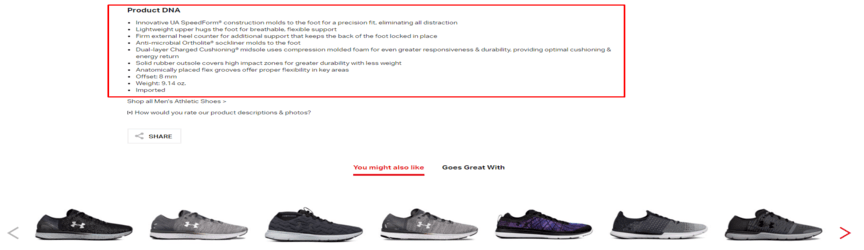
Generally, product descriptions should be as long as they have to be. If you can say everything in a few sentences, go for it. If it takes a few paragraphs, that’s fine too. As long as you organize it in a readable and understandable way, you’ll show customers that you know your products inside and out.
3. Building links to your website
Links from relevant sites, such as the manufacturers you carry, trade associations, and industry publications, also support your visibility in search results. Their quality matters more than their count.
In order to earn links, you need to create content that people want to link to. Then, you can reach out to bloggers and industry influencers to see if they’re interested in sharing your content.
As your site earns more and more links, you will appear higher in search results for keywords and phrases related to your business. And people will view you as a leader in your field.
4. Using social media
While it may sound counterintuitive, social media can be incredibly helpful for B2B companies like wholesalers. Using Facebook, X, LinkedIn, and other platforms are all great ways to show your potential customers that you’re staying current with marketing trends. Plus, it gives them a chance to approach you with questions, comments, and even complaints.
While it may sound bad to have complaints, social media allows you to field those complaints on your own turf and in a public forum. That means you control the discussion, and the more professional and courteous you are, the better impression you’ll make on your audience as a whole.
Last, social media is great for promoting new additions to your staff, website, stock, and more to make sure that customers can keep in touch with your growing wholesale company. It offers you a level of transparency and interaction that you couldn’t achieve in the offline world, and that makes you a more trusted presence in your industry.
5. Using pay-per-click advertising (PPC)
PPC is a form of advertising where you place a maximum bid for a keyword, and every time someone searches for that keyword, your ad shows up above or below the regular search results. The best part is that you only pay for your ad if someone clicks on it. Otherwise, you’re not charged a dime.
Using this form of advertising is helpful because it lets you target essential keywords that you can’t quite grasp with your SEO strategies yet. Even if you’re lagging behind your competition, adding a few PPC keywords can give you an advantage over them that’ll drive traffic and conversions on your site. And then, once your SEO presence is strong enough, you can either continue using PPC or adapt it to other essential keywords for an even broader reach in your market.
6. Starting and maintaining a blog
Blogs give you a chance to show that you’re a reliable authority on your industry. You can post about new trends, industry news, and the questions buyers ask before ordering, such as minimums, lead times, and seasonal stocking. Then promote each post on social media to make sure people see it.
The key to a successful blog is sticking to a regular schedule that you use week after week. That helps people know when they can expect new content, and it also shows Google that you’re regularly updating your website. Both of those qualities give buyers a reason to return, and posts that answer specific questions give Google and AI assistants clear answers to surface.
7. Optimizing for AI search
Wholesale buyers ask ChatGPT, Perplexity, and Google AI Overviews to shortlist suppliers, often before they visit a single website. Those answers draw on pages that state the facts buyers screen on, such as minimum order quantities (MOQs), lead times, shipping regions, and certifications.
Optimize for those conversations with tactics like the following:
- List the questions buyers use to screen suppliers: Think “wholesale [product] supplier with low minimums” or “distributor that ships to [region] within two weeks.” Run them in ChatGPT and Google to see which suppliers get named and which details the answers repeat.
- Publish the details buyers filter on: Put MOQs, lead times, case packs, shipping regions, and certifications on indexable product and capability pages as text, not only in PDF line sheets. But remember to keep account pricing behind your trade login.
- Keep filtered catalog pages in check: Google’s guidance on faceted navigation recommends using robots.txt to block crawling of filter URLs you don’t need indexed. That keeps crawlers focused on your category and product pages.
- Track where AI names you: OmniSEO®, WebFX’s AI search visibility platform, tracks how your brand appears in responses to specific prompts, along with the competitors cited beside you. Use those reports to decide which product lines need clearer pages first.
Drive revenue with SEO for wholesale suppliers
You’re looking for more than search visibility — you’re looking for revenue.
At WebFX, we prioritize SEO work by the revenue it can bring in, not by how many issues a tool flags. We’ve partnered with wholesalers for decades, and we know what it takes to make you visible to buyers across Google and AI search.
Plus, we connect your SEO to the orders it produces with RevenueCloudFX, WebFX’s marketing platform that integrates with your CRM to show how each channel is performing.
Our SEO management pricing starts at $2,900 / month, and we stay transparent about our SEO costs so you know exactly what you’re investing in.
Do you want create business growth for your wholesale company? Contact us today to start strategizing a unique SEO plan for your business!
We Drive Results for Wholesale Supply Companies
- Data-driven decision making that’s generated $3B in revenue for clients
- Dedicated account manager backed by 750+ digital experts


Table of Contents
- How to optimize for wholesaler SEO
- 1. Researching and using keywords
- 2. Writing unique product descriptions
- 3. Building links to your website
- 4. Using social media
- 5. Using pay-per-click advertising (PPC)
- 6. Starting and maintaining a blog
- 7. Optimizing for AI search
- Drive revenue with SEO for wholesale suppliers
- We Drive Results for Wholesale Supply Companies
Solving key challenges for wholesale suppliers
Our website isn’t driving enough traffic
Optimize your website to achieve higher rankings in the search results when potential clients search for your services online, so you can enjoy more web traffic and revenue.

We’re struggling to stay ahead of our competitors
Outshine your competitors in the search results and launch cutting-edge marketing strategies that encourage your audience to choose your services every time.

We’re not selling the services we offer
When you partner with WebFX, we’ll help you get your services in front of the people actively searching for them so you can maximize your revenue.

We’re not attracting enough new clients
Craft engaging website copy and designs that encourage more of your website visitors to become leads (and eventually clients) with our team of award-winning copywriters, designers, and more.
