Digital PR is the practice of earning coverage, brand mentions, and links from third-party sites like news outlets, trade publications, and industry blogs to build your brand’s reputation and visibility online.
That coverage shapes how buyers, search engines, and AI assistants like ChatGPT and Google AI Overviews see your brand. In this video, Dylan from our Earned Media team walks through what digital PR is and how to improve it.
What is digital PR?
Digital PR refers to how your company works to grow your presence online, often by establishing authority, trustworthiness, and building relationships. There are lots of ways you can do that, including building relationships with journalists and publishers and creating content that builds trust in your business.
Why do digital public relations?
The overall idea behind doing digital public relations is to establish your trustworthiness and expertise so your audience will create a positive association with your company and then choose your business when they need something you offer.
That positive association matters early in the buying process.
Forrester data shows 41% of B2B buyers begin their purchase journey with a single preferred vendor already in mind, so the brands buyers have already seen in trusted sources start ahead.
What is the difference between digital PR vs. marketing?
You might be thinking, “This sounds just like digital marketing. What’s the difference?”
There’s actually a lot of overlap between the two. Some people even use the terms interchangeably. Having said that, digital PR usually refers more to the relationship-building side of things. And it can often be even more focused on building links relevant to your business. More on that in a bit.
Digital PR is not as concerned with directly driving sales or marketing specific products or services, although the coverage you earn shapes which brands buyers consider before they ever talk to sales. It’s mainly about projecting a certain image for your brand and forming trusted relationships with the people that matter most.
How to improve your digital PR
If you’re wondering what you can do to make your digital PR more effective and prove it’s working, don’t worry — we’ve got a few tips to help you out.
First, you’ll want to work on improving your presence on websites that you don’t own (which can also help your SEO). One of the best ways to do that is to earn backlinks for your site.
Whenever a website that isn’t your own links to your content, that is considered a backlink. But you shouldn’t shoot for any old website that’ll link to you. A good backlink comes from a reputable website, often in your industry, although not always.
A strong backlink profile typically has a nice variety of links from diverse but reputable sources. The link you get should either be contextually relevant, meaning the content that includes the link should relate to your business, or it should be related to your goals.
So, if you want to promote your landscaping services, it would make total sense to appear in an article about topiaries — whether in a trade magazine or another publication your potential customers read. It would not make sense to try for links on pages about cooking or chess.
You can earn backlinks by seeking link and brand-mention opportunities on third-party websites and recommending to the site owners that they link to your content — or even that they allow you to post guest content on their website. It’s good to aim for your link to add value to those websites, as that creates a positive experience with your brand, as well.
Google treats links from reputable sites as one of many signals when it evaluates how trustworthy your site is.
Editorial links, the kind digital PR earns, make up most of the backlinks top-ranking sites have. WebFX’s backlink study of 1,462 page-one domains across 15 industries found an average of 92.2% of their backlinks were editorial links, while directory and resource page links combined made up less than 8%.
This SEO boost can get your business in front of a larger audience, and ultimately improve your visibility and rankings in search results — meaning even more users will find you and learn about your company.
Appearing on reputable sites that people already trust also tells your audience that your brand is one they can trust. It’s almost as if their really smart friend is recommending something to them, digital word-of-mouth if you will. You establish your authority and expertise, leading to an audience that comes to you when they want reliable information, products, or services.
You’ll have a better chance of earning links, with or without outreach, if you create content that attracts them. Write articles that solve problems or share new insights. Share company news through online press releases. You can also share research or case studies you’ve done, as well as awards you’ve received.
You may also want to promote your brand on social media.
That’s a great way to get in front of a lot of people and showcase your brand voice. There are plenty of social media platforms to choose from, and you can focus on several or just one, perhaps one that is really popular in your industry. Whatever you have the resources and need for.
How does digital PR influence AI search?
Digital PR shapes how AI assistants describe your brand.
Tools like ChatGPT, Perplexity, and Google AI Overviews build answers from third-party sources such as news coverage, trade publications, review sites, and industry blogs. Coverage in those sources gives AI tools something accurate to say about you.
That changes how you plan and measure a digital PR campaign, such as by:
- Pitching the sources AI answers already cite: Run the questions your buyers ask through AI tools and note which publications appear as sources. Those are the outlets that belong at the top of your pitch list.
- Counting mentions, not only links: An unlinked mention in a trusted publication still tells AI tools what your brand is known for. Log each placement by outlet, topic, and whether it links to you.
- Tracking your brand in AI answers: Teams use OmniSEO®, WebFX’s platform for tracking a brand’s AI search visibility, to see which prompts mention their brand and how their share of voice compares with competitors. Compare that share before and after each campaign to see what your coverage changed.
- Verifying links and referral traffic: Check new links in the Links report in Google Search Console, then report referral traffic and leads beside your link counts.
Start your digital PR journey
Now that you know what digital PR is, you can start implementing it for your company. In the meantime, you can subscribe to our YouTube channel — or our email newsletter, Revenue Weekly — for more helpful digital marketing content.
Thanks for watching, and I’ll see ya next time!
-
 Matthew Gibbons is a Senior Data & Tech Writer at WebFX, where he strives to help businesses understand niche and complex marketing topics related to SEO, martech, and more. With a B.A. in Professional and Public Writing from Auburn University, he’s written over 1,000 marketing guides and video scripts since joining the company in 2020. In addition to the WebFX blog, you can find his work on SEO.com, Nutshell, TeamAI, and the WebFX YouTube channel. When he’s not pumping out fresh blog posts and articles, he’s usually fueling his Tolkien obsession or working on his latest creative project. View full profile
-

WebFX is a full-service digital marketing agency delivering revenue-driving strategies across online advertising, SEO and AI search optimization, and digital marketing. Backed by 1,100+ client reviews, a 4.9-star rating on Clutch, and proprietary revenue-tracking technology, our team helps businesses grow visibility and revenue across platforms, from Google to ChatGPT to LinkedIn. Discover how our expert team and revenue-accelerating tech can drive results for you. Learn more

Try our free Marketing Calculator
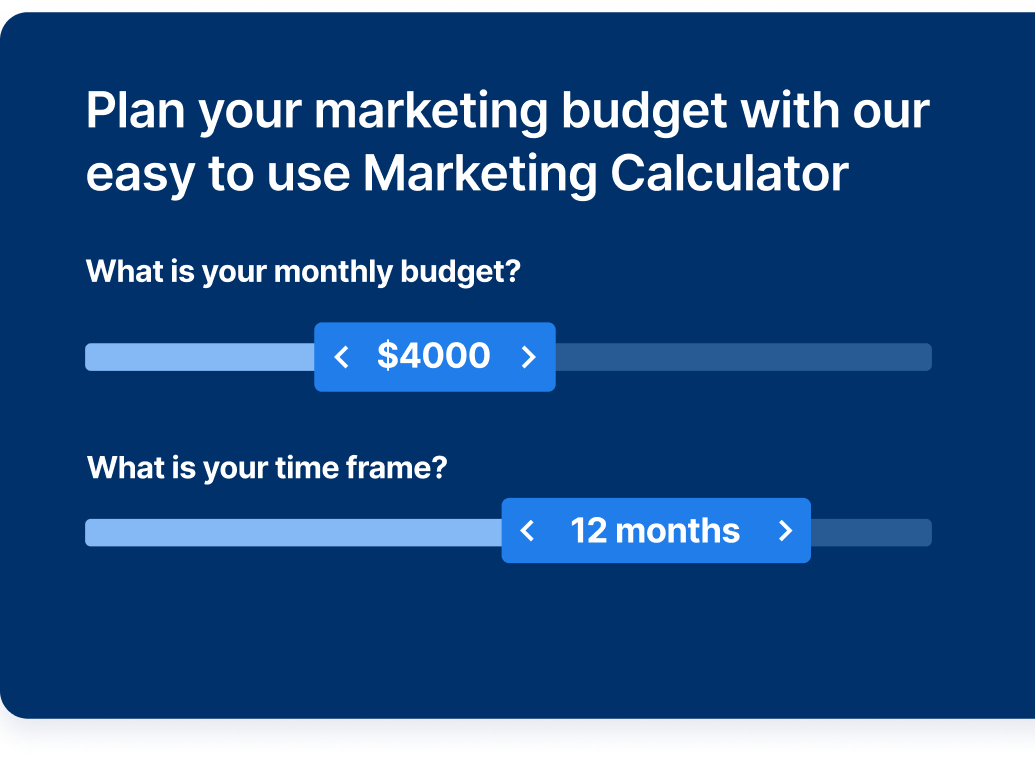
Craft a tailored online marketing strategy! Utilize our free Internet marketing calculator for a custom plan based on your location, reach, timeframe, and budget.
Share this article


Proven Marketing Strategies
Try our free Marketing Calculator
Craft a tailored online marketing strategy! Utilize our free Internet marketing calculator for a custom plan based on your location, reach, timeframe, and budget.