


Table of Contents
- Content marketing basics FAQs
- Content marketing strategy and planning FAQs
- Content creation and formats FAQs
- Blogging FAQs
- Content marketing and SEO FAQs
- Website copy and copywriting FAQs
- Interactive and visual content FAQs
- Pillar content, E-E-A-T, and YMYL FAQs
- Content distribution and promotion FAQs
- Content marketing leads, conversions, and ROI FAQs
- Content marketing timelines and expectations FAQs
- Content marketing costs and budgeting FAQs
- Common content marketing challenges and mistakes FAQs
- AI in content marketing FAQs
- Content marketing agency vs. in-house FAQs
- Content marketing works. But only if you do it right.
- What is content marketing? Content marketing is a strategic approach that creates and distributes valuable, relevant content to attract and engage a target audience, ultimately driving profitable customer actions rather than directly promoting products or services.
- How long does content marketing take to show results? Content marketing typically requires 3-6 months to see meaningful results, as search engines need time to index and rank content, though the timeline varies based on competition, content quality, and consistency of publishing.
- What is the average cost of content marketing? Content marketing costs vary widely depending on whether you handle it in-house or hire an agency, with typical monthly budgets ranging from $2,000 to $10,000 or more for professional services that include strategy, creation, and distribution.
- Should you use AI for content creation? AI can assist with research, outlines, and initial drafts to improve efficiency, but human expertise remains essential for ensuring accuracy, adding unique insights, maintaining brand voice, and creating content that truly resonates with audiences.
- When should you hire a content marketing agency? Consider hiring an agency when you lack internal expertise, need to scale content production quickly, want access to specialized tools and experience, or find that building an in-house team would be more expensive than outsourcing.
Content marketing answers real customer questions with helpful, search-optimized content that drives traffic, builds trust, and generates leads over time.
This guide compiles 100+ content marketing FAQs covering strategy, SEO, content creation, distribution, ROI, timelines, budgeting, AI, and outsourcing. Each section provides direct, practical answers to help you plan, execute, and measure a high-performing content program.
Whether you’re building a strategy from scratch or refining an existing one, use the quick links below to jump to the answers you need.
Pick your starting point:
- Content marketing basics FAQs
- Content marketing strategy and planning FAQs
- Content creation and formats FAQs
- Blogging FAQs
- Content marketing and SEO FAQs
- Website copy and copywriting FAQs
- Interactive and visual content FAQs
- Pillar content, E-E-A-T, and YMYL FAQs
- Content distribution and promotion FAQs
- Content marketing leads, conversions, and ROI FAQs
- Content marketing timelines and expectations FAQs
- Content marketing costs and budgeting FAQs
- Common content marketing challenges and mistakes FAQs
- AI in content marketing FAQs
- Content marketing agency vs. in-house FAQs
- Content marketing works. But only if you do it right.

Content marketing basics FAQs
Before diving into strategy, formats, and distribution, it helps to understand what content marketing actually is and why it matters. These common questions about content marketing cover the fundamentals:
🎥Video: What is content marketing?
What is content marketing?
Content marketing is a strategy where you create and distribute helpful content (like blog posts, videos, guides, and infographics) to attract, engage, and educate your target audience.
At its best, content marketing:
- Builds trust and authority with your ideal customers
- Answers real questions and solves real problems
- Drives profitable actions like leads, sales, and repeat business
Unlike traditional advertising, content marketing earns attention instead of buying it.
How does content marketing work?
Content marketing works by putting helpful, searchable information in front of people who are already looking for answers.
In practice, that means you:
- Research your audience and what they’re searching for
- Create content that answers their questions or solves their problems
- Distribute it through channels like search, social media, and email
Over time, that content builds trust and moves people through the buyer’s journey, from awareness to consideration to purchase.
Why is content marketing important?
Content marketing helps you reach your audience where they already are: searching for answers online. It generates three times more leads than outbound marketing, and 72% of businesses say content marketing increases their leads.
Beyond lead generation, it builds brand awareness, establishes your credibility, and creates long-term visibility. Unlike paid ads that stop working when you stop paying, strong content continues to drive traffic and results over the years.
What results can content marketing actually drive?
Content marketing can drive brand awareness, website traffic, leads, and revenue. 77% of businesses are satisfied with the ROI they receive from content marketing. Businesses that use content marketing earn six times more conversions than businesses that don’t.
Companies with blogs produce 67% more leads per month compared to those without. High-quality content also helps meet people at different stages of the sales funnel, from early research to purchase-ready.
What types of content count as content marketing?
Content marketing includes any valuable material you create to attract and engage your audience:
- Blog posts and articles
- Videos (explainers, tutorials, testimonials)
- Infographics
- Ebooks, whitepapers, and guides
- Case studies
- Webinars
- Podcasts
- Social media content
The content format depends on your audience’s preferences and where they spend time online.
What is the difference between earned media and paid media?
Paid media is any form of online marketing where you pay to advertise through a platform or service – like Google Ads, paid search ads, or sponsored social media posts. Earned media, on the other hand, is when other people talk about how great your company is through reviews, press mentions, influencer endorsements, or backlinks on third-party websites. Paid media lets you reach specific audiences quickly, while earned media acts as third-party validation that builds trust since people tend to believe other customers over brands.
What is the difference between content marketing and social media marketing?
Content marketing is the process of attracting customers by publishing valuable, original content like blogs, videos, infographics, or how-to guides that educate or entertain your target audience. Social media marketing builds customer relationships through direct interaction on platforms like Facebook and Twitter, where you engage in two-way conversations and respond to customer questions, complaints, and feedback. The key difference breaks down to this: content is what you present to potential customers, and social media is where you interact with them.
What is the difference between content marketing and inbound marketing?
Content marketing focuses on creating and distributing content across multiple channels—like writing a guide, sharing it on social media, and getting it read by your target audience. Inbound marketing takes a bigger-picture approach, using various methods (social media, blogs, video, and more) to make your website and content attractive enough to compel visitor action, whether that’s a purchase, form completion, or social follow. Content marketing is actually part of an inbound marketing strategy, with content marketing handling specific content creation and distribution while inbound marketing covers the broader conversion process.
What’s the difference between articles and blog posts?
Articles are evergreen, always-relevant pieces meant to serve a long-term purpose on your website, while blog posts are typically more timely and cover current topics. A technology website might write a blog post about the newest cell phone model’s features, but create an article detailing how to set up any new cell phone. If you don’t have a dedicated section for articles or want to consolidate all your content in one spot, blog posts can serve basically the same purpose as articles.
What are the main benefits of content marketing?
Content marketing establishes your business as an industry expert, improves your search engine visibility, and generates more leads than traditional marketing. Companies that use content marketing see six times more conversions than those that don’t, and businesses with blogs produce 67% more leads per month.
What’s the difference between content marketing and digital marketing?
The difference between content marketing and digital marketing is scale – content marketing involves a single strategy, while digital marketing involves multiple strategies. Content marketing is actually a digital marketing strategy that focuses on creating and distributing valuable, relevant content to attract your audience. Digital marketing encompasses all online marketing efforts, including content marketing, SEO, PPC advertising, email marketing, and social media.
Content marketing strategy and planning FAQs
Publishing content without a plan is like driving without a destination. These frequent questions on content marketing dive into strategy fundamentals, from setting goals to building a content calendar that keeps your team on track:
🎥Video: How to create a content marketing plan (and strategy!) for your business
What should a content marketing strategy include?
A content marketing strategy should include clear goals, a defined target audience, content topics and formats, a publishing schedule, distribution channels, and a plan for measuring results. It should also outline your brand voice and how content ties into your broader marketing efforts, like SEO, email, and social media. Without a documented strategy, you’re just creating content and hoping something sticks.
How do I set content marketing goals that tie to revenue?
Start by working backward from business outcomes and use SMART goals (Specific, Measurable, Attainable, Relevant, and Timely) to define what success looks like.
To set revenue-tied content goals:
- Identify your target outcome (leads, conversions, or revenue)
- Work backward from the numbers you need to hit
- Set specific benchmarks you can track and measure
For example, say you want to generate $20,000 in new revenue from content over the next six months. If your average customer is worth $2,000, you’ll need about 10 new customers from content. With a close rate of around 25% on content-driven leads, you’re aiming for roughly 40 qualified leads from content to hit that target.
In SMART terms, your goal becomes: “Generate 40 qualified leads from content in the next six months to drive approximately $20,000 in new revenue.”
Your content marketing goals should always answer the question: How does this impact the bottom line?
How do I identify my target audience for content marketing?
Look at your current customers first. What demographics do they share? What problems do they need solved? Use platform analytics, customer surveys, and CRM data to build a clear picture. Consider attributes like demographics, socioeconomic status, buying habits, and interests. The more specific you get with your target audience, the easier it becomes to create content that resonates and drives action.
How can I tell if my content is attracting the wrong audience?
Content that’s attracting the wrong audience often shows itself in analytics. Use a free platform like Google Analytics 4 to evaluate how long users stay on the page, whether they visit other pages, and if they complete a key action, like opting-in to a newsletter or purchasing a product.
What is a content calendar, and do I need one?
A content calendar is a planning document that maps out what content you’ll create, when you’ll publish it, and where it will be distributed. It helps you stay organized, maintain consistency, and avoid last-minute scrambling.
Content calendars also help teams avoid miscommunication and overlap. If you’re managing multiple content types or working with a team, a content calendar is essential. Even solo marketers benefit from planning at least a month ahead.
How do you create a content calendar?
You can create a physical calendar using post-it notes on a large paper calendar to represent each piece of content, which allows you to easily move deadlines and make changes. Alternatively, digital calendars using customized spreadsheet templates offer extreme shareability and endless customization options – you can keep a running tally of published pieces, set monthly goals that automatically update, and structure everything exactly how your team needs it while sharing it as easily as Google Calendar.
How do I brainstorm content ideas?
Look at the real questions your customers ask and the problems they encounter every day. Use keyword research tools like KeywordsFX to find topics people are actively searching for. Look at what competitors are covering and identify gaps you can fill. Review comments and questions from your sales team, customer service, and social media. Industry news and content marketing trends can also spark ideas. Capture ideas in one place as they come up, so you always have fresh topics ready to go.
How often should I update my content marketing strategy?
Review your strategy quarterly at a minimum. Content marketing isn’t static, and what worked six months ago may not work today. Use performance data to identify what’s hitting and what’s falling flat. Major algorithm updates, new platform features, or shifts in your business goals should also trigger a strategy refresh. The key is to stay flexible and adjust based on what the data shows.
What is integrated content marketing?
Integrated content marketing is a strategic approach where you create and deliver valuable, relevant content across multiple channels to attract and retain a clearly defined audience. It aligns all your marketing efforts with broader business goals to maximize impact and return on investment. For example, instead of running disconnected blog posts, social media campaigns, and email newsletters, you coordinate them around the same messaging and objectives so each channel reinforces the others.
How do you create an integrated content marketing strategy?
Start by defining clear goals like increasing brand awareness, generating leads, or driving sales, then identify your unique value proposition and create consistent messaging that communicates what sets your business apart. Develop a content plan that includes various formats, like blog posts, videos, infographics, social media updates, tailored to different stages of the customer journey from awareness to conversion.
How do I create a content marketing plan?
Start by defining your content marketing objectives — whether that’s building brand awareness, boosting SEO, or raising revenue — since your goals will shape your content types and editorial calendar. Take inventory of your previous content to identify strengths and weaknesses, then decide on a target audience and create buyer personas so you can tailor material to meet their specific needs. Generate content ideas that fill gaps in your industry, choose promotional channels like social media and email, chart out an editorial calendar to stay organized, and select a content management system to monitor metrics like website traffic and overall revenue.
What is a content strategy?
A content strategy sets the overarching vision and goals powering your content creation through high-level planning, developing, and managing content marketing materials across many channels. It includes three pillars: content planning (who, what, when, where, and how), content creation and management (developing and organizing content production), and content reporting (measuring which channels, topics, and content types contribute most to your goals).
How do I create a content strategy?
Start by developing your brand style guide and defining S.M.A.R.T. goals that relate to bottom-line results like leads and revenue. Assemble your content team, audit existing content to identify gaps, then create a content plan and calendar outlining topics, types, due dates, and publishing locations. After managing and launching your content, promote it through social media or email, measure results using tools like Google Analytics, and re-optimize older content to maximize its value.
How do you create a content marketing strategy?
Start by setting S.M.A.R.T. goals (specific, measurable, achievable, realistic, and timely) and determining your target audience beyond just demographics – research where they spend time online, what pain points they have, and what content types they engage with. Then audit your existing content, write content guidelines for consistency, establish a content management system, and measure actionable metrics that tie directly to your goals.
Why is a content marketing strategy necessary?
A content marketing strategy develops a clear plan for achieving your goals, influences the success of your entire content marketing plan, and helps you adapt to industry changes. Organizations with a documented content marketing strategy increase their plan’s effectiveness by 25% compared to those without one, making the strategy critical for maximizing your return on investment.
Content creation and formats FAQs
Content is what makes content marketing work. These content marketing FAQs look at what to create, which formats perform best, and how to keep your content engaging and valuable:
🎥Video: 6 tips for how to create content that converts
What type of content performs best?
The best-performing content depends on your audience and goals, but video drives strong results across the board. 89% of businesses use video as a marketing tool, and 87% of consumers have been convinced to buy a product or service after watching a video. Blog posts remain foundational for SEO and thought leadership.
Case studies and customer stories are particularly effective for B2B, with 53% of B2B marketers saying they’re the most effective content format. You’ll typically find the best content for your company by matching content type to what your audience prefers and where they spend time.
How long should blog posts be?
The ideal blog post length depends on your goals. The average blog post is 1,333 words long. Posts with 1,000 to 1,500 words work well for social sharing and general engagement. For ranking on Google, longer content tends to perform better, with top-ranking articles averaging around 2,450 words. More important than hitting a specific word count is covering the topic thoroughly and providing genuine value to readers.
Should I prioritize video content?
Yes, if you have the capacity to produce it steadily. 95% of marketers consider video marketing an important part of their overall strategy, and 96% say video has helped boost brand awareness. Video keeps users engaged and increases time on site.
If video feels overwhelming, start small with short clips, behind-the-scenes footage, or repurposed content from longer videos. You don’t need expensive equipment. A smartphone and basic editing software can get you started.
What makes content engaging?
Engaging content is useful, relevant, and easy to consume. It answers questions, solves problems, or entertains. Use clear headlines and break up text with visuals, subheadings, and short paragraphs. Content with visuals gets 94% more views than text-only content. Add calls to action (CTAs), so readers know what to do next. Most importantly, write for humans first. Content that feels like a conversation rather than a lecture will keep people reading.
How do I create content faster without sacrificing quality?
38% of marketers say creating more content faster is a challenge. To speed up without losing quality, build systems and processes:
- Create content templates for common formats
- Batch similar tasks like research, writing, and editing
- Repurpose existing content into new formats
- Use AI tools for ideation and first drafts, then refine for quality and brand voice
- Build a content calendar, so you’re never scrambling for ideas
- Consider outsourcing specialized tasks like design or video production to free up internal bandwidth
What is a content brief?
A content brief is a roadmap that gives writers the key details they need to produce content aligned with your business goals. It outlines essential information like the target audience, desired tone, primary keywords, word count, deadlines, and a rough outline so writers understand what’s expected. A good brief includes a working title, foundational details, the content goal, audience pain points, voice and persona guidelines, links to helpful sources, and an SEO checklist to keep content optimized.
How do you write a content brief?
Start by crafting a working title that includes your primary keyword and captures reader interest. Provide foundational information like word count, content type, deadlines, and whether you need graphics or videos. Explain the goal of the content and what funnel stage it targets, then describe your audience’s demographics and pain points. Specify the desired tone and brand voice with examples, create a rough outline highlighting key points, and give writers links to competitor content or relevant sources. Finish with an SEO checklist that covers keyword usage, internal linking, and metadata requirements.
Why is a content brief important?
Content briefs give your team clear direction so the final product aligns with your goals and messaging. They keep your brand voice consistent across multiple writers and make collaboration easier by giving sales, marketing, and design teams a central reference point. Writers produce higher-quality content faster when they have the information they need upfront, and you’ll see better results in your analytics when content is created with a strategic brief rather than guesswork.
What is content scaling?
Content scaling is when you grow your content strategy by increasing both the quantity and quality of content you produce. The goal is to dominate search results and drive more qualified leads to your business – you’re essentially expanding your content output without sacrificing the value you provide to your audience. For example, instead of publishing one blog post per week, you might scale up to three or four posts while maintaining (or improving) the depth and usefulness of each piece.
How do you scale content marketing?
Start by expanding your content team or outsourcing to a professional agency that has experienced writers, designers, and videographers ready to go. Create consistent processes using project management tools so everyone knows their role and each piece moves smoothly from writing to editing to publishing – a style guide helps keep everything on-brand. You can use AI tools to assist your team with grammar checks, research, and inspiration (just don’t replace human creators entirely).
Should you write long-form or short-form content?
Long-form content (1,200+ words) beats short-form content (500 – 800 words) in nearly every metric that matters — studies from BuzzSumo analyzing 100 million articles found that posts with 3,000 – 10,000 words performed best for shares, while Moz’s study of over one million websites showed content above 1,000 words earned more shares and links than shorter content. Long-form also ranks for more keywords since you can take a 360-degree approach to covering a topic and its sub-topics, answers the reader’s initial question plus their follow-up questions, and delivers better conversion rates (Crazy Egg boosted conversions 30% by increasing page length).
How do I repurpose content for my business?
Repurposing content means taking one valuable resource and modifying it so it can be shared in different formats or on different platforms. You can update outdated content with fresh information, experiment with new formats like turning a blog post into an infographic or video, and share your content across available channels like social media and email. For example, if you have a popular YouTube video, you can add it to your blog using the video transcript as text and share snippets on social media.
What content should I repurpose?
Start by looking at content that’s easy to update or content your audience already loves, like pages that get high traffic or videos on topics that perform well. Case studies and data compilations work especially well for repurposing since statistics make great infographics, research can be explained in videos, and both can be shared across social media and email newsletters. Ultimately, choose evergreen content that answers common industry questions and provides valuable, in-depth information.
Blogging FAQs
Most content marketing strategies involve creating blog posts and maintaining a blog on your website. Check out these blogging FAQs below for more information!
How long does it take to see results from blogging?
Most blogs start gaining traction after six months, though it can take anywhere from four months to a year depending on your post frequency, topics, and content quality. The speed of growth varies based on your audience size, engagement levels, and how consistently you publish high-quality content. If you produce valuable posts regularly, you should see a positive return on investment sooner rather than later.
What results can you get from blogging?
Blogging builds brand awareness and drives measurable business outcomes – companies with blogs produce 67% more leads every month. You’ll see increased exposure as your content reaches a wider audience, improved SEO from engaging and informative posts, and higher engagement rates when readers connect with what you share. Quality blog posts also boost conversion rates by guiding visitors to sign up for newsletters or make purchases when they find exactly what they’re looking for.
How do you know if your blog post was successful?
A successful blog post typically generates interest and results within a few weeks or months of publishing, but success looks different for each post. Some posts rank for valuable keywords and drive high traffic, while others rank for fewer keywords but generate qualified leads. Measure success based on what each post does for your website and business goals – one post might excel at building awareness while another drives conversions, and both contribute value to your overall content strategy.
What is a blog post outline?
A blog post outline is a roadmap that lists the sections, key points, and working title of your blog post before you start writing. It helps you stay focused on the topic and ensures you cover all important ideas in a logical order that readers can easily follow. For example, an outline for a comparison post might include an introduction, benefits of each option, a recommendation section, and a call to action.
How do you write a blog post outline?
Start by identifying your audience’s search intent. What problem are they trying to solve or what question are they asking? Write a working title that summarizes your post and addresses reader needs, then determine your three to five main topics based on that intent. List key takeaways under each topic, including any studies, research, or expert quotes you’ll cite. Review the structure and reorganize topics if needed to front-load the most important information, then add a call to action that guides readers to the next logical step based on their intent.
Why do you need a blog post outline?
A blog post outline organizes your thoughts and gives your content a structure that readers can follow without getting lost. It keeps you on track so you don’t leave out important points or stray off topic while writing. Outlines also help you arrange ideas with a logical flow that makes sense for your audience’s needs, which means you’ll spend less time rewriting sections and more time crafting quality content that delivers value.
Does my website need a blog?
Yes, your website needs a blog. Adding a blog lets you attract new users to your site through informational content that targets people at the top and middle of the buying funnel and users who are researching solutions but aren’t ready to buy yet. When you create industry-relevant content, you give people searching for topics related to your business a reason to visit your site, which increases valuable traffic that can turn into leads and sales. Blogs also maximize your online presence since you can share posts across email newsletters and social media, creating multiple touchpoints for people to discover your business.
How do I create a successful blog for my business?
Start by posting content often using a content calendar to plan when you create, edit, and publish posts – consistent publishing creates new ways for users to find you in search results. Focus on industry-related topics rather than trending topics that aren’t relevant to your business. For example, a dog grooming business should write about how to trim dog nails or find the right groomer, not unrelated trending news. Add visuals like photos, videos, infographics, or custom graphics to break up text and keep readers engaged. Keep your content evergreen (relevant over time rather than based on trends) so posts you created months ago can still drive traffic to your site.
Why are blog posts effective for SEO?
Blog posts drive strong SEO results because they’re shorter and faster to create than other content types, which means you can publish more frequently – and 60% of bloggers who publish at least once per day report getting strong results. When you create evergreen blog posts (content that stays relevant over time rather than dated news), you’ll have a steady stream of traffic to your site since those posts continue ranking and driving visitors months or even years after you publish them. The combination of frequent posting and evergreen topics creates sustainable traffic growth that improves your overall SEO performance.
What makes a blog post high-quality?
High-quality blog posts combine original ideas with accurate information, clear structure, and engaging writing. Your post should have a compelling title, a strong introduction that hooks readers immediately, and content broken into scannable sections with short paragraphs, headings, and visuals. Support your ideas with research and cite sources, but don’t forget to include your own insights — that’s what differentiates a blog post from a news article.
How should I structure my blog post for readability?
Keep paragraphs short with one idea per paragraph, use bulleted lists when appropriate, and break up your post with headings that organize content into logical sections. Use bold text to highlight key terms and avoid walls of text that span 30-40 lines — they’re visually overwhelming and discourage readers from reading the entire post. Add images, charts, or diagrams to illustrate complex ideas and make your content easier to digest.
Should I write my blog post title before or after writing the content?
Writing your title first gives you a focused starting point and helps you stay on track as you write. A solid title developed before you start ensures you have a concise idea to work with, helps you research relevant keywords, and lets you check back regularly to make sure your writing stays focused on the topic you promised readers.
How can I get more value from my blog posts?
Focus on providing information that stands out from what other bloggers have already covered, include relevant visuals like images or videos to hold readers’ interest, and promote your posts on social media platforms. After publishing, encourage readers to subscribe so they receive automatic email notifications when you publish new content. These strategies help you attract more traffic and build trust with potential customers over time
Content marketing and SEO FAQs
Content and SEO go hand in hand. Here are some of the most common content marketing questions we get on optimizing your content for search engines, earning rankings, and driving organic traffic:
🎥Video: What Google EEAT means for your web content
Is content marketing the same as SEO?
No, but SEO and content marketing work closely together. Search engine optimization (SEO) focuses on improving your website’s visibility in search results. Content marketing focuses on creating valuable material that attracts and engages your audience.
Content is the fuel that powers SEO. When you create optimized content, it ranks in search engines and drives organic traffic. The better your SEO, the better your content performs, and vice versa. SEO attracts qualified traffic to your site, while content marketing keeps those visitors interested and moves them closer to becoming customers.
How does content marketing improve SEO?
Content marketing fuels SEO by giving search engines something to rank. When you create high-quality content optimized with relevant keywords, search engines understand what your pages are about and can match them to user searches.
Strong content also earns backlinks from other websites, which signals authority to Google. 72% of marketers say content creation is the most important SEO tactic. The more valuable content you publish, the more opportunities you have to rank for relevant searches.
What keywords should I use for content marketing?
Conduct keyword research using tools like KeywordsFX to find relevant terms related to your content. Focus on long-tail keywords that contain three or more words, for example, “best fashion magazine” instead of just “fashion.” These keywords are more specific and drive more qualified traffic to your site because people searching these terms have higher search intent and are more likely to have an interest in your business.
How do I optimize content for search engines?
Start with keyword research to identify what your audience is searching for. Then follow these content optimization best practices:
- Include your primary keyword in your title tag, meta description, headings, and naturally throughout the content
- Write descriptive, compelling title tags that encourage clicks
- Use header tags (H2, H3) to structure your content and make it scannable
- Optimize images for visual search with descriptive alt text
- Internally link to other relevant pages on your site
- Ensure your page loads quickly and works well on mobile
Most importantly, focus on creating genuinely helpful content that answers the searcher’s question better than competing pages. Google rewards content that satisfies search intent, not content stuffed with keywords.
How do backlinks relate to content marketing?
Backlinks are links from other websites pointing to your content. They signal to search engines that your content is valuable and trustworthy. When you create high-quality content like original research, infographics, or comprehensive guides, other sites are more likely to link to it as a resource.
These links boost your domain authority and help your pages rank higher. Content marketing is one of the most effective ways to earn backlinks naturally.
How long does it take for content to rank in search results?
Most content takes about three to six months to start ranking and gaining meaningful traction in search results.
How fast you see movement depends on factors like:
- Your site’s authority and backlink profile
- How competitive the keyword or topic is
- The quality, depth, and freshness of your content
New websites or pages without established authority may take longer, while low-competition topics can rank faster. Track your rankings regularly and update content as needed to keep improving performance.
What is YMYL content?
YMYL stands for Your Money or Your Life content, which covers high-stakes topics like health, finance, legal issues, or anything else that could significantly impact someone’s wellbeing or financial stability. Google pays closer attention to YMYL sites because bad information in these areas can harm people, so they evaluate whether your content demonstrates Experience, Expertise, Authoritativeness, and Trustworthiness (E-E-A-T). Creating YMYL content today isn’t just about SEO – one slip-up can cost you readers’ trust or your Google visibility.
What does E-E-A-T mean for YMYL content?
E-E-A-T stands for Experience, Expertise, Authoritativeness, and Trustworthiness, and it’s how Google evaluates whether your YMYL content is credible. Experience means including firsthand perspectives like patient or clinician accounts. Expertise comes from statements by academic or clinical specialists.
Authoritativeness means citing respected institutions like the NIH, CDC, or Mayo Clinic. Trustworthiness is built through transparent attributions and diverse sources. You strengthen E-E-A-T by getting subject-matter experts like MDs or DOs to review your content, including authoritative quotes from professionals, and earning professional certifications that prove you understand the standards and ethics required for trustworthy communication in your field.
How do you create effective YMYL content?
Use AI tools only for brainstorming and topic ideation, never to replace human writers who ensure accuracy and align with Google’s expectations. Include authoritative quotes from professionals and institutions to boost credibility, and feature high-quality images and videos from real sources (not obvious stock photos) to build trust.
Get subject-matter experts to review your content for fact-checking and lending a formal stamp of authority. Join professional organizations for networking and industry insights, attend one or two niche events per year to gain insider perspectives, and earn professional certifications like CHES or AMWA programs to demonstrate verifiable expertise. Combine these strategies into a workflow that maintains quote databases, sources authentic visuals, integrates expert reviews, and builds targeted processes for pitching content to authoritative outlets.
What is an SEO content checklist?
An SEO content checklist is a set of steps you follow each time you write content to make sure it ranks in search results where people can find it. It starts before you write (choosing a target keyword, finding related keywords, determining search intent, and researching your topic) and continues after you draft your piece (optimizing title tags and URLs, compressing images with alt text, adding internal links, pursuing backlinks, using responsive design, ensuring fast load speeds, and analyzing your page with Google tools). Following a checklist makes the process less intimidating since Google’s algorithms might seem complicated, but the actual steps to optimize your content are fairly simple to implement.
What types of content should I create for SEO?
Five types of content work best for driving traffic through SEO: Blog posts (shorter, conversational pieces around 1,000 to 1,500 words that you can publish frequently), long-form content (detailed, in-depth articles with a professional tone that keep people on your site longer), videos (highly engaging format where one minute equals eight million words), listicles (easy-to-scan numbered or bulleted lists), and guides (all-encompassing pieces that provide every detail about a topic). Each format serves a different purpose, but they all help boost your search rankings when optimized properly with keywords, internal links, and valuable information that matches search intent.
How does video content help with SEO rankings?
Video increases engagement and sends positive ranking signals to Google in several ways. Users spend 88% more time on pages with videos, and that longer dwell time tells Google your page is relevant to searchers, which leads to higher rankings. You’re also 53 times more likely to end up on the first page of Google results if you use video on your website. Videos keep people engaged since U.S. adults spend five hours each day watching videos, and 86% of businesses see improved conversion rates when they add video to their content.
How do I write SEO content that ranks?
Start with keyword research to identify relevant topics, then write content that matches search intent by examining what already ranks for your target keywords. Make sure your content is comprehensive and high-quality (aim for 1,000 – 2,000 words depending on the topic), and optimize key places like your title tag, meta description, H1 tag, headings, and paragraphs with your core and related keywords. Include internal links to other valuable content on your site, add clear CTAs to drive conversions, and encourage content sharing through social media buttons to earn backlinks.
Should I write SEO content for search engines or readers?
Write for both. Your content should flow naturally and engage human readers while also following SEO best practices. Focus on creating helpful content that addresses readers’ pain points rather than bombarding them with a sales pitch, and break content into short two to three-sentence paragraphs for easy web browsing. Adding videos, images, and graphics to your SEO content can boost your rankings and engage site visitors, making your content work harder for both search engines and the people you want to become customers.
How does content optimization improve SEO?
Content optimization improves SEO because search engines need content to rank in the first place – without strong, optimized content on your pages, Google has nothing to show in search results. Optimized content uses targeted keywords naturally, includes multimedia to keep visitors engaged longer, and creates internal links that help Google find and index all your pages more quickly.
How do you optimize content for SEO?
Start with keyword research to identify which terms your audience searches for and which have achievable competition levels, then implement those keywords naturally in your content, headings, title tags, and meta descriptions. Add multimedia like images and videos to keep visitors engaged, create internal links to other relevant pages on your site, and check spelling and grammar to maintain credibility.
Website copy and copywriting FAQs
Have questions about website copywriting? Get the answers below!
Why should you write website copy?
Website copy improves your visibility in search engines by allowing you to insert keywords your target audience is searching for, drives more traffic to your website (generating 54% more leads than traditional marketing methods), and can more than double your conversion rates. Web copy also increases brand awareness by establishing your business as a trustworthy expert in your field, provides users with important information they want about your business and offerings, and boosts other digital marketing strategies like email marketing and social media. Without website copy, users wouldn’t learn much about your business and would likely turn to competitors who provide more detailed information.
What is website copy?
Website copy is the core text or narrative on your website pages — including your homepage, about page, product pages, services pages, and content pages. This copy guides users throughout your website, informs visitors about your brand, gives detailed information about your products and services, and helps answer users’ questions while providing solutions to their problems and pain points.
Without web copy, your website would have no information about your brand or what you offer, making it impossible to keep visitors on your site until they’re ready to make a purchase.
How does website copy help drive conversions?
Website copy drives conversions by guiding users throughout your website and including attention-grabbing calls to action that encourage visitors to browse products, learn more about your brand, sign up for newsletters, make purchases, or contact you for more information.
In fact, businesses that use web copy see six times more conversions than businesses that don’t, and 70% of users prefer to get to know companies through articles instead of advertisements. By providing high-quality copy that gives users the information they want and helps them understand how you can solve their problems, you can keep them on your website longer and encourage them to convert into paying customers.
How do you write effective web content?
Start by getting to know your audience (their demographic information, hobbies, interests, and challenges) so you can use language and tone that resonates with them, then optimize your content for SEO by integrating long-tail keywords, linking internally, and creating descriptive title tags and meta descriptions.
Keep sentences and paragraphs short (2-3 sentences max per paragraph) to make your content digestible, integrate bulleted lists and headings to maximize readability, and use the inverted pyramid method to share your most important information first since people spend an average of 37 seconds on an article. Make sure you limit jargon so your audience can understand your content, and always edit your work before publishing to provide error-free copy.
How do I write compelling headlines?
Use one of seven proven headline types: urgency (highlighting time as a factor), curiosity (making readers feel like they’re missing out), self-help (appealing to emotional needs), lists (telling people exactly what to expect), how-to (promising DIY solutions), newsjacking (capitalizing on current news), or contrarian (turning accepted ideas on their head). For example, “6 Tips You Need to Know to Keep Your Business Alive This Year” uses urgency, while “237 Awesome Tools to Keep Your Business Growing” uses a list with a large number to get more attention.
Why is copywriting essential for my website?
Copywriting serves five critical functions: attracting visitors to your site, informing them about your industry, convincing them to become customers, filling your site with readable content, and supporting your SEO strategy. Good copy keeps visitors on your site longer, which increases your chances of converting them into paying customers. Search engines also favor websites that regularly update with quality content, giving you an advantage over competitors who don’t maintain their sites.
How does website copywriting improve my SEO?
Copywriting lets you target specific keywords to attract qualified traffic from search engines like Google. Search engines recommend sites that regularly update with quality information because it signals that your site is active and provides recent, relevant content to users. Every new page, blog post, or article you add strengthens your site’s SEO performance and gives you an advantage over competitors who don’t update their websites frequently.
How should I format website copy so people actually read it?
Break content into small paragraphs of 3 to 4 sentences instead of academic-style blocks of text, use bulleted lists to attract readers’ eyes, and number your points if you’re covering specific steps or tips. Long paragraphs deter readers because they make content difficult to scan for important information. Adding visual elements like photos, custom graphics, or videos also increases engagement. In fact, 65% of viewers watch more than half of a video on a website.
What’s the difference between content marketing and copywriting?
Content marketing is original content created with the long-term goal of attracting new customers, like blog posts, videos, podcasts, and ebooks that gradually convince visitors your company is trustworthy. Copywriting is the written content that fills your site and motivates visitors to take immediate action, like product descriptions, pricing pages, and calls to action. Content marketing provides long-term value and works as an appetizer to entice people, while copywriting is your sales pitch designed to encourage immediate conversions.
How do content marketing and copywriting work together?
Content marketing and copywriting complement each other when you seek a balance between the two strategies. Content marketing works at the top of your sales funnel to introduce visitors to your business and the value you provide, then links to pages with stronger copywriting that moves these visitors down the funnel to conversion. Without copywriting in the form of calls to action, your content marketing rarely results in conversions, but without content marketing, you come off too strong to visitors who aren’t ready to buy yet.
Interactive and visual content FAQs
Get answers to common questions about interactive content and visual content below!
Why are headlines so important for content marketing?
Your headline is often your only chance to earn a click in search results or an RSS feed. According to Upworthy’s co-founder Eli Pariser, content virality depends on balancing strong packaging with strong content – even the best article is wasted if no one reads it because the headline didn’t grab them. You’re competing against thousands of articles, blogs, and infographics for attention. If your headline isn’t targeted, interesting, or thought-provoking, readers will move on to something else. For example, “Lessons Learned From Upworthy” won’t get nearly as many clicks as “The Rise of Upworthy and What it Means for Content Marketing.”
Why should businesses use vertical videos?
Vertical videos are sweeping social media right now and can truly grab viewers’ attention with addictive, fast-paced content that moves people through an emotional cycle quickly. Your competitors are likely already creating them, so leveraging this format helps you compete in an added space and potentially get ahead. They’re also cost-effective since you can film them on a phone and edit them using built-in platform software, making them faster and cheaper to produce than longer horizontal videos.
How do you create vertical videos for your business?
Start by choosing which platform to post on based on where your audience browses – TikTok is solely for short videos, while YouTube and Instagram also feature other content types alongside Shorts and Reels. Come up with video ideas by checking what competitors are posting, answering frequently asked questions from customers, capitalizing on trending topics in your industry, or introducing your staff to humanize your brand. You can film your own footage or use stock video from sites like StoryBlocks, then edit using free platforms like Canva or paid options like Adobe Express that have vertical video dimensions built in as templates.
How do you create immersive content?
Start by paying attention to small details like color scheme, style, and format that reflect your brand and make your content memorable. Think outside the box to present information creatively – if you own a restaurant and want to teach people how to cut vegetables, create a video showing the technique or an infographic with step-by-step photos.
Make your content interactive by adding elements like quizzes, polls, hot spots where users can find more information, or 360-degree videos that let viewers control what they see. Include clear calls to action that guide your audience on what to do next, and put your audience in control by letting them customize how they absorb and view your content.
How does interactive content generate leads?
Interactive content generates leads by engaging visitors through participation, whether they’re using calculators, taking quizzes, or exploring interactive infographics, and then offering a contact form or soft call to action after they’ve experienced value from the tool. Users who complete an entire interactive experience are highly qualified leads since they’ve invested time and effort, signaling genuine interest in your services. The key is making the interactive element genuinely useful (like a cost calculator or personalized quiz) so visitors want to provide their contact information to continue the conversation.
How do you use images and videos for content marketing?
Create original visual content like infographics, how-to videos, user-generated content, behind-the-scenes footage, or simple illustrations to help your content stand out in a crowded market where 93% of marketers already use content marketing. Visuals allow readers to process information faster and keep their attention longer than text alone, for example, tweets with images receive 18% more clicks, 89% more favorites, and 150% more retweets than text-only tweets. Start with the type that fits your business best, whether that’s data-heavy infographics, product demonstration videos, or customer photos shared through a branded hashtag.
What makes infographics effective for content marketing?
Infographics organize data-heavy information in a digestible, visually interesting format that can boost engagement and SEO. WebFX created a color-coded map showing iPhone costs around the world instead of listing prices in a boring table, which earned close to a hundred tweets, over a thousand Facebook likes, and several backlinks to the site. If you have interesting business statistics or want to explain a narrow topic, a custom infographic gives you a unique visual asset that makes complex information accessible and shareable.
Why should I use video for content marketing?
Video content helps you appear 53 times more likely to rank near the top of Google’s search results, and over 50% of marketing professionals say video delivers the best return on investment. Adding a video to a landing page can increase conversion rates by 80%, and video helps you connect with customers at every stage of the marketing funnel, from educating them about your brand to converting them into customers.
How do I use video at different stages of the marketing funnel?
At the top of the funnel, create educational videos and event videos to introduce people to your brand and establish authority. In the middle of the funnel, use product demos and how-to videos to showcase what you offer and highlight benefits. At the bottom of the funnel, share customer testimonial videos and employee testimonial videos to build trust and give potential customers the final push they need to convert.
Should I use short-form or long-form video content for my business?
You should use both. Short-form videos (under 10 minutes) work well for social media platforms like Instagram Reels and TikTok, while long-form videos (over 10 minutes) perform better on YouTube and your website. Your audience’s preferences, the video’s purpose, and where you plan to share it all determine which length to use for each piece of content.
What is interactive content?
Interactive content encourages users to actively engage with it instead of passively consuming it. This includes calculators, tools, quizzes, image sliders, interactive infographics, videos, and polls or surveys, and content that users manipulate and engage with on your website. Interactive content helps increase brand awareness, boost audience engagement, and drive more leads and conversions for your business.
What are the best types of interactive content to use?
Calculators and tools help users find answers to their questions and can encourage them to convert into customers. Quizzes are shareable and engaging, which increases your brand awareness when users share results on social media. Image sliders enable visitors to browse products easily, while interactive infographics and videos provide immersive experiences that keep users on your site longer. Polls and surveys give you valuable feedback about your audience’s demographics, interests, and preferences.
Why should I add interactive content to my website?
Interactive content keeps your audience engaged and increases the time they spend on your website learning about your business. More than 70% of users prefer getting to know a company through content instead of advertisements, and consumers spend 88% more time on pages with videos. Interactive elements like calculators can help potential customers make purchasing decisions, while quizzes and tools position your brand as an expert in your field.
Pillar content and E-E-A-T FAQs
What is pillar content? How can you implement E-E-A-T signals in your content? Get the answers to those questions and more below!
What is E-E-A-T, and why does it matter for content?
E-E-A-T stands for Experience, Expertise, Authoritativeness, and Trustworthiness. It’s a framework Google uses to evaluate content quality.
How do you improve E-E-A-T?
To improve E-E-A-T, create content from subject matter experts, cite credible sources, keep information accurate and up to date, and build your reputation through consistent, high-quality publishing.
What is user-focused content?
User-focused content prioritizes the end user who interacts with your content instead of search engine algorithms or industry norms. It can include any format, including text, videos, images, or infographics, as long as it’s created with the user’s needs and experience at the forefront. Creating user-focused content helps you see better returns on content marketing, build your brand reputation, and earn trust with your audience over time.
Why should you create user-focused content?
User-focused content strengthens your impact and boosts conversions by delivering consistent quality, building brand awareness, and earning user trust. The more you focus on your end user, the higher quality your work becomes. Users will remember your name, come to you for information, and potentially purchase when they need your products or services. Since Google tries to find the best content for searchers, they reward websites that pay attention to users, which means focusing on the user naturally helps your algorithm performance too.
How do you create content that’s actually user-focused?
Focus on the user instead of the algorithm by making your content easy to skim and understand, turn features into benefits that explain how you improve the user’s life, and answer user intent early on the page. Be clear with your information using concise language rather than walls of text, think about recipe pages where people scroll past lengthy paragraphs to find the actual recipe. If you make your content beneficial for users, more people will engage with it, which sends positive signals to Google that improve your ranking naturally.
What is pillar content?
Pillar content is comprehensive, in-depth material that focuses on a specific topic and serves as the go-to resource for detailed information, think ebooks, guides, or reports rather than individual blog posts or videos. These pieces dive deeply into a subject and break it down into various sections, taking significant time to develop because they provide a 360-degree view of a topic instead of a quick “one and done” post. Pillar content is industry-specific and instructive, often focusing on critical areas of your business or services you specialize in to help your audience understand complex topics.
Why should you create pillar content?
Pillar content builds your reputation as an industry authority, keeps visitors engaged longer on your site (sending positive signals to Google that boost rankings), attracts more qualified leads who invest time reading detailed information, and earns more backlinks from authority sites. Since this well-researched, highly detailed content provides abundant information, credible sites are more likely to reference it in their own content, which improves your SEO ranking and helps you reach more valuable leads.
How do you create effective pillar content?
Start by understanding your target audience and what information they need, then brainstorm broad core topics you can break down into smaller subtopics (like “content marketing” broken into videos, blogs, and infographics). Use videos and infographics as supportive content to break up text and keep readers engaged, keep updating your pillar content as information changes to maintain accuracy and trust, and actively promote it through SEO, email marketing, and social media to drive traffic.
How do I make my content more data-driven?
Start by outlining your content first, then research credible sources like industry authorities, research companies, or your competitors to find relevant statistics. Make sure the data you incorporate directly supports your main points and comes from reliable, recent sources that your audience will trust.
Why should I add data to my content?
Adding data helps your audience see the concrete impact of your claims, builds your website’s credibility, and makes your content more valuable to readers. For example, saying “U.S. adults spend an average of five hours a day watching videos” makes a stronger impression than simply saying “many people enjoy videos online.”
Where can I find credible data for my content?
You can obtain data from industry authorities, research companies that conduct studies about your field, or by tracking your competitors’ cited sources back to the original research. If you can’t find relevant information, consider conducting your own research through surveys or studies to gather original data.
What makes content high quality?
High quality content has a clear purpose that solves a problem or provides tangible value to readers, uses proper grammar and spelling, and includes relevant multimedia like images or videos to enhance the reader’s experience. It should also be technically optimized with best-practice formatting and headers so search engines can parse and index it, and it needs to align with what your audience expects based on your industry and their needs.
How do you know if your content is high quality?
Put yourself in your audience’s shoes and ask if the content is something you would enjoy consuming. If not, hold off on publishing it. Check that your content flows well with correct grammar, includes factually accurate information, and provides real value rather than fluff created just to rank in search engines. Content that makes use of great visual media gets shared up to 12 times more often than text-only content, so evaluate whether you’ve enhanced the reader’s experience with relevant multimedia.
Content distribution and promotion FAQs
Creating great content is just the very beginning. Let’s break down how to get your content in front of the right audience through distribution and promotion:
🎥Video: How to repurpose content on your website, social media, and beyond
How do I distribute my content?
Distribute content through the channels where your audience already spends time. Start with your website as the hub, then share through email newsletters, social media, and paid promotion. 73% of marketers use organic social media to promote their content, and 53% use email marketing.
You can also repurpose content for different platforms, like turning a blog post into a LinkedIn article or a short video. The goal is to meet your audience where they are, not wait for them to find you.
How do content marketing and social media work together?
Social media and content marketing complement each other naturally. You create content on your website, then share it on social platforms to expand your reach. Social media helps your content reach people who may not visit your site routinely. It also lets you gather feedback, encourage discussion, and get input on future content ideas. As you reliably share valuable content, you build a following that drives traffic back to your site and increases engagement.
Should I use paid promotion for my content?
Paid promotion can accelerate your content’s reach, especially for high-value pieces. 63% of marketers use paid channels to boost content distribution. The best paid channels include social media advertising (66%), paid search ads (45%), and YouTube ads (40%).
Paid promotion works well for gated content like ebooks or webinars where you’re capturing leads. Start with a small budget to test what works before scaling. Organic reach takes time, so paid promotion can help bridge the gap while you build momentum.
What is the best way to promote a new blog post?
Promote new blog posts through multiple channels to maximize reach:
- Share on your social media profiles (multiple times over several weeks)
- Send to your email list, either as a dedicated email or within a newsletter
- Link to it from related pages on your website
- Reach out to influencers or industry sites who might find it valuable
- Repurpose key points into social media posts, graphics, or short videos
How do I build an email list for content distribution?
Offer something valuable in exchange for an email address. This could be an ebook, guide, template, checklist, or access to exclusive content. To grow your email list effectively:
- Place signup forms on high-traffic pages and within relevant blog posts
- Use clear calls to action that explain the benefit of subscribing
- Offer webinars or free courses that require registration
- Gate high-value content behind a simple email form
Once you build your list, send regular email newsletters featuring your latest content to keep subscribers engaged and driving traffic back to your site.
How often should I promote my content?
Promote each piece of content at least three times across your channels, since your entire audience won’t see it the first time.
For an effective content promotion cadence:
- Share new content multiple times over the first few weeks
- Space those shares out appropriately, and vary your messaging and format each time
- Repromote evergreen content periodically since the value doesn’t expire
- Track which posts drive the most engagement and double down on your top performers
Be steady without being repetitive. A single share rarely moves the needle, but a coordinated push across platforms does.
How can I use social media to promote my content marketing more effectively?
Post your content multiple times on social media since not all followers will see it the first time you share it. Tools like Buffer and Hootsuite let you preschedule tweets and status updates weeks or months in advance, putting content promotion on autopilot. Instead of just posting the content title, ask questions like “were you surprised by [x]?” or “what did you find most interesting about [y]?” to encourage comments and discussions that help you better engage your followers.
Why should I ask my social media followers for content ideas?
Your social media followers will tell you exactly what questions they have about your industry and what concerns they have about products or services if you make a point to engage them regularly. This gives you a wealth of ideas to add to your content calendar over the next few weeks or months and shows you what your audience actually wants to know. When you create content based on their input, you demonstrate that you have the knowledge they’re looking for and that you’re willing to listen to what they have to say.
Can I use social media to find content ideas?
Social media platforms like Facebook, Twitter, and LinkedIn are excellent sources for content ideas. Read through comments on posts from large brands in your field to see what questions people are asking, follow industry leaders on Twitter to track trending topics, and join LinkedIn groups where professionals in your industry discuss challenges. If you find a good question in a Facebook comment thread, ask the commenter if they’d read an article on that topic. You might have your first reader before you even start writing.
How can Reddit and Quora help me come up with blog topics?
Reddit’s industry-specific subreddits show you which topics get the most upvotes and generate discussion, revealing what your audience finds compelling. Quora works similarly, users ask questions and vote on answers, giving you direct insight into what people want to know. Browse relevant subreddits and search Quora for keywords related to your field, then look for recurring questions or controversial issues that haven’t been fully addressed.
How do I promote my blog posts after publishing them?
Share new posts on Facebook, Twitter, LinkedIn, and any other social platforms your company uses immediately after publishing. You can re-share posts on Twitter in the following weeks and months as long as the content remains current and accurate. Unless you’re already a well-known blogger in your industry, readers won’t check your site on their own for new content, so social promotion is one of the easiest ways to attract readers.
How do you promote content after publishing it?
Content promotion requires multiple strategies working together. SEO optimization to help your content appear in search results, manual outreach to build links from other websites, and social media sharing with hashtags and context. The best approach combines free methods like sharing content three times on social platforms (spaced appropriately) with occasional paid promotion through Google Ads, social media advertising, or StumbleUpon’s Paid Discovery for high-investment pieces like infographics or ebooks.
Why is content promotion necessary?
Even the best content won’t succeed without promotion because the internet is highly saturated with content from thousands of producers, making the chance of any piece going viral or receiving links without manual intervention very low. Without SEO and active promotion, your chance at appearing naturally in search results when someone searches for relevant keywords is slim to none, meaning your content won’t reach the audience it was created for.
What are the best ways to build links to your content?
Manual outreach is one of the best ways to build links, especially for newer websites – this involves emailing website owners and asking them to link to your content. Links from other websites bring more people to your content and give your website more authority, which can increase your search engine rankings. However, avoid buying links, as Google actively penalizes websites found engaging in this practice by banning them from search results.
Content marketing leads, conversions, and ROI FAQs
Content marketing can absolutely drive revenue, but only if you’re measuring the right things. In this part of the guide, we’ll walk through how to generate leads, track conversions, and prove ROI to the people who control your budget:
🎥Video: 5 tips for getting the best ROI from your marketing investment
How do I create content that generates leads?
Create content that targets what your ideal customers are searching for when they’re close to taking action.
To build lead-generating content:
- Choose topics tied to high-intent searches (comparisons, pricing, “best” lists, how-to guides)
- Offer something valuable like a template, checklist, or demo in exchange for contact info
- Place clear, relevant CTAs throughout your content so readers know exactly what to do next
72% of businesses say content marketing increases their leads, but only when the content itself is designed with conversion in mind.
How do I generate leads from content marketing?
Generate leads by building a content marketing system that attracts the right audience, nurtures interest, and captures contact information at the right moments.
Key strategies include:
- Using SEO, social, and email to steadily drive your ideal buyers to your content
- Mapping content to each stage of the funnel (awareness, consideration, and decision)
- Pairing high-intent content with lead capture offers and following up with nurture campaigns
The difference between content that generates leads and content that just sits there is a system that moves people from first click to conversion.
What is content marketing ROI?
Content marketing ROI is the revenue you earn compared to what you spend on content marketing.
It shows you:
- How profitable your content efforts really are
- Whether your current strategy is worth scaling, fixing, or cutting
- How to justify (or grow) your content marketing budget with data
77% of businesses are satisfied with the ROI they receive from content marketing, and 67% of marketers say they can calculate revenue from leads and conversions driven by their content.
How do I calculate content marketing ROI?
Use this formula: Content Marketing ROI = (Return – Investment) / Investment × 100
Your investment includes content creation costs, tools, labor, and any agency fees. Return is the revenue generated from content-driven conversions. For example, if you spend $1,000 on content and generate $5,000 in sales, your ROI is 400%.
To accurately measure your content marketing ROI, you need tracking in place. Use Google Analytics to track conversions, set up goals for form fills and purchases, and use UTM parameters to identify traffic sources.
What metrics should I track for content marketing?
Focus on content marketing metrics that tie to business outcomes. The most important ones include:
- Conversions: Form fills, downloads, purchases driven by content
- Organic traffic: Visitors coming from search engines
- Engagement: Time on page, bounce rate, pages per session
- Email engagement: Open rates, click-through rates from content emails
- Social engagement: Shares, comments, clicks on content posts
- Lead quality: How many content-driven leads convert to customers
Google Analytics is the top ROI tracking tool, with 64% of marketers using it. Avoid getting distracted by vanity metrics like page views unless they connect to a larger goal.
How long does it take to see ROI from content marketing?
Most businesses start to see meaningful content marketing ROI in about three to six months, with the biggest impact showing up as your content library grows.
In those first few months, your content needs time to:
- Get crawled, indexed, and ranked in search results
- Build authority and backlinks in your space
- Start driving steady traffic, leads, and assisted conversions
Early on, focus on leading indicators like organic traffic growth and engagement. With consistency, those translate into leads and revenue. Be patient, track progress monthly, and adjust based on what the data shows. Results compound as your content library grows.
How do I prove content marketing value to stakeholders?
Use data to connect content efforts to business outcomes. Track which content pieces generate traffic, leads, and revenue using tools like Google Analytics or platforms like RevenueCloudFX. Show how content supports the sales funnel by measuring conversions at each stage. Compare the cost of content marketing to other lead generation methods.
Content marketing generates 54% more leads than traditional marketing at a lower cost. Present ROI as a percentage and highlight specific wins, like a blog post that generated a certain number of qualified leads or a guide that contributed to closed deals.
What types of interactive content work best for lead generation?
Calculators work especially well for finance-related businesses since users input their own data and receive personalized results, creating an immediate dialogue where you can ask for contact information to provide tailored recommendations. Interactive infographics combine eye-catching visuals with user participation and can include subtle calls to action or contact forms on the final screen, while quizzes let you ask leading questions that reveal what visitors need before they even contact you. All three formats drive quality leads because users who complete them have demonstrated real interest rather than passive browsing.
What types of content generate the most leads?
The top lead-generating content types include blog posts, guides, case studies, industry reports, email marketing, video, social media, polls/quizzes/surveys, tools, and infographics. Written content like blogs and guides drives SEO and establishes authority. Marketers who blog are 13 times more likely to see positive ROI. Interactive content like videos and social media creates engagement. Users absorb 95% of information from videos compared to just 10% from text, and 74% of people use social media when making purchasing decisions.
Why is written content still important for lead generation?
Written content supports lead generation through search engine optimization (keywords help you rank on SERPs), website engagement (readers spend more time on your site and get exposed to conversion opportunities), and industry authority (authoritative content builds trust, especially important with AI changing the information landscape). Long-form guides receive 77% more links than short articles because of their word density and authoritative style, making them excellent evergreen assets that generate leads year-round without depending on trends.
How do you build a lead generation content strategy?
Start by identifying your target audience, then determine their preferred content types and develop keyword strategies for that content. Create targeted content across all digital platforms your audience uses, and set measurable goals like boosting site traffic, increasing visit duration, attracting organic visitors, or improving conversion rates. Focus on moving people farther down the marketing funnel with each interaction, most visitors aren’t ready to buy yet, so just get them to take the next step like following on social media, signing up for emails, or clicking another article.
How do you create content that converts?
Start by optimizing for search intent. Analyze what’s currently ranking for your target keywords to see what users are looking for, then tailor your content to that same intent. Make your content helpful and informational rather than sales-focused (users want solutions, not lengthy pitches), keep it concise with short paragraphs and bulleted lists, and wrap up with one clear call to action that tells your audience exactly what you want them to do next. Earning backlinks from reputable sites also helps Google rank your content higher in search results.
What are backlinks and why do they matter for content?
A backlink is when another website links to your content, and Google uses these links to determine how reputable your content is. If a reputable site links to your page, Google assumes your content is legitimate too and ranks it higher in search results. Great content from reputable sites often earns backlinks automatically, but if you don’t yet have that reputation, you can perform manual outreach by contacting site owners about adding links to your content where it could strengthen their existing pages or replace broken links.
Content marketing timelines and expectations FAQs
Content marketing is a long game. These content marketing FAQs cover realistic timelines, when to expect results, and how to set expectations with stakeholders:
🎥Video: Easily scale content creation with these 6 tips
How often should I publish new content?
Consistency matters more than volume. Companies that publish 16 or more blog posts per month generate 4.5 times more leads than companies that publish four or fewer. However, publishing frequency should match your resources and quality standards.
Posting three to four high-quality pieces per month is better than publishing daily content that’s thin or rushed. Create a realistic publishing schedule your team can sustain, then stick to it.
How do I set realistic expectations with leadership?
Set expectations early and anchor them to how content marketing actually performs during a set period:
- Position content as a long-term strategy: Content marketing compounds. It’s not designed for instant wins like paid ads, but for sustainable traffic, leads, and authority.
- Share realistic timelines: Most businesses begin seeing measurable traction in three to six months, with ROI increasing as content assets accumulate and rankings improve.
- Track leading indicators first: Use early metrics like organic traffic growth, keyword visibility, engagement, and assisted conversions before expecting direct revenue impact.
- Ground expectations in benchmarks: About 77% of businesses report satisfaction with their content marketing ROI, but that satisfaction comes from discipline and patience.
- Create a phased plan: Set quarterly milestones and checkpoints so stakeholders can see progress, optimization opportunities, and momentum well before the full payoff.
This approach reframes success as progress, not instant revenue, and helps leadership stay aligned while results build.
What happens if I stop creating content?
If you stop publishing, your results will plateau and gradually decline. Competitors who continue creating content will outrank you. Your existing content will age and may become outdated or less relevant. Traffic and leads that depend on fresh content will drop.
Content marketing requires ongoing investment to maintain momentum. The good news is that evergreen content drives traffic long after it’s published, but even evergreen pieces need periodic content refreshes to stay competitive.
Is content marketing worth it?
Yes, content marketing is worth it because it attracts qualified traffic, generates leads, and drives revenue in the long run. Here’s why it’s worth the investment:
- It reaches people already searching for answers (high-intent visibility).
- It helps you rank better on Google with helpful, search-optimized content (and stronger E-E-A-T).
- It supports the full buyer journey, from awareness to conversion.
- It keeps delivering after publishing, unlike ads that stop when spend stops.
Content marketing takes effort, but the results compound, making it one of the highest-ROI long-term strategies.
Content marketing costs and budgeting FAQs
Content marketing isn’t free, even when you’re not paying for ads. For these content marketing questions, we’ll talk more about realistic budgets, where to allocate spend, and what results you can expect for your investment:
🎥Video: How much does content marketing cost?
How much does content marketing cost?
Content marketing costs vary widely based on scope, quality, and whether you handle it in-house or outsource. Most businesses spend $5,001 to $10,000 per month on content marketing. Smaller budgets are possible, with 27% of marketers spending less than $1,000 per month.
Costs include content creation (writing, design, video), tools and software, distribution and promotion, and labor. If you work with freelancers, expect to pay $1,000 to $10,000 monthly, depending on volume and complexity.
What is a realistic content marketing budget for small businesses?
Small businesses can start content marketing with a modest budget and scale as they see results. Nearly a quarter of businesses spend $501 to $1,000 monthly on blog content alone.
If you’re handling content in-house, your main costs are time and tools. If outsourcing, budget for at least a few quality pieces per month rather than a high volume of low-quality content. Start with what you can sustain, then increase investment as you see results.
How should I allocate my content marketing budget?
Allocate budget based on your goals and gaps. Most businesses split spend across content creation (writing, design, video production), tools and software (CMS, analytics, SEO tools), and distribution (paid promotion, email marketing).
55% of businesses allocate 11% to 50% of their overall marketing budget to content marketing. If you’re just starting, prioritize creation and foundational tools. As your library grows, shift more toward promotion and optimization.
Is content marketing cheaper than paid advertising?
Content marketing typically costs less per lead as time goes on, but it requires up-front investment and patience. Content marketing generates 54% more leads than traditional marketing and costs significantly less per acquisition in the long run.
Paid ads deliver immediate traffic but stop working when you stop paying. Content continues driving traffic and leads long after it’s published. The best approach often combines both: Use paid promotion to amplify high-performing content while building organic visibility.
Should I invest in content marketing tools?
Yes, but start with essentials and add tools as your needs grow. The right content marketing tools can streamline tasks and speed up results. Consider tools in these categories:
- Content management systems (CMS): WordPress is the most popular option for publishing and managing content
- Analytics tools: Google Analytics helps you track performance, traffic, and conversions
- SEO and optimization tools: KeywordsFX, SEMrush, Surfer SEO, and Ahrefs help with keyword research and content optimization
- Writing and editing tools: Grammarly and Hemingway Editor catch errors and improve readability
- Content planning tools: Trello, Evernote, and Google Docs help organize your content calendar and workflow
81% of B2B marketers use analytics tools to manage content. Invest in tools that save time, improve quality, or provide insights you can’t get otherwise. Start with free tools and add paid options as your content operation scales.
For a deeper dive into the numbers, our guide on how to budget for content marketing covers cost benchmarks by content type, typical allocation percentages, and three planning tips to help you build a budget that works.
How much should I budget for content marketing?
B2B companies typically spend 28% of their total marketing budget on content, while B2C companies spend around 32%, with about half of businesses planning to increase that spending. Content marketing generally ranges from $6,000-$12,000 annually if you outsource copywriting and design, though costs vary based on whether you create text-only content (most affordable) or invest in videos, infographics, and interactive tools (which require more specialized skills and equipment).
Common content marketing challenges and mistakes FAQs
Even experienced marketers run into roadblocks with content. The following questions about content marketing explore the most common challenges, mistakes to avoid, and how to get your strategy back on track:
🎥Video: How to avoid making these 6 content marketing mistakes
What are the biggest content marketing challenges?
The most common challenges marketers face include:
- Lack of resources: 54% of B2B marketers cite this as their top challenge
- Measuring results: 47% struggle to measure content marketing’s impact
- Aligning content with the customer journey: 45% find this difficult
- Creating the right content: 57% say creating content that resonates with their audience is a major challenge
- Scaling production: 48% have trouble scaling content output
These challenges are normal. The key is prioritizing quality over quantity, focusing on your highest-value content, and building systems to measure what carries weight.
What content marketing mistakes should I avoid?
Several common content marketing mistakes can undermine your content efforts:
- Not having a specific audience in mind: Writing for everyone means connecting with no one. Create marketing personas and tailor content to the people most likely to convert.
- Not having a unique angle: If hundreds of sites have already covered a topic, you need a fresh perspective to stand out. Ask how the topic is relevant to your specific audience.
- Writing about extremely broad topics: Vague overviews don’t help readers solve problems. Detailed explanations of specific topics perform better and rank for more keywords.
- Being overly promotional: Your content should inform and help, not sell. Build trust first. Save the sales pitch for your product pages.
- Not promoting content after publishing: Great content won’t find readers on its own. Share across social platforms, email, and consider outreach to expand reach.
- Not having measurable goals: If you’re not tracking results, you can’t improve. Set specific goals, measure performance, and revise your strategy based on what works.
Avoiding these mistakes starts with having a clear strategy, understanding your audience, and committing to disciplined execution.
How can I improve my content marketing strategy?
Start by targeting the right keywords through keyword research (focus on long-tail keywords with three or more words), and make sure you optimize your title tag and meta description so users know what to expect. Use a content calendar to stay organized, create compelling headlines that get people excited to read, and include clear calls to action (CTAs) in your content so readers know how to take the next step.
AI in content marketing FAQs
AI is changing how marketers research, create, and optimize content. This list of questions on content marketing covers how AI fits into your strategy, where it adds the most value, and where human expertise still matters:
🎥Video: Should AI write all of your website content? AI case studies and more
How is AI changing content marketing?
AI is transforming content marketing by speeding up research, streamlining workflows, and enabling personalization at scale. More than half of marketers now use AI for content marketing tasks like brainstorming topics, generating outlines, and optimizing copy.
AI tools can analyze data, surface trends, and automate repetitive tasks that used to take hours. But AI works best as an assistant, not a replacement. The most effective teams use AI for efficiency while relying on humans for strategy, creativity, and quality control.
Can I use AI to create content?
You can, but proceed with caution. AI tools like ChatGPT and Jasper can generate drafts, outlines, and ideas quickly. However, AI-generated content often lacks originality, brand voice, and the depth that helps content rank and resonate.
Websites that published AI content without human oversight have seen up to 95% drops in organic traffic after Google’s core updates. Use AI to assist with ideation, research, and first drafts, but always have humans refine, fact-check, and add expertise before publishing.
What content marketing tasks can AI help with?
AI works well for content tasks that benefit from speed and pattern recognition:
- Keyword and topic research: Generate keyword ideas and content clusters
- Content outlining: Create draft structures and section breakdowns
- Brainstorming: Surface new angles and ideas when you’re stuck
- Proofreading: Catch grammar, spelling, and readability issues
- Content optimization: Suggest SEO improvements and keyword gaps
- Personalization: Tailor content for different audience segments at scale
AI is less effective for tasks requiring creativity, nuance, and expertise, like writing original content, building brand voice, or making strategic decisions.
Will AI replace content marketers?
No. AI is a tool that enhances what marketers do, not a replacement for human creativity, strategy, and judgment. AI can automate repetitive tasks, surface insights, and speed up production, but it can’t build authentic connections, understand nuanced brand voice, or make strategic decisions based on business context. The marketers who thrive will use AI as an assistant to boost efficiency while focusing their energy on strategy, creativity, and genuine audience engagement.
What are the risks of using AI for content?
AI content comes with real risks if not managed carefully:
- Accuracy issues: AI can hallucinate facts, cite sources that don’t exist, or produce outdated information
- Quality control: AI content often lacks depth, originality, and the human touch that makes content engaging
- SEO penalties: Google’s updates have penalized sites with thin, unhelpful AI-generated content
- Plagiarism concerns: AI responses can contain some form of plagiarism or copied content from somewhere on the Internet.
- Brand voice: AI doesn’t understand your brand and produces generic, robotic-sounding copy
The solution is human oversight. Use AI as an assistive tool, but always review, edit, and add real value before publishing.
What AI tools are useful for content marketing?
Several AI tools can streamline your content workflow:
- TeamAI: Collaboration platform with access to multiple AI models
- ChatGPT: Topic research, outlines, brainstorming, clarification
- Jasper AI: Marketing copy, ad copy, content drafts
- Grammarly: Proofreading, tone analysis, readability improvements
- Surfer SEO: Content optimization, keyword suggestions, SERP analysis
- Canva AI: Quick graphics and visual content creation
Choose tools based on your specific needs and always verify AI outputs before using them.
Content marketing agency vs. in-house FAQs
Not sure whether to build an internal content team or partner with experts? These content marketing FAQs uncover when to outsource, what agencies actually do, and how to find the right fit:
🎥Video: Agency vs. In-house marketing: Pros and cons to help you decide
Should I hire a content writer or work with an agency?
It depends on your budget, content volume, and goals. Hiring an in-house writer gives you someone dedicated to your brand who understands your voice. However, salaries, benefits, and training add up, and one person may not have all the skills you need.
A content marketing agency gives you access to a full team of writers, strategists, editors, designers, and SEO specialists that scales with your needs. If content marketing is stretching your bandwidth or you need expertise across multiple formats, an agency is often the smarter investment.
What does a content marketing agency actually do?
A content marketing agency handles strategy, creation, distribution, and measurement. Content marketing services typically include:
- Content audits and research: Reviewing existing content, analyzing competitors, and identifying gaps
- Content strategy development: Building a custom plan aligned with your goals and audience
- Content creation: Producing blog posts, videos, guides, infographics, social content, and more
- Content calendars: Planning and scheduling content for consistent publishing
- Distribution and promotion: Getting content in front of the right audience through SEO, social, email, and paid channels
- Tracking and reporting: Measuring traffic, leads, engagement, and tying results to business outcomes
A good agency doesn’t just create content. They ensure it reaches the right people and drives measurable results.
How do I choose the right content marketing agency?
When choosing a content marketing partner, evaluate potential agencies based on:
- Results-driven focus: Do they prioritize metrics that impact revenue, not just vanity metrics like page views?
- Custom strategies: Do they create tailored plans or use a cookie-cutter approach?
- Transparency: Are they upfront about pricing, process, and reporting?
- Portfolio and testimonials: Can you see examples of their work and hear from past clients?
- Industry experience: Have they worked with companies in your industry or similar fields?
- Communication: Are they responsive, clear, and easy to work with?
The best content marketing companies understand how content marketing fits into your broader digital marketing strategy and business goals.
What questions should I ask before hiring a content marketing agency?
When writing a request for information (RFI) or before signing a contract, ask these key questions:
- What experience do you have in my industry?
- How do you develop a content strategy and choose topics?
- What does your content creation process look like?
- What content formats do you offer?
- How do you ensure content is optimized for search?
- What metrics do you track, and how often do you report?
- How do you measure content marketing ROI?
- Who will be my main point of contact?
A good agency should explain its approach clearly and show how its work connects to business results. They should also be transparent about what’s included in their services.
When should I consider outsourcing content marketing?
Consider outsourcing content marketing when:
- You don’t have the internal resources to create content reliably
- Your team lacks specialized skills like SEO or video production
- You need to scale content output quickly
- Your current content isn’t driving the results you want
- You want access to diverse expertise without the overhead of multiple full-time hires
Almost half of companies outsource content marketing to an agency or third party to increase traffic, leads, and revenue. If you can’t execute well in-house, outsourcing is worth the investment.
Don’t miss our Revenue Weekly emails!
Join 200K smart marketers for the hottest marketing news and insights in your inbox.
Inline Subscription Form
“*” indicates required fields

Content marketing works. But only if you do it right.
You’ve seen the stats. 72% of businesses say content marketing increases leads. 77% are satisfied with their ROI. But those results don’t happen by accident.
They come from a proven strategy. From understanding your audience. From creating content that answers real questions and moves people toward a purchase. And from measuring what counts so you can do more of what works.
That’s what we do at WebFX. With 30 years of expertise helping businesses grow online, we’ve driven over $10 billion in revenue for our clients through content that actually ranks, resonates, and converts.
It’s time your content starts punching above its weight. Contact us online or call 888-601-5359 to talk to a strategist today about our industry-leading content marketing services.
-
 Albert Dandy Velasquez blends SEO strategy with compelling storytelling to help businesses boost their visibility and revenue online. With a B.A. in English and certifications from HubSpot, Semrush, and Google Analytics, he has written and optimized hundreds of articles on organic SEO, content strategy, and user experience. He regularly contributes to the WebFX blog and SEO.com, creating content that helps readers turn marketing goals into measurable results. When he’s off the clock, he’s usually exploring new neighborhoods on two wheels, filming travel content, or chasing golden hour with a coffee in hand. View full profile
 -

WebFX is a full-service digital marketing agency delivering revenue-driving strategies across online advertising, SEO and AI search optimization, and digital marketing. Backed by 1,100+ client reviews, a 4.9-star rating on Clutch, and proprietary revenue-tracking technology, our team helps businesses grow visibility and revenue across platforms, from Google to ChatGPT to LinkedIn. Discover how our expert team and revenue-accelerating tech can drive results for you. Learn more
Try our free Marketing Calculator
Craft a tailored online marketing strategy! Utilize our free Internet marketing calculator for a custom plan based on your location, reach, timeframe, and budget.
Plan Your Marketing Budget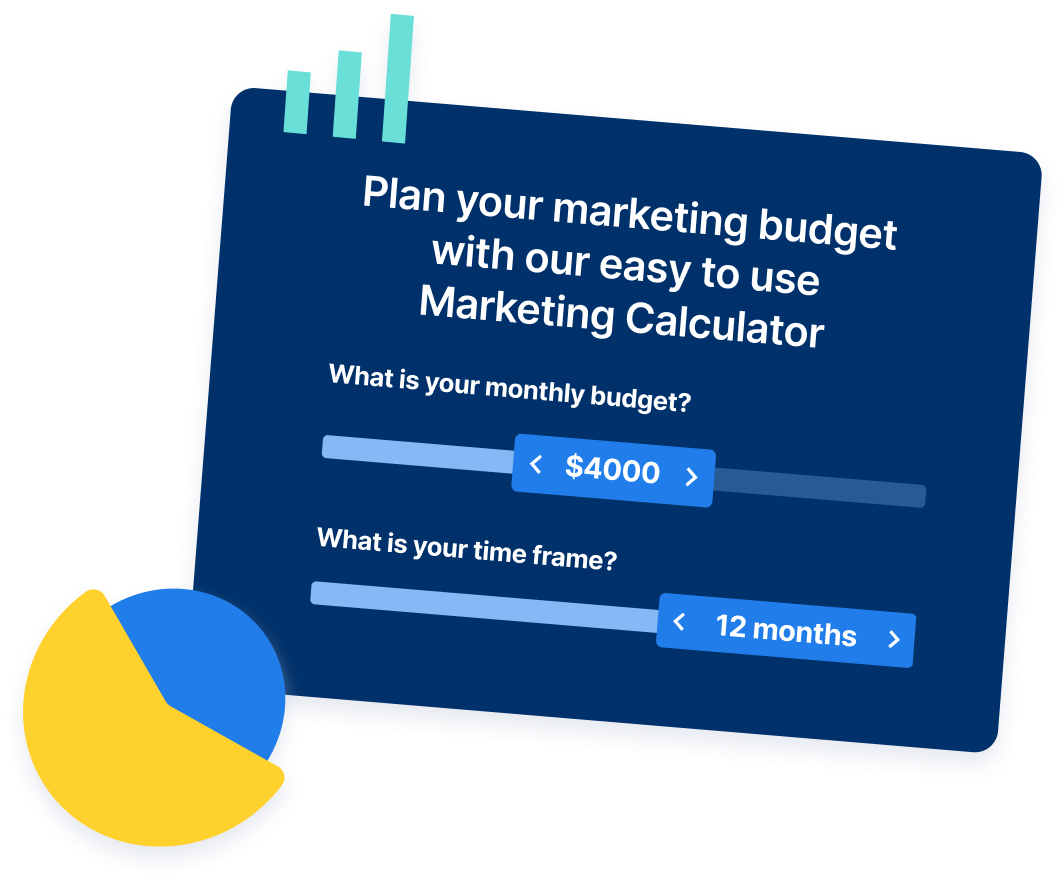
Table of Contents
- Content marketing basics FAQs
- Content marketing strategy and planning FAQs
- Content creation and formats FAQs
- Blogging FAQs
- Content marketing and SEO FAQs
- Website copy and copywriting FAQs
- Interactive and visual content FAQs
- Pillar content, E-E-A-T, and YMYL FAQs
- Content distribution and promotion FAQs
- Content marketing leads, conversions, and ROI FAQs
- Content marketing timelines and expectations FAQs
- Content marketing costs and budgeting FAQs
- Common content marketing challenges and mistakes FAQs
- AI in content marketing FAQs
- Content marketing agency vs. in-house FAQs
- Content marketing works. But only if you do it right.
Share this article


Try our free Marketing Calculator
Craft a tailored online marketing strategy! Utilize our free Internet marketing calculator for a custom plan based on your location, reach, timeframe, and budget.
Plan Your Marketing Budget
What to read next