Table of Contents
- Does SEO work during a recession?
- What SEO work should you protect during a recession?
- Why use SEO during a recession?
- How to use SEO during a recession
- 1. Refine your spending
- 2. Retain existing customers
- 3. Analyze competitors
- 4. Be consistent
- 5. Monitor your campaign to see what works
- Excel during a recession with WebFX’s SEO experts
SEO during a recession is one of the most cost-efficient ways to keep earning revenue because organic and AI search visibility doesn’t charge you for every click. In a recession, SEO works best when you protect the essentials and pause work that isn’t producing results.
Learn how to navigate SEO in a recession in this guide:
Looking for help improving your SEO’s revenue impact? Discover how our SEO services have delivered more than $10 billion in revenue by calling 888-601-5359 for a custom strategy!
Does SEO work during a recession?
SEO works during any economic period, including a recession. Investing time and resources into SEO can protect much of your existing visibility through a downturn, though rankings and traffic still shift with demand and competition. Though business activity might slow down, it does not stop entirely.
What SEO work should you protect during a recession?
When budgets tighten, protect the SEO work that keeps your best pages findable and measurable across search experiences. These areas hold on to demand you already earn, so you can trim elsewhere without starving your pipeline.
A few SEO areas to prioritize in a recession include:
- Fix crawl problems first. Google’s crawl budget documentation says that when a site slows down or returns server errors, Google crawls less. Slow templates and broken pages quietly erode the visibility your budget is meant to protect.
- Keep your money pages current. Service, product, and pricing pages that already convert deserve updates before you fund new content. A refreshed page that ranks today is cheaper than a new page that might rank next year.
- Check how AI tools describe you. Buyers now ask ChatGPT, Perplexity, and Google AI Overviews for shortlists before they visit a website. Teams can use software like OmniSEO®, WebFX’s AI search visibility platform, to track which of their top commercial prompts cite them or a competitor and then update the pages and listings those answers draw on.
Start with the fixes that cost the least and protect the most revenue. Technical repairs and page refreshes usually fit within an external or internal team’s time, while AI visibility tracking shows you where to get buy-in next.
Why use SEO during a recession?
Whether you want to get started with SEO or keep up with your strategy, there are plenty of benefits to doing so during a recession. Here are some major considerations:
- SEO is one of the biggest drivers of traffic: Organic search is also still one of the largest sources of website visits. In WebFX’s analysis of 2.3 billion sessions, organic search drove 27.12% of total website sessions in 2025, while generative AI platforms accounted for just 0.18%. That makes organic search one of the last channels to cut, even as more buyers start their research in AI tools.
- SEO is cost-effective: You can make many changes for SEO at no extra cost. Copywriting and site updates can be handled in-house at little direct cost, though keyword tools and staff time still take budget.
- You can invest in longevity post-recession: Recessions don’t last forever, but your marketing’s impact can. If you want to continue growing your business, SEO is a great tool for keeping sales and traffic high after the recession.
- You can have more flexible strategies: SEO consists of multiple factors, all of which lead to better brand awareness and more conversions. You can format your strategy to your timeline and budget instead of being stuck in one plan.
Because SEO is an ongoing process, you can think of it as a long-lasting tool for success. Where paid ads deliver traffic only while you pay for clicks, SEO keeps earning visibility after the work is done, which is why many businesses run both.
How to use SEO during a recession
SEO can be a big help to your business any time, but especially during a recession. Here are a few ways to use SEO during a recession that can help you see the best results:
- Refine your spending
- Retain existing customers
- Analyze competitors
- Be consistent
- Monitor your campaign to see what works
Let’s look at how to accomplish each step below.
1. Refine your spending
Effective SEO will fit within your budget without wasting money on extraneous tools, services, or approaches. You can optimize your website if you know what to target.
Keywords are a huge part of SEO, and targeting and implanting them correctly can help you save. You can use a tool like Keywords Everywhere to help you analyze the cost-per-click (CPC) and the competition, including the longer, question-style queries people type into AI assistants. For example, “hair salons in Harrisburg” has the following stats:

By targeting keywords with a low CPC and higher volume, you can focus any spending on effective keywords and focus your costs on the most effective strategies.
HVAC company Boss Mechanical took this approach with targeted keywords and local search optimization as part of a broader program. It saw a 70% decrease in organic cost per lead.
Even the bare minimum of SEO (optimizing on-site ranking factors) can make you more visible than competitors who skip it, especially if you’re focused on local markets.
2. Retain existing customers
Many people think SEO is only an acquisition tool, when it can help customers post-conversion stay part of your client base.
Focusing on your existing customers leads to cheaper marketing costs. Existing customers know who you are, they’ve already converted, and they have a good impression of your company. Upselling and maintaining your customer base costs much less than attracting new leads.
Check in with your customers after their purchase and make sure they were satisfied with the process. Also, keep posting content that can help customers after they convert — like information on using your products and services.
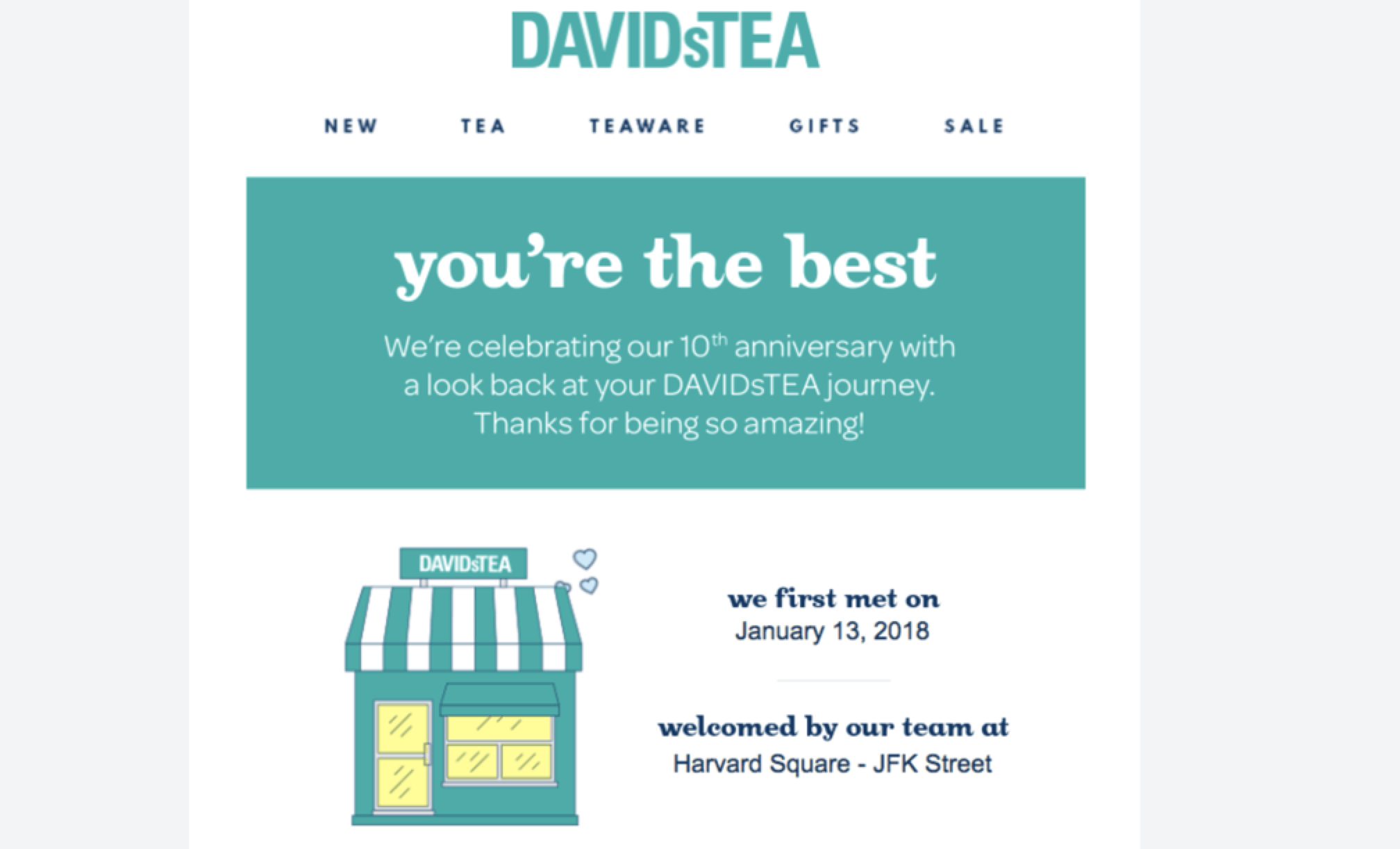
Additionally, contacting your customers through email can be a more personalized way to show you care:
3. Analyze competitors
Understanding your competitors can help you stick out during a recession. What are your competitors offering? How can you prove that you’re better than them?
A competitor analysis will help you answer these questions and implement changes to your strategy. For example, if your competitor shares industry statistics and downloadable guides, you could do the same and add in your own spin.
Be sure to use a tool like Ahrefs to see what keywords they’re ranking for, so you can implement them in your site.
4. Be consistent
Consistency is a valuable part of any SEO strategy. If you don’t keep up with your SEO, whether through your blog or regular updates, Google will notice. Having a solid online presence tells users and search engines that you care about your website and SEO.
To help you stay on top of SEO, we recommend:
- Creating a schedule for blog posts. You don’t have to post every day, but once a week or a few times a month is ideal.
- Outlining a list of all the pages on your site that need content. Making updates over time shows Google that you’re invested in SEO.
- Including time to focus on backend features. If you want to make your website better, you have to account for the technical side.
- Building quality links from reputable sources. Talk to other businesses in your industry about linking to your website and articles in their posts.
5. Monitor your campaign to see what works
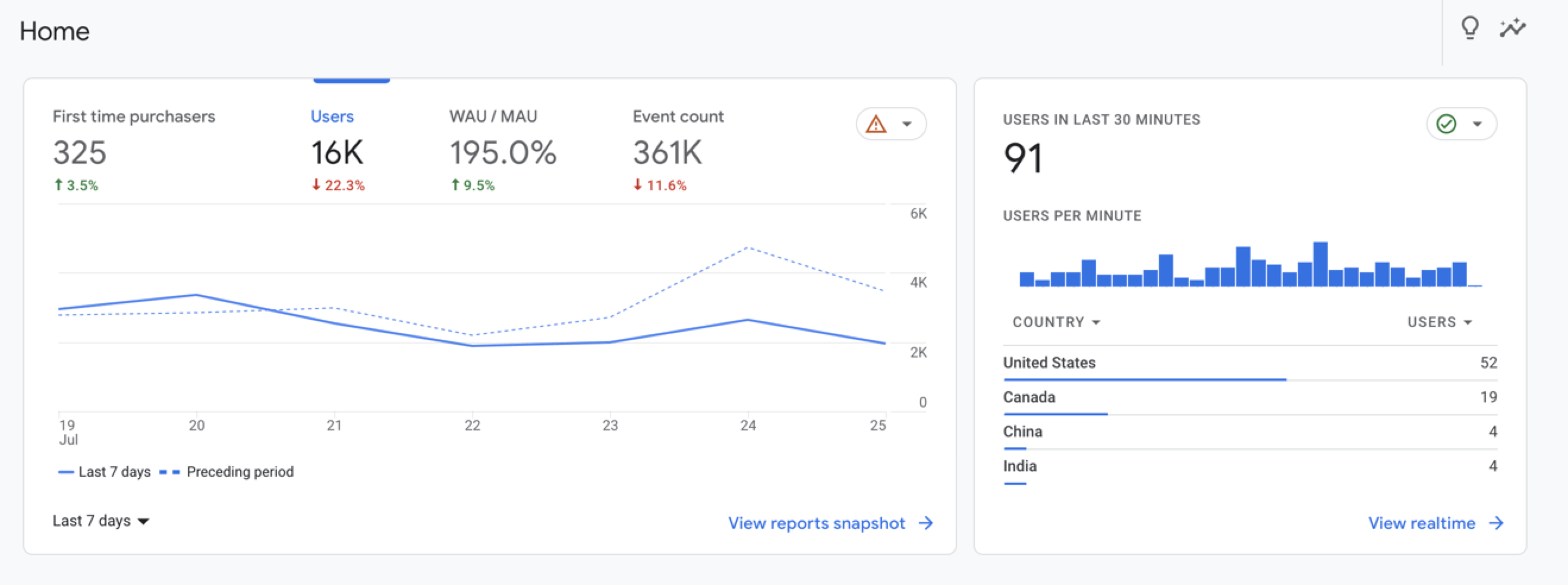
Part of SEO is monitoring your campaign to make sure your strategy is working. During a recession, you can lean into free tools like Google Analytics 4 to track your SEO campaign.
GA4 reports will help you see traffic, conversions, and even customer demographics, and Google Search Console shows the queries behind your impressions and clicks:
To see whether AI tools send you visitors, use the built-in AI Assistant channel group in GA4. This channel separates traffic from ChatGPT, Perplexity, and Gemini from your standard referral traffic.
As you monitor your campaign over time, you can optimize every dollar you spend on SEO. Without data, you will waste money on empty strategies that have no backing.
SEO is just one piece of a recession marketing plan.
For a broader look at the strategies that hold up during an economic downturn, our guide to marketing during a recession covers content marketing, social media, customer loyalty, and ROI tracking alongside SEO.
We’re masters of our craft.


300+

9,000+

4,000+

200+

100+
Excel during a recession with WebFX’s SEO experts
If you want help with your SEO approach, working with an agency can ensure you get the best results. Partner with WebFX to help your business earn more revenue through SEO.
Our team of over 750 digital marketing experts can help you earn more from SEO. Our SEO services include a custom plan for each of our clients that focuses on individual business needs and goals. So far, we have generated:
- 24,859,684 leads
- $10,085,355,239+ in revenue
- 7.14 million calls
We can do the same for your business, no matter the circumstances.
Request a free quote today with no obligation, and see what your SEO plan could look like with our team!
-
 Abby is a Sr. SEO Consultant at WebFX, where she implements, optimizes, and tracks SEO and digital marketing strategies that are powered by data for WebFX. With certifications in SEO, Local SEO, and Google Analytics, Abby has implemented hundreds of optimizations and led strategies and initiatives that have helped WebFX improve online visibility, traffic, and leads. Before her time as a Digital Marketing Analyst, Abby was an innovative content writer who created content for WebFX clients in various industries and for WebFX’s own blog and website. When she’s not implementing strategies and optimizations that drive leads and revenue, you’ll find her walking her dog, travelling around Europe, or watching her favorite reality TV show. View full profile
-

WebFX is a full-service digital marketing agency delivering revenue-driving strategies across online advertising, SEO and AI search optimization, and digital marketing. Backed by 1,100+ client reviews, a 4.9-star rating on Clutch, and proprietary revenue-tracking technology, our team helps businesses grow visibility and revenue across platforms, from Google to ChatGPT to LinkedIn. Discover how our expert team and revenue-accelerating tech can drive results for you. Learn more
Try our free Marketing Calculator
Craft a tailored online marketing strategy! Utilize our free Internet marketing calculator for a custom plan based on your location, reach, timeframe, and budget.
Plan Your Marketing Budget
Table of Contents
- Does SEO work during a recession?
- What SEO work should you protect during a recession?
- Why use SEO during a recession?
- How to use SEO during a recession
- 1. Refine your spending
- 2. Retain existing customers
- 3. Analyze competitors
- 4. Be consistent
- 5. Monitor your campaign to see what works
- Excel during a recession with WebFX’s SEO experts
Share this article


Proven Marketing Strategies
Try our free Marketing Calculator
Craft a tailored online marketing strategy! Utilize our free Internet marketing calculator for a custom plan based on your location, reach, timeframe, and budget.
Plan Your Marketing Budget