What it is: Home builder SEO makes your site, community pages, and floor plans easy to find when buyers search for a builder across Google, Maps, and AI answers.
How it works: It matches the searches buyers make to the pages and next steps they need, which differ for custom builders (services, build-on-your-lot) and production builders (communities, floor plans, inventory).
The core home builder SEO strategies: Business-model keyword targeting, location and community pages, optimized floor plan pages, local SEO and Google Business Profile, completed-project pages, buyer-question content, technical SEO, and link building.
How AI search affects home builders: Buyers ask AI tools which builders serve their area, and longer queries trigger AI Overviews more often. Clear pages, firsthand expertise, and schema help you get cited in those answers.
How to measure home builder SEO results: Track qualified inquiries, model-home appointments, and signed contracts, not just rankings and traffic, and connect organic results to your CRM to see which markets and communities drive sales.
SEO for home builders helps residential construction companies appear when buyers search for custom builders, new-home communities, floor plans, and available homes in their market. It connects those searches to the right pages, turning online visibility into qualified inquiries, consultations, model-home visits, and signed contracts.
Buyers don’t all search the same way. Someone who already owns land looks for a custom builder who can turn their plans into a home, while someone relocating compares communities, move-in-ready homes, and floor plans before they ever call a sales office. Home builder SEO connects each of those buyers with the information they need to take the next step.
Let’s break down how SEO for home builders works, eight strategies to attract buyers, how builders show up in AI answers, and what it costs.
Home builder SEO works by matching the searches buyers make with the pages and next steps they need to evaluate your homes, across Google Search, Maps, and AI-powered answers. The process starts with how your buyers actually search, which depends on the kind of builder you are.
A custom home builder and a production builder can serve the same city and still need different pages. A custom builder wants to reach people searching for build-on-your-lot services, while a production builder needs to attract buyers comparing available homes in a specific community. Both need SEO; what differs is the pages they prioritize and the action they want a visitor to take.
The home builder search-to-sale map
One practical way to connect buyer searches with the pages most likely to generate sales is to map each search to a target page and a next step.
What the buyer searches
Page to prioritize
Next step to offer
Custom home builders in [city]
Custom home building service page
Request a consultation
Build on your lot in [city]
Build-on-your-lot service page
Discuss a building project
New construction homes in [community]
Community listing page
Explore available communities
Four-bedroom homes in [city]
Relevant floor plan page
Request floor plan details
Move-in-ready homes in [city]
Available-home listings
Schedule a showing
Cost to build a home in [city]
Local construction cost guide
Request a project estimate
These are illustrative examples, not verified keyword recommendations.
The value is in spotting gaps. If buyers search for move-in-ready homes but you only have a general services page, you’re missing the inventory they want. Match your highest-value searches to existing pages first, then build what’s missing.
8 home builder SEO strategies to attract qualified buyers
Effective SEO for home builders starts with how people research a build, compare options, and choose a builder. These eight strategies cover that process:
1. Target keywords based on your homebuilding business model
The best home builder SEO keywords reflect the homes you build, the locations you serve, and the buyers you want. Separate your target searches by business model before you write a single page.
Custom builders should prioritize keywords tied to construction services and service areas, such as:
Custom home builders in [city]
Luxury home builders in [city]
Build on your lot in [city]
Design-build home builders in [city]
Production builders should focus on searches tied to available homes and communities, such as:
New construction homes in [city]
Move-in-ready homes in [city]
Four-bedroom new construction homes in [city]
New homes in [community]
Tools like Google Search Console, Semrush, or Ahrefs help you find these queries and gauge competition. Don’t stop at search volume, though. A buyer searching “new construction homes in Cary under $600,000” has already named a location, home type, and budget, which makes a page showing relevant homes far more valuable than a general article on the benefits of new construction.
Home builder SEO tip: Review the questions your sales team hears before consultations and model-home visits. Those conversations surface high-intent topics that deserve their own pages, even when keyword tools show low volume.
2. Create location and community pages that answer buyer questions
Location and community pages help you rank for searches tied to specific cities and developments, but only when each page offers real, location-specific information rather than the same copy with a city name swapped in.
For custom builders, each market page should explain what you build there and what buyers should know about working with you locally: Home types, nearby completed projects, local building considerations, testimonials from the area, and how to book a consultation.
For production builders, each active community page should make the buyer’s decision easy by clearly covering:
Community location and nearby amenities
Available home types and floor plans
Current or starting price ranges
Available and upcoming inventory
Sales office hours and how to schedule a tour
Connect these pages with internal links so a buyer can move from your Cary market page to a community, then to a floor plan, then to an available home. A clean path like that helps buyers compare options and gives Google clearer routes to your most important pages.
Expert insights from
Jordan D.Head of Search Performance
“Both B2C and B2B companies continue to see success with geo-targeted content such as service pages focusing on each of their locations.”
3. Optimize floor plan and available-home pages for search
Floor plan and available-home pages turn general interest into purchase consideration, which makes them some of your most valuable SEO assets. Buyers use them to compare layouts, features, and pricing, yet many builder sites lean on images and PDFs with little text, which gives search engines and AI tools nothing to read.
Put the key details directly on every important floor plan page: Name and style, square footage, bed and bath counts, notable features, available elevations, the communities where it’s offered, and pricing where applicable. Compare a vague line like “the Oakwood offers a beautiful layout with plenty of space” against “the Oakwood offers 2,350 square feet across a single-story layout, with four bedrooms, two bathrooms, an open-concept kitchen, and an optional covered patio.” The second gives buyers and search engines something specific to work with.
Keep inventory accurate: Homes sell, communities close, and listings go stale. Set a process for updating availability, pricing, and completion dates, and when a home sells, decide whether the page should stay live with an updated status and links to similar homes, or redirect to a relevant alternative rather than dumping buyers on your homepage.
4. Strengthen your local SEO and Google Business Profile
Home builder local SEO helps buyers find you when they search for builders in a specific city or service area. In WebFX’s analysis of 237,990 home services queries, location-modified searches triggered a Google AI Overview only 12.2% of the time, and brand-plus-location searches 12.4%, far less often than many informational searches. Local searches tend to keep you in front of buyers who are ready to hire.
Start with your Google Business Profile. Use accurate categories like General Contractor and Custom Home Builder, keep your name, phone, and hours current, and add recent project photos and reviews.
Builders face one eligibility rule most local businesses don’t: Google excludes individual model homes and for-sale properties from Business Profiles, but staffed sales or leasing offices can qualify. Verify each eligible office rather than risking a suspension by listing model homes.
Ask buyers for reviews after a milestone like closing, when the experience is fresh. Reviews shape where you land in the local pack, and buyers read them before they call. For more ways to strengthen your local presence, see our local SEO services.
5. Use completed projects to demonstrate your expertise
Completed homes give buyers tangible proof of what you can build, so turn your strongest projects into detailed portfolio pages rather than plain photo galleries. For custom builders especially, these pages attract buyers searching for specific styles or features.
Include the home style and approximate square footage, notable architectural and custom features, the construction challenges you solved, professional photography, and a relevant testimonial. A page explaining how you built a custom home with a walkout basement on a sloped lot shows real expertise in a way a gallery can’t.
Optimize the images too: Compress large files, use descriptive filenames and alt text (for example, “modern-farmhouse-raleigh-exterior.webp” with alt text describing the home), and get permission before publishing homeowner details.
6. Publish content that answers buyers’ construction questions
Content marketing reaches buyers who are still researching and aren’t ready to call, and the best topics tie directly to your services and sales process. Custom builders can answer questions about budgets, land, and timelines; production builders can explain inventory, financing, and the new-construction process.
High-value questions include:
How much does it cost to build a custom home in [city]?
What should you know before buying land for a custom home?
How long does custom home construction take?
What’s the difference between a model home and an available home?
How does financing work for new construction?
Answer these using your real building experience, with actual project examples and pricing ranges where you can. A cost article grounded in real factors like lot conditions, site prep, and materials gives buyers something they can’t get from a generic explanation, and it demonstrates expertise before they ever contact you. Link each article to the relevant service or community page so a reader researching build-on-your-lot costs can reach your build-on-your-lot services.
7. Fix technical SEO issues that affect builder websites
Technical SEO helps Google discover and understand your site while making homes easy to browse on any device. For builders, the biggest issues come from image-heavy pages, interactive floor plans, inventory filters, and listings that change constantly.
Focus on four areas:
Page speed and images: Compress large home photos and videos so pages load quickly; check Core Web Vitals in Google PageSpeed Insights.
Crawlable listings: Make sure Google can reach your community and floor plan pages through real links, not only through JavaScript filters a visitor has to click.
Duplicate and outdated URLs: Use canonical tags and redirects to manage the near-identical URLs that filters, sold homes, and closed communities create.
Structured data: Add relevant markup, such as LocalBusiness for eligible business locations, and validate it against Google’s documentation. For floor plan and available-home pages, choose schema types that accurately reflect the content rather than assuming every listing qualifies for Product or Offer markup.
8. Earn relevant links and build authority in your markets
Link building strengthens your site’s authority by earning links from trustworthy, relevant sites, and for builders the best opportunities already exist in your network: Home builders associations, architects, suppliers, local real estate publications, and community sponsorships.
A regional building award can earn industry coverage, and a new community opening can be worth sharing with local publications. You can also create resources others want to reference, like a guide to building on a difficult lot. Focus on legitimate coverage and real partnerships rather than buying links.
How does AI search affect home builder SEO?
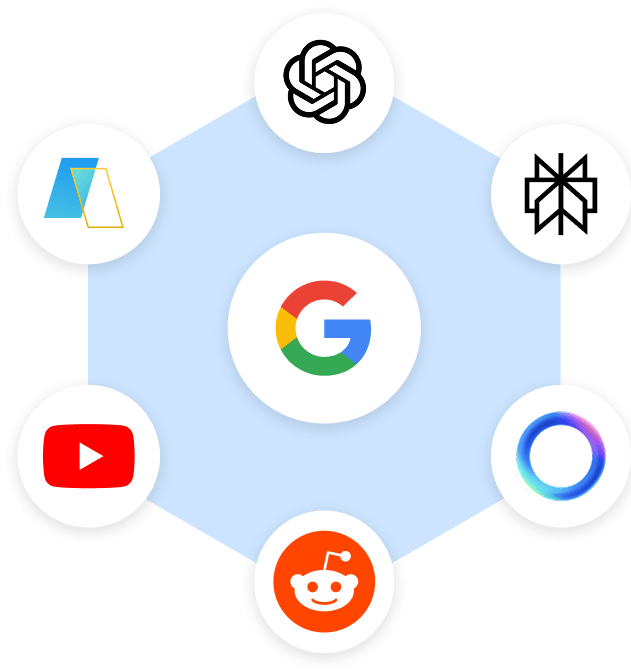
AI search gives buyers another way to find and compare builders, whether they ask ChatGPT to recommend custom builders in a city or use Google AI Overviews to research costs and timelines. Your job is to give those tools accurate, accessible information about your services, locations, and experience.
How a buyer phrases a search changes what they see. WebFX’s analysis of 237,990 home services queries found that queries of seven or more words triggered AI Overviews 41.1% of the time, and informational, learn-focused searches triggered them more often than commercial ones. So a buyer asking “how much does it cost to build a custom home on your own land” is likely to get an AI answer first, while “custom home builders in Raleigh” usually returns local results. You need to show up in both places.
To strengthen AI visibility:
Answer specific buyer questions clearly about services, pricing, timelines, and customization.
Show firsthand expertise through completed projects, original photography, and insight from your team.
Keep your business information consistent across your site and profiles.
Track how AI tools describe you.OmniSEO®, WebFX’s AI search visibility platform, tracks citations and mentions for your brand and up to five competitors across ChatGPT, Perplexity, and Google AI Overviews, so you can spot the questions where a competitor is named instead of you and fix the page that should answer them.
Ranking first no longer guarantees an AI recommendation, which is why the two are worth treating as connected but separate goals. If you want help showing up across both, learn more about WebFX’s AI search optimization services.
Expert insights from
Jordan D.Head of Search Performance
“One of the biggest misconceptions we hear is that ranking first on Google means AI tools will recommend you too. Those two things have come apart, which is why we measure and optimize for AI visibility as its own part of your strategy.”
Measure home builder SEO by tracking how organic visibility turns into qualified inquiries, appointments, and signed contracts, not rankings and traffic alone. A cost-to-build article might draw hundreds of visitors and few consultations, while a community page with less traffic produces several model-home appointments. Both matter, so measure them by their job.
The metrics worth prioritizing:
Metric
What it tells you
Local keyword rankings
How visible you are in target markets
Community page traffic
Whether buyers are finding your developments
Floor plan engagement
Which homes attract interest
Consultation requests
How many visitors want to discuss a build
Model-home appointments
How well community pages drive visits
Qualified leads
How many inquiries match your ideal buyer
Signed contracts and revenue
How SEO contributes to growth
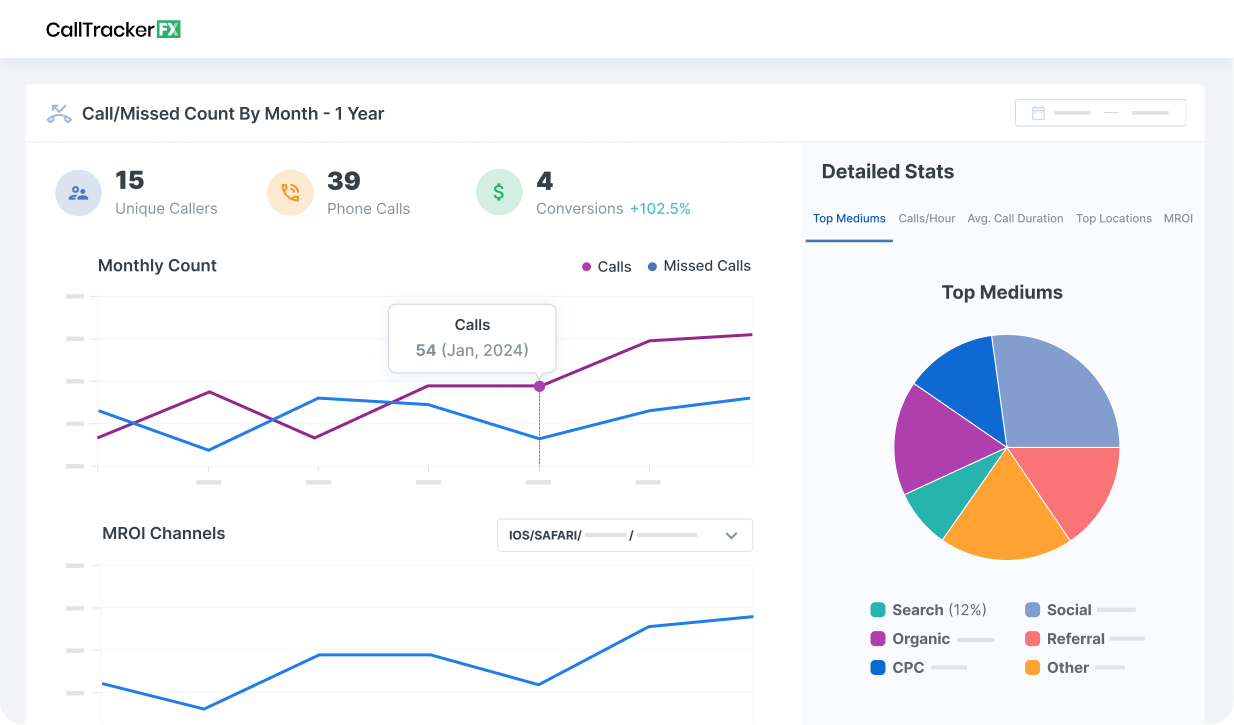
Use Google Search Console for query and page data and Google Analytics 4 for conversions, then connect both to your CRM to see which inquiries become real opportunities.
RevenueCloudFX helps connect your marketing data to leads and revenue, so you can see which markets, communities, and floor plans drive real sales conversations and focus your investment there.
Expert insights from
Jordan D.Head of Search Performance
“Search results now answer a lot of questions before anyone clicks, so traffic alone stopped telling the whole story. We report on visibility, brand presence, and the revenue organic search actually drives, so you can see the value even when click counts shift.”
Measuring the metrics that affect your bottom line.
Are you interested in custom reporting that is specific to your unique business needs? Powered by RevenueCloudFX, WebFX creates custom reports based on the metrics that matter most to your company.
The cost of SEO for home builders depends on your market competition, the size of your site, how many locations you serve, and how much ongoing work you need. A custom builder in one metro has very different requirements from a production builder managing dozens of communities across several states.
The main pricing factors:
Target markets: More competitive cities require more research and optimization.
Website size: Hundreds of community, floor plan, and inventory pages need more support.
Content development: New service pages, community descriptions, and buyer guides add scope.
Technical requirements: Inventory systems, interactive floor plans, and performance work can require specialized attention.
Rather than evaluate a provider on price alone, compare the deliverables to what your business needs. If your priority is selling homes in three active communities, your SEO investment should support those communities and their inventory, not a stack of general construction blogs. You can see current plans and pricing on WebFX’s SEO services page.
Should home builders hire an SEO company?
Hiring a home builder SEO company makes sense when you need specialized help to improve visibility, maintain your site, and turn organic traffic into qualified inquiries, especially as you expand into new markets or manage more communities and inventory.
A strong home builder SEO agency should understand how construction buyers search and be able to:
Build keyword strategies for custom or production homebuilding
Optimize location, community, floor plan, and available-home pages
Manage technical SEO and site performance
Improve local visibility and reputation
Track qualified leads, appointments, and sales outcomes
Look for relevant experience, transparent reporting, and verifiable results before you commit. WebFX’s work with Ryan Amato Painting, a home services company in Eastern Pennsylvania and New Jersey, shows what a focused SEO and PPC strategy can do: A 125% increase in organic traffic and a 120% increase in SEO leads, giving the team far more chances to book jobs.
Learn how WebFX grew a client’s organic traffic by 125% and increased their SEO leads by 120%.
SEO for home builders usually takes several months of consistent work, though it depends on your site’s condition, competition, and target markets. Established sites often improve sooner, while new builders or those entering competitive metros need more time to build visibility.
Yes. SEO for custom builders leans on construction services, completed projects, and build-on-your-lot pages, while production builders prioritize community pages, floor plans, available inventory, and new-home searches.
Production builders should create a dedicated page for each active community when it offers unique information about location, amenities, floor plans, pricing, and available homes. That helps buyers compare options and gives search engines a clear picture of each development.
No. Google excludes individual model homes and for-sale properties from Business Profile eligibility, but qualifying sales and leasing offices can have verified profiles when they meet Google’s requirements.
Independent research from Clutch has named WebFX the top SEO company in the United States.
Clutch has personally interviewed more than 250 WebFX clients to discuss their experience partnering with us.
Earn more jobs from expert home builder SEO with WebFX
Your next buyer is searching right now for a custom builder, a community, or a floor plan that fits their budget. If your site doesn’t show up or doesn’t give them what they need, that job goes to the builder who does.
WebFX builds industry-specific SEO strategies that turn search visibility into booked jobs, backed by a dedicated account manager and revenue tracking through RevenueCloudFX. Get your free proposal or call 888-601-5359 to speak with a strategist today about our award-winning SEO services.
Try our free Marketing Calculator
Craft a tailored online marketing strategy! Utilize our free Internet marketing calculator for a custom plan based on your location, reach, timeframe, and budget.
Craft a tailored online marketing strategy! Utilize our free Internet marketing calculator for a custom plan based on your location, reach, timeframe, and budget.
Sarah Berry is a Lead SEO Consultant at one of the largest digital…
More
Sarah Berry is a Lead SEO Consultant at one of the largest digital marketing agencies in the USA — WebFX. With more than 10,000 hours of experience, she offers practical insights and strategies to grow your digital revenue. Her work has been cited by Michigan State University, Business Insider, and Ars Technica. When she isn’t polishing her Time Magazine Person of the Year Award, she’s spending time with her flock of ducks. Hide









 Sarah Berry is a Lead SEO Consultant at one of the largest digital marketing agencies in the USA — WebFX. With more than 10,000 hours of experience, she offers practical insights and strategies to grow your digital revenue. Her work has been cited by Michigan State University, Business Insider, and Ars Technica. When she isn’t polishing her Time Magazine Person of the Year Award, she’s spending time with her flock of ducks. View full profile